Intestinal Research
Cure8 research brief
Cure8 research brief
Pregnancy increases VTE risk, and people with IBD have additional thrombotic risk—understanding when to use thromboprophylaxis affects maternal safety. The review highlights uncertainty about applying Western-derived guidance to Asian populations.
pregnant-patients, clinicians, researchers
This article reviews studies showing elevated VTE risk in pregnant and postpartum people with IBD, especially when disease is active, during hospitalization, or after cesarean delivery. Current guideline approaches generally favor selective, risk-stratified use of thromboprophylaxis rather than routine anticoagulation for all pregnant people with IBD.
The authors highlight that most data and guidelines are based on Western populations and argue for research to define population-specific absolute risks and to refine risk-based prophylaxis strategies in Asian settings.
The review summarizes safety considerations and clinical variables relevant to deciding on anticoagulation during pregnancy and postpartum, and it calls for future studies to fill evidence gaps and support tailored guideline recommendations.
The article is a narrative review (abstract level) that synthesizes observational data and guideline recommendations; it identifies gaps and calls for population-specific research rather than reporting new primary trial data.
Review the original publication for the complete reporting, methods, and context.
This Cure8 brief is based on source text from the linked article. Cure8 is informational only and is not a substitute for professional medical advice, diagnosis, or treatment.
If you have IBD — especially Crohn’s — this study suggests your long-term risk of needing dialysis or a kidney transplant may be higher than the general population. Certain treatments and prior bowel surgery were linked...
This large, population-based study suggests people with Crohn's disease have modestly higher overall mortality than matched controls and higher deaths from specific causes (colorectal cancer, renal disease, non-Hodgkin...
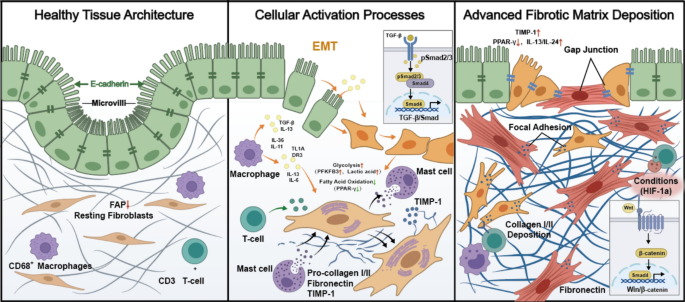
Intestinal fibrosis causes strictures that can lead to obstruction and often require surgery; current drugs mainly reduce inflammation and do not reliably prevent or reverse fibrosis. Advances in understanding fibrosis...