medscape.com
Cure8 news brief
Cure8 news brief
A blood biomarker that flags higher risk for complicated Crohn's could help identify people who may need closer monitoring or earlier treatment escalation before clear symptoms or endoscopic inflammation appear.
Adults with Crohn's disease (especially those with mild or inactive disease), clinicians managing IBD, and researchers studying biomarkers, Paneth cell biology, or disease prediction.
This report summarizes a prospective analysis from two CD cohorts and a separate prediagnostic cohort showing that higher serum REG3-alpha predicted later disease progression and complicated disease.
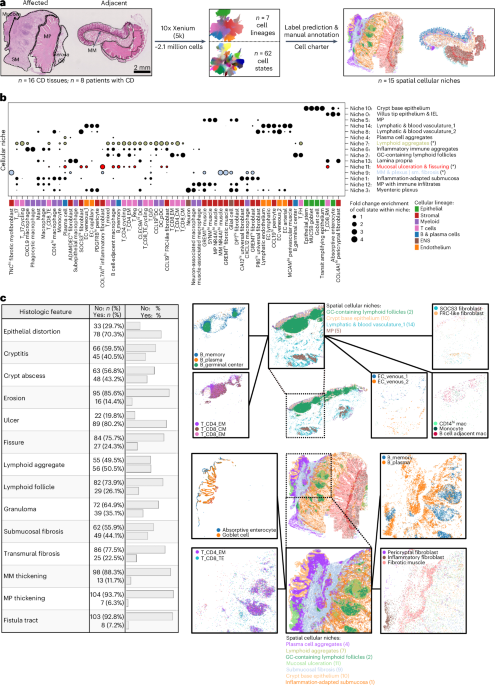
The investigators also used single-cell RNA sequencing of ileal tissue to show shifts in Paneth cell programs toward inflammatory, hypersecretory states, offering a possible biological link to rising REG3-alpha.
The signal was present even in patients with mild or endoscopically inactive disease and was detectable in stored serum up to 10 years before diagnosis, with the biomarker better at predicting complicated vs uncomplicated future CD.
Clinical implications are preliminary: findings suggest REG3-alpha is worth further study as a risk stratification tool, but this is not yet a validated clinical test or part of care guidelines.
The study populations were primarily White and the prediagnostic group had more men, which may limit generalizability. The researchers did not assess the gut microbiome. These findings come from cohort analyses and require independent validation before clinical use.
Review the original publication for the complete reporting, methods, and context.
This Cure8 brief is based on source text from the linked article. Cure8 is informational only and is not a substitute for professional medical advice, diagnosis, or treatment.
If correct, the paper points to a previously underappreciated immune cell (GzmK+ tissue-resident CD8+ T cells) as a potential driver of Crohn’s inflammation — which could lead to new biomarkers or therapies that work...
The paper maps distinct stromal cell states tied to inflamed versus fibrotic tissue niches in Crohn’s disease and shows that these states have different chromatin configurations and drug-modifiable properties — pointing...
The study points to serum protein panels and tissue expression of glypican-6 (GPC6) as potential tools to diagnose or predict intestinal strictures in Crohn disease, which could help detect fibrosis earlier and guide...