
medicalxpress.com
Cure8 news brief
Cure8 news brief
The study suggests how endoscopy services are organized—who performs IBD surveillance, how much time is allocated, and whether dye is used—may affect how often small polyps are found. For people with colonic IBD, that could influence early detection of precancerous changes.
People with IBD affecting the large bowel (Crohn's colitis, ulcerative colitis), gastroenterologists and endoscopy teams, and researchers focused on surveillance and cancer prevention.
The study used the UK National Endoscopy Database and included almost 16,000 IBD surveillance procedures from 2024 across roughly 65% of UK endoscopy units. Fewer than 20% of endoscopists performed checks at least monthly but accounted for 57% of procedures.
The database analysis linked polyp detection rates to operator experience, allotted procedure time, and dye use. The database did not include pathology results for removed polyps, so the team could not determine whether these differences translated into fewer cancers.
The analysis used national endoscopy procedure records and found associations but did not include pathology results for removed polyps, so it cannot confirm effects on cancer outcomes. The findings point to candidates for service improvement but require prospective evaluation.
Review the original publication for the complete reporting, methods, and context.
This Cure8 brief is based on source text from the linked article. Cure8 is informational only and is not a substitute for professional medical advice, diagnosis, or treatment.
Obese patients with FibroScan-detected steatosis in this cohort had a high frequency of colitis and some cases of IBD, dysplasia, and cancer, which could affect screening and symptom evaluation decisions.
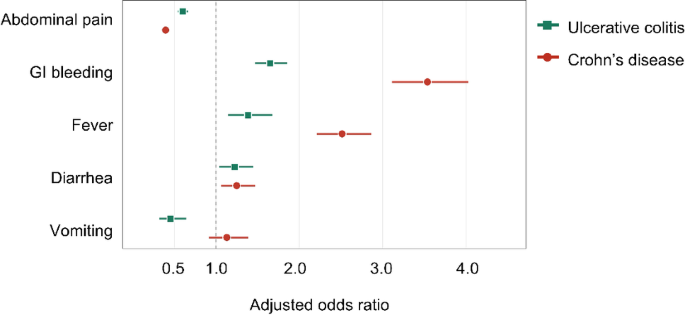
The study suggests ED presentation symptoms predict admission differently in UC versus CD, which could affect triage and short-term risk assessment for IBD patients. Knowing which symptoms are stronger predictors by...
Distinguishing UC from Crohn’s colitis can be challenging but affects long-term management and surveillance. A histologic feature—homogeneity versus heterogeneity of epithelial lesions across biopsies—might help improve...