ClinicalTrials.gov
Cure8 trial brief
Cure8 trial brief
Pediatric-onset IBD can behave differently than adult-onset disease. Comparing conventional versus biologic approaches in children may help clarify relative effectiveness, safety, and impacts on growth and steroid exposure.
Pediatric patients with Crohn's disease, ulcerative colitis, and their caregivers; pediatric gastroenterologists and IBD researchers interested in real-world comparative outcomes of therapies.
This is a registered observational cohort study (not yet recruiting) at Assiut University comparing conventional therapy versus biologic therapy in children and adolescents with IBD.
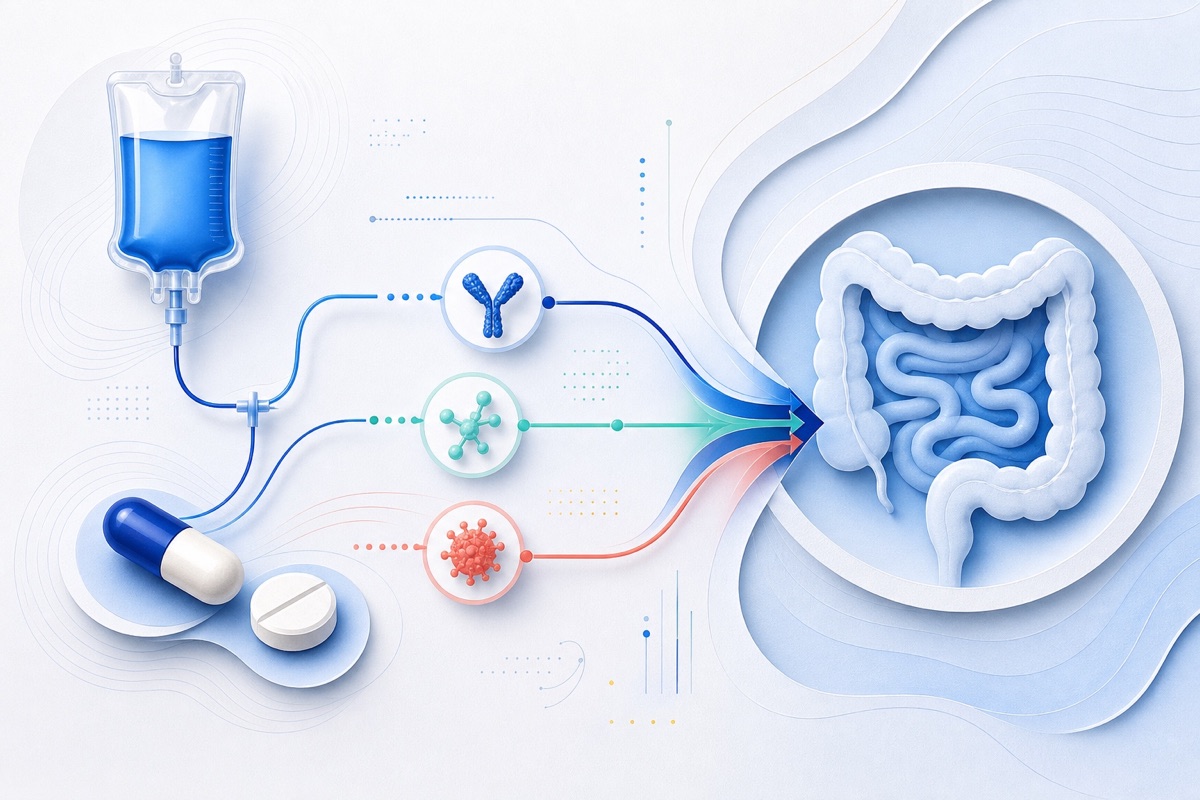
It will classify pediatric patients into a conventional-therapy group (5-aminosalicylates, corticosteroids, and/or immunomodulators) and a biologic-therapy group (mainly anti-TNF agents), and follow outcomes including clinical remission, steroid-free remission, adverse events, and growth over 12 months.
Planned enrollment is 100; primary outcomes are remission rates at 8–12 weeks, 6 months, and 12 months using PCDAI or PUCAI thresholds.
This is an observational (retrospective-prospective) registry study that is not yet recruiting. As an observational design, treatment groups are not randomized, so differences between groups could reflect selection factors rather than causal effects.
Review the original publication for the complete reporting, methods, and context.
This Cure8 brief is based on source text from the linked article. Cure8 is informational only and is not a substitute for professional medical advice, diagnosis, or treatment.
The review links specific therapies and surgical options to outcomes that matter to people with IBD — mucosal healing, lower hospitalizations, and reduced need for surgery — and highlights that combining medical and...
This study suggests LVV can occur in people with IBD at younger ages and with distinct vascular findings, and it may arise even when gut disease is in remission. That matters for awareness, diagnosis, and coordination...
People with IBD and their clinicians need to know whether common IBD treatments change COVID-19 risk or should be stopped. This review provides practical recommendations (continue most maintenance drugs; avoid systemic...