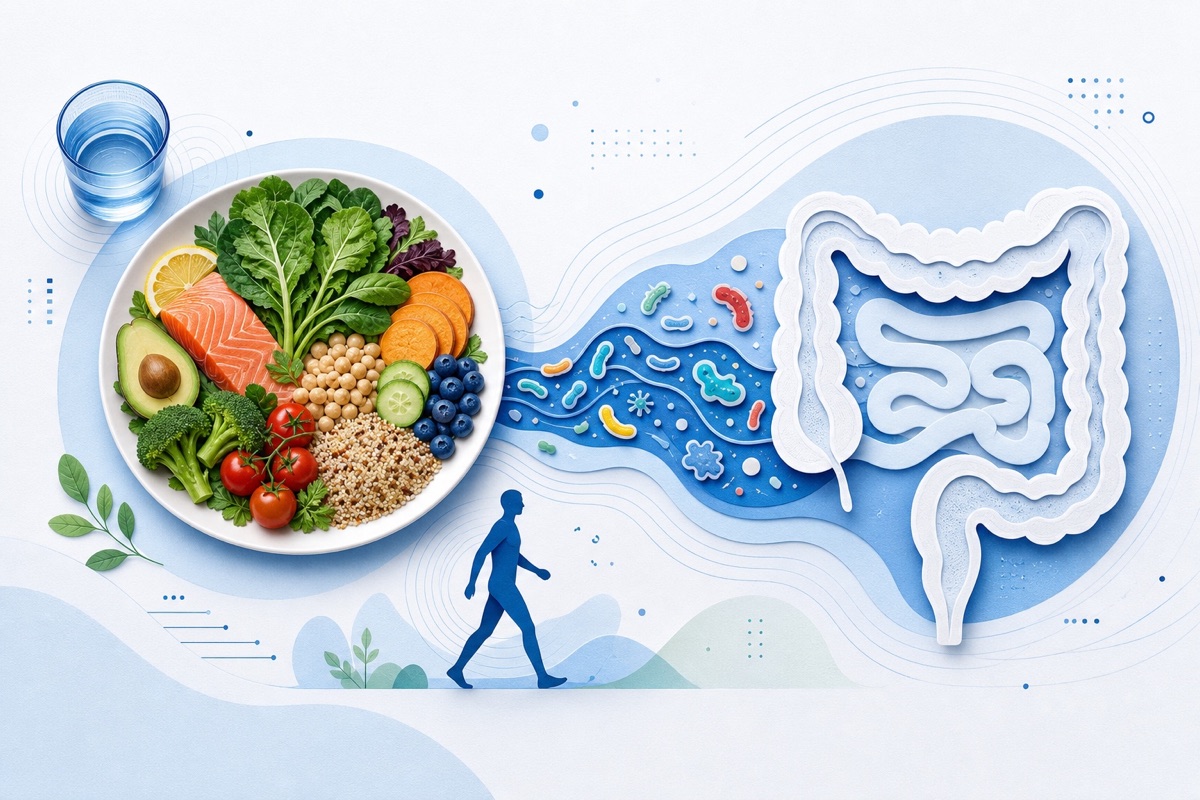
The review found higher ultra-processed food intake was linked to increased odds of Crohn’s disease relapse — a potentially actionable signal because diet can be changed. However, the evidence certainty is very low, so this is hypothesis-generating rather than definitive.
Who Should Pay Attention
Adults with Crohn's disease in remission, clinicians who counsel IBD patients about diet, researchers studying diet–microbiome–IBD links, and people interested in relapse prevention strategies.
Study Snapshot
Story typeResearch paper
Evidence typeResearch paper
Source depthJournal abstract
What To Know
This is a systematic review and meta-analysis of prospective cohort studies and randomized trials that searched multiple databases through early 2025 and pooled results from three prospective cohorts (276 patients).
The pooled odds ratio favored an association between higher UPF intake and relapse (OR 2.27), but the authors rated the overall certainty of evidence as very low using GRADE. The paper points to plausible biological mechanisms (gut microbiome changes, intestinal permeability) but cannot establish causation.
The included studies are few and relatively small, and the review calls for larger, well-designed prospective studies and randomized dietary trials before making firm clinical recommendations. If you are considering dietary changes, discuss them with your care team so adjustments are safe and appropriate for your medical situation.
Keep In Mind
The analysis pooled three prospective cohorts (276 patients) and rated evidence certainty as very low (GRADE). Observational dietary studies are prone to measurement error and confounding; randomized dietary trials are needed to test causation. This brief is grounded in the article abstract provided by the journal.
Source Details
Review the original publication for the complete reporting, methods, and context.
This Cure8 brief is based on source text from the linked article. Cure8 is informational only and is not a substitute for professional medical advice, diagnosis, or treatment.
Many people with IBD try dietary changes to manage symptoms. This review summarizes what published adult studies report and points toward whole-food and Mediterranean-style patterns as commonly supported approaches.
Diet quality was linked to gut microbiome features and exploratory differences in inflammatory markers and symptoms in adults with Crohn disease from Puerto Rico; understanding these links may help tailor dietary...
If you or your clinician are considering dietary therapy like the CDED for Crohn's disease, microbiome features at baseline may influence who achieves sustained remission. Understanding these links could help personalize...