
Digestive Diseases and Sciences
Cure8 research brief
Cure8 research brief
Behavioral coaching targets daily functioning, self-management, and psychological distress that often persist despite controlled inflammation — issues many people with IBD care about.
Nurse-delivered coaching could broaden support available in routine care without relying solely on specialists in psychology or psychiatry. Results are preliminary but suggest potential benefit for person-centered outcomes.
Adults with IBD who experience fatigue, reduced functioning, or psychological distress; IBD clinicians and specialist nurses; program designers and health services researchers interested in integrated self-management interventions.
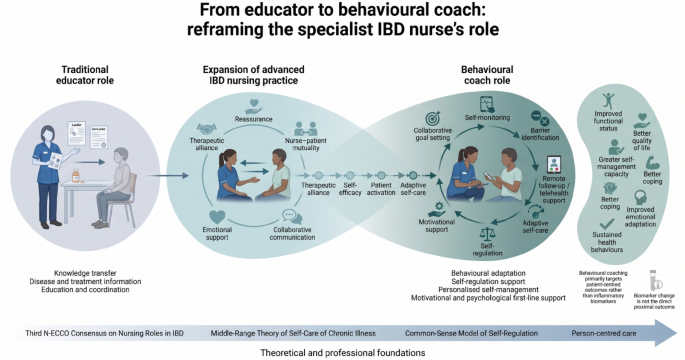
A recent invited commentary discusses a pilot randomized trial of a nurse-delivered behavioral coaching/self-management program for adults with active IBD symptoms.
The intervention (eight-module, nurse-led program) was feasible, highly acceptable, and associated with improvements in functional impairment, patient activation, and self-regulation, while inflammatory marker (fecal calprotectin) and symptom severity were largely unchanged.
The authors position behavioral coaching as an expanded role for specialist IBD nurses aligned with the Third N-ECCO Consensus, and note methodological limits of the pilot (baseline imbalances, no attention-control, limited generalizability).
This piece is a commentary summarizing and contextualizing a small pilot randomized trial. The trial had methodological limitations (baseline imbalance, no attention-matched control, predominantly white English-speaking academic sample) so findings are preliminary.
The article frames coaching as a promising model that requires larger, attention-controlled, and more diverse trials before broad implementation.
Review the original publication for the complete reporting, methods, and context.
This Cure8 brief is based on source text from the linked article. Cure8 is informational only and is not a substitute for professional medical advice, diagnosis, or treatment.
Stigma is common in people with IBD and can worsen isolation, anxiety, and quality of life. Practical coping strategies and support resources can help reduce emotional burden and improve daily functioning.
People with Crohn’s and other IBDs have higher rates of depression and suicidal thoughts; recognizing risk factors and warning signs can help you seek timely support. The article gives practical steps you can take with...
Energy depletion, poor sleep, and stress are common in Crohn’s disease and can worsen quality of life. Practical self-care strategies may help patients feel better day-to-day when used alongside medical treatment.

