ClinicalTrials.gov
Cure8 trial brief
E-nose in Evaluating Colitis Activity
Tests and monitoring
Fecal calprotectin
Intestinal ultrasound
Clinical Trial Phase 1
Inflammatory bowel disease
Crohn's disease
Cure8 trial brief
A rapid stool molecular test could offer a noninvasive way to measure inflammation, predict relapse, and monitor treatment response in children with IBD—areas where current tests have limitations.
Pediatric patients with IBD, parents/caregivers, pediatric gastroenterologists, and researchers working on noninvasive biomarkers or stool diagnostics.
This is a not-yet-recruiting observational study at Tampere University Hospital enrolling children scheduled for colonoscopy. Stool samples collected for routine fecal calprotectin testing will also be analyzed by DMS to generate a ‘‘fecal molecular profile’’ (FMP).
Researchers will compare FMPs between children with and without IBD, between active disease and remission, and over time during up to 5 years of follow-up to see if profiles predict relapse or treatment escalation.
The study focuses on collecting stool and routine clinical data (symptom scores, blood tests, intestinal ultrasound, elastography, and clinically indicated biopsies) rather than adding invasive procedures. If successful, the approach could become a rapid, noninvasive adjunct to existing monitoring tools.
This is an observational trial protocol (not yet recruiting) testing a technology (DMS) for fecal molecular profiling alongside routine tests; findings would need further validation before clinical use.
Review the original publication for the complete reporting, methods, and context.
This Cure8 brief is based on source text from the linked article. Cure8 is informational only and is not a substitute for professional medical advice, diagnosis, or treatment.
Noninvasive tools that reliably detect postoperative recurrence could reduce the need for frequent invasive endoscopy and help target earlier intervention for people with Crohn's disease after surgery.
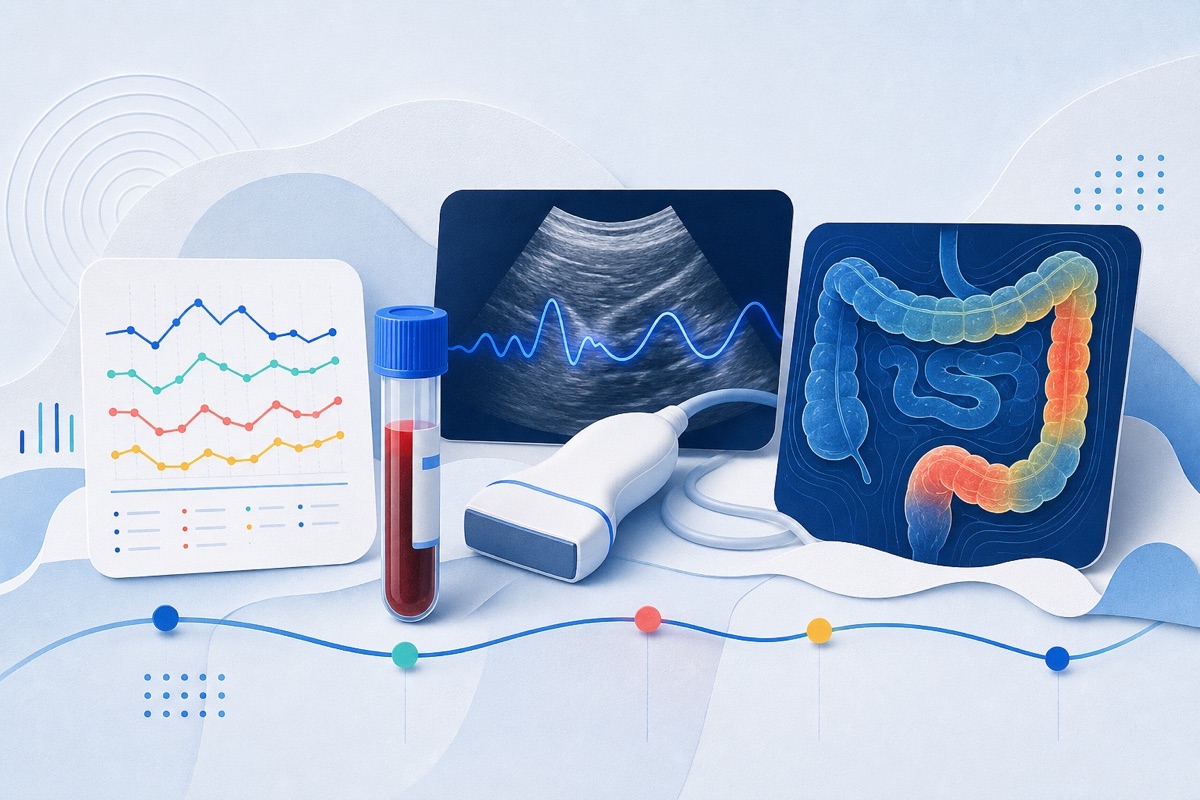
Noninvasive tests at 3 months after ileocecal resection (ultrasound + fecal calprotectin) may identify patients at high risk of endoscopic recurrence by 6 months. That could help avoid or target postoperative endoscopy...
This study suggests using both faecal calprotectin and intestinal ultrasound together can better identify patients who reach deeper, transmural healing — and those patients had lower risk of bowel-damage progression....