Fear of movement (kinesiophobia) can reduce physical activity and worsen quality of life for people with IBD.
This study suggests patients' ability to do basic daily tasks and their level of fatigue are stronger correlates of kinesiophobia than disease activity, which could help shape more individualized activity support.
Who Should Pay Attention
Adult patients with IBD, gastroenterology clinicians, IBD nurses, physical therapists and rehabilitation specialists, and researchers studying activity, fatigue, and quality of life in IBD.
Study Snapshot
Story typeResearch paper
Evidence typeResearch paper
Source depthJournal abstract
What To Know
This cross-sectional study of 249 IBD patients used validated questionnaires: the Tampa Scale for Kinesiophobia-17 for fear of movement, the Barthel Index for independence in basic activities of daily living, and the Multidimensional Fatigue Inventory for fatigue.
Over half of participants scored at or above a commonly used threshold for elevated kinesiophobia. Across adjusted models and sensitivity analyses, lower independence in basic activities of daily living and greater fatigue showed consistent associations with higher kinesiophobia.
Disease activity showed a less consistent relationship and varied by analytic approach. Female sex and insurance type were also associated in some analyses.
How this might be used These results suggest that when IBD clinicians assess barriers to physical activity, it may help to evaluate patients' everyday functional independence and fatigue levels — not just disease activity — and consider targeted interventions (rehabilitation, fatigue management, graded activity) to address movement-related concerns.
Keep In Mind
Cross-sectional design from a single tertiary hospital in Shanghai means the study shows associations, not causation, and findings may not generalize to all settings. The provided content is based on the article abstract and summary; Cure8 did not review additional data beyond the extracted full-text.
Source Details
Review the original publication for the complete reporting, methods, and context.
Funding disclosed by the source: National Natural Science Foundation of China
This Cure8 brief is based on source text from the linked article. Cure8 is informational only and is not a substitute for professional medical advice, diagnosis, or treatment.
Fear of movement was more common and more severe in people with ulcerative colitis in this study. Addressing kinesiophobia could help increase physical activity and improve function and quality of life for people with...
IBD patients often face high psychological burden; knowing whether MBCT is acceptable and feasible helps patients and clinicians weigh it as a support option. Practical barriers (time, fatigue, disease activity) and...
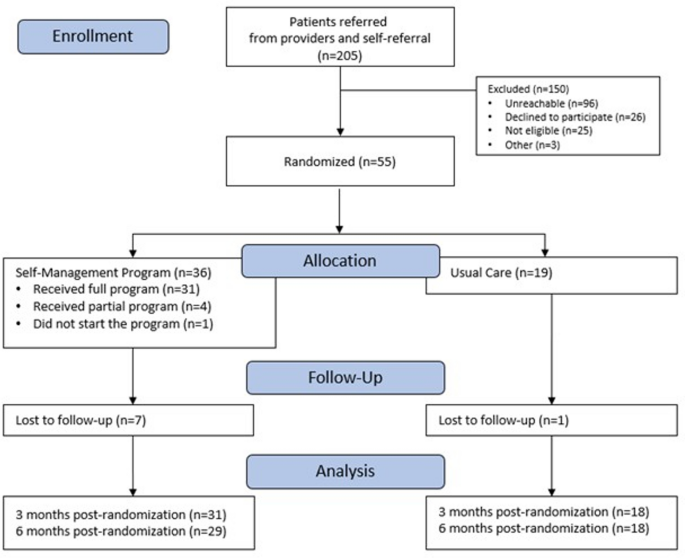
Self‑management programs delivered by nurses may help people with IBD improve daily functioning, confidence in managing their condition, and quality of life even when inflammation markers don’t change. That matters...