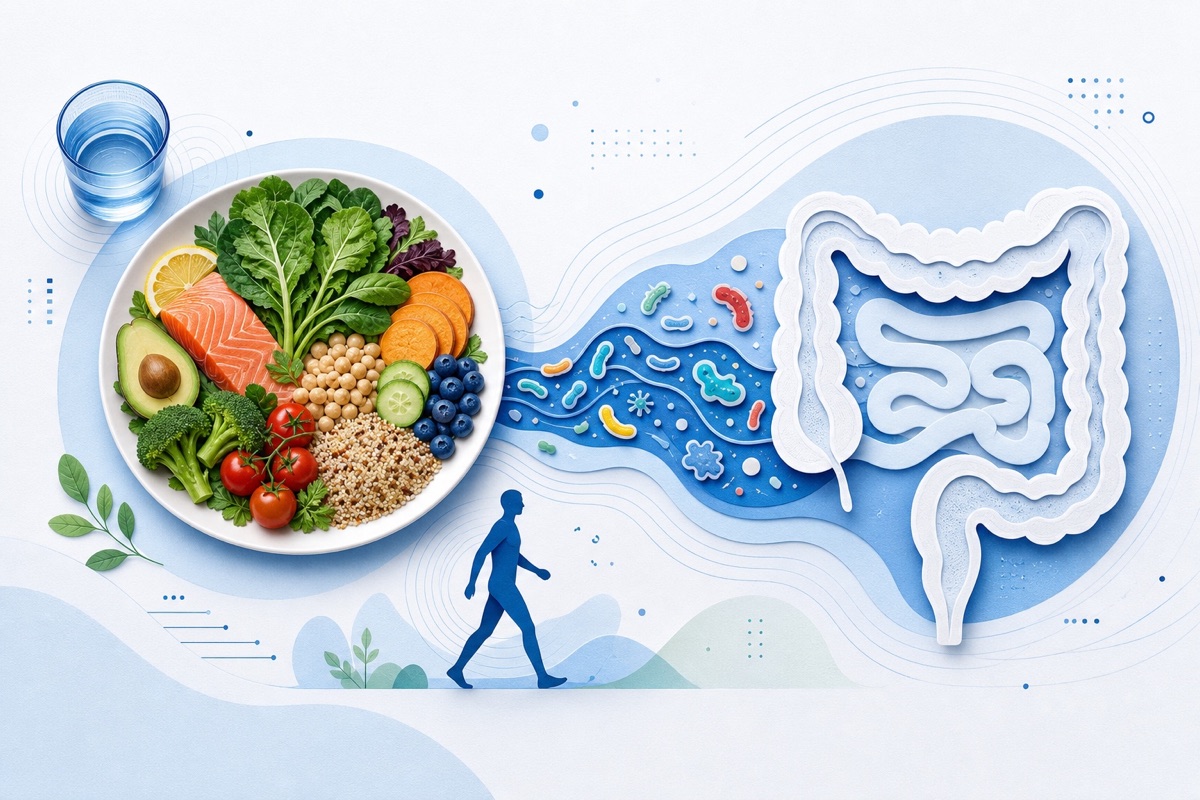
Dietary therapy (CDED + PEN) was associated with longer remission when families adhered well; since adherence varies, support from a dietitian matters for keeping children in remission.
Who Should Pay Attention
Pediatric patients with Crohn’s disease, parents and caregivers considering dietary therapy, pediatric gastroenterologists, and dietitians working with IBD families.
Study Snapshot
Story typeResearch paper
Evidence typeResearch paper
Source depthJournal abstract
What To Know
This study reports on a single-centre retrospective observational cohort of paediatric patients (age 6–17) with mild–moderate Crohn’s disease treated with the Crohn’s Disease Exclusion Diet (CDED) plus partial enteral nutrition (PEN).
Researchers tracked clinical remission and time to relapse over follow-up and compared outcomes by degree of dietary adherence. The authors found longer remission duration among patients with better adherence; suboptimal adherence was associated with earlier relapse.
The report highlights the role of dietitian support for monitoring adherence and nutritional status and suggests CDED + PEN can be considered as a longer-term management option in motivated families. This is an observational, retrospective study from a single centre with a modest sample size and 12-month follow-up available for a subset of participants.
The abstract provides summary results but does not replace full peer-reviewed details about confounding, adherence measurement methods, or disease severity stratification.
If you’re considering dietary therapy for a child with Crohn’s, discuss options, monitoring plans (including faecal calprotectin and blood tests), and dietitian support with your care team rather than changing treatment based on this abstract alone.
Keep In Mind
This is a retrospective, single-centre observational study reported as an abstract/full-text on Europe PMC. Results are suggestive but limited by study design, sample size, and potential selection/confounding factors. The abstract does not provide full protocol details or randomized comparison.
Source Details
Review the original publication for the complete reporting, methods, and context.
This Cure8 brief is based on source text from the linked article. Cure8 is informational only and is not a substitute for professional medical advice, diagnosis, or treatment.
Diet-based induction options matter for children because EEN can be hard to tolerate. This study finds CDED (with partial enteral nutrition) performs similarly to EEN for inducing remission and mucosal healing in...
This study suggests that higher intake of specific fibers (beta‑glucan and inulin) may be linked to lower Crohn’s risk in people with a family history, and it connects those fibers to biomarkers of inflammation, barrier...
This study suggests a Crohn disease exclusion diet (with partial enteral nutrition) helped some pediatric patients reach steroid-free clinical remission and lowered fecal calprotectin, measures important for disease...