NIH RePORTER
Cure8 regulatory brief
Cure8 regulatory brief
This project seeks to clarify how gut microbes and diet drive CD4+ T cell responses—mechanisms that are central to intestinal tolerance and to diseases like IBD. A better map of TCR–antigen pairs and how tolerance breaks down could inform future diagnostics or immune-directed therapies.
Researchers studying IBD, mucosal immunology, microbiome science, and single-cell genomics; clinicians interested in immune mechanisms of IBD; and translational scientists developing antigen-targeted or tolerance-restoring therapies.
NIH Reporter summarizes a funded research project from Stanford that will map how microbiota and dietary antigens shape CD4+ T cell fate in the gut.
The team uses a 116-strain human-derived microbiota in gnotobiotic mice and a high-throughput single-cell platform to clone and test ~1,000 native T cell receptors (TCRs), aiming to define which antigens drive regulatory (Treg) versus effector CD4+ lineages.
The project has two main aims: (1) systematically define specificity across major intestinal CD4+ populations to test whether Treg induction is the common response to foreign antigens versus the idea that specific species preferentially induce effectors; and (2) examine how T cell phenotype and specificity change during acute and chronic intestinal inflammation.
The work will produce an atlas of TCR–antigen pairs and a platform useful for studying TCR specificity in complex antigenic settings. This brief is grounded in the NIH project abstract provided on the Reporter site and does not reflect independent review of unpublished data or full study results.
this is a funded research project (NIH Reporter project record) describing planned and ongoing work and preliminary results; it is not a completed clinical trial or peer-reviewed paper. Findings described are from the project abstract and preliminary data—not final validated clinical results.
Review the original publication for the complete reporting, methods, and context.
Funding disclosed by the source: National Institute of Allergy and Infectious Diseases - K99AI201798 - $166,425
This Cure8 brief is based on source text from the linked article. Cure8 is informational only and is not a substitute for professional medical advice, diagnosis, or treatment.
New, non-invasive biomarkers and AI-driven multi-omic approaches could make diagnosis and treatment of IBD more precise, helping patients avoid invasive tests and improving chances of choosing effective therapies sooner.
Understanding gene–microbe interactions that drive site-specific disease in very early-onset Crohn’s could reveal why some children develop ileal versus colonic disease and suggest new approaches to prevention or...
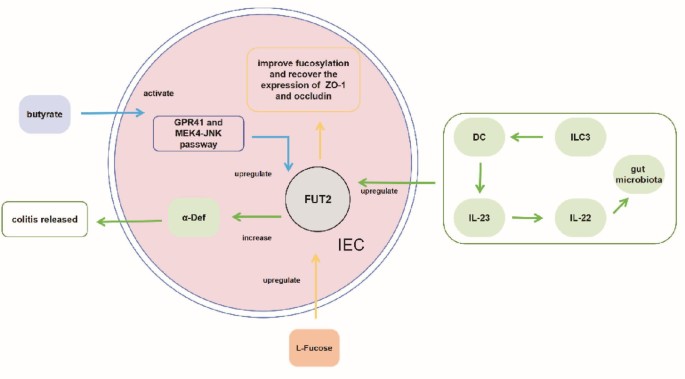
FUT2-mediated fucosylation shapes gut glycans and the microbiome, mechanisms relevant to inflammation and mucosal barrier function in IBD. Understanding these pathways could point to future biomarkers or therapeutic...