Early, effective treatment may lower the risk of crohn’s progression to structural bowel damage (strictures, fistula) and improve long-term outcomes; defining who truly has “early” disease could help target such strategies.
Who Should Pay Attention
Clinicians treating IBD, researchers studying disease progression or biomarkers, patients with newly diagnosed Crohn’s disease, and people considering early escalation to biologics or other advanced therapies.
Study Snapshot
Story typeResearch paper
Evidence typeResearch paper
Source depthJournal abstract
What To Know
This is a narrative review summarizing evidence that earlier, more effective treatment in Crohn’s disease can reduce progression to transmural bowel damage (strictures and fistulae) and improve long-term outcomes.
The review highlights randomized trials such as PROFILE and notes benefits across multiple advanced therapy classes, suggesting treatment responsiveness declines with longer disease duration.
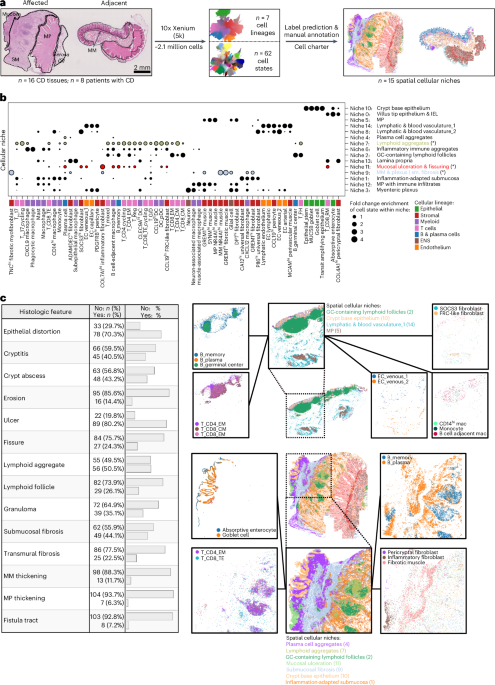
The authors discuss translational data showing transmural inflammation can evolve from reversible inflammation to irreversible fibrosis over time, and they flag emerging evidence that immune and mucosal changes may be present years before symptoms appear.
They emphasize that disease duration alone is a blunt marker and call for better biological definitions of “early” disease and improved patient selection for early or top-down strategies.
This brief is based on the article abstract provided by the journal (structured content depth: abstract) and does not represent a full independent review of all cited studies.
Keep In Mind
This article is a review (abstract available). While randomized trials and translational studies are cited, the review notes disease duration is an imperfect marker and calls for refined biological definitions and better patient selection. It does not provide new trial results itself.
Source Details
Review the original publication for the complete reporting, methods, and context.
Research paperEvidence type derived from source or registry metadata.
PublicationCurrent gastroenterology reports
AuthorsBruno César da Silva, Matheus Freitas Cardoso de Azevedo, A Hillary Steinhart +1 more
InstitutionDivision of Gastroenterology & Hepatology, Temerty Faculty of Medicine, University of Toronto, Toronto, ON, Canada. bruno.cesardasilva@sinaihealth.ca.
Conflict statement: Declarations. Competing interests: Bruno César da Silva has served as a speaker for Johnson & Johnson, AbbVie, and Takeda. Matheus Freitas Cardoso de Azevedo has received fees for serving as a speaker and/or advisory board member for AbbVie, Janssen, and Takeda. A. Hillary Steinhart has served on advisory boards for AbbVie, Amgen, BioJAMP, BMS, Celltrion, Fresenius Kabi, Janssen, Lilly, Organon, OSE Immunotherapeutics, Pendopharm, Pfizer, and Sandoz; has served as a speaker for AbbVie, Janssen, Organon, Pfizer, and Takeda; has served as an investigator for AbbVie, Celgene/BMS, Genentech/Roche, Gilead, Janssen, Pfizer, Spyre Therapeutics, and Takeda; and has served as a consultant for Greenshield/NKS Pharmacy. Stephen B. Hanauer has received financial research, speaking, review, and/or consulting support from AbbVie, Allergan, Amgen, Arena, AstraZeneca, Boehringer Ingelheim, Bristol Myers Squibb, Celgene, Cosmos, Catalys Pacific, Covance, Genentech, GSK, Janssen, Lilly, Merck, Novartis, Pfizer, Progenity, Prometheus, Receptos, Salix, Samsung Bioepis, Seres Therapeutics, Sorriso, Takeda, TLL Pharma, UCB Pharma, VHsquared, Gossamer, and Protagonist. He also serves as Editor-in-Chief of Current Gastroenterology Reports. Declaration of AI-Assisted Tools: Grammarly add-in for Microsoft Word was used to check grammar and clarity during the preparation of this manuscript. The author(s) thoroughly reviewed and edited the content as needed, taking full responsibility for the final version of the publication. No AI tools were used for content generation.
This Cure8 brief is based on source text from the linked article. Cure8 is informational only and is not a substitute for professional medical advice, diagnosis, or treatment.
The paper maps distinct stromal cell states tied to inflamed versus fibrotic tissue niches in Crohn’s disease and shows that these states have different chromatin configurations and drug-modifiable properties — pointing...
AI models that combine CTE/MRE imaging with clinical and molecular data could improve objective classification of small-bowel Crohn's disease and help predict which patients are likely to respond to medical therapy...
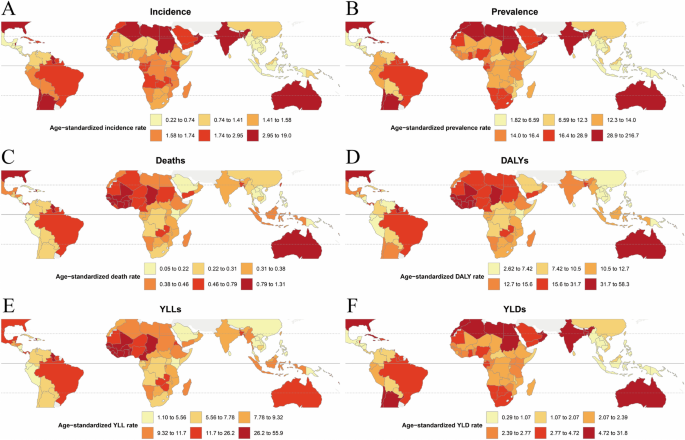
The work links climate and sociodemographic context to IBD burden in tropical regions, which can influence diagnostic recognition, resource needs, and research priorities for communities where IBD is rising.