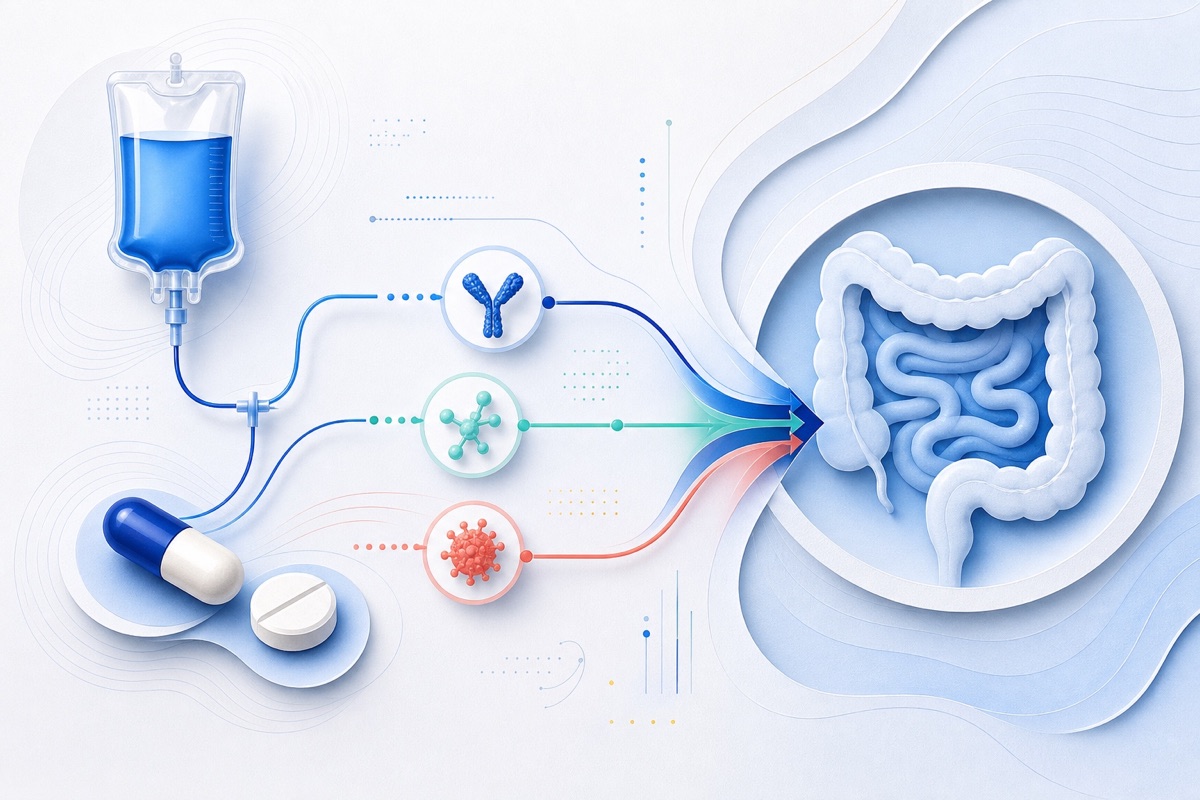
Trends in treatments for children with IBD can affect hospitalization and surgical needs. Noting rising use of biologics (infliximab) alongside fewer hospitalizations may be important for families and clinicians tracking changes in care and outcomes over time.
Who Should Pay Attention
Pediatric patients with IBD and their parents/caregivers, pediatric gastroenterologists, health system planners, and researchers studying treatment impacts on outcomes.
Study Snapshot
Story typeResearch paper
Evidence typeResearch paper
Source depthJournal abstract
What To Know
The research used electronic dispensation records and regional health data to track medication exposure and health outcomes across children under 18. Advanced therapies increased from about 27% to 42% of treated patients over the period, while hospitalizations fell from ~205 to ~150 per 1,000 patient-years.
The study found that immunosuppressant (conventional immunomodulator) use rose early then declined back to near-baseline by study end, corticosteroid and salicylate (mesalamine) dispensations increased modestly, and infliximab remained the leading biologic.
These are population-level correlations rather than proof that increased advanced therapy use caused fewer hospitalizations; the authors report correlation analyses and temporal associations.
Keep In Mind
This is an observational, population-based cohort using dispensation and administrative data from Catalonia; findings describe temporal associations at the population level and do not establish causality. Details such as disease severity, indication for each therapy, or individual patient-level outcomes beyond hospitalizations and surgeries are not provided in the abstract.
Source Details
Review the original publication for the complete reporting, methods, and context.
This Cure8 brief is based on source text from the linked article. Cure8 is informational only and is not a substitute for professional medical advice, diagnosis, or treatment.
VEOIBD often has a strong genetic component and different clinical needs than adult IBD; this study shows genetic findings and treatment challenges in a Middle East pediatric center, which may affect diagnosis and access...
Because it describes a severe new Crohn’s disease case temporally linked to COVID‑19, patients and clinicians should be aware that persistent or worsening GI symptoms after SARS‑CoV‑2 infection may merit investigation;...