If disease activity hurts quality of life partly through low self-efficacy and (for UC) psychological distress, then boosting self-management confidence and identifying anxiety/depression could help improve patient-reported outcomes.
Who Should Pay Attention
Adults with ulcerative colitis or Crohn's disease, IBD nurses and clinicians involved in self-management education, and researchers studying psychosocial interventions or patient-reported outcomes.
Study Snapshot
Story typeResearch paper
Evidence typeResearch paper
Source depthJournal abstract
What To Know
The authors found that higher disease activity was linked to worse quality of life in both UC and Crohn's. Self-efficacy (confidence in managing IBD) acted as a mediator for both conditions, suggesting that patients' belief in their ability to manage the disease affects how disease activity translates to quality of life.
Psychological distress (measured as anxiety and depression) mediated the relationship only in ulcerative colitis, not Crohn's disease.
When the researchers replaced clinical activity scores with objective inflammation markers (CRP and fecal calprotectin), the indirect effects through self-efficacy and distress were no longer significant — implying the pathways reported are more tied to subjective symptom perception than to objective inflammation.
Implications noted by the authors focus on nursing practice: supporting self-management to boost self-efficacy for all IBD patients and screening for anxiety/depression particularly in patients with ulcerative colitis.
Keep In Mind
This is a cross-sectional study of hospitalized patients and used clinical activity indices and patient questionnaires; cross-sectional design cannot prove causation. The authors report that objective inflammatory markers (CRP, fecal calprotectin) did not support the same mediation, so findings emphasize subjective symptom pathways.
Structured content depth: abstract — the brief is grounded in the source-provided abstract.
Source Details
Review the original publication for the complete reporting, methods, and context.
This Cure8 brief is based on source text from the linked article. Cure8 is informational only and is not a substitute for professional medical advice, diagnosis, or treatment.
The study suggests anxiety, depression, poor sleep, and low exercise are linked with higher risk of IBD flares. That means mental health and lifestyle may be important parts of managing IBD alongside medical care.
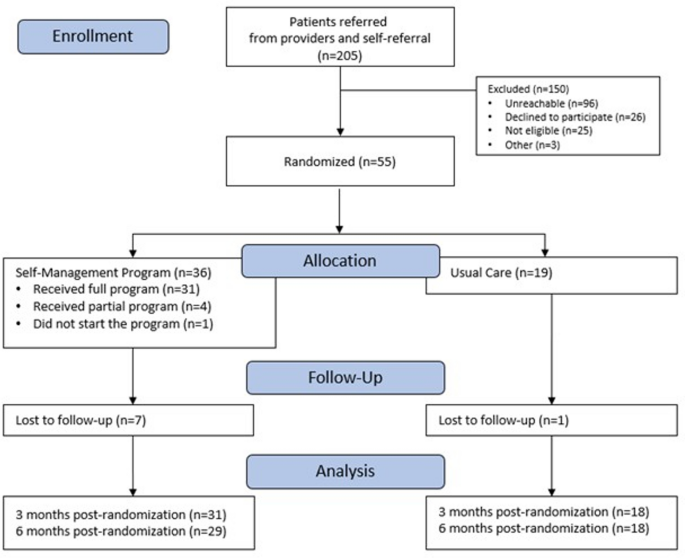
Self‑management programs delivered by nurses may help people with IBD improve daily functioning, confidence in managing their condition, and quality of life even when inflammation markers don’t change. That matters...
Persistent fatigue is a common disabling symptom in IBD even during remission; a structured adapted physical activity program could offer a non-drug way to improve daily functioning if the trial shows benefit.