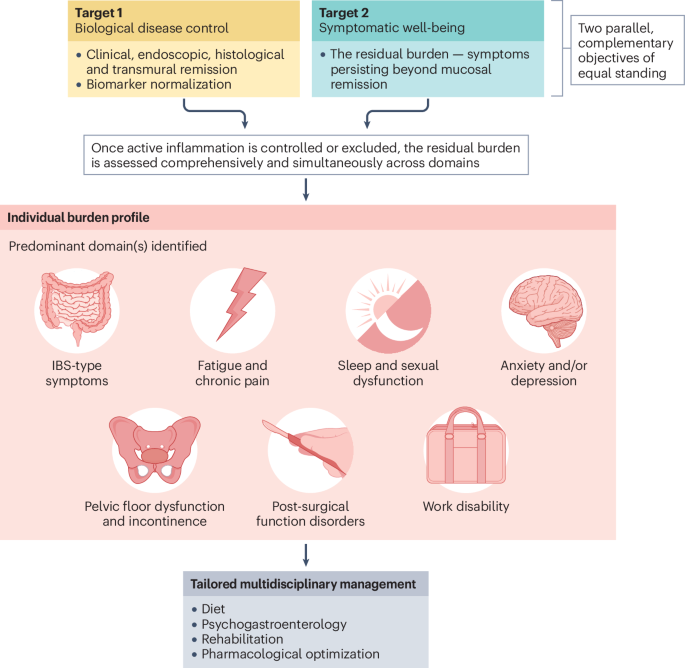
Many people with IBD remain symptomatic even when tests show little or no inflammation; recognising these persistent symptoms as a separate treatment target could improve quality of life. This reframes care to address pain, fatigue, bowel symptoms, and mental health alongside inflammatory control.
Who Should Pay Attention
People with IBD (Crohn’s disease or ulcerative colitis) who have ongoing symptoms despite remission, caregivers, gastroenterologists, IBD nurses, and researchers focused on symptom management and patient-reported outcomes.
Study Snapshot
Story typeResearch paper
Evidence typeResearch paper
Source depthMetadata only
What To Know
The piece summarizes evidence that symptoms persisting despite inflammatory remission are common and can be misattributed to ongoing inflammation.
It highlights the need for assessment tools and care pathways that separate inflammatory activity (biomarkers, endoscopy) from functional and psychosocial contributors, and it points to recent IOIBD/Rome guidance and real-world surveys addressing evaluation and management.
It is a narrative/review-style article drawing on consensus statements and observational studies rather than reporting new trial results. Readers can expect discussion of prevalence data, quality-of-life impacts, and recommendations for multidisciplinary management rather than novel experimental therapies.
Keep In Mind
This is a review/perspective in a high-quality journal summarizing existing studies and consensus guidance (STRIDE-II, IOIBD/Rome recommendations). It does not present new randomized trial data.
Management recommendations will depend on individual assessment to distinguish active inflammation (endoscopy, fecal calprotectin, CRP) from functional, psychological, or other contributors.
Source Details
Review the original publication for the complete reporting, methods, and context.
This Cure8 brief is based on source text from the linked article. Cure8 is informational only and is not a substitute for professional medical advice, diagnosis, or treatment.
Chronic pain affects many people with IBD even after inflammation is controlled, often limiting daily activities and worsening mental health. Understanding that pain can persist without active inflammation highlights the...
Fatigue affects many people with Crohn’s even when inflammation looks controlled; recognizing it as a distinct target could change clinic assessments and treatment priorities.
Fatigue is a common, often persistent symptom in Crohn’s disease even during remission. This study suggests brain structure differences may be linked to fatigue when inflammation is low, pointing to potential...