Symptoms and disease activity

Depression

Depression articles covering mental health, quality of life, coping, support, and daily functioning for people affected by IBD. Symptom context emphasizes flares, remission, daily disease activity, and patient-relevant warning signs.

20 articles

Psychological Functioning and Parent-Child Mental Health Interrelations in Pediatric Gastrointestinal Autoimmune Disorders.
Clinical child psychology and psychiatry

Psychological Functioning and Parent-Child Mental Health Interrelations in Pediatric Gastrointestinal Autoimmune Disorders.

Emotional functioning and parent-child mental health are linked with anxiety, depression, and quality of life in children with IBD and other GI autoimmune disorders. Identifying these issues may help families get...

Read Summary
Beyond inflammation control: Rethinking fatigue as a multidimensional target in Crohn’s disease management
World Journal of Gastroenterology

Beyond inflammation control: Rethinking fatigue as a multidimensional target in Crohn’s disease management

Fatigue markedly affects quality of life for people with Crohn’s and often remains after inflammation is controlled. Recognizing multiple drivers — psychological distress and immune/hematologic signals — could change how...

Read Summary
High Prevalence of Fatigue is Linked to Depression in Inflammatory Bowel Disease.
Gastroenterology nursing : the official journal of the Society of Gastroenterology Nurses and Associates

High Prevalence of Fatigue is Linked to Depression in Inflammatory Bowel Disease.

Fatigue is extremely common in IBD and is closely linked to depression—recognizing and addressing mental-health issues may be important for patients who report significant fatigue.

Read Summary
Psychological Pathways From Disease Activity to Quality of Life in Ulcerative Colitis and Crohn's Disease: A Cross‐Sectional Serial Mediation Study
Journal of Clinical Nursing

Psychological Pathways From Disease Activity to Quality of Life in Ulcerative Colitis and Crohn's Disease: A Cross‐Sectional Serial Mediation Study

If disease activity hurts quality of life partly through low self-efficacy and (for UC) psychological distress, then boosting self-management confidence and identifying anxiety/depression could help improve...

Read Summary
Leveraging electronic health records for subtype-dependent directionality in depression and gastrointestinal disease: a retrospective cohort study.
Journal of psychosomatic research

Leveraging electronic health records for subtype-dependent directionality in depression and gastrointestinal disease: a retrospective cohort study.

Depression and GI diseases often co-occur; knowing which tends to appear first — and that this varies by subtype — can help clinicians prioritize screening and integrated care.

Read Summary
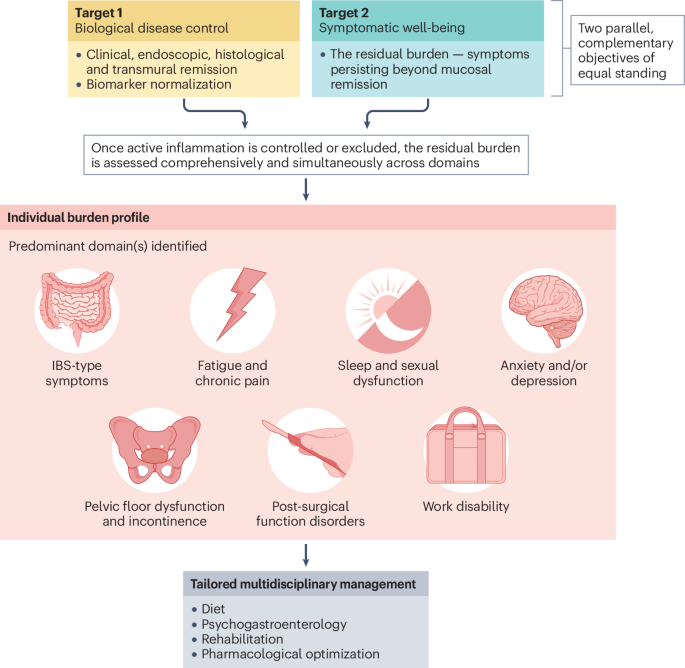
Beyond inflammation: the residual burden as the next target in inflammatory bowel disease
Nature Reviews Gastroenterology & Hepatology

Beyond inflammation: the residual burden as the next target in inflammatory bowel disease

Many people with IBD remain symptomatic even when tests show little or no inflammation; recognising these persistent symptoms as a separate treatment target could improve quality of life. This reframes care to address...

Read Summary
High prevalence of fatigue in patients with inflammatory bowel disease: association with physical activity intensity and sedentary behavior
Frontiers in Public Health

High prevalence of fatigue in patients with inflammatory bowel disease: association with physical activity intensity and sedentary behavior

Fatigue is very common in people with IBD—even when the disease is in remission—and is linked with lower physical activity, more sitting time, and with anxiety/depression. Understanding these links may help patients and...

Read Summary
Association between Ulcerative Colitis, mental health, and Quality of Life in a Pakistani cohort: A cross-sectional analysis
PLOS One

Association between Ulcerative Colitis, mental health, and Quality of Life in a Pakistani cohort: A cross-sectional analysis

The study links worse UC activity with higher rates of anxiety and depression and with poorer quality of life among patients in Pakistan, suggesting mental-health screening could be relevant to overall disease...

Read Summary
Efficacy of psychotherapies in individuals with inflammatory bowel disease: A systematic review and meta-analysis
World Journal of Psychiatry

Efficacy of psychotherapies in individuals with inflammatory bowel disease: A systematic review and meta-analysis

The review shows psychotherapies can improve quality of life and reduce anxiety and depression in people with IBD, outcomes that matter for daily functioning even when intestinal symptoms may not change.

Read Summary
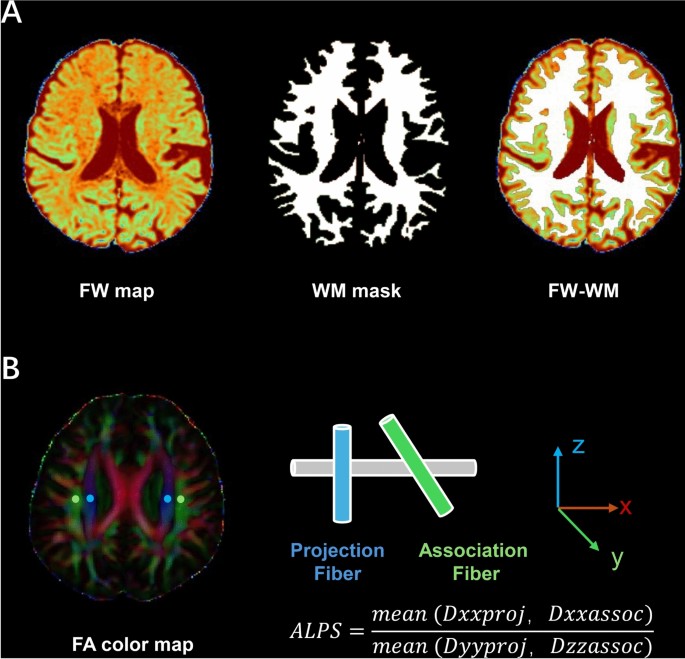
Multimodal MRI reveals glymphatic system activity associated with systemic inflammation and neuropsychiatric symptoms in Crohn’s disease
Journal of Gastroenterology

Multimodal MRI reveals glymphatic system activity associated with systemic inflammation and neuropsychiatric symptoms in Crohn’s disease

This study suggests brain glymphatic function — a fluid-clearance system — may be altered in people with Crohn’s disease and could relate to inflammation and common neuropsychiatric symptoms like fatigue, anxiety,...

Read Summary
Erythritol Exacerbates DSS-Induced Colitis and Influences Behavioral Responses in Mice Through Gut Microbiota and Metabolic Alterations
Microorganisms

Erythritol Exacerbates DSS-Induced Colitis and Influences Behavioral Responses in Mice Through Gut Microbiota and Metabolic Alterations

This study suggests erythritol — a common non-nutritive sweetener — may worsen experimental colitis and depression-like behavior in mice via microbiome and metabolic changes, raising questions about how ultra-processed...

Read Summary
Hierarchical correlates of sexual dysfunction in inflammatory bowel disease: Psychological burden outweighs disease activity and sarcopenia.
Journal of psychosomatic research

Hierarchical correlates of sexual dysfunction in inflammatory bowel disease: Psychological burden outweighs disease activity and sarcopenia.

Sexual dysfunction is common in IBD and—according to this study—appears more strongly linked to psychological and demographic factors than to disease activity or muscle loss. Recognizing and treating mental-health issues...

Read Summary