ama-assn.org
Cure8 news brief
Cure8 news brief
The article helps patients and caregivers recognize common symptoms and complications, understand causes and risk factors, and see why ongoing specialist care and lifestyle measures matter for long-term management.
People with Crohn's disease, newly diagnosed patients, parents/caregivers of pediatric patients, and clinicians looking for a patient-facing overview.
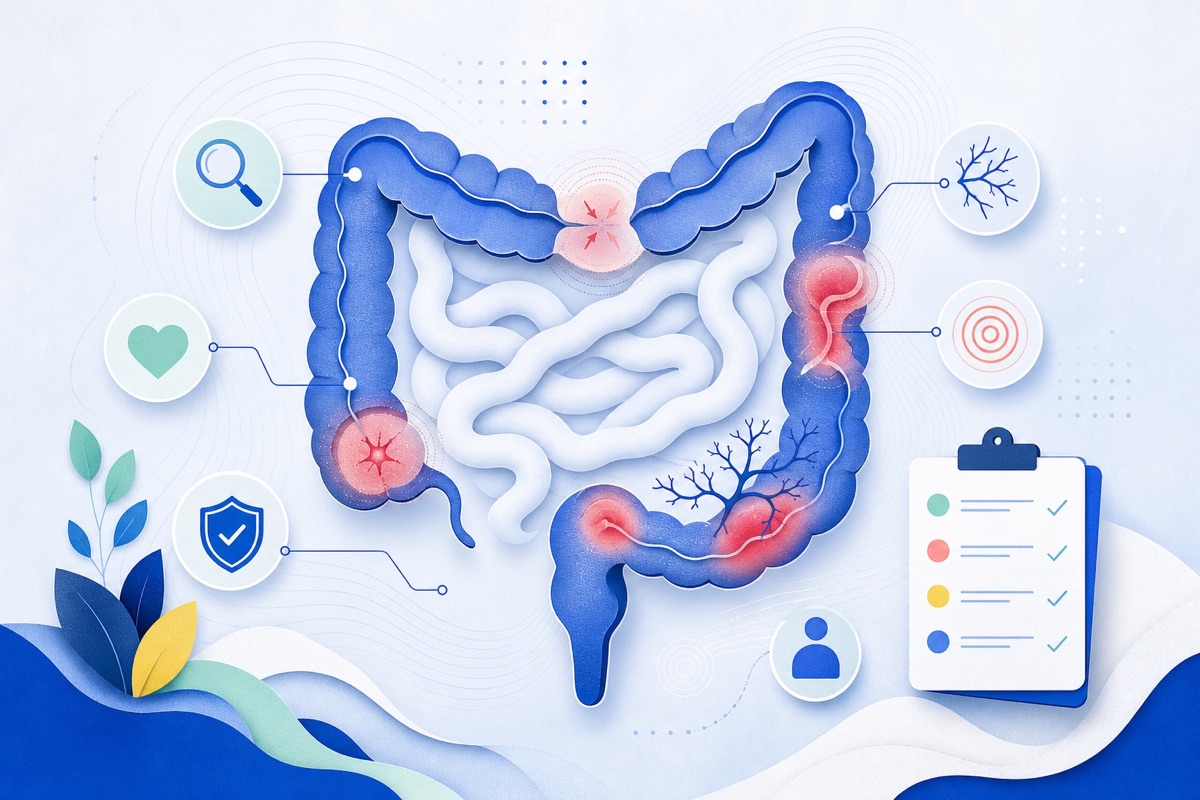
The piece summarizes typical symptoms (diarrhea, abdominal pain, fatigue, weight loss, blood in stool) and explains that Crohn’s can affect any part of the GI tract and cause deeper intestinal injury than ulcerative colitis.
It notes extra-intestinal manifestations (joints, skin, eyes, liver), common complications (stricturing, fistula, abscess), and longer-term risks such as anemia and reduced bone density. The article also highlights likely contributors (genetics, microbiome, environmental factors) and lifestyle risks like smoking and processed-food intake.
This is a clinician-authored patient-education overview from the AMA summarizing established knowledge and practical management points; it does not present new trial data.
Review the original publication for the complete reporting, methods, and context.
This Cure8 brief is based on source text from the linked article. Cure8 is informational only and is not a substitute for professional medical advice, diagnosis, or treatment.
Knowing the type of Crohn’s disease helps explain where symptoms come from and what treatments or procedures might be considered. The article links specific symptoms and complications to each anatomical pattern of...
The article outlines complications that can come from Crohn’s disease, many of which may need tests, medication, or surgery. Knowing these helps you recognize warning signs and talk with your care team about prevention...
Stomach cramps are a common and often painful part of Crohn’s disease that can signal active inflammation or complications. Understanding causes and management options helps people with Crohn’s recognize when to seek...