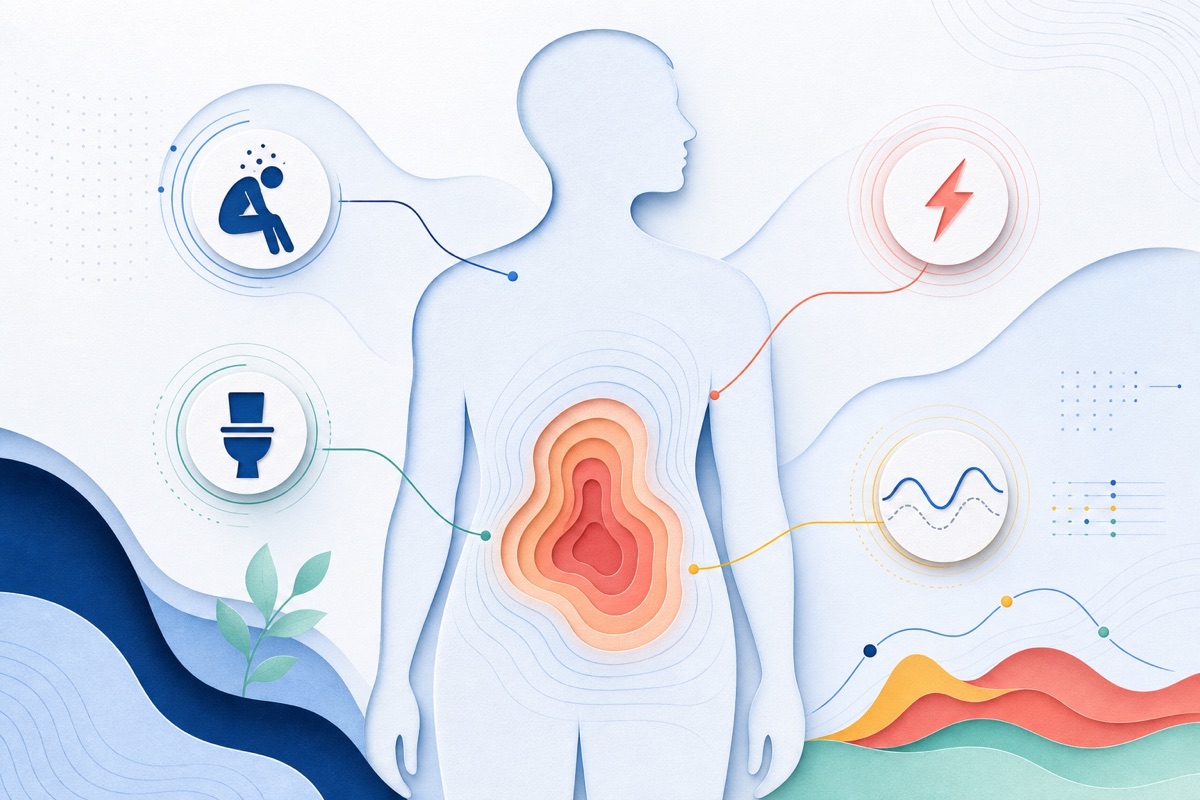
Ileal pouch disorders are common after IPAA surgery and cause symptoms many patients will experience. Early recognition and initial treatment by primary care can speed symptom relief and identify patients who need specialist care.
Who Should Pay Attention
Primary care clinicians, gastroenterologists, colorectal surgeons, adults with IPAA (post-colectomy patients), and caregivers of these patients.
Study Snapshot
Story typeResearch paper
Evidence typeResearch paper
Source depthJournal abstract
What To Know
This Mayo Clinic Proceedings review summarizes common inflammatory and structural pouch disorders after IPAA, such as acute and chronic pouchitis, cuffitis, Crohn-like disease of the pouch, leaks, strictures, and fistulas.
Symptoms are often nonspecific (increased stool frequency, urgency, pelvic or abdominal discomfort, tenesmus, rectal bleeding, difficulty evacuating). For mild suspected pouchitis without alarm features the article notes empirical oral antibiotics with close follow-up is reasonable; topical mesalamine can be considered for suspected cuffitis.
The review emphasizes that persistent or recurrent symptoms, suspected Crohn-like disease of the pouch, or signs suggesting structural complications warrant prompt specialist referral.
Keep In Mind
This record is an abstract-level review in a clinical journal. It summarizes diagnostic categories and general management principles but is not a detailed guideline; recommendations should be individualized and specialist referral is recommended for recurrent, refractory, or structural problems.
Source Details
Review the original publication for the complete reporting, methods, and context.
This Cure8 brief is based on source text from the linked article. Cure8 is informational only and is not a substitute for professional medical advice, diagnosis, or treatment.
Understanding the differences between Crohn’s and ulcerative colitis helps patients and caregivers recognize likely symptom patterns, know which tests and treatments are commonly used, and when to seek specialist care....
If your Crohn’s gets worse, your care plan may change — from new medicines to nutritional support or surgery — and this article summarizes common steps doctors take to prevent complications and control inflammation.
Population estimates help patients understand how common IBD is and show that ulcerative colitis is more common than Crohn’s in this survey. Knowing prevalence and who is more likely to be diagnosed can help people feel...