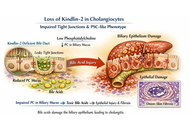
PSC is closely linked with IBD (especially ulcerative colitis); understanding mechanisms that damage bile ducts could point to new future therapies or biomarkers.
This study suggests phosphatidylcholine handling and cholangiocyte junctions may be relevant, which could be of interest to patients and clinicians following PSC research.
Who Should Pay Attention
Clinicians and researchers focused on hepatobiliary disease and gut–liver interactions; patients with PSC and those with IBD (particularly ulcerative colitis) who follow research developments.
Study Snapshot
Story typeResearch paper
Evidence typeResearch paper
Source depthJournal abstract
What To Know
The study is preclinical and uses a biliary-specific kindlin-2 knockout mouse to explore mechanisms that might underlie PSC and its association with inflammatory bowel disease (especially ulcerative colitis).
The main points are mechanistic: PC is important for membrane and junctional integrity, loss of kindlin-2 impairs cholangiocyte junctions and produces PSC-like fibrosis in mice, and disrupted junctions could theoretically reduce biliary PC and contribute to liver injury.
This is not a clinical trial and does not provide evidence that PC supplements or other treatments are effective or safe in people with PSC or IBD. More work is needed to determine how well the mouse model matches human PSC and whether targeting PC delivery is practicable in patients. Summary confidence: medium
Keep In Mind
The article is an abstract-level report of preclinical (mouse-model) work; it does not present human clinical trial data. The authors explicitly state further investigation is required before considering PC supplementation or clinical translation.
Source Details
Review the original publication for the complete reporting, methods, and context.
This Cure8 brief is based on source text from the linked article. Cure8 is informational only and is not a substitute for professional medical advice, diagnosis, or treatment.
If you have PSC-IBD or care for someone who does, this study suggests the gut microbiota and its ability to make secondary bile acids may help drive inflammation and colorectal dysplasia risk.
Shows which IBD comorbidities may be driven in part by shared inherited genetic risk and which likely reflect non-genetic factors, information that could shape future risk stratification and screening approaches for...
People with ulcerative colitis commonly experience depression; understanding whether the relationship is causal and which blood proteins might mediate it could help researchers develop biomarkers or new therapies...