
Frontiers in Gastroenterology
Cure8 research brief
Cure8 research brief
The analysis compares rescue drugs used when severe ulcerative colitis doesn't respond to IV steroids — a high-stakes situation where avoiding colectomy matters.
The findings suggest standard-dose infliximab may be associated with lower colectomy risk than ciclosporin in pooled data, but randomized trials did not clearly confirm this.
Clinicians treating hospitalized steroid-refractory acute severe ulcerative colitis; researchers planning comparative trials of rescue therapies; adult patients and caregivers seeking evidence about rescue treatment options.
The study pooled randomized trials and observational studies through June 2026 and analyzed colectomy at short (in-hospital/30-day), ~12–14 week, and ~12-month time points plus serious adverse events. Most included studies were observational and judged at serious risk of bias, and the networks had no closed loops, which limits confident indirect comparisons.
Randomized trials included in the review showed more comparable outcomes between infliximab and ciclosporin, suggesting that the apparent advantage for standard-dose infliximab in the overall analysis was driven largely by observational data.
The authors call for adequately powered randomized trials that include patients previously exposed to contemporary biologics and newer small-molecule therapies.
The review pooled randomized and observational studies; most observational studies had serious risk of bias and randomized trials showed more similar outcomes between infliximab and ciclosporin. The article is an abstract-level structured summary from Frontiers in Gastroenterology.
Review the original publication for the complete reporting, methods, and context.
This Cure8 brief is based on source text from the linked article. Cure8 is informational only and is not a substitute for professional medical advice, diagnosis, or treatment.
People with ulcerative colitis who have had colectomy can rarely develop inflammation of the small intestine and high-output stomas that are hard to control.
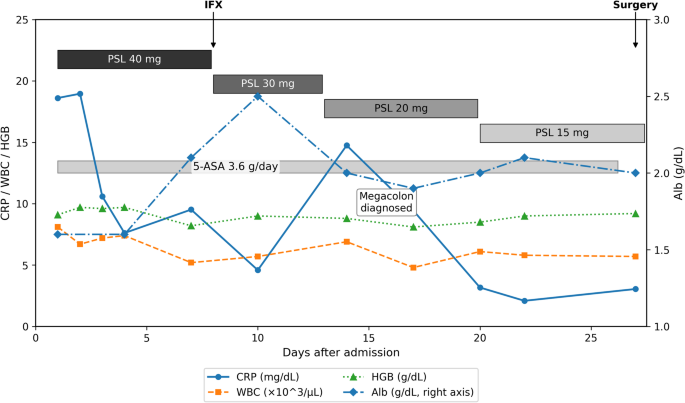
For patients and clinicians facing steroid- and infliximab-refractory acute severe ulcerative colitis, upadacitinib may be a third-line medical option that can produce rapid symptom and CRP improvement and allow some...
Persistent or worsening colonic dilatation in ulcerative colitis can reflect severe, possibly irreversible bowel‑wall damage even when classic signs of toxic megacolon are absent. Recognizing this may prompt timely...