Research topics

Immune Pathways

Immune pathway articles covering inflammatory mechanisms, immune cells, signaling pathways, and disease biology in IBD research.

Page 2 of 2 · 70 articles

Spatial immunoprofiling of human colon in health and disease: insights into inflammation 2256907
The Journal of Immunology

Spatial immunoprofiling of human colon in health and disease: insights into inflammation 2256907

Spatial, high-plex mapping of immune cells in the colon helps reveal how immune cells and stromal cells are organized in IBD versus normal tissue. That information could help researchers identify new biomarkers or...
Read Summary
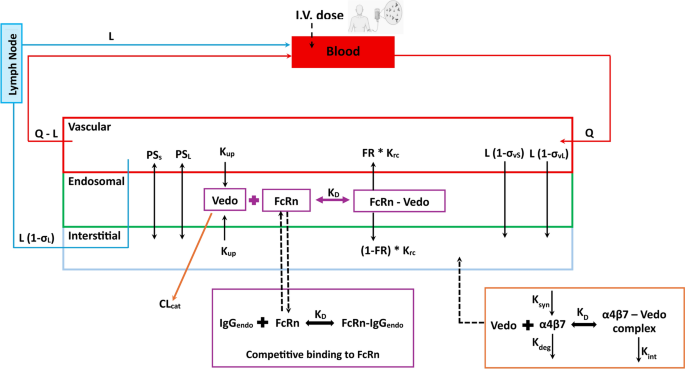
Physiologically Based Pharmacokinetic Modeling of Vedolizumab in Healthy Adults and Patients with Inflammatory Bowel Disease
Clinical Pharmacokinetics

Physiologically Based Pharmacokinetic Modeling of Vedolizumab in Healthy Adults and Patients with Inflammatory Bowel Disease

Vedolizumab blood levels can vary with disease activity; a model that links intestinal α4β7 expression to drug exposure helps explain why some patients have lower drug levels and may need different dosing. This could...

Read Summary
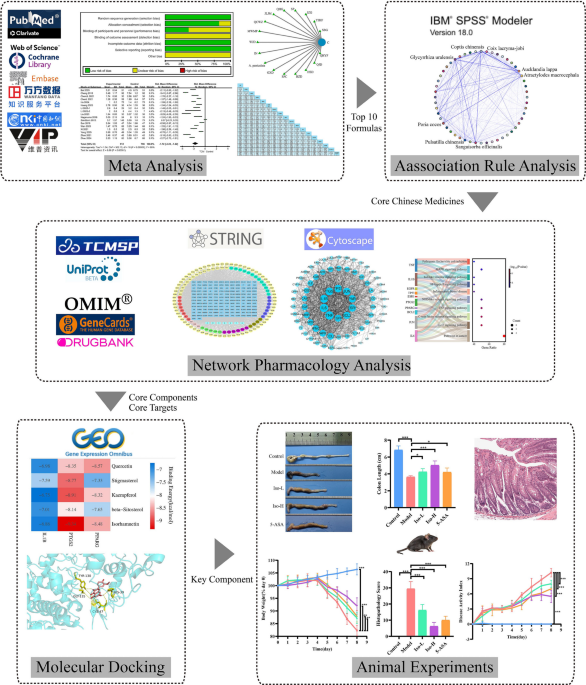
Isorhamnetin ameliorates active ulcerative colitis potentially involving the Nrf2-PTGS2 axis: an integrative study from clinical evidence mining to in vivo validation
Naunyn-Schmiedeberg's Archives of Pharmacology

Isorhamnetin ameliorates active ulcerative colitis potentially involving the Nrf2-PTGS2 axis: an integrative study from clinical evidence mining to in vivo validation

This article suggests a naturally derived compound (isorhamnetin) identified from TCM may reduce inflammation in experimental ulcerative colitis and points to the Nrf2–PTGS2 pathway as a possible mechanism. That could...

Read Summary
Microbial predictors of sustained clinical remission following the Crohn's disease exclusion diet in adults and microbiome shifts toward healthy pediatric controls.
Crohn's & colitis 360

Microbial predictors of sustained clinical remission following the Crohn's disease exclusion diet in adults and microbiome shifts toward healthy pediatric controls.

If you or your clinician are considering dietary therapy like the CDED for Crohn's disease, microbiome features at baseline may influence who achieves sustained remission. Understanding these links could help personalize...

Read Summary
FUT2-mediated α1,2-fucosylation in inflammatory bowel disease: mechanisms and translational potential.
Molecular biology reports

FUT2-mediated α1,2-fucosylation in inflammatory bowel disease: mechanisms and translational potential.

FUT2 connects genetics, mucosal sugars, and the gut microbiome — pathways that could help explain why some people with IBD have different microbiomes or disease risk. If validated in trials, FUT2-targeted or...

Read Summary
Treatable traits in inflammatory bowel disease: a conceptual framework for personalized care.
EClinicalMedicine

Treatable traits in inflammatory bowel disease: a conceptual framework for personalized care.

A treatable-traits approach could help tailor IBD care to each patient by targeting specific biological, comorbid, and psychosocial drivers of disease and quality-of-life impairment, potentially improving how we choose...

Read Summary

JAK and TYK2 inhibitors differentially modulate interferon/TNF-driven inflammation, stemness and proliferation in the colonic epithelium of ulcerative colitis

The study suggests JAK and TYK2 inhibitors can directly change epithelial inflammatory signaling and proliferation in UC, which may be relevant to healing of the gut lining and how different drugs work beyond immune...

Read Summary
Fecal microbiota transplantation in ulcerative colitis: mucosal immune mechanisms and precision microbiota therapy
Frontiers in Immunology

Fecal microbiota transplantation in ulcerative colitis: mucosal immune mechanisms and precision microbiota therapy

FMT and precision microbiota therapies target the gut ecosystem, a modifiable factor in UC. For people with UC, this review explains potential mechanisms, where FMT has shown benefit in trials, and why it is still...

Read Summary
Microplastics, Gut Dysbiosis, and Inflammatory Pathways in Ulcerative Colitis.
Journal of inflammation research

Microplastics, Gut Dysbiosis, and Inflammatory Pathways in Ulcerative Colitis.

If environmental microplastics contribute to gut dysbiosis and mucosal inflammation, this could help explain environmental triggers of ulcerative colitis and point toward prevention or microbiome-targeted interventions.

Read Summary
Macrophage-driven inflammation in inflammatory bowel disease: mechanisms and therapeutic opportunities
Frontiers in Bioengineering and Biotechnology

Macrophage-driven inflammation in inflammatory bowel disease: mechanisms and therapeutic opportunities

Macrophages and innate immune signaling are central to how gut inflammation starts and persists in IBD; better understanding these pathways could point to new treatment strategies for people whose disease doesn’t fully...

Read Summary
Responses of intestinal organoids to infection by resemble symptoms observed in Crohn's disease Mycobacterium avium .
Gut microbes

Responses of intestinal organoids to infection by resemble symptoms observed in Crohn's disease Mycobacterium avium .

The work models how Mycobacterium avium can provoke epithelial inflammation similar to Crohn's disease, pointing to possible molecular links between infection and CD-like pathology that could guide future research.

Read Summary
Crohn's Disease: From Immune Dysregulation to Intestinal Damage.
Inflammation

Crohn's Disease: From Immune Dysregulation to Intestinal Damage.

This review explains how genetic, microbial, immune, and stromal factors interact to cause Crohn’s disease, which helps explain why treatments often need to target specific immune pathways or biologic mechanisms....

Read Summary
Johnson & Johnson investigational co-antibody therapy JNJ-4804 shows potential to raise the bar for clinical efficacy in treating refractory inflammatory bowel disease
finanznachrichten.de

Johnson & Johnson investigational co-antibody therapy JNJ-4804 shows potential to raise the bar for clinical efficacy in treating refractory inflammatory bowel disease

This reports Phase 2b results for a new investigational biologic (JNJ-4804) that targets both IL-23 and TNF and showed higher clinical and endoscopic responses in patients with refractory UC and CD — a group with few...

Read Summary