Evidence types

Basic Science

Basic science articles covering early-stage IBD research, disease mechanisms, lab findings, microbiome work, genetics, and experimental models.

Page 5 of 15 · 709 articles

Multimodal Imaging-Based Anatomical Characterization of DSS-Induced Experimental Ulcerative Colitis in Rat Model.
Annals of anatomy = Anatomischer Anzeiger : official organ of the Anatomische Gesellschaft

Multimodal Imaging-Based Anatomical Characterization of DSS-Induced Experimental Ulcerative Colitis in Rat Model.

Non-invasive imaging biomarkers that track intestinal inflammation and structure could speed preclinical testing of IBD therapies and guide translational imaging research relevant to clinical monitoring of ulcerative...

Read Summary
Wogonoside alleviates ulcerative colitis-induced senescence by activating AMPK in in vivo and in vitro models
American journal of translational research

Wogonoside alleviates ulcerative colitis-induced senescence by activating AMPK in in vivo and in vitro models

Based on the title and source metadata, this appears to be a basic science related to Ulcerative colitis, Inflammatory bowel disease, and Research and clinical trials. The original article is from American journal of...

Read Summary
Cell-type specific analyses in blood and gut identify cis-eQTL matching 140 IBD risk loci and entrectinib as repurposing candidate.
Nature communications

Cell-type specific analyses in blood and gut identify cis-eQTL matching 140 IBD risk loci and entrectinib as repurposing candidate.

The study connects many IBD genetic risk regions to specific genes and cell types, helping prioritize drug targets. It also nominates a known small molecule (entrectinib) as a repurposing candidate via NLRP3/NEK7...

Read Summary
Colitis-Associated Colorectal Cancer—STAT3 Inhibition as a Preventive Strategy
International Journal of Molecular Sciences

Colitis-Associated Colorectal Cancer—STAT3 Inhibition as a Preventive Strategy

Preclinical data suggest blocking STAT3 with TTI-101 prevented colitis-associated colorectal tumors in a mouse model and altered tumor-related gene expression and the gut microbiome — findings that could guide future...

Read Summary
Cerium-tannic acid-formaldehyde coordination polymer colloidal nanomaterials for inflammatory bowel disease therapy
Scientific Reports

Cerium-tannic acid-formaldehyde coordination polymer colloidal nanomaterials for inflammatory bowel disease therapy

This study describes a new nanoparticle (Ce‑TA) that reduced inflammation and tissue injury in a common mouse model of colitis, suggesting a possible future therapeutic avenue for IBD driven by antioxidant and...

Read Summary
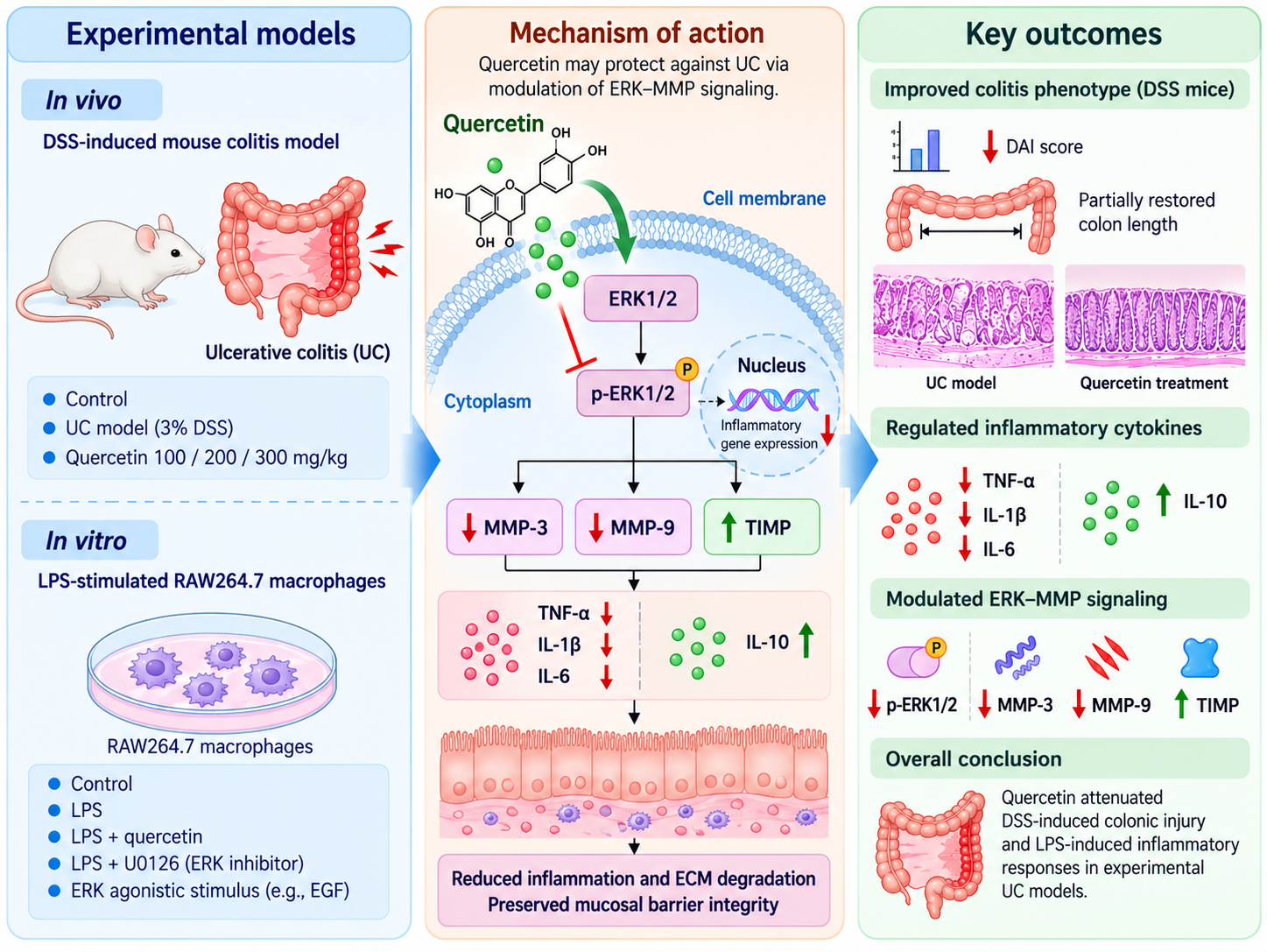
Protective effects of quercetin in experimental ulcerative colitis: Potential involvement of ERK-MMP signaling
Pakistan Journal of Pharmaceutical Sciences

Protective effects of quercetin in experimental ulcerative colitis: Potential involvement of ERK-MMP signaling

The study suggests quercetin can reduce inflammation and tissue damage markers in lab models of ulcerative colitis, pointing to ERK–MMP signaling as a possible mechanism. That could inform future preclinical research...

Read Summary
Tolerogenic dendritic cells modulate macrophage inflammatory response in Ulcerative colitis: role of IL-1RN
BMC Gastroenterology

Tolerogenic dendritic cells modulate macrophage inflammatory response in Ulcerative colitis: role of IL-1RN

Identifies IL-1RN and SERPINA1 as biomarkers linked to macrophage-driven inflammation in ulcerative colitis and shows TolDCs can reduce macrophage pro-inflammatory cytokine expression in lab experiments — findings that...

Read Summary
Phosphatidylserine liposomes attenuate Crohn’s disease through an immunosuppressive mechanism targeting monocytes
Springer Science and Business Media LLC

Phosphatidylserine liposomes attenuate Crohn’s disease through an immunosuppressive mechanism targeting monocytes

The study proposes a new immunomodulatory approach—phosphatidylserine liposomes—that reduced inflammation in mouse colitis models and altered monocyte and T-cell responses, which could point toward future therapies for...

Read Summary
Mesenchymal Stem Cells Alleviate Crohn's Disease by Regulating CBS-Mediated Ferroptosis.
Immunity, inflammation and disease

Mesenchymal Stem Cells Alleviate Crohn's Disease by Regulating CBS-Mediated Ferroptosis.

If MSCs can limit ferroptosis via CBS, that points to a new biological pathway that might be targeted to reduce intestinal inflammation in Crohn's disease. This could guide future lab research and eventually early-phase...

Read Summary
Identification of Gene Signatures and Molecular Mechanisms Underlying the Comorbidity of Alzheimer's Disease and Crohn's Disease Using Machine Learning.
Psychiatry investigation

Identification of Gene Signatures and Molecular Mechanisms Underlying the Comorbidity of Alzheimer's Disease and Crohn's Disease Using Machine Learning.

The paper proposes molecular links between Crohn’s disease and Alzheimer’s disease through two genes implicated in inflammation and tissue remodeling. This could shape future research into shared gut–brain inflammatory...

Read Summary
High-throughput chemical screen identifies epothilone B in modulating inflammatory bowel disease by triggering neutrophil apoptosis.
Genes & diseases

High-throughput chemical screen identifies epothilone B in modulating inflammatory bowel disease by triggering neutrophil apoptosis.

The paper identifies epothilone B as a repurposing candidate that may reduce neutrophil-driven inflammation and support epithelial healing in IBD models, a potential new strategy distinct from broad neutrophil...

Read Summary
Acupoint Catgut Embedding Ameliorates Ulcerative Colitis in Association with Modulation of cGAS-STING Signaling and M1-Like/M2-Like Macrophage Markers.
Journal of inflammation research

Acupoint Catgut Embedding Ameliorates Ulcerative Colitis in Association with Modulation of cGAS-STING Signaling and M1-Like/M2-Like Macrophage Markers.

The study links a traditional acupuncture-derived technique (ACE) to reduced colitis severity in rats and to modulation of the cGAS–STING immune pathway and macrophage marker profiles, suggesting a potential mechanistic...

Read Summary
In Silico Single-Cell Frame work for Modeling Intestinal Stem and Transit-Amplifying Progenitor Cells Dynamics.
Methods in molecular biology (Clifton, N.J.)

In Silico Single-Cell Frame work for Modeling Intestinal Stem and Transit-Amplifying Progenitor Cells Dynamics.

The pipeline helps identify stem and progenitor epithelial cell states linked to inflammation in IBD. Knowing these cell states and biomarkers could guide research into disease mechanisms, tissue repair, and potential...

Read Summary
Ultrastructural and Proteomic Signatures of Mechanoadaptive Fibroblast Remodeling across Microphysiological and Mesoscale Shear Platforms
Europe PMC

Ultrastructural and Proteomic Signatures of Mechanoadaptive Fibroblast Remodeling across Microphysiological and Mesoscale Shear Platforms

Mechanical forces in the gut may help drive fibroblast activation and early fibrosis in IBD; models that reproduce this could help researchers study and eventually target fibrotic pathways relevant to stricturing...

Read Summary
IRF5 promotes the progression of ulcerative colitis by regulating macrophage polarization and Toll-like receptor signaling pathway.
Biochemical and biophysical research communications

IRF5 promotes the progression of ulcerative colitis by regulating macrophage polarization and Toll-like receptor signaling pathway.

The study links IRF5 to worse intestinal inflammation in UC and shows that reducing IRF5 activity lessens disease in a mouse model, suggesting IRF5 could be a future therapeutic target or biomarker.

Read Summary
Inflammation-responsive sodium alginate-based microalgal hydrogel with pH/ROS dual sensitivity for oral colon-targeted therapy of ulcerative colitis.
International journal of biological macromolecules

Inflammation-responsive sodium alginate-based microalgal hydrogel with pH/ROS dual sensitivity for oral colon-targeted therapy of ulcerative colitis.

The study presents a new inflammation-responsive oral delivery system designed to concentrate antioxidant and anti-inflammatory activity in the colon, which could—if translated safely to humans—offer a way to treat...

Read Summary
Differential modulation of ferroptosis pathways by NOX1/4 and NLRP3 inhibition in DSS-induced colitis
Scientific Reports

Differential modulation of ferroptosis pathways by NOX1/4 and NLRP3 inhibition in DSS-induced colitis

This preclinical study links NOX1/4 and NLRP3 pathways to ferroptosis and iron metabolism in a mouse colitis model, highlighting potential mechanistic targets that could inform future precision therapies for ulcerative...

Read Summary
Multi-omics analyses unveil gut microbiota and metabolites signatures in deoxycholic acid-associated intestinal inflammation.
Frontiers in microbiology

Multi-omics analyses unveil gut microbiota and metabolites signatures in deoxycholic acid-associated intestinal inflammation.

The study links high levels of the bile acid DCA to microbiome and metabolite changes that correlate with intestinal inflammation in mice, suggesting a possible pathway connecting high‑fat diets to colitis risk.

Read Summary
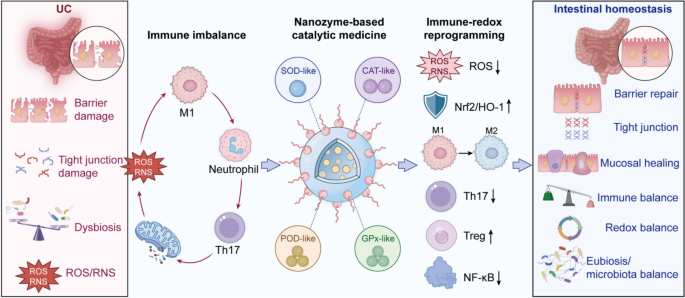
Catalytic nanozymes for ulcerative colitis: harnessing immune-redox crosstalk for mucosal healing and disease remission
Journal of Nanobiotechnology

Catalytic nanozymes for ulcerative colitis: harnessing immune-redox crosstalk for mucosal healing and disease remission

The review describes a novel preclinical approach—catalytic nanozymes—that aims to reduce oxidative stress and re-balance immune responses in ulcerative colitis, which could eventually lead to new treatments for patients...

Read Summary
Design, synthesis, and in vitro application of a two-photon fluorescent probe for fluorescent imaging and in vitro biological evaluation of ulcerative colitis.
Bioorganic chemistry

Design, synthesis, and in vitro application of a two-photon fluorescent probe for fluorescent imaging and in vitro biological evaluation of ulcerative colitis.

A new fluorescent probe designed from bile acids may help image inflammation and has shown anti-inflammatory/antioxidant activity in cell studies relevant to ulcerative colitis, which could inform future diagnostic or...

Read Summary
Dysbiosis and Bacterial Invasion in Murine Models of Ileal Crohn's Disease
Advances and Applications in Biotechnology: Volume 4

Dysbiosis and Bacterial Invasion in Murine Models of Ileal Crohn's Disease

Based on the title and source metadata, this appears to be a basic science related to Crohn's disease, Inflammatory bowel disease, and Research and clinical trials. The original article is from Advances and Applications...

Read Summary
IL1B-high macrophages promote ferroptosis-like lipid peroxidation injury in Crohn's disease intestinal epithelium.
Redox biology

IL1B-high macrophages promote ferroptosis-like lipid peroxidation injury in Crohn's disease intestinal epithelium.

The study identifies a macrophage-driven mechanism (IL-1β–linked ferroptosis-like lipid peroxidation) that may contribute to epithelial injury in Crohn’s disease, suggesting new biological targets that could eventually...

Read Summary
Deep learning coupled with scalable domain-specific structural validation expands RNA virus discovery from metatranscriptomes
Nature Communications

Deep learning coupled with scalable domain-specific structural validation expands RNA virus discovery from metatranscriptomes

Improved detection of divergent RNA viruses in gut metatranscriptomes could help researchers better characterize the viral component of the microbiome in IBD and explore possible viral contributions to disease biology or...

Read Summary
A sesterterpenoid derivative alleviates ulcerative colitis through targeting ProRS to suppress the NLRP3 inflammasome
Science China Life Sciences

A sesterterpenoid derivative alleviates ulcerative colitis through targeting ProRS to suppress the NLRP3 inflammasome

A new small molecule that blocks the NLRP3 inflammasome via ProRS could point to future drug strategies for ulcerative colitis — a pathway involved in intestinal inflammation that matters to people with IBD. This is...

Read Summary
MiR-29a deficiency disrupts gut microbiota-bile acid homeostasis and impairs the anti-inflammatory effects of lithocholic acid in colitis
Frontiers in Cellular and Infection Microbiology

MiR-29a deficiency disrupts gut microbiota-bile acid homeostasis and impairs the anti-inflammatory effects of lithocholic acid in colitis

The paper connects a host microRNA (miR-29a) to gut microbiota bile-acid metabolism and an anti-inflammatory bile acid (LCA). If similar mechanisms apply in people, it could point to new biological targets or biomarkers...

Read Summary
Colon-targeted EGCG delivery remodels the gut microenvironment to enhance therapeutic efficacy in ulcerative colitis.
Journal of controlled release : official journal of the Controlled Release Society

Colon-targeted EGCG delivery remodels the gut microenvironment to enhance therapeutic efficacy in ulcerative colitis.

The study introduces a colon-targeted EGCG delivery system that reduced inflammation and improved microbial and metabolic markers in a mouse model of UC, suggesting a potential new therapeutic approach worth further...

Read Summary
PACSIN2 regulates mercaptopurine cytotoxicity and cellular biomechanics through Rac1 modulation in intestinal epithelial cells.
Frontiers in pharmacology

PACSIN2 regulates mercaptopurine cytotoxicity and cellular biomechanics through Rac1 modulation in intestinal epithelial cells.

The study connects a genetic regulator (PACSIN2) and Rac1 signaling to cellular responses to mercaptopurine, a drug used in IBD, offering a possible explanation for why some patients experience thiopurine-related gut...

Read Summary
Distinct Evolutionary Selection Patterns in Temperate and Filamentous Phages of Phocaeicola vulgatus in Health and IBD
Europe PMC

Distinct Evolutionary Selection Patterns in Temperate and Filamentous Phages of Phocaeicola vulgatus in Health and IBD

Phages shape the gut microbial community and may behave differently in inflamed guts. Understanding phage evolution in IBD could eventually inform microbiome-targeted therapies or explain disease-associated microbial...

Read Summary
Use of a novel genetic mouse model to investigate the role of folate in colitis-associated colon cancer
The Journal of nutritional biochemistry

Use of a novel genetic mouse model to investigate the role of folate in colitis-associated colon cancer

The paper suggests that reduced folate transport can raise markers of inflammation-associated colon tumor initiation in mice, which is relevant because people with IBD are at higher risk for folate deficiency and colon...

Read Summary
An H2A.Z-dependent epigenetic checkpoint in macrophages couples genetic risk to microbial metabolite signaling.
Protein & cell

An H2A.Z-dependent epigenetic checkpoint in macrophages couples genetic risk to microbial metabolite signaling.

This study links an epigenetic mechanism in macrophages (H2A.Z deposition) to microbial metabolites (butyrate) and to genetic variants associated with IBD, which may help explain persistent inflammation and variable...

Read Summary
Qijiao Shengbai capsule ameliorates ulcerative colitis in mice by modulating gut microbiota and protecting the intestinal barrier, associated with suppression of the TLR4/MyD88/NF-κB pathway
Frontiers in Microbiology

Qijiao Shengbai capsule ameliorates ulcerative colitis in mice by modulating gut microbiota and protecting the intestinal barrier, associated with suppression of the TLR4/MyD88/NF-κB pathway

This preclinical study connects an herbal medicine to changes in gut microbiota, inflammation, and intestinal barrier function in a mouse model of ulcerative colitis — findings that could inform future research on new...

Read Summary

Layer-Resolved Spatial Transcriptomic Profiling Reveals Distinct Fibrotic and Muscularizing Submucosal Niches in Fibrostenotic Crohn's Disease

The study maps layer-specific gene programs in fibrostenotic Crohn's disease and pinpoints the submucosa as a hotspot for fibromuscular remodeling that underlies strictures and bowel obstruction risk.

Read Summary
Metabolic reprogramming in ulcerative colitis: integrating dietary drivers, pathogenesis, and therapeutic advances
Frontiers in Immunology

Metabolic reprogramming in ulcerative colitis: integrating dietary drivers, pathogenesis, and therapeutic advances

The review connects Western diet-driven metabolic shifts in the gut, immune cells, and microbiota to ulcerative colitis mechanisms and highlights metabolism-targeting therapies as a potential future avenue for treatment.

Read Summary