
Research tools

Therapeutic Drug Monitoring

Articles tagged with Therapeutic Drug Monitoring in the research and clinical trials topic, grouped for easier browsing of related monitoring, diagnosis, and research updates.

27 articles

PREDICT-UC, infliximab pharmacokinetics, and the pursuit of personalised rescue therapy in acute severe ulcerative colitis
Translational gastroenterology and hepatology

PREDICT-UC, infliximab pharmacokinetics, and the pursuit of personalised rescue therapy in acute severe ulcerative colitis

For people hospitalized with acute severe UC, the findings suggest that measuring early infliximab pharmacokinetics could help personalize rescue therapy and potentially reduce colectomy risk by identifying who may need...

Read Summary
Subcutaneous infliximab in inflammatory bowel disease: from pharmacokinetic principles to clinical practice.
Expert opinion on biological therapy

Subcutaneous infliximab in inflammatory bowel disease: from pharmacokinetic principles to clinical practice.

A subcutaneous option for infliximab could simplify maintenance therapy, reduce infusion visits, and change how drug levels and accompanying immunomodulators are managed — issues many people with IBD and their clinicians...

Read Summary
Early but not serial ustekinumab concentration measurements are associated with clinical outcomes in Crohn's disease and ulcerative colitis: the Stockholm Ustekinumab study (STOCUSTE).
European journal of gastroenterology & hepatology

Early but not serial ustekinumab concentration measurements are associated with clinical outcomes in Crohn's disease and ulcerative colitis: the Stockholm Ustekinumab study (STOCUSTE).

Patients and clinicians using ustekinumab may be able to use an early (around 3 months) drug concentration to help predict short-term remission, while routine repeated monitoring later on may be less informative for...

Read Summary
Vedolizumab trough concentrations and clinical and endoscopic outcomes in inflammatory bowel disease: a systematic review and meta-analysis.
Clinical gastroenterology and hepatology : the official clinical practice journal of the American Gastroenterological Association

Vedolizumab trough concentrations and clinical and endoscopic outcomes in inflammatory bowel disease: a systematic review and meta-analysis.

Patients and clinicians using vedolizumab may be interested because the review links higher trough concentrations to better remission outcomes—most convincingly for endoscopic remission in UC—and provides descriptive...

Read Summary
Connecting the Dots Between Pharmacokinetics, Inflammatory Biomarkers, and Mucosal Healing in Patients on Infliximab with Inflammatory Bowel Disease
Pharmaceutics

Connecting the Dots Between Pharmacokinetics, Inflammatory Biomarkers, and Mucosal Healing in Patients on Infliximab with Inflammatory Bowel Disease

If true, using infliximab drug-level modeling plus routine blood tests could help predict who has mucosal healing without immediate endoscopy, potentially reducing invasive procedures and improving monitoring for people...

Read Summary
Gradient Boosting Machine-Based Prognostic Model with SurvSHAP Analysis for Predicting Secondary Loss of Response to Infliximab Therapy in Crohn's Disease.
Drug design, development and therapy

Gradient Boosting Machine-Based Prognostic Model with SurvSHAP Analysis for Predicting Secondary Loss of Response to Infliximab Therapy in Crohn's Disease.

The work identifies factors that predict loss of response to infliximab and suggests maintenance drug levels are the strongest predictor, which could influence monitoring strategies for people with Crohn's disease on...

Read Summary
Pharmacokinetic Predictor of Infection in Patients With Inflammatory Bowel Disease Treated With Intravenous and Subcutaneous Infliximab.
Journal of clinical gastroenterology

Pharmacokinetic Predictor of Infection in Patients With Inflammatory Bowel Disease Treated With Intravenous and Subcutaneous Infliximab.

This study suggests that cumulative infliximab exposure over time (AUC) — not just trough levels — may predict infection risk in people with IBD. That could affect how clinicians use therapeutic drug monitoring to...

Read Summary
A Clinical Trial of Taibowei® Adalimumab Injection in the Treatment of Chinese Pediatric Patients With Moderately to Severely Active Crohn's Disease
ClinicalTrials.gov

A Clinical Trial of Taibowei® Adalimumab Injection in the Treatment of Chinese Pediatric Patients With Moderately to Severely Active Crohn's Disease

This trial studies adalimumab safety and pediatric dosing in children with moderate–severe Crohn's disease, which is directly relevant to families and clinicians considering anti-TNF therapy for pediatric IBD.

Read Summary
Switching Between Anti-TNFs and Other Biologic Drugs in Paediatric Inflammatory Bowel Disease: A Narrative Review and Practical Clinical Guide.
Journal of inflammation research

Switching Between Anti-TNFs and Other Biologic Drugs in Paediatric Inflammatory Bowel Disease: A Narrative Review and Practical Clinical Guide.

Switching biologics is a frequent and consequential decision in children with IBD; using TDM and a mechanism‑based approach can help choose whether to optimize, switch within class, or change drug class.

Read Summary
Dynamic precision therapy in chronic gastrointestinal diseases: A focus on gastroesophageal reflux disease and inflammatory bowel disease-A narrative review and conceptual perspective.
Therapeutic advances in gastroenterology

Dynamic precision therapy in chronic gastrointestinal diseases: A focus on gastroesophageal reflux disease and inflammatory bowel disease-A narrative review and conceptual perspective.

The review lays out a multidimensional precision-care model that could help make IBD treatment more personalized, reduce unnecessary continuous medication, and use biomarker and technology-driven adjustments to manage...

Read Summary
Therapeutic Drug Monitoring guided vedolizumab treatment in ulcerative colitis in Cyprus: a cost-effectiveness analysis.
Value in health : the journal of the International Society for Pharmacoeconomics and Outcomes Research

Therapeutic Drug Monitoring guided vedolizumab treatment in ulcerative colitis in Cyprus: a cost-effectiveness analysis.

Using TDM to optimize vedolizumab could improve outcomes but may raise treatment costs; patients and clinicians should know cost-effectiveness depends heavily on drug price and local healthcare thresholds.

Read Summary
Comprehensively validated µSPE-HPLC-MS/MS method for high-throughput clinical monitoring of Janus kinase inhibitor drugs approved for inflammatory bowel disease treatment
Scientific Reports

Comprehensively validated µSPE-HPLC-MS/MS method for high-throughput clinical monitoring of Janus kinase inhibitor drugs approved for inflammatory bowel disease treatment

Reliable, high-throughput lab methods are a prerequisite for therapeutic drug monitoring (TDM). For people with IBD on JAK inhibitors, validated assays can enable exposure measurement needed for future precision dosing...

Read Summary
Predictors of ustekinumab intensified dose escalation in inflammatory bowel disease: a real-world (UST-predict) study
Frontiers in Pharmacology

Predictors of ustekinumab intensified dose escalation in inflammatory bowel disease: a real-world (UST-predict) study

People with Crohn’s disease on ustekinumab may be more likely to need intensified dosing if they previously tried biologics or immunomodulators or have had disease longer; this could affect monitoring and planning. For...

Read Summary
Induction-phase infliximab monitoring accelerates time to remission in pediatric IBD: a retrospective cohort study.
Crohn's & colitis 360

Induction-phase infliximab monitoring accelerates time to remission in pediatric IBD: a retrospective cohort study.

Faster remission can reduce symptoms, school disruption, and steroid exposure for children with IBD. If earlier infliximab level checks reliably speed remission, clinicians could adjust dosing sooner to improve outcomes.

Read Summary
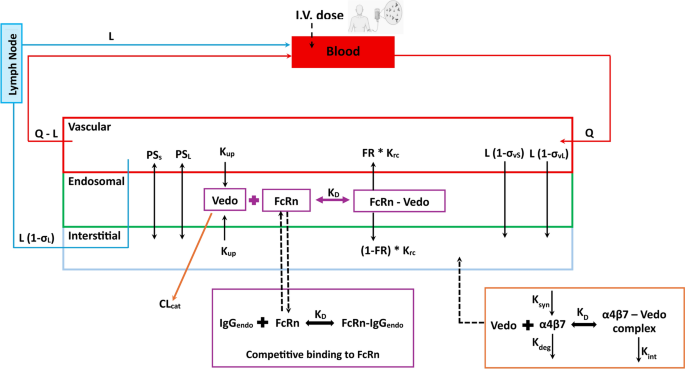
Physiologically Based Pharmacokinetic Modeling of Vedolizumab in Healthy Adults and Patients with Inflammatory Bowel Disease
Clinical Pharmacokinetics

Physiologically Based Pharmacokinetic Modeling of Vedolizumab in Healthy Adults and Patients with Inflammatory Bowel Disease

Vedolizumab blood levels can vary with disease activity; a model that links intestinal α4β7 expression to drug exposure helps explain why some patients have lower drug levels and may need different dosing. This could...

Read Summary
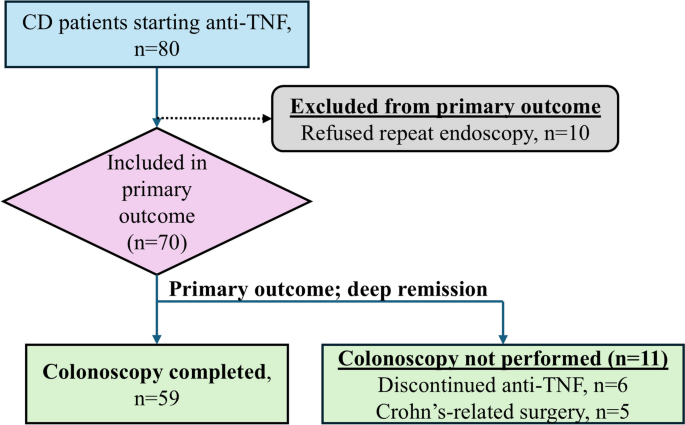
Pharmacometric Targets During Anti-TNF Induction and Their Association with Deep Remission in Pediatric Crohn’s Disease
Clinical Pharmacokinetics

Pharmacometric Targets During Anti-TNF Induction and Their Association with Deep Remission in Pediatric Crohn’s Disease

The study identifies specific induction exposure targets and biomarkers tied to higher chances of deep remission at 12 months in children on anti-TNF therapy, which could inform earlier dose optimization to improve...

Read Summary
Pharmacokinetic model selection for infliximab based on inflammatory bowel disease phenotype and severity: Toward model-informed precision dosing.
PloS one

Pharmacokinetic model selection for infliximab based on inflammatory bowel disease phenotype and severity: Toward model-informed precision dosing.

Infliximab dosing can be hard to personalize. This study shows that selecting pharmacokinetic models based on IBD type and severity can improve how well drug levels are predicted, which could help tailor dosing for...

Read Summary
Proactive therapeutic drug monitoring of infliximab leads to treatment durability in paediatric Crohn's disease: A single‐centre Australian experience
JPGN Reports

Proactive therapeutic drug monitoring of infliximab leads to treatment durability in paediatric Crohn's disease: A single‐centre Australian experience

Proactive TDM of infliximab was associated with high 1‑ and 2‑year durability in this pediatric Crohn's cohort, and the study flags clinical factors that may predict need to switch biologics. This could be relevant when...

Read Summary