Evidence types

Basic Science

Basic science articles covering early-stage IBD research, disease mechanisms, lab findings, microbiome work, genetics, and experimental models.

Page 13 of 15 · 708 articles

Liandan Xiaoyan Formula ameliorates DSS-induced ulcerative colitis through altering the metabolism of bile acids by regulating the FXR-FGF15 signaling pathway.
Phytomedicine : international journal of phytotherapy and phytopharmacology

Liandan Xiaoyan Formula ameliorates DSS-induced ulcerative colitis through altering the metabolism of bile acids by regulating the FXR-FGF15 signaling pathway.

The study links a traditional herbal formula to improved colitis in mice and to changes in bile-acid metabolism through the FXR–FGF15 pathway, suggesting a mechanistic route that could inform future preclinical or...

Read Summary
RNA-binding protein RBM47 in health and disease: molecular mechanisms, preclinical evidence, and translational challenges.
Frontiers in immunology

RNA-binding protein RBM47 in health and disease: molecular mechanisms, preclinical evidence, and translational challenges.

Researchers are investigating RBM47 because it influences RNA processing and immune pathways that could modify inflammation and disease processes relevant to IBD. If borne out, RBM47 could become a biomarker or...

Read Summary
Structural elucidation of an active pectin against inflammatory bowel disease from the roots of Sanguisorba officinalis and its protection effect.
Carbohydrate polymers

Structural elucidation of an active pectin against inflammatory bowel disease from the roots of Sanguisorba officinalis and its protection effect.

Researchers identified a defined pectin from Sanguisorba officinalis that reduced inflammatory cytokine release in cells and improved outcomes in a mouse colitis model, suggesting a new lead for IBD drug discovery.

Read Summary
Shikonin Alleviated Epithelial Responses in a Lipopolysaccharide/Tumor Necrosis Factor Alpha-induced Ulcerative Colitis-like Condition in Caco-2/HT-29 Co-cultured Cells by Modulating the MAPK/NLRP3/Nuclear Factor Kappa B Pathways.
Journal of physiological investigation

Shikonin Alleviated Epithelial Responses in a Lipopolysaccharide/Tumor Necrosis Factor Alpha-induced Ulcerative Colitis-like Condition in Caco-2/HT-29 Co-cultured Cells by Modulating the MAPK/NLRP3/Nuclear Factor Kappa B Pathways.

Cure8 found this source from Journal of physiological investigation, but the page could not be read reliably yet. It is tagged for Ulcerative colitis, Inflammatory bowel disease, and Research and clinical trials. Open...

Read Summary
Effects of cuproptosis and its application in inflammatory bowel disease (Review).
International journal of molecular medicine

Effects of cuproptosis and its application in inflammatory bowel disease (Review).

Researchers report links between copper-driven cell death pathways and IBD biology; identifying cuproptosis-related biomarkers or drugs could open new diagnostic or therapeutic avenues for people with Crohn's disease or...

Read Summary
Expression patterns of miR-21 and miR-146 in ulcerative colitis: implications for disease progression and therapeutic strategies
Journal of Genetic Engineering and Biotechnology

Expression patterns of miR-21 and miR-146 in ulcerative colitis: implications for disease progression and therapeutic strategies

Based on the title and source metadata, this appears to be a basic science related to Ulcerative colitis, Inflammatory bowel disease, and Research and clinical trials. The original article is from Journal of Genetic...

Read Summary
Spatiotemporally optimized heterotopic transplantation of early-stage small intestinal organoids ameliorates murine ulcerative colitis.
International immunopharmacology

Spatiotemporally optimized heterotopic transplantation of early-stage small intestinal organoids ameliorates murine ulcerative colitis.

If organoid transplantation can be translated to people, it could offer a new way to repair inflamed colonic lining and promote mucosal healing when current therapies are insufficient. The approach also highlights links...

Read Summary
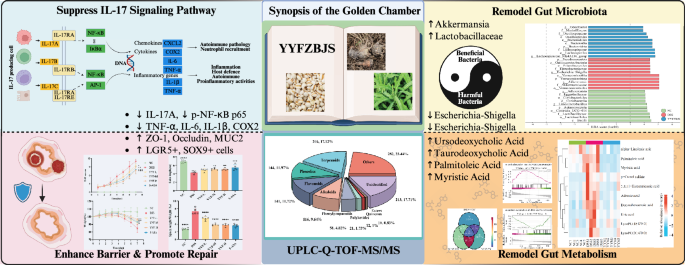
Yiyi Fuzi Baijiang formula protects against DSS-induced colitis by orchestrating the gut barrier-microbiota-metabolism axis
Chinese Medicine

Yiyi Fuzi Baijiang formula protects against DSS-induced colitis by orchestrating the gut barrier-microbiota-metabolism axis

The study suggests a multi-component herbal formula may affect inflammation, the intestinal barrier, epithelial repair, the gut microbiome, and fecal metabolites in a mouse colitis model—topics relevant to understanding...

Read Summary
SR9009 regulates macrophage polarization via the NR1D1/NF-κB axis to ameliorate obesity-associated ulcerative colitis
Frontiers in Gastroenterology

SR9009 regulates macrophage polarization via the NR1D1/NF-κB axis to ameliorate obesity-associated ulcerative colitis

This study identifies NR1D1 activation by the experimental drug SR9009 as a potential way to reduce inflammation and improve colon pathology in a mouse model of obesity-associated ulcerative colitis.

Read Summary
Engineered Probiotic-Silver Nanointerfaces Enable Multimodal Repair of Inflamed Colon via Wnt and Chemokine Recalibration.
ACS applied materials & interfaces

Engineered Probiotic-Silver Nanointerfaces Enable Multimodal Repair of Inflamed Colon via Wnt and Chemokine Recalibration.

This study describes a lab-stage engineered probiotic–silver nanoparticle therapy that reduced inflammation and promoted colon repair in an animal colitis model; it highlights new molecular targets (Wnt signaling and...

Read Summary
Structural Characteristics and Efficacy of Polysaccharides from Fenjiu Vinasse in Alleviating DSS-Induced Ulcerative Colitis
Foods

Structural Characteristics and Efficacy of Polysaccharides from Fenjiu Vinasse in Alleviating DSS-Induced Ulcerative Colitis

The study identifies a specific polysaccharide fraction (VPS-30) that reduced inflammation and improved gut barrier markers in cell and mouse models of colitis, suggesting a possible new functional-food lead for...

Read Summary
cGAS/STING Signaling in Ulcerative Colitis: Mechanism and Therapeutic Opportunities
International Journal of Molecular Sciences

cGAS/STING Signaling in Ulcerative Colitis: Mechanism and Therapeutic Opportunities

Researchers and clinicians are exploring cGAS/STING as a novel immune pathway linked to mucosal barrier function and inflammation in UC. Modulators of this pathway could become future targeted treatments, so patients and...

Read Summary
Macrophage-Centered Integration of Single-Cell and Bulk Transcriptomic Data Identifies CCL3, CCL4, and JUNB as Inflammatory Regulatory Signatures in Ulcerative Colitis
Genes

Macrophage-Centered Integration of Single-Cell and Bulk Transcriptomic Data Identifies CCL3, CCL4, and JUNB as Inflammatory Regulatory Signatures in Ulcerative Colitis

Identifies macrophage-linked genes (CCL3, CCL4, JUNB) that are strongly upregulated in ulcerative colitis and may help explain immune-cell remodeling in the colon. These genes could serve as biomarkers or starting points...

Read Summary
Anti-inflammatory efficacy of diosgenin in an oxazolone-induced model of ulcerative colitis in mice via suppression of Th2 pathways and pSTAT3 expression: A prospective study.
Science progress

Anti-inflammatory efficacy of diosgenin in an oxazolone-induced model of ulcerative colitis in mice via suppression of Th2 pathways and pSTAT3 expression: A prospective study.

A natural compound (diosgenin) reduced disease signs and inflammatory markers in a mouse model of ulcerative colitis, suggesting a possible anti-inflammatory mechanism that could inform future preclinical research.

Read Summary
Amikacin Protection Assay for Quantification and Visualization of Escherichia coli Cell Invasion.
Journal of visualized experiments : JoVE

Amikacin Protection Assay for Quantification and Visualization of Escherichia coli Cell Invasion.

AIEC is linked to IBD pathogenesis but is defined by lab assays rather than clear genetic markers. This paper presents a practical assay to detect cell invasion even when isolates are resistant to gentamicin, which could...

Read Summary
Chirality-dependent toxicity decoupling: Discovery of a resibufogenin-based L-configured STING inhibitor with superior therapeutic profile for ulcerative colitis.
European journal of medicinal chemistry

Chirality-dependent toxicity decoupling: Discovery of a resibufogenin-based L-configured STING inhibitor with superior therapeutic profile for ulcerative colitis.

Targeting STING may reduce inflammatory signaling that contributes to ulcerative colitis; a safer, more potent STING inhibitor could become a new therapeutic approach if later-stage studies confirm benefit and safety.

Read Summary
A natural product-based pH-responsive hydrogel nanoplatform for ulcerative colitis therapy via synchronous regulation of immune microenvironment and intestinal barrier.
Colloids and surfaces. B, Biointerfaces

A natural product-based pH-responsive hydrogel nanoplatform for ulcerative colitis therapy via synchronous regulation of immune microenvironment and intestinal barrier.

This research describes a new nanoparticle/hydrogel delivery system that reduced inflammation and helped restore the intestinal barrier in mouse models of ulcerative colitis. It suggests a potential future therapeutic...

Read Summary
Unraveling the probiotic evidence: how Lactobacillus pentosus from fermented vegetables alleviates colitis by enlisting muribaculum to boost host phosphatidylcholine biosynthesis.
Food & function

Unraveling the probiotic evidence: how Lactobacillus pentosus from fermented vegetables alleviates colitis by enlisting muribaculum to boost host phosphatidylcholine biosynthesis.

This study identifies a specific probiotic–commensal interaction that improved colitis in mice and points to a metabolite (phosphatidylcholine) and metabolic pathway that might help repair the gut barrier — a pathway...

Read Summary
Patchouli alcohol protects against ulcerative colitis by alleviating ER stress and dysbiosis-mediated intestinal epithelial injury
Chinese Journal of Natural Medicines

Patchouli alcohol protects against ulcerative colitis by alleviating ER stress and dysbiosis-mediated intestinal epithelial injury

Based on the title and source metadata, this appears to be a basic science related to Ulcerative colitis, Inflammatory bowel disease, and Research and clinical trials. The original article is from Chinese Journal of...

Read Summary
Changyanqing decoction ameliorates ulcerative colitis via PI3K-Akt pathway: Insights from network pharmacology and in-vitro validation.
Pakistan journal of pharmaceutical sciences

Changyanqing decoction ameliorates ulcerative colitis via PI3K-Akt pathway: Insights from network pharmacology and in-vitro validation.

Patients and clinicians often ask whether herbal formulas or plant compounds can help IBD. This preclinical study identifies quercetin and the PI3K–Akt pathway as potential mechanisms, which may guide future research...

Read Summary

JAK and TYK2 inhibitors differentially modulate interferon/TNF-driven inflammation, stemness and proliferation in the colonic epithelium of ulcerative colitis

The study suggests JAK and TYK2 inhibitors can directly change epithelial inflammatory signaling and proliferation in UC, which may be relevant to healing of the gut lining and how different drugs work beyond immune...

Read Summary
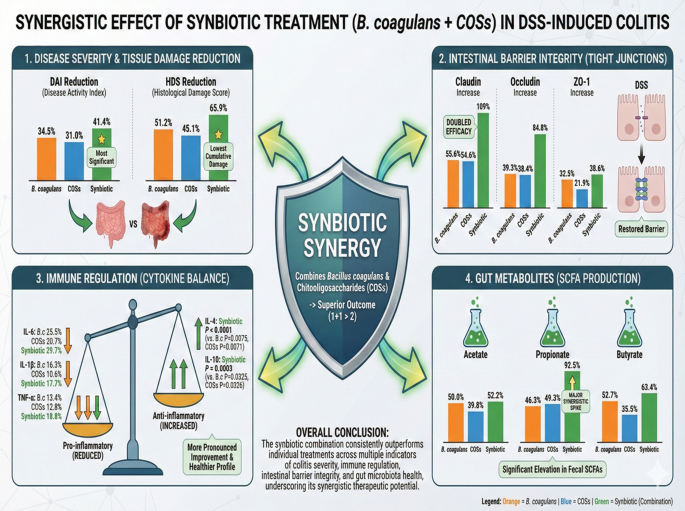
Synergistic synbiotic therapies for ulcerative colitis: mechanistic insights from multi-targeted pathways in animal models
Inflammopharmacology

Synergistic synbiotic therapies for ulcerative colitis: mechanistic insights from multi-targeted pathways in animal models

People with ulcerative colitis may be interested because synbiotic approaches aim to change the gut microbiome and intestinal barrier and therefore could become a future therapeutic option or adjunct. The paper...

Read Summary
Therapeutic efficacy of the cyanobacterium Leptolyngbya cf. ectocarpi in experimental toxic hepatitis and inflammatory bowel disease in mice
Сибирский научный медицинский журнал

Therapeutic efficacy of the cyanobacterium Leptolyngbya cf. ectocarpi in experimental toxic hepatitis and inflammatory bowel disease in mice

The paper describes a potential new anti-inflammatory/hepatoprotective candidate (a cyanobacterium extract) tested in mouse models of liver injury and IBD — early-stage research that could guide future studies but is not...

Read Summary
Callistephus A from Callistephus chinensis Alleviates DSS-Induced Ulcerative Colitis and Gut-liver Axis Disruption by Targeting the JAK2/STAT1 Pathway and Remodeling Gut Microbiota.
Journal of ethnopharmacology

Callistephus A from Callistephus chinensis Alleviates DSS-Induced Ulcerative Colitis and Gut-liver Axis Disruption by Targeting the JAK2/STAT1 Pathway and Remodeling Gut Microbiota.

The study identifies a plant-derived compound that reduced inflammation and liver injury in a mouse model of ulcerative colitis and ties its effects to both JAK2/STAT1 inhibition and changes in the gut microbiota—two...

Read Summary
Intestinal toxicity of functionalized polystyrene nanoplastics in NOD2 models of Crohn’s disease susceptibility
Frontiers in Toxicology

Intestinal toxicity of functionalized polystyrene nanoplastics in NOD2 models of Crohn’s disease susceptibility

The study suggests nanoplastic particles can alter intestinal barrier function, goblet cells, mucin secretion, and inflammation-related gene expression in models with genetic susceptibility to Crohn’s disease.

Read Summary
Orally Delivered Nanotherapeutics with miRNA-497 Supplying for Inflammatory Bowel Disease.
ACS applied materials & interfaces

Orally Delivered Nanotherapeutics with miRNA-497 Supplying for Inflammatory Bowel Disease.

Researchers are exploring targeted nanodelivery of miR-497 to reduce oxidative stress and shift immune cells toward tissue-repairing states — a novel preclinical strategy that could eventually lead to new treatments for...

Read Summary
Targeted β‐Glucan‐Veiled Oral Apremilast Nanotherapy Modulates Key Dysbiosis‐Associated Gut Microbiota and Alleviates Ulcerative Colitis‐Associated Anxiety, Depression, and Neuropsychiatric Behaviors
Advanced Science

Targeted β‐Glucan‐Veiled Oral Apremilast Nanotherapy Modulates Key Dysbiosis‐Associated Gut Microbiota and Alleviates Ulcerative Colitis‐Associated Anxiety, Depression, and Neuropsychiatric Behaviors

The study describes a new oral nanotherapy that delivered apremilast to the inflamed colon in mice and reportedly reduced gut inflammation and behaviors resembling anxiety/depression—suggesting a combined...

Read Summary
Lactobacillus pentosus Unraveling the probiotic evidence: howfrom fermented vegetables alleviates colitis by enlisting muribaculum to boost host phosphatidylcholine biosynthesis.
Food & function

Lactobacillus pentosus Unraveling the probiotic evidence: howfrom fermented vegetables alleviates colitis by enlisting muribaculum to boost host phosphatidylcholine biosynthesis.

This study suggests a specific probiotic strain may help reduce colitis in mice by changing the gut microbiome and boosting host phosphatidylcholine production — a pathway that could be relevant to gut barrier repair in...

Read Summary
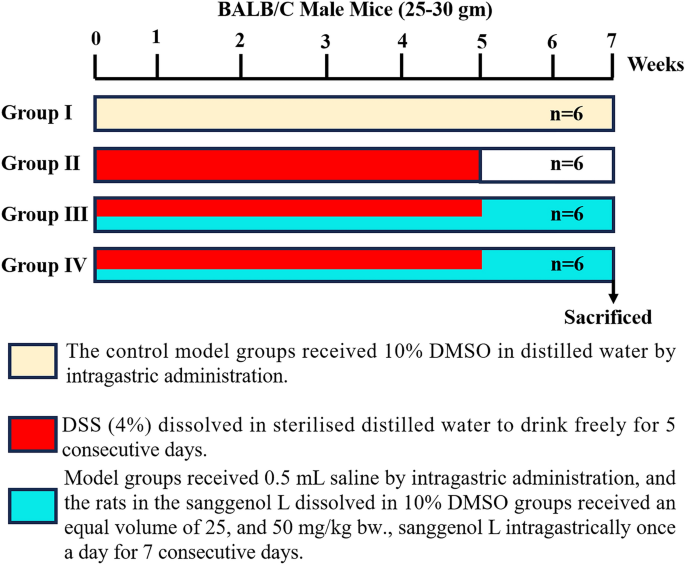
Sanggenol L Regulates Nrf2/HO-1/p65 Signalling Pathways via Dextran Sulfate Sodium-Induced Ulcerative Colitis in Mice
Bratislava Medical Journal

Sanggenol L Regulates Nrf2/HO-1/p65 Signalling Pathways via Dextran Sulfate Sodium-Induced Ulcerative Colitis in Mice

Researchers exploring new anti-inflammatory or antioxidant compounds for ulcerative colitis may find sanggenol L’s effects on Nrf2/HO-1 and TLR4/p65 signalling of interest. Patients should note this is early-stage,...

Read Summary
Lactobacillus johnsonii mediates the protective effects of pristimerin against ulcerative colitis and concomitant liver injury through remodeling hepatic lipid metabolism via LXRα-SCD1 axis.
Gut microbes

Lactobacillus johnsonii mediates the protective effects of pristimerin against ulcerative colitis and concomitant liver injury through remodeling hepatic lipid metabolism via LXRα-SCD1 axis.

The study identifies a gut bacteria–liver signaling axis (Lactobacillus johnsonii → hepatic LXRα–SCD1) that may explain how altered hepatic lipids contribute to UC and related liver injury, and shows pristimerin can...

Read Summary
Magnoflorine, a dietary alkaloid from Alpinia oxyphylla fruit, ameliorates colitis by restoring intestinal barrier and dual modulation of JAK/STAT3 pathway.
Food chemistry

Magnoflorine, a dietary alkaloid from Alpinia oxyphylla fruit, ameliorates colitis by restoring intestinal barrier and dual modulation of JAK/STAT3 pathway.

The study identifies a food-derived compound that improved colitis in lab models and acted on JAK/STAT3 signaling and intestinal barrier proteins—pathways relevant to IBD inflammation and mucosal healing.

Read Summary
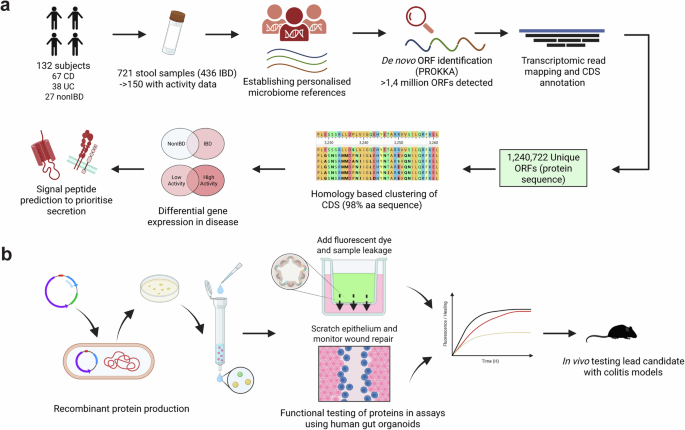
A microbiome meta-transcriptomics pipeline identifies a neutrophil elastase inhibitor that protects the colonic epithelial barrier
Signal Transduction and Targeted Therapy

A microbiome meta-transcriptomics pipeline identifies a neutrophil elastase inhibitor that protects the colonic epithelial barrier

Identifies a microbiome-derived protein that inhibits a protease linked to epithelial damage in IBD and shows protective effects in lab and mouse models, pointing to a new therapeutic strategy focused on barrier...

Read Summary
M2 macrophage-based biohybrid system regulates intestinal microbiota homeostasis and immunity for the treatment of inflammatory bowel disease.
Acta biomaterialia

M2 macrophage-based biohybrid system regulates intestinal microbiota homeostasis and immunity for the treatment of inflammatory bowel disease.

The study tests a multi-targeted biohybrid that could—if translated—help address inflammation, oxidative stress, and dysbiosis together, a combination that current single-target IBD treatments often do not address.

Read Summary
Probiotic‐Derived Vesicles Rectally Delivered via Thermo‐Gelling Copolymer Promote Mucosal Healing and Reduce Inflammation in Ulcerative Colitis
Advanced Science

Probiotic‐Derived Vesicles Rectally Delivered via Thermo‐Gelling Copolymer Promote Mucosal Healing and Reduce Inflammation in Ulcerative Colitis

This study describes a local rectal therapy that combines mesalamine with probiotic‑derived extracellular vesicles to promote mucosal healing and reduce inflammation in ulcerative colitis models, which could point toward...

Read Summary
Development And Validation of UV-Spectrophotometric Method for Determination of Upadacitinib Bulk and in Tablet Dosage Form
Journal of Drug Delivery and Therapeutics

Development And Validation of UV-Spectrophotometric Method for Determination of Upadacitinib Bulk and in Tablet Dosage Form

Reliable laboratory methods help ensure upadacitinib tablets contain the correct amount of drug and support quality control of medicines people take for conditions including Crohn’s disease and ulcerative colitis.

Read Summary
Hudi enteric-coated capsules promote colonic mucosa restoration via modulation of Wnt/β-catenin signaling in inflammatory bowel disease.
Fitoterapia

Hudi enteric-coated capsules promote colonic mucosa restoration via modulation of Wnt/β-catenin signaling in inflammatory bowel disease.

A traditional medicine formulation (Hudi capsules) relieved colitis signs in mice and appears to stimulate Wnt/β-catenin–dependent epithelial regeneration, which could point to new therapeutic directions for mucosal...

Read Summary
Integrative Bioinformatics Analysis of Single Cell RNA-Sequencing Data Reveals Key Regulatory Genes and Therapeutic Targets in Inflammatory Bowel Disease
Europe PMC

Integrative Bioinformatics Analysis of Single Cell RNA-Sequencing Data Reveals Key Regulatory Genes and Therapeutic Targets in Inflammatory Bowel Disease

The study uses single-cell RNA sequencing to pinpoint genes and regulatory networks that might help explain IBD biology and suggest new biomarkers or repurposed drugs. That information could guide future research toward...

Read Summary