Research topics

Microbiome

Microbiome articles covering gut bacteria, microbial changes, microbiota research, and IBD disease mechanisms.

Page 4 of 12 · 570 articles

Distribution of CARD15/NOD2 Variants in Crohn’s Disease, Ulcerative Colitis, and Healthy Controls in a Djiboutian Population
Gastrointestinal Disorders

Distribution of CARD15/NOD2 Variants in Crohn’s Disease, Ulcerative Colitis, and Healthy Controls in a Djiboutian Population

The report explores NOD2/CARD15 variants in a Djiboutian IBD cohort and suggests higher variant frequencies in Crohn’s disease, which could point to population-specific genetic susceptibility. It also raises khat use as...

Read Summary
Interaction between intestinal microbiota, inflammatory cytokines, and the expression of miR-330-3p and miR-515-5p in patients with ulcerative colitis.
Journal of medical biochemistry

Interaction between intestinal microbiota, inflammatory cytokines, and the expression of miR-330-3p and miR-515-5p in patients with ulcerative colitis.

The paper links specific gut bacteria, inflammatory cytokines, and two microRNAs with UC activity, which could point toward new diagnostic biomarkers or targets for research into disease mechanisms.

Read Summary
Metabolic regulation of gut barrier integrity in IBD: protein, lipid, and carbohydrate pathways.
Frontiers in nutrition

Metabolic regulation of gut barrier integrity in IBD: protein, lipid, and carbohydrate pathways.

Dietary macronutrients affect microbiota, barrier integrity, and mucosal immunity in ways that could alter IBD activity. Understanding these pathways could inform more targeted dietary strategies beyond generic...

Read Summary
Extracellular vesicle-based therapies in IBD: immunomodulation, regeneration, and translation.
Frontiers in immunology

Extracellular vesicle-based therapies in IBD: immunomodulation, regeneration, and translation.

Extracellular vesicle (EV) therapies are being explored as new ways to modulate immune responses and promote mucosal repair in IBD, which could eventually expand treatment options beyond current biologics and small...

Read Summary
Insight into Ulcerative Colitis and Associated Diarrhea: Exploring the Interplay of Cellular and Molecular Axis with Advancement in Treatments.
Recent advances in inflammation & allergy drug discovery

Insight into Ulcerative Colitis and Associated Diarrhea: Exploring the Interplay of Cellular and Molecular Axis with Advancement in Treatments.

Persistent diarrhea is a common, quality-of-life–limiting problem in ulcerative colitis; this review synthesizes how epithelial transport, barrier damage, immune signaling, mitochondria, and microbiota interact and...

Read Summary
Revisiting the role of lymphatics in Crohn’s disease
Inflammatory Bowel Diseases

Revisiting the role of lymphatics in Crohn’s disease

If lymphatic dysfunction helps cause or sustain Crohn’s inflammation, it could explain some classic disease features (patchy, transmural inflammation and mesenteric changes) and point to new treatment approaches aimed at...

Read Summary
Colitis-Associated Colorectal Cancer—STAT3 Inhibition as a Preventive Strategy
International Journal of Molecular Sciences

Colitis-Associated Colorectal Cancer—STAT3 Inhibition as a Preventive Strategy

Preclinical data suggest blocking STAT3 with TTI-101 prevented colitis-associated colorectal tumors in a mouse model and altered tumor-related gene expression and the gut microbiome — findings that could guide future...

Read Summary
Microbiota-Associated Amino Acid Metabolites in Inflammatory Bowel Disease: Emerging Key Players in the Host–Microbe Interface
Microorganisms

Microbiota-Associated Amino Acid Metabolites in Inflammatory Bowel Disease: Emerging Key Players in the Host–Microbe Interface

Microbial amino-acid metabolites may be active players in IBD biology and could become useful biomarkers or therapeutic targets. Understanding these metabolites helps explain links between the microbiome, immune...

Read Summary
Microplastics and nanoplastics in inflammatory bowel disease: Mechanistic plausibility, human evidence and future research priorities
World Journal of Gastrointestinal Pathophysiology

Microplastics and nanoplastics in inflammatory bowel disease: Mechanistic plausibility, human evidence and future research priorities

People with IBD may be concerned about environmental exposures that could influence inflammation or worsen disease. This review explains why micro- and nanoplastics are biologically plausible contributors but also why...

Read Summary
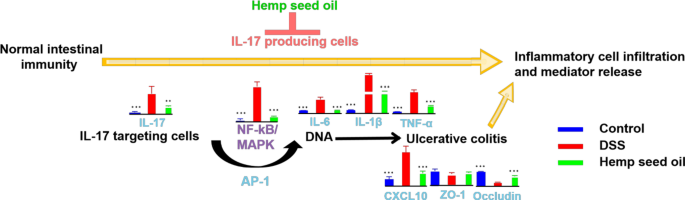
Hemp seed oil ameliorates DSS-induced ulcerative colitis in mice by altering transcriptomics and metabolomics
Journal of Natural Medicines

Hemp seed oil ameliorates DSS-induced ulcerative colitis in mice by altering transcriptomics and metabolomics

The study uses a mouse model of ulcerative colitis to test hemp seed oil and reports molecular and metabolic changes alongside reduced disease in the model. Patients and researchers may be interested because it explores...

Read Summary
High-throughput chemical screen identifies epothilone B in modulating inflammatory bowel disease by triggering neutrophil apoptosis.
Genes & diseases

High-throughput chemical screen identifies epothilone B in modulating inflammatory bowel disease by triggering neutrophil apoptosis.

The paper identifies epothilone B as a repurposing candidate that may reduce neutrophil-driven inflammation and support epithelial healing in IBD models, a potential new strategy distinct from broad neutrophil...

Read Summary
Dietary prevention of undernutrition reduces intestinal inflammation associated with an anti-inflammatory profile of gut microbiota in a preclinical model
Scientific Reports

Dietary prevention of undernutrition reduces intestinal inflammation associated with an anti-inflammatory profile of gut microbiota in a preclinical model

Undernutrition and lean-mass loss are common and harmful in people with IBD. If dietary strategies can prevent weight and muscle loss and shift the gut microbiota toward SCFA producers, that could be relevant to...

Read Summary
Lonicerae Japonicae Flos as a Dietary Natural Product: Bioactive Constituents, Gut Health Modulation, and Therapeutic Potential in Ulcerative Colitis and Colorectal Cancer.
Food science & nutrition

Lonicerae Japonicae Flos as a Dietary Natural Product: Bioactive Constituents, Gut Health Modulation, and Therapeutic Potential in Ulcerative Colitis and Colorectal Cancer.

The review suggests LJF contains compounds that may reduce intestinal inflammation, support gut barrier health, and influence microbiota—areas directly relevant to ulcerative colitis and colorectal cancer risk. However,...

Read Summary
Genetic and microbial regulation of NOD2 signaling in homeostasis and disease.
MedScience

Genetic and microbial regulation of NOD2 signaling in homeostasis and disease.

NOD2 loss-of-function is a major genetic risk for Crohn’s disease, and this review highlights that gut microbes can modulate NOD2 signaling. That connection may help explain variation in disease risk and points to...

Read Summary
Inflammation-responsive sodium alginate-based microalgal hydrogel with pH/ROS dual sensitivity for oral colon-targeted therapy of ulcerative colitis.
International journal of biological macromolecules

Inflammation-responsive sodium alginate-based microalgal hydrogel with pH/ROS dual sensitivity for oral colon-targeted therapy of ulcerative colitis.

The study presents a new inflammation-responsive oral delivery system designed to concentrate antioxidant and anti-inflammatory activity in the colon, which could—if translated safely to humans—offer a way to treat...

Read Summary
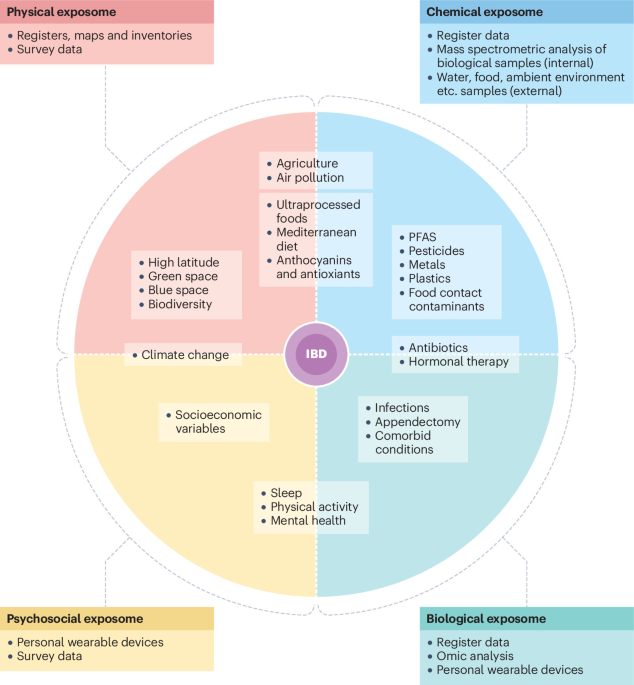
The exposome and inflammatory bowel disease: a framework for primary and primordial prevention
Nature Reviews Gastroenterology & Hepatology

The exposome and inflammatory bowel disease: a framework for primary and primordial prevention

The exposome perspective emphasizes that many non-genetic, potentially modifiable environmental factors likely influence IBD risk. Understanding these factors could help guide prevention research and public-health...

Read Summary
Multi-omics analyses unveil gut microbiota and metabolites signatures in deoxycholic acid-associated intestinal inflammation.
Frontiers in microbiology

Multi-omics analyses unveil gut microbiota and metabolites signatures in deoxycholic acid-associated intestinal inflammation.

The study links high levels of the bile acid DCA to microbiome and metabolite changes that correlate with intestinal inflammation in mice, suggesting a possible pathway connecting high‑fat diets to colitis risk.

Read Summary
Klebsiella pneumoniae in inflammatory bowel disease and rectal cancer: from gut inflammation to a potential driver of carcinogenesis.
Frontiers in microbiology

Klebsiella pneumoniae in inflammatory bowel disease and rectal cancer: from gut inflammation to a potential driver of carcinogenesis.

The review suggests that specific Klebsiella pneumoniae strains could connect chronic IBD inflammation with rectal cancer risk, pointing to possible biomarker or prevention targets that may be relevant for people with...

Read Summary
Spatial multi-omics-guided drug development in inflammatory bowel disease: from mucosal immune niches to precision therapy
Frontiers in Immunology

Spatial multi-omics-guided drug development in inflammatory bowel disease: from mucosal immune niches to precision therapy

Spatially resolved profiling could identify the specific cell neighborhoods and signaling circuits that drive disease in a person’s gut tissue, which may help predict who will respond to particular biologics or small...

Read Summary
MiR-29a deficiency disrupts gut microbiota-bile acid homeostasis and impairs the anti-inflammatory effects of lithocholic acid in colitis
Frontiers in Cellular and Infection Microbiology

MiR-29a deficiency disrupts gut microbiota-bile acid homeostasis and impairs the anti-inflammatory effects of lithocholic acid in colitis

The paper connects a host microRNA (miR-29a) to gut microbiota bile-acid metabolism and an anti-inflammatory bile acid (LCA). If similar mechanisms apply in people, it could point to new biological targets or biomarkers...

Read Summary
Colon-targeted EGCG delivery remodels the gut microenvironment to enhance therapeutic efficacy in ulcerative colitis.
Journal of controlled release : official journal of the Controlled Release Society

Colon-targeted EGCG delivery remodels the gut microenvironment to enhance therapeutic efficacy in ulcerative colitis.

The study introduces a colon-targeted EGCG delivery system that reduced inflammation and improved microbial and metabolic markers in a mouse model of UC, suggesting a potential new therapeutic approach worth further...

Read Summary
Probiotic drug interactions in ulcerative colitis: a microbiota and metabolite perspective
Frontiers in Microbiology

Probiotic drug interactions in ulcerative colitis: a microbiota and metabolite perspective

People with UC often use probiotics or microbiome-directed therapies alongside prescription drugs. Understanding probiotic–drug interactions could explain why individuals respond differently to IBD treatments and may...

Read Summary
Antibiotic-Refractory Chronic Pouchitis After Ileal Pouch-Anal Anastomosis: Current and Emerging Therapeutic Strategies.
Drugs

Antibiotic-Refractory Chronic Pouchitis After Ileal Pouch-Anal Anastomosis: Current and Emerging Therapeutic Strategies.

Chronic antibiotic-refractory pouchitis is a common, impactful complication after ileal pouch-anal anastomosis that can worsen quality of life and increase the risk of pouch failure. Patients and clinicians need clearer...

Read Summary
Qijiao Shengbai capsule ameliorates ulcerative colitis in mice by modulating gut microbiota and protecting the intestinal barrier, associated with suppression of the TLR4/MyD88/NF-κB pathway
Frontiers in Microbiology

Qijiao Shengbai capsule ameliorates ulcerative colitis in mice by modulating gut microbiota and protecting the intestinal barrier, associated with suppression of the TLR4/MyD88/NF-κB pathway

This preclinical study connects an herbal medicine to changes in gut microbiota, inflammation, and intestinal barrier function in a mouse model of ulcerative colitis — findings that could inform future research on new...

Read Summary
Preventive administration of verapamil attenuates dextran sulfate sodium-induced colitis in mice.
Experimental and therapeutic medicine

Preventive administration of verapamil attenuates dextran sulfate sodium-induced colitis in mice.

A common heart drug, verapamil, reduced disease signs in a mouse model of colitis and altered inflammation and the gut microbiota — suggesting a possible avenue for future IBD research. These are preclinical results, so...

Read Summary
Metabolic reprogramming in ulcerative colitis: integrating dietary drivers, pathogenesis, and therapeutic advances
Frontiers in Immunology

Metabolic reprogramming in ulcerative colitis: integrating dietary drivers, pathogenesis, and therapeutic advances

The review connects Western diet-driven metabolic shifts in the gut, immune cells, and microbiota to ulcerative colitis mechanisms and highlights metabolism-targeting therapies as a potential future avenue for treatment.

Read Summary
Glutathione peroxidase in inflammatory bowel disease: From ferroptosis, immunity, and microbiota regulation to targeted nanomedicines.
Life sciences

Glutathione peroxidase in inflammatory bowel disease: From ferroptosis, immunity, and microbiota regulation to targeted nanomedicines.

GPX and selenium-related pathways may be important to how oxidative stress, ferroptosis, and the microbiome contribute to IBD. Understanding these mechanisms could guide future therapies.

Read Summary
Comparative pharmacodynamic material basis of oral and colonic administration of Baitouweng decoction in experimental ulcerative colitis.
Journal of ethnopharmacology

Comparative pharmacodynamic material basis of oral and colonic administration of Baitouweng decoction in experimental ulcerative colitis.

The paper suggests that the same herbal formula can produce different absorbed components and target interactions depending on oral versus colonic delivery, which could influence therapeutic effects in ulcerative colitis...

Read Summary
Macrophage plasticity as a therapeutic target in inflammatory bowel disease: Immunomodulatory and regenerative strategies.
International immunopharmacology

Macrophage plasticity as a therapeutic target in inflammatory bowel disease: Immunomodulatory and regenerative strategies.

Macrophages are central regulators of intestinal inflammation and repair; understanding their diversity and how to modulate them could lead to new, more targeted treatments for Crohn's disease and ulcerative colitis.

Read Summary
A robustness-first cross-disease framework supports a candidate shared microbial redox axis and disease-specific metabolic divergence in colorectal cancer, Crohn's disease, and liver cirrhosis.
mSystems

A robustness-first cross-disease framework supports a candidate shared microbial redox axis and disease-specific metabolic divergence in colorectal cancer, Crohn's disease, and liver cirrhosis.

Researchers found a candidate shared microbial signal across colorectal cancer, Crohn’s disease, and liver cirrhosis that points to redox-related microbial functions; this could guide future biomarker or experimental...

Read Summary
Engineered microvesicle-mediated multimodal therapy resolves ulcerative colitis via synergistic immunoregulation, barrier restoration, and microbiota remodeling
Materials today. Bio

Engineered microvesicle-mediated multimodal therapy resolves ulcerative colitis via synergistic immunoregulation, barrier restoration, and microbiota remodeling

Based on the title and source metadata, this appears to be a basic science related to Ulcerative colitis, Inflammatory bowel disease, and Microbiome. The original article is from Materials today. Bio.

Read Summary
Integrated Multi-Omics Reveals Complementary Luminal and Mucosal Host–Microbiome Interactions Associated with Disease Activity and Phenotype in Paediatric Inflammatory Bowel Disease
Microorganisms

Integrated Multi-Omics Reveals Complementary Luminal and Mucosal Host–Microbiome Interactions Associated with Disease Activity and Phenotype in Paediatric Inflammatory Bowel Disease

The study shows that fecal (luminal) and mucosal microbiome and metabolite profiles capture different aspects of pediatric IBD—activity versus phenotype—so combined sampling may give a fuller picture for research and...

Read Summary