Research tools

Biomarker

Biomarker articles covering signals used to study, predict, monitor, or measure Crohn's disease and IBD activity or treatment response.

Page 3 of 6 · 242 articles

Protease-serpin-microbiome interactions in inflammatory bowel disease: toward integrated biomarkers of gut health.
Gut microbes

Protease-serpin-microbiome interactions in inflammatory bowel disease: toward integrated biomarkers of gut health.

Protease and serpin activity affect the gut barrier, immunity, and microbial ecology—processes central to IBD. Integrating these pathways could help identify biomarkers or targets that explain why IBD varies between...

Read Summary
Novel Therapeutic Strategies and Biomarkers in the Management of Inflammatory Bowel Disease: A Narrative Review.
Cureus

Novel Therapeutic Strategies and Biomarkers in the Management of Inflammatory Bowel Disease: A Narrative Review.

This narrative review surveys novel biomarkers and therapeutic strategies for adult IBD, topics that could affect diagnosis, monitoring, and future treatment options for people with Crohn's disease or ulcerative colitis.

Read Summary
Expression Profiles, Biological Functions and Clinical Significance of Circular RNAs in Inflammatory Bowel Disease.
Journal of inflammation research

Expression Profiles, Biological Functions and Clinical Significance of Circular RNAs in Inflammatory Bowel Disease.

Researchers are investigating circRNAs as potential biomarkers and therapeutic targets in IBD because they may help explain disease mechanisms and lead to better diagnostics or treatments in the future.

Read Summary
Gut Microbiota and Metabolic Pathway Signatures for Inflammatory Bowel Disease Identified via Subject-Stratified Random Forest Based on the Longitudinal HMP2 Cohort
Genes

Gut Microbiota and Metabolic Pathway Signatures for Inflammatory Bowel Disease Identified via Subject-Stratified Random Forest Based on the Longitudinal HMP2 Cohort

The study provides a more rigorous, leakage-free machine-learning analysis of a major IBD microbiome cohort and proposes reproducible microbial and metabolic pathway candidates that could eventually help IBD diagnosis or...

Read Summary
The Utility of Faecal Biomarkers in the Discrimination Between Acute Gastroenteritis and Inflammatory Bowel Disease
Biomedicines

The Utility of Faecal Biomarkers in the Discrimination Between Acute Gastroenteritis and Inflammatory Bowel Disease

Distinguishing acute infectious gastroenteritis from new‑onset IBD can be clinically challenging. Faecal biomarkers that help tell these apart could speed correct diagnosis and treatment and avoid unnecessary...

Read Summary
Development of a tissue-based risk prediction model combining histology and barrier biomarkers for clinical relapse in ulcerative colitis with endoscopic healing.
Therapeutic advances in gastroenterology

Development of a tissue-based risk prediction model combining histology and barrier biomarkers for clinical relapse in ulcerative colitis with endoscopic healing.

Patients with UC who appear healed on endoscopy can still relapse; a biopsy-based model could help separate lower- and higher-risk patients and guide monitoring or research enrollment.

Read Summary
Fatty acid-binding protein 2 in inflammatory bowel disease: mechanistic insights and translational perspectives.
Frontiers in medicine

Fatty acid-binding protein 2 in inflammatory bowel disease: mechanistic insights and translational perspectives.

FABP2 is presented as a sensitive biomarker of intestinal mucosal injury and a possible contributor to IBD mechanisms; if validated, it could improve disease monitoring and suggest new therapeutic targets.

Read Summary
Identification of Ferro‐Aging‐Related Biomarkers for Ulcerative Colitis Through Integrated Machine Learning, Single‐Cell Analysis, and Spatial Transcriptomics
The FASEB Journal

Identification of Ferro‐Aging‐Related Biomarkers for Ulcerative Colitis Through Integrated Machine Learning, Single‐Cell Analysis, and Spatial Transcriptomics

Researchers identified molecular features of a proposed “ferro‑aging” state in UC and nominated CHST15 and MSN as biomarkers, which could help understand disease biology and point to new experimental targets for therapy...

Read Summary
Extracellular vesicles in inflammatory bowel disease: from immune regulation and barrier repair to precise transformation.
Autoimmunity reviews

Extracellular vesicles in inflammatory bowel disease: from immune regulation and barrier repair to precise transformation.

The review summarizes how extracellular vesicles (EVs) shape immune responses and barrier repair in the gut and discusses their potential as accessible biomarkers and as vehicles for precise IBD therapies — topics that...

Read Summary
Wearable perspiration sensor for continuous inflammation tracking in inflammatory bowel disease.
Inflammatory bowel diseases

Wearable perspiration sensor for continuous inflammation tracking in inflammatory bowel disease.

A wearable sensor that reliably measures inflammation markers (CRP and calprotectin) from sweat could make inflammation monitoring less invasive and more frequent for people with IBD, potentially helping detect flares...

Read Summary
Pectin and Kaolin as Adjunctive Metabolic Therapy for Maintaining Remission in Ulcerative Colitis: Biological Rationale, Current Evidence and Future Clinical Perspectives
Nutrients

Pectin and Kaolin as Adjunctive Metabolic Therapy for Maintaining Remission in Ulcerative Colitis: Biological Rationale, Current Evidence and Future Clinical Perspectives

The review proposes a low-cost, non-immunosuppressive adjunctive strategy targeting the gut microbiome and luminal metabolism to help maintain remission in UC, an area of strong patient interest but limited clinical...

Read Summary
Plasma proteomic signatures associated with ulcerative colitis risk in overweight/obesity individuals: a UK Biobank study
Scientific Reports

Plasma proteomic signatures associated with ulcerative colitis risk in overweight/obesity individuals: a UK Biobank study

If you have overweight or obesity, this study suggests measurable blood proteins linked to inflammation may be associated with higher future risk of ulcerative colitis. Identifying such markers could help research on...

Read Summary
Shaping the research agenda of pediatric gastroenterology, hepatology, and nutrition: The proposal from a SIGENP expert groups
PubMed Central

Shaping the research agenda of pediatric gastroenterology, hepatology, and nutrition: The proposal from a SIGENP expert groups

A strategic, pediatric-focused research agenda helps target studies where children with IBD and related conditions most need better diagnostics, biomarkers, and treatments. Prioritizing multi-center registries and...

Read Summary
Ferroptosis in Intestinal Diseases: Molecular Mechanisms, Therapeutic Potential, and Future Perspectives.
Medicinal research reviews

Ferroptosis in Intestinal Diseases: Molecular Mechanisms, Therapeutic Potential, and Future Perspectives.

Researchers are exploring ferroptosis as a double-edged mechanism: preventing it may protect healthy gut lining in IBD, while inducing it might help treat colorectal cancer. Advances could lead to new biomarkers or...

Read Summary
The Roles of Four Neutrophil-Derived Proteins as Non-Invasive Biomarkers in the Assessment of Inflammatory Bowel Disease.
Journal of inflammation research

The Roles of Four Neutrophil-Derived Proteins as Non-Invasive Biomarkers in the Assessment of Inflammatory Bowel Disease.

Non-invasive biomarkers can help detect and monitor IBD activity, distinguish IBD from other GI conditions, and potentially predict relapse—tools that may reduce need for invasive tests.

Read Summary
Identification and validation of novel platelet-related genes in ulcerative colitis using bioinformatics and machine learning strategies
PeerJ

Identification and validation of novel platelet-related genes in ulcerative colitis using bioinformatics and machine learning strategies

Researchers present a small platelet-related gene signature (TRIM22, TIMP1, RAC2) that may help understand UC biology and point toward blood-based biomarkers. If validated further, such markers might aid noninvasive...

Read Summary
Basal crypt dysplasia in inflammatory bowel disease: morphological quandaries, p53 immunohistochemistry and diagnostic pointers
Virchows Archiv

Basal crypt dysplasia in inflammatory bowel disease: morphological quandaries, p53 immunohistochemistry and diagnostic pointers

Basal crypt dysplasia is easy to miss but linked to higher risk of advanced colorectal neoplasia in longstanding IBD. Improved recognition and use of p53 immunohistochemistry or complementary biomarkers could affect...

Read Summary
TL1A-DR3 Signaling in Inflammatory Bowel Disease: From Pathogenesis to Therapeutic Targeting.
The Kurume medical journal

TL1A-DR3 Signaling in Inflammatory Bowel Disease: From Pathogenesis to Therapeutic Targeting.

TL1A-DR3 is implicated in both inflammation and fibrosis in IBD, so targeting it could address active disease and reduce fibrotic complications that lead to strictures. New TL1A-blocking antibodies are already in...

Read Summary
Longitudinal visceral adipose heterogeneity supports digital health stratification of infliximab response loss in Crohn disease
Springer Science and Business Media LLC

Longitudinal visceral adipose heterogeneity supports digital health stratification of infliximab response loss in Crohn disease

If validated, an imaging-derived adipose heterogeneity biomarker could help predict who will lose response to infliximab after induction, potentially guiding earlier treatment decisions and personalized monitoring for...

Read Summary
Microbiota-Immune Interaction Landscape of Treg/Th17 Dynamic Balance in Regulating Mucosal Immune Homeostasis: From Molecular Switches to Precision Intervention in Inflammatory Bowel Disease
Discovery Medicine

Microbiota-Immune Interaction Landscape of Treg/Th17 Dynamic Balance in Regulating Mucosal Immune Homeostasis: From Molecular Switches to Precision Intervention in Inflammatory Bowel Disease

Treg/Th17 balance is a central immune mechanism implicated in IBD pathogenesis; understanding how microbes, metabolites, and tissue context control that balance could inform new biomarkers and targeted therapies.

Read Summary
Pesticide Residues, Gut Microbiota, and Gastrointestinal Outcomes: A Scoping Review of Human Evidence
Comprehensive Reviews in Food Science and Food Safety

Pesticide Residues, Gut Microbiota, and Gastrointestinal Outcomes: A Scoping Review of Human Evidence

This review summarizes human evidence that pesticides in the diet could affect the gut microbiome and may be linked to gastrointestinal outcomes including IBD; strongest consistent signals were for organochlorine...

Read Summary
Serum leucine-rich α-2-glycoprotein and monocyte chemoattractant protein-1 as novel biomarkers for predicting vedolizumab response in patients with ulcerative colitis.
Crohn's & colitis 360

Serum leucine-rich α-2-glycoprotein and monocyte chemoattractant protein-1 as novel biomarkers for predicting vedolizumab response in patients with ulcerative colitis.

Blood biomarkers that predict vedolizumab response could help patients and clinicians choose the most effective therapy sooner and avoid ineffective treatments. The study suggests LRG and MCP‑1 may differentiate...

Read Summary
Analysis of multiplexed SERS-based lateral flow assays: turning qualitative into quantitative for inflammatory bowel disease monitoring.
The Analyst

Analysis of multiplexed SERS-based lateral flow assays: turning qualitative into quantitative for inflammatory bowel disease monitoring.

Quantitative, rapid stool tests could make it easier to track intestinal inflammation without central lab delays. If translated to clinical use, SERS-enhanced lateral-flow assays might allow more frequent, point-of-care...

Read Summary
Anti-Integrin αvβ6 Autoantibodies Distinguish Ulcerative Colitis From Crohn's Disease With High Diagnostic Accuracy and Outperform ANCA and ASCA Status: A Prospective Cross-Sectional Study.
Alimentary pharmacology & therapeutics

Anti-Integrin αvβ6 Autoantibodies Distinguish Ulcerative Colitis From Crohn's Disease With High Diagnostic Accuracy and Outperform ANCA and ASCA Status: A Prospective Cross-Sectional Study.

A blood test that more reliably distinguishes UC from CD could reduce diagnostic uncertainty and help guide appropriate long‑term management for people with colonic inflammatory bowel disease.

Read Summary
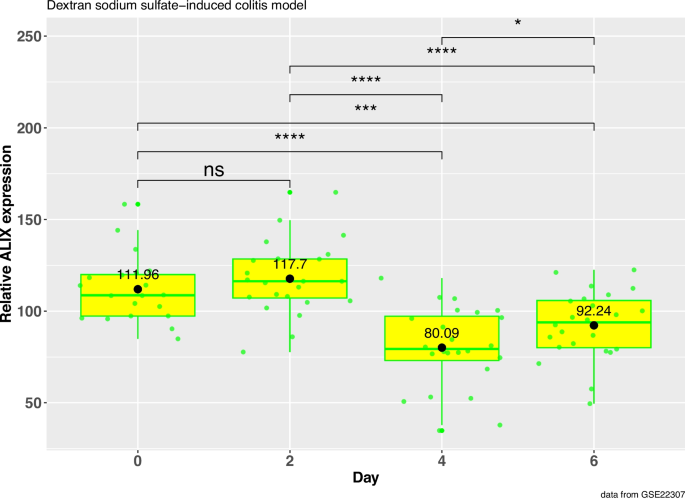
Low ALIX expression might promote mucosal inflammation in the colon of patients with ulcerative colitis, possibly by promoting pyroptosis: an in silico analysis
Comparative Clinical Pathology

Low ALIX expression might promote mucosal inflammation in the colon of patients with ulcerative colitis, possibly by promoting pyroptosis: an in silico analysis

The paper suggests a new molecular link—low ALIX expression—to inflammatory cell death (pyroptosis) that might help explain mucosal inflammation in ulcerative colitis. If validated, that pathway could point to biomarkers...

Read Summary
Inflammation-driven carcinogenesis in ulcerative colitis: Molecular and immunological pathways
World Journal of Gastrointestinal Oncology

Inflammation-driven carcinogenesis in ulcerative colitis: Molecular and immunological pathways

People with ulcerative colitis face a higher colorectal cancer risk driven in part by chronic inflammation; this review explains the molecular and immune mechanisms behind that risk and highlights biomarkers and...

Read Summary
C-Reactive Protein-to-Albumin Ratio in Pediatric Inflammatory Bowel Disease: Associations with Disease Activity and Comparison with C-Reactive Protein Alone
Diagnostics

C-Reactive Protein-to-Albumin Ratio in Pediatric Inflammatory Bowel Disease: Associations with Disease Activity and Comparison with C-Reactive Protein Alone

This paper evaluates CAR, a simple blood‑based biomarker, in children with IBD and finds it reflects disease severity and changes over time in pediatric Crohn’s disease. That matters because reliable, easy-to-measure...

Read Summary
Disrupted terminal bilirubin catabolism links Lachnospiraceae depletion to inflammatory bowel disease
Frontiers in Microbiology

Disrupted terminal bilirubin catabolism links Lachnospiraceae depletion to inflammatory bowel disease

Identifies specific gut bacteria and fecal bilirubin metabolites that may link microbial loss to increased oxidative burden in IBD; suggests new biomarker candidates and targets for functional follow-up.

Read Summary
Plasma Proteomic Profiling Identifies Biomarkers and Therapeutic Targets for Predicting Osteoporosis Risk in Patients with Inflammatory Bowel Disease.
The Turkish journal of gastroenterology : the official journal of Turkish Society of Gastroenterology

Plasma Proteomic Profiling Identifies Biomarkers and Therapeutic Targets for Predicting Osteoporosis Risk in Patients with Inflammatory Bowel Disease.

IBD increases risk of osteoporosis; identifying blood proteins that predict later bone loss could help flag higher-risk patients and reveal biological links between gut inflammation and bone health.

Read Summary
Multiple paths to health: A scoping review of dietary interventions for adults with Crohn's disease and ulcerative colitis.
Therapeutic advances in gastroenterology

Multiple paths to health: A scoping review of dietary interventions for adults with Crohn's disease and ulcerative colitis.

Many people with IBD try dietary changes to manage symptoms. This review summarizes what published adult studies report and points toward whole-food and Mediterranean-style patterns as commonly supported approaches.

Read Summary
Persistent elevation of serum LBP, IL-23 and IL-6 in infliximab-maintained Crohn's disease: a case–control study from Iraq with the serum LBP/albumin ratio as a novel composite biomarker
Journal of Genetic Engineering and Biotechnology

Persistent elevation of serum LBP, IL-23 and IL-6 in infliximab-maintained Crohn's disease: a case–control study from Iraq with the serum LBP/albumin ratio as a novel composite biomarker

Based on the title and source metadata, this appears to be a clinical study related to Crohn's disease, Inflammatory bowel disease, and Infliximab. The original article is from Journal of Genetic Engineering and...

Read Summary
Evaluation of pharmacokinetic metrics and pharmacodynamic biomarkers associated with endoscopic healing in pediatric Crohn's disease patients treated with anti-tumor necrosis factor biologics.
Crohn's & colitis 360

Evaluation of pharmacokinetic metrics and pharmacodynamic biomarkers associated with endoscopic healing in pediatric Crohn's disease patients treated with anti-tumor necrosis factor biologics.

Identifies candidate drug‑level and immune biomarker cut‑points linked with endoscopic healing in pediatric Crohn's disease, which could help guide dosing or treatment changes if validated.

Read Summary
Rapid fecal lipidome profiling in inflammatory bowel disease: A novel approach for exploratory disease molecular characterization and therapeutic monitoring.
Journal of pharmaceutical and biomedical analysis

Rapid fecal lipidome profiling in inflammatory bowel disease: A novel approach for exploratory disease molecular characterization and therapeutic monitoring.

Non-invasive fecal lipid markers could help differentiate UC from CD and improve diagnostic molecular profiling in IBD if validated, which may be useful for patients and clinicians seeking less-invasive diagnostic tools.

Read Summary