Medication classes

Anti-TNF

Anti-TNF articles covering treatments such as infliximab, adalimumab, certolizumab, and golimumab in IBD care. Medication context emphasizes treatment decisions, safety, approvals, and therapy access.

Page 2 of 5 · 240 articles

Upadacitinib Is Associated with the Lowest Risk of Treatment Failure Among Advanced Therapies for Ulcerative Colitis: A Real-World Administrative Claims Study.
Clinical gastroenterology and hepatology : the official clinical practice journal of the American Gastroenterological Association

Upadacitinib Is Associated with the Lowest Risk of Treatment Failure Among Advanced Therapies for Ulcerative Colitis: A Real-World Administrative Claims Study.

This large real-world study found upadacitinib was associated with lower risk of treatment failure and more corticosteroid-free stability compared with several other advanced therapies for ulcerative colitis —...

Read Summary
Subcutaneous infliximab for maintenance therapy in children and adolescents with inflammatory bowel disease: a systematic review and meta-analysis.
European journal of pediatrics

Subcutaneous infliximab for maintenance therapy in children and adolescents with inflammatory bowel disease: a systematic review and meta-analysis.

Children with IBD and their caregivers may be interested in subcutaneous infliximab as an alternative to regular IV infusions because this review suggests it can maintain drug levels and remission after switching, with...

Read Summary
Medical Therapies Beyond Infliximab for Perianal Fistulizing Crohn's Disease: Current Evidence and Future Perspectives.
Journal of clinical medicine

Medical Therapies Beyond Infliximab for Perianal Fistulizing Crohn's Disease: Current Evidence and Future Perspectives.

Perianal fistulas are a common, hard-to-heal complication of Crohn's disease. This review collects current options beyond infliximab and explains where evidence is stronger or still emerging, which can help patients and...

Read Summary
Biologics, small molecules, and extraintestinal malignancies in inflammatory bowel disease: practical questions and evidence-based answers.
Inflammatory bowel diseases

Biologics, small molecules, and extraintestinal malignancies in inflammatory bowel disease: practical questions and evidence-based answers.

People with IBD often need long-term advanced therapies. Cancer risk concerns commonly influence treatment choices—this review compiles current evidence to help patients and clinicians weigh risks when starting or...

Read Summary
Impact of Smoking on the Effectiveness of Advanced Therapies in Inflammatory Bowel Disease: Active Smoking Is Associated with Reduced Effectiveness of Anti-TNF Treatment
Medicina

Impact of Smoking on the Effectiveness of Advanced Therapies in Inflammatory Bowel Disease: Active Smoking Is Associated with Reduced Effectiveness of Anti-TNF Treatment

The study suggests active smoking reduces the effectiveness of anti-TNF biologics in people with IBD, which could affect treatment response and the need to switch or escalate therapies. This supports including smoking...

Read Summary
Patterns and factors associated with dose escalation during maintenance treatment for inflammatory bowel disease: a population-based cohort study.
Sage open chronic disease

Patterns and factors associated with dose escalation during maintenance treatment for inflammatory bowel disease: a population-based cohort study.

Dose increases are common during IBD maintenance and vary a lot by drug and patient profile. Knowing which treatments and patient factors are linked to escalation can help patients and clinicians plan monitoring and...

Read Summary
Multicentre, prospective, observational study on the effectiveness and safety of upadacitinib for active perianal fistulising Crohn's disease in patients with prior anti-tumour necrosis factor failure: a study protocol.
BMJ open

Multicentre, prospective, observational study on the effectiveness and safety of upadacitinib for active perianal fistulising Crohn's disease in patients with prior anti-tumour necrosis factor failure: a study protocol.

Perianal fistulising Crohn's disease is hard to treat and often fails anti-TNF drugs. This study will provide real-world data on whether upadacitinib can be effective and safe for patients with refractory perianal...

Read Summary
Comparative effectiveness of infliximab vs vedolizumab as first-line biologic therapy in moderate-to-severe ulcerative colitis: A prospective, multicenter, real-world study
Inflammatory Bowel Diseases

Comparative effectiveness of infliximab vs vedolizumab as first-line biologic therapy in moderate-to-severe ulcerative colitis: A prospective, multicenter, real-world study

This study compares two commonly used biologics as first-line therapy for moderate-to-severe ulcerative colitis and reports better short- and long-term effectiveness for vedolizumab with similar safety. The results could...

Read Summary
Anti-TNF-refractory inflammatory bowel disease associated with a novel XIAP frameshift variant successfully treated with ustekinumab.
Clinical journal of gastroenterology

Anti-TNF-refractory inflammatory bowel disease associated with a novel XIAP frameshift variant successfully treated with ustekinumab.

Identifying a genetic cause (XIAP frameshift variant) helped explain why anti‑TNF drugs failed and why blocking IL‑12/23 with ustekinumab led to improvement; that connection could influence treatment choices for similar...

Read Summary
Effectiveness and safety of tacrolimus versus infliximab as rescue therapy for intravenous corticosteroid-refractory acute severe ulcerative colitis: a multicenter cohort study.
Journal of Crohn's & colitis

Effectiveness and safety of tacrolimus versus infliximab as rescue therapy for intravenous corticosteroid-refractory acute severe ulcerative colitis: a multicenter cohort study.

This study directly compares two rescue medications used when intravenous steroids fail in acute severe ulcerative colitis, reporting similar short-term remission and safety but a slower early response with tacrolimus —...

Read Summary
Orofacial granulomatosis associated with Crohn's disease: clinical phenotype and response to biologics and Janus kinase inhibitor therapy in a large multi-center cohort.
Journal of Crohn's & colitis

Orofacial granulomatosis associated with Crohn's disease: clinical phenotype and response to biologics and Janus kinase inhibitor therapy in a large multi-center cohort.

Orofacial granulomatosis often co-occurs with Crohn's disease and appears linked to a distinct Crohn's phenotype and treatment needs. The findings suggest that advanced therapies can be effective for OFG-associated CD...

Read Summary
Targeting epithelial IFN-I signaling restores barrier integrity in anti-TNF refractory Crohn's disease.
Journal of Crohn's & colitis

Targeting epithelial IFN-I signaling restores barrier integrity in anti-TNF refractory Crohn's disease.

The study identifies epithelial IFN‑I signaling as a driver of barrier failure in anti‑TNF refractory Crohn’s disease and suggests that blocking IFN‑I could be a rescue strategy for patients who do not respond to...

Read Summary
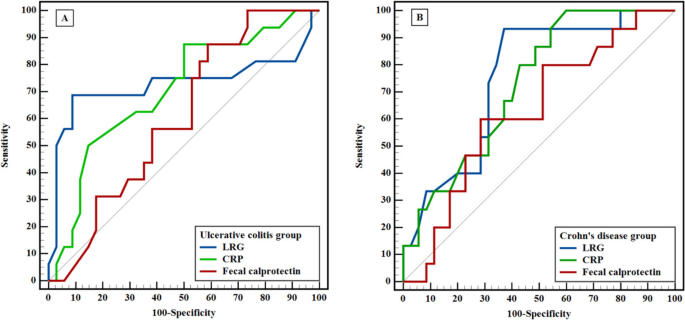
Leucine-rich alpha-2 glycoprotein as a predictor of primary non-response to anti-TNF-α therapy in biologic-naïve Egyptian IBD patients
BMC Gastroenterology

Leucine-rich alpha-2 glycoprotein as a predictor of primary non-response to anti-TNF-α therapy in biologic-naïve Egyptian IBD patients

A blood biomarker that helps predict primary non-response to anti‑TNF drugs could spare some patients ineffective therapy, reduce delays to alternative treatments, and inform shared decision‑making before starting...

Read Summary
Assessing the effectiveness of biologics in biologic-naïve patients with isolated small bowel Crohn's disease by double-balloon endoscopy.
Expert opinion on biological therapy

Assessing the effectiveness of biologics in biologic-naïve patients with isolated small bowel Crohn's disease by double-balloon endoscopy.

The findings give clinicians and patients data on how often biologic therapy leads to endoscopic remission in biologic‑naïve patients with isolated small‑bowel Crohn's disease, and they suggest similar effectiveness...

Read Summary
Switching standard dosed intravenous to subcutaneous infliximab leads to similar drug exposure in inflammatory bowel disease patients independent of concomitant immunosuppressants (SHUFFLE study).
British journal of clinical pharmacology

Switching standard dosed intravenous to subcutaneous infliximab leads to similar drug exposure in inflammatory bowel disease patients independent of concomitant immunosuppressants (SHUFFLE study).

The findings suggest people with IBD on IV infliximab could switch to fixed-dose SC infliximab without losing drug exposure, and many may gain convenience and higher trough drug levels regardless of concomitant...

Read Summary
Comparative outcomes of advanced medical rescue therapies in steroid-refractory acute severe ulcerative colitis: a systematic review and network meta-analysis
Frontiers in Gastroenterology

Comparative outcomes of advanced medical rescue therapies in steroid-refractory acute severe ulcerative colitis: a systematic review and network meta-analysis

The analysis compares rescue drugs used when severe ulcerative colitis doesn't respond to IV steroids — a high-stakes situation where avoiding colectomy matters.

Read Summary
A Direct Head-to-head Comparison of Ustekinumab With Infliximab for the Treatment of Ulcerative Colitis
ClinicalTrials.gov

A Direct Head-to-head Comparison of Ustekinumab With Infliximab for the Treatment of Ulcerative Colitis

Head-to-head comparisons between biologics are uncommon but useful for patients and clinicians deciding between agents. This study specifically compares ustekinumab and infliximab for remission, safety, and quality of...

Read Summary
Connecting the Dots Between Pharmacokinetics, Inflammatory Biomarkers, and Mucosal Healing in Patients on Infliximab with Inflammatory Bowel Disease
Pharmaceutics

Connecting the Dots Between Pharmacokinetics, Inflammatory Biomarkers, and Mucosal Healing in Patients on Infliximab with Inflammatory Bowel Disease

If true, using infliximab drug-level modeling plus routine blood tests could help predict who has mucosal healing without immediate endoscopy, potentially reducing invasive procedures and improving monitoring for people...

Read Summary
Aspects of inflammatory bowel disease during the COVID-19 pandemic and general considerations☆ Aspectos y consideraciones generales en la enfermedad inflamatoria intestinal durante la pandemia por COVID-19
Revista de gastroenterologia de Mexico (English)

Aspects of inflammatory bowel disease during the COVID-19 pandemic and general considerations☆ Aspectos y consideraciones generales en la enfermedad inflamatoria intestinal durante la pandemia por COVID-19

People with IBD and their clinicians need to know whether common IBD treatments change COVID-19 risk or should be stopped. This review provides practical recommendations (continue most maintenance drugs; avoid systemic...

Read Summary
Gradient Boosting Machine-Based Prognostic Model with SurvSHAP Analysis for Predicting Secondary Loss of Response to Infliximab Therapy in Crohn's Disease.
Drug design, development and therapy

Gradient Boosting Machine-Based Prognostic Model with SurvSHAP Analysis for Predicting Secondary Loss of Response to Infliximab Therapy in Crohn's Disease.

The work identifies factors that predict loss of response to infliximab and suggests maintenance drug levels are the strongest predictor, which could influence monitoring strategies for people with Crohn's disease on...

Read Summary
Anti-TNF therapy attenuates the diagnostic utility of leucine-rich α2-Glycoprotein 1 for endoscopic activity in ulcerative colitis.
Therapeutic advances in gastroenterology

Anti-TNF therapy attenuates the diagnostic utility of leucine-rich α2-Glycoprotein 1 for endoscopic activity in ulcerative colitis.

Serum LRG1 is a candidate blood biomarker for mucosal inflammation in UC, but anti-TNF drugs may suppress its levels and cause false-negative results. This affects noninvasive monitoring and decisions based on LRG1...

Read Summary
Intestinal ultrasound: a non-invasive alternative to monitor and predict biologic treatment persistence in patients with inflammatory bowel disease.
Scandinavian journal of gastroenterology

Intestinal ultrasound: a non-invasive alternative to monitor and predict biologic treatment persistence in patients with inflammatory bowel disease.

A non-invasive test (intestinal ultrasound) that predicts whether patients stay on biologic therapy could reduce the need for frequent endoscopy and help guide monitoring decisions.

Read Summary
Pharmacokinetic Predictor of Infection in Patients With Inflammatory Bowel Disease Treated With Intravenous and Subcutaneous Infliximab.
Journal of clinical gastroenterology

Pharmacokinetic Predictor of Infection in Patients With Inflammatory Bowel Disease Treated With Intravenous and Subcutaneous Infliximab.

This study suggests that cumulative infliximab exposure over time (AUC) — not just trough levels — may predict infection risk in people with IBD. That could affect how clinicians use therapeutic drug monitoring to...

Read Summary
Efficacy and safety of tumor necrosis factor-α inhibitors and mesenchymal stem cells in the treatment of fistulizing Crohn’s disease: a systematic review and network meta-analysis
Frontiers in Immunology

Efficacy and safety of tumor necrosis factor-α inhibitors and mesenchymal stem cells in the treatment of fistulizing Crohn’s disease: a systematic review and network meta-analysis

This analysis directly addresses treatments commonly used for perianal fistulizing Crohn’s disease and compares biologic anti-TNF drugs with emerging mesenchymal stem cell therapy, information that could affect treatment...

Read Summary
Baseline infliximab clearance identifies patients requiring intensified induction in acute severe ulcerative colitis
Frontline Gastroenterology

Baseline infliximab clearance identifies patients requiring intensified induction in acute severe ulcerative colitis

Knowing a patient’s estimated infliximab clearance before starting rescue therapy for acute severe ulcerative colitis could help identify who may need higher or intensified induction dosing and who might be at greater...

Read Summary
Intertriginous/Periorificial Dermatoses in Patients With IBD on Anti-TNFα: Relative Abundance of Staphylococcus Aureus Within the Lesion Microbiota and Clinical Correlation (micSPIDER).
ClinicalTrials.gov

Intertriginous/Periorificial Dermatoses in Patients With IBD on Anti-TNFα: Relative Abundance of Staphylococcus Aureus Within the Lesion Microbiota and Clinical Correlation (micSPIDER).

People with IBD who are treated with anti‑TNFα drugs commonly develop inflammatory or infectious skin problems. This study aims to clarify whether Staphylococcus aureus is more abundant in those lesions and whether its...

Read Summary
A Clinical Trial of Taibowei® Adalimumab Injection in the Treatment of Chinese Pediatric Patients With Moderately to Severely Active Crohn's Disease
ClinicalTrials.gov

A Clinical Trial of Taibowei® Adalimumab Injection in the Treatment of Chinese Pediatric Patients With Moderately to Severely Active Crohn's Disease

This trial studies adalimumab safety and pediatric dosing in children with moderate–severe Crohn's disease, which is directly relevant to families and clinicians considering anti-TNF therapy for pediatric IBD.

Read Summary
Long-term real-world effectiveness and safety of mirikizumab in ulcerative colitis: 52-Week results from an expanded international two-center retrospective cohort study.
Therapeutic advances in gastroenterology

Long-term real-world effectiveness and safety of mirikizumab in ulcerative colitis: 52-Week results from an expanded international two-center retrospective cohort study.

Real-world 52-week data suggest mirikizumab can produce meaningful remission and reasonable drug persistence in patients with treatment-experienced ulcerative colitis. This is especially relevant for people who have not...

Read Summary
Ustekinumab combined with upadacitinib promotes endoscopic healing in moderate-to-severe Crohn's disease with anti-TNF-α failure.
Revista espanola de enfermedades digestivas

Ustekinumab combined with upadacitinib promotes endoscopic healing in moderate-to-severe Crohn's disease with anti-TNF-α failure.

Patients with moderate-to-severe Crohn's disease who do not respond to anti-TNF drugs have limited options. This study suggests combining ustekinumab with upadacitinib may improve endoscopic healing versus either drug...

Read Summary