Evidence types

Basic Science

Basic science articles covering early-stage IBD research, disease mechanisms, lab findings, microbiome work, genetics, and experimental models.

Page 11 of 15 · 709 articles

Rhoifolin Alleviates Ulcerative Colitis by Targeting NMNAT1 and Activating SIRT1‐FOXO1 Signaling to Enhance ILC3s Effector Function
Advanced Science

Rhoifolin Alleviates Ulcerative Colitis by Targeting NMNAT1 and Activating SIRT1‐FOXO1 Signaling to Enhance ILC3s Effector Function

The paper describes a new immunometabolic mechanism that strengthened intestinal barrier function and reduced colitis in mice, suggesting a potential pathway to develop therapies that boost ILC3-driven IL-22 production...

Read Summary
The acid polysaccharides extracted from Moringa leaf improve DSS-induced ulcerative colitis by targeting intestinal microbiota metabolism.
Food research international (Ottawa, Ont.)

The acid polysaccharides extracted from Moringa leaf improve DSS-induced ulcerative colitis by targeting intestinal microbiota metabolism.

The study suggests a Moringa-derived polysaccharide may reduce inflammation in a mouse model of ulcerative colitis by altering gut microbiota, metabolites, and inflammatory/antioxidant signaling — a potential preclinical...

Read Summary
The polysaccharide from Usnea longissima ach. ameliorates DSS-induced ulcerative colitis by restoring gut microbiota homeostasis and inhibiting the NF-κB/PI3K-Akt signaling pathways.
International immunopharmacology

The polysaccharide from Usnea longissima ach. ameliorates DSS-induced ulcerative colitis by restoring gut microbiota homeostasis and inhibiting the NF-κB/PI3K-Akt signaling pathways.

Researchers are exploring natural compounds that may modulate gut microbes, barrier function, and immune signaling relevant to ulcerative colitis.

Read Summary
Nanoengineered RNA delivery systems for gene therapy in intestinal fibrosis.
Journal of controlled release : official journal of the Controlled Release Society

Nanoengineered RNA delivery systems for gene therapy in intestinal fibrosis.

Intestinal fibrosis causes strictures and surgery in many people with Crohn's disease; new RNA-based antifibrotic strategies delivered by nanocarriers could offer non-surgical treatment options in the future if they can...

Read Summary
Extracellular vesicles from pasteurized Akkermansia muciniphila ameliorate inflammatory bowel disease through suppression of STING-driven inflammatory signaling.
Frontiers in microbiology

Extracellular vesicles from pasteurized Akkermansia muciniphila ameliorate inflammatory bowel disease through suppression of STING-driven inflammatory signaling.

This study suggests a new, non‑live (“postbiotic”) approach—extracellular vesicles from pasteurized Akkermansia muciniphila—may reduce inflammation and improve barrier function in an experimental colitis model, which...

Read Summary
Amelioration of Acute Oxazolone-Induced Colitis via Oral Administration of EPICERTIN, a Mucosal Healing Biotherapeutic for Inflammatory Bowel Disease
Biomedicines

Amelioration of Acute Oxazolone-Induced Colitis via Oral Administration of EPICERTIN, a Mucosal Healing Biotherapeutic for Inflammatory Bowel Disease

The study presents preclinical data that an orally delivered biotherapeutic (EPICERTIN) promotes epithelial repair and reduces inflammation in a UC-relevant mouse model — a potential step toward therapies that directly...

Read Summary
γδ T cells exacerbate intestinal fibrosis in mice with experimental colitis via activation of the CD73-adenosine receptor-cyclic AMP signaling pathway
World Journal of Gastroenterology

γδ T cells exacerbate intestinal fibrosis in mice with experimental colitis via activation of the CD73-adenosine receptor-cyclic AMP signaling pathway

Fibrosis causes strictures and surgery in many people with Crohn’s disease; a new immune pathway linked to fibrosis could point to future treatments. This study shows that γδ T cells and CD73-mediated adenosine signaling...

Read Summary
Extracellular Vesicles Derived from Elaeocarpus braceanus Alleviate DSS-Induced Ulcerative Colitis in Mice Through Multiple Pathways
Nanomaterials

Extracellular Vesicles Derived from Elaeocarpus braceanus Alleviate DSS-Induced Ulcerative Colitis in Mice Through Multiple Pathways

This study describes a new plant-derived nanoparticle (EBDEVs) that reduced inflammation and improved colon health in a mouse model of ulcerative colitis and altered the gut microbiota — early evidence that may guide...

Read Summary
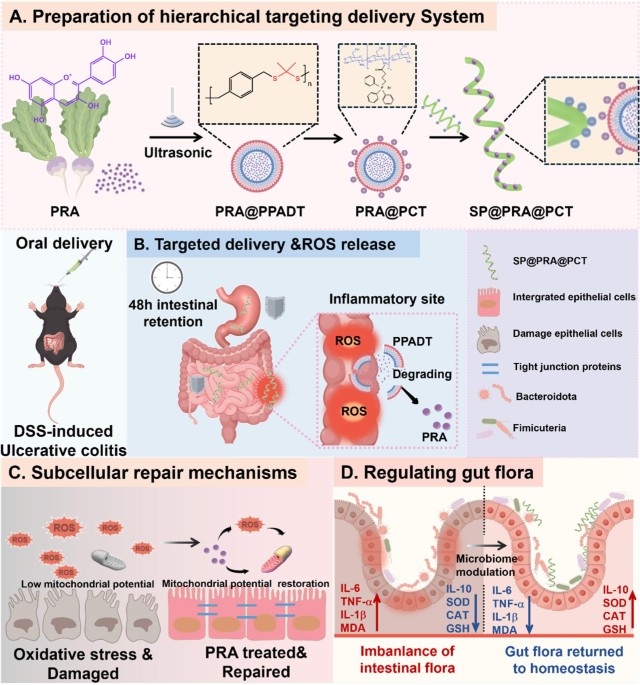
Oral microalgae-ROS-responsive hierarchical targeting delivery system for precision therapy of ulcerative colitis
Journal of Nanobiotechnology

Oral microalgae-ROS-responsive hierarchical targeting delivery system for precision therapy of ulcerative colitis

The study proposes a targeted oral delivery method that could help concentrate anti-inflammatory natural compounds at inflamed colon sites, potentially improving treatment effectiveness for ulcerative colitis while...

Read Summary
Effects of common antibiotics on representative gut bacterial strains associated with inflammatory bowel disease
BMC Microbiology

Effects of common antibiotics on representative gut bacterial strains associated with inflammatory bowel disease

Antibiotics commonly used against anaerobes affected opportunistic IBD-associated strains and beneficial commensals differently in lab cultures; this could influence thinking about using broad‑spectrum antibiotics to...

Read Summary
Oral Nanoarmored Lactobacillus rhamnosus with Inflammation Targeting and Scavenging Activities for Colitis Lesion-Specific Therapy
ACS Biomaterials Science & Engineering

Oral Nanoarmored Lactobacillus rhamnosus with Inflammation Targeting and Scavenging Activities for Colitis Lesion-Specific Therapy

This work describes a novel engineered probiotic designed to survive the gastrointestinal tract and act specifically at inflamed colitis sites, which could lead to new targeted therapies for IBD if validated in humans.

Read Summary
A facile sequentially-activatable fluorescent probe for fast imaging of the superoxide anion in ulcerative colitis.
Chemical communications (Cambridge, England)

A facile sequentially-activatable fluorescent probe for fast imaging of the superoxide anion in ulcerative colitis.

A probe that images superoxide in inflamed colons could help researchers study oxidative stress in ulcerative colitis and potentially guide development of new biomarkers or imaging approaches.

Read Summary
Combined Enterococcus faecium SF68®–Butyrate–Folate Supplementation Restores Intestinal Barrier Integrity and Epithelial Metabolic Function in Experimental DSS-Induced Colitis
Springer Science and Business Media LLC

Combined Enterococcus faecium SF68®–Butyrate–Folate Supplementation Restores Intestinal Barrier Integrity and Epithelial Metabolic Function in Experimental DSS-Induced Colitis

The study suggests a combined probiotic-plus-nutrient approach may improve intestinal barrier integrity, reduce inflammation, and restore epithelial metabolism in an IBD model—areas not fully addressed by current...

Read Summary
Structural Characterization of a Glucan from Zingiber officinale and Its Efficacy in Alleviating Ulcerative Colitis by Ameliorating Gut Microbiota Imbalance
Journal of Agricultural and Food Chemistry

Structural Characterization of a Glucan from Zingiber officinale and Its Efficacy in Alleviating Ulcerative Colitis by Ameliorating Gut Microbiota Imbalance

Researchers tested a ginger-derived glucan that reduced inflammation and reshaped the gut microbiota in a mouse colitis model — a potential prebiotic approach that could inform future IBD therapies or dietary strategies.

Read Summary
Macrophages and the Tissue Repair Circuit: Homeostasis, Autoimmune Diseases, and Resolution-Based Therapeutic Strategies
Cells

Macrophages and the Tissue Repair Circuit: Homeostasis, Autoimmune Diseases, and Resolution-Based Therapeutic Strategies

The review links macrophage-driven repair mechanisms to chronic inflammation and fibrosis in autoimmune diseases, including IBD, and highlights experimental strategies that aim to promote resolution rather than suppress...

Read Summary
Chitosan–Unconjugated Bilirubin Microspheres Alleviate Dysbiosis, Immune Dysregulation, and Intestinal Barrier Damage in Ulcerative Colitis
Biomolecules

Chitosan–Unconjugated Bilirubin Microspheres Alleviate Dysbiosis, Immune Dysregulation, and Intestinal Barrier Damage in Ulcerative Colitis

This study reports a new colon-targeted delivery system for unconjugated bilirubin that reduced inflammation and improved mucosal healing in a mouse model of ulcerative colitis; it could inform future drug-development...

Read Summary
Fraxinellone suppresses inflammatory bowel disease by targeting PINK1 and activating PINK1/Parkin-mediated mitophagy
International Immunopharmacology

Fraxinellone suppresses inflammatory bowel disease by targeting PINK1 and activating PINK1/Parkin-mediated mitophagy

Based on the title and source metadata, this appears to be a basic science related to Inflammatory bowel disease and Research and clinical trials. The original article is from International Immunopharmacology.

Read Summary
n-Hexane extract of Anacardium occidentale ameliorates spatial memory impairment, anxiety, and depressive-like behavior through the suppression of gut-brain inflammation and cholinergic disruption in acetic acid-induced experimental colitis
Springer Science and Business Media LLC

n-Hexane extract of Anacardium occidentale ameliorates spatial memory impairment, anxiety, and depressive-like behavior through the suppression of gut-brain inflammation and cholinergic disruption in acetic acid-induced experimental colitis

IBD is linked with mood and cognitive symptoms via systemic and gut‑brain inflammation, so preclinical findings that a cashew kernel extract reduced inflammation and behavioral changes could point to new research...

Read Summary
Weissella confusa RY-1 ameliorates DSS-induced colitis by restoring intestinal barrier, modulating gut microbiota, and reprogramming microbial metabolism
Frontiers in Microbiology

Weissella confusa RY-1 ameliorates DSS-induced colitis by restoring intestinal barrier, modulating gut microbiota, and reprogramming microbial metabolism

The study shows a probiotic strain reduced inflammation and improved gut barrier and microbiome/metabolite profiles in a mouse colitis model, indicating a possible new avenue for UC therapies worth further research.

Read Summary
Coixol attenuates Ulcerative Colitis by modulating the ILC3 response via the Wnt/β-catenin pathway.
Journal of ethnopharmacology

Coixol attenuates Ulcerative Colitis by modulating the ILC3 response via the Wnt/β-catenin pathway.

This study identifies a plant-derived compound that reduced inflammation and promoted intestinal healing in mouse models by modulating the Wnt/β-catenin pathway and ILC3-driven IL-22 production—pathways relevant to...

Read Summary
Intestinal epithelial SETD2 maintains gut microbial homeostasis to attenuate colitis.
Clinical and translational medicine

Intestinal epithelial SETD2 maintains gut microbial homeostasis to attenuate colitis.

Epigenetic control of intestinal epithelial cells can shape gut microbes and influence colitis severity; understanding SETD2’s role could point to new mechanistic targets for IBD research and microbiome-directed...

Read Summary
Innate immune recognition of Debaryomyces hansenii requires Dectin-1-Card9 signaling.
Infection and immunity

Innate immune recognition of Debaryomyces hansenii requires Dectin-1-Card9 signaling.

Researchers found that immune cells detect the gut-associated yeast Debaryomyces hansenii via Dectin-1 and Card9, and the yeast was enriched in Crohn’s disease ulcers. That suggests a possible microbial–immune link...

Read Summary

Epithelial-Intrinsic Alterations and Maladaptation to Luminal Metabolites Underlie Persistent Crohn's Disease Pathogenesis

If epithelial cells themselves retain disease-linked programs, that could help explain persistent intestinal abnormalities in Crohn’s disease even during remission and point to new biomarker or therapeutic targets...

Read Summary
Gut commensal Lachnospira eligens alleviates ulcerative colitis by mediating isodeoxycholic acid via the STAT3/NF-κB signaling pathway
Springer Science and Business Media LLC

Gut commensal Lachnospira eligens alleviates ulcerative colitis by mediating isodeoxycholic acid via the STAT3/NF-κB signaling pathway

The study identifies a specific gut microbe and a bile-acid metabolite that reduced inflammation in a mouse colitis model and implicates STAT3/NF-κB pathways — a potential new avenue for microbiome-based therapeutics for...

Read Summary
Krill oil supplementation alleviates clinical symptoms and improves intestinal barrier function with transcriptomic associations to cell adhesion molecule pathways in a mouse model of spontaneous chronic colitis
Frontiers in Nutrition

Krill oil supplementation alleviates clinical symptoms and improves intestinal barrier function with transcriptomic associations to cell adhesion molecule pathways in a mouse model of spontaneous chronic colitis

Krill oil improved colitis signs and intestinal barrier markers in a mouse model and changed colon gene expression linked to cell adhesion—findings that may interest people tracking dietary or supplemental approaches for...

Read Summary
Synergistic effects of heat-clearing and yin-nourishing herbs in compound Ganlu Yin on attenuating ulcerative colitis in mice
Advances in Traditional Medicine

Synergistic effects of heat-clearing and yin-nourishing herbs in compound Ganlu Yin on attenuating ulcerative colitis in mice

The study explores a multi-herb formula that the authors report reduces inflammation and alters gut microbiota in a mouse model of ulcerative colitis, suggesting possible biological mechanisms worth further study.

Read Summary
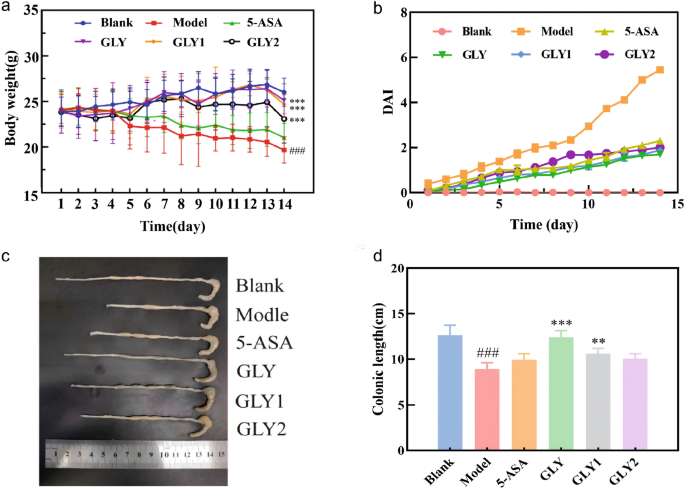
Polarized macrophage-derived microvesicles differentially modulate intestinal barrier dysfunction and endoplasmic reticulum stress in ulcerative colitis
Biology Direct

Polarized macrophage-derived microvesicles differentially modulate intestinal barrier dysfunction and endoplasmic reticulum stress in ulcerative colitis

The study identifies macrophage-derived microvesicles as modulators of intestinal barrier function and ER stress in ulcerative colitis models, suggesting a new mechanism that could be relevant to mucosal healing...

Read Summary
Magnolia biondii-Derived Exosome-Like Nanoparticles Ameliorate Ulcerative Colitis by Suppressing Inflammation, Reducing Oxidative Stress, and Modulating Gut Microbiota.
International journal of nanomedicine

Magnolia biondii-Derived Exosome-Like Nanoparticles Ameliorate Ulcerative Colitis by Suppressing Inflammation, Reducing Oxidative Stress, and Modulating Gut Microbiota.

This study suggests plant-derived exosome-like nanoparticles from a traditional herbal decoction may reduce inflammation, oxidative stress, and alter gut microbiota in a mouse model of colitis — an early preclinical step...

Read Summary
Bioinspired Nanoparticles Deliver DNase I to Attenuate Ulcerative Colitis by Degrading NETs and Modulating PTGS2-Mediated ER Stress
Materials Today Bio

Bioinspired Nanoparticles Deliver DNase I to Attenuate Ulcerative Colitis by Degrading NETs and Modulating PTGS2-Mediated ER Stress

Based on the title and source metadata, this appears to be a basic science related to Ulcerative colitis, Inflammatory bowel disease, and Research and clinical trials. The original article is from Materials Today Bio.

Read Summary
Therapeutic Potential of Bioactive Natural Product in Crohn’s Disease: Focus on Redox Homeostasis and Inflammatory Signalling
Natural Products Analysis

Therapeutic Potential of Bioactive Natural Product in Crohn’s Disease: Focus on Redox Homeostasis and Inflammatory Signalling

People with Crohn’s may be interested because the review discusses novel natural compounds that target oxidative stress and inflammation — pathways involved in disease activity — and highlights formulation challenges...

Read Summary
Discovery of self-assembled nanoparticles from Rubia cordifolia L. before and after carbonization and mechanistic study on their targeted therapy for ulcerative colitis
Phytomedicine

Discovery of self-assembled nanoparticles from Rubia cordifolia L. before and after carbonization and mechanistic study on their targeted therapy for ulcerative colitis

Based on the title and source metadata, this appears to be a basic science related to Ulcerative colitis, Inflammatory bowel disease, and Research and clinical trials. The original article is from Phytomedicine.

Read Summary
Curcumin-loaded tetrahedral framework nucleic acids reshape intestinal homeostasis in ulcerative colitis by coordinating barrier repair, microbiota reconstruction, and immune modulation
Materials Today Bio

Curcumin-loaded tetrahedral framework nucleic acids reshape intestinal homeostasis in ulcerative colitis by coordinating barrier repair, microbiota reconstruction, and immune modulation

Based on the title and source metadata, this appears to be a basic science related to Ulcerative colitis, Inflammatory bowel disease, and Microbiome. The original article is from Materials Today Bio.

Read Summary
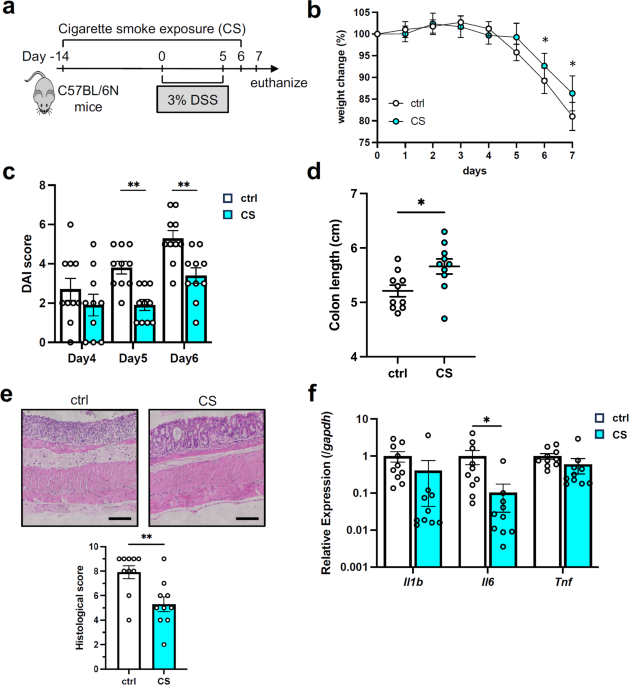
Metabolite 4-hydroxybenzoic acid, modulated by cigarette smoke exposure, functions as a protective factor in dextran sodium sulfate-induced colitis
Journal of Gastroenterology

Metabolite 4-hydroxybenzoic acid, modulated by cigarette smoke exposure, functions as a protective factor in dextran sodium sulfate-induced colitis

This preclinical study suggests cigarette smoke alters gut microbes and metabolites in ways that can either protect or worsen colitis depending on the model; it identifies 4-HBA as a metabolite that reduced inflammation...

Read Summary
Regulation of Tph cell differentiation via farnesoid X receptor of dendritic cells in inflammatory bowel disease.
Inflammation research : official journal of the European Histamine Research Society ... [et al.]

Regulation of Tph cell differentiation via farnesoid X receptor of dendritic cells in inflammatory bowel disease.

This study links bile-acid signaling through FXR in dendritic cells to regulation of Tph cells, a T-cell subset found in IBD. Understanding these immune pathways could point to new biological mechanisms relevant to...

Read Summary