
Research topics

Genetics and genomics

Genetics and genomics articles covering inherited risk, gene expression, disease pathways, and IBD research that connects genes to Crohn's disease, ulcerative colitis, or broader IBD.

Page 3 of 3 · 142 articles

The causal association between inflammatory bowel disease and pancreatitis: A 2-sample Mendelian randomization study.
Medicine

The causal association between inflammatory bowel disease and pancreatitis: A 2-sample Mendelian randomization study.

If true, a causal link between IBD and pancreatitis could help explain why people with Crohn’s disease or ulcerative colitis sometimes develop acute or chronic pancreatitis and could guide research into shared biological...

Read Summary
Polygenic Risk Scores Show Distinct Genetic Architectures of IBD-Associated Comorbidities.
Digestive diseases and sciences

Polygenic Risk Scores Show Distinct Genetic Architectures of IBD-Associated Comorbidities.

Shows which IBD comorbidities may be driven in part by shared inherited genetic risk and which likely reflect non-genetic factors, information that could shape future risk stratification and screening approaches for...

Read Summary
HIL1 Debaryomyces hansenii The role ofin strain-level adhesion and immune recognition in.
mBio

HIL1 Debaryomyces hansenii The role ofin strain-level adhesion and immune recognition in.

The work links fungal strain variation to differences in adhesion and immune recognition, which could help explain why a normally food-associated yeast is found in Crohn disease ulcers and point to microbial features...

Read Summary
Bayesian Network Analysis Identifies PREX1 as a Master Regulator of Cytoskeletal Disruption in Inflammatory Bowel Disease
Europe PMC

Bayesian Network Analysis Identifies PREX1 as a Master Regulator of Cytoskeletal Disruption in Inflammatory Bowel Disease

This study proposes a specific gene (PREX1) and related cytoskeletal pathways that may help explain epithelial brush-border and microvillus damage seen in IBD. Understanding these mechanisms could eventually inform new...

Read Summary
Single-nuclei multiome-seq and modeling of intestinal cell types nominates regulatory mechanisms driving IBD genetic risk and anti-TNF nonresponse 2309915
The Journal of Immunology

Single-nuclei multiome-seq and modeling of intestinal cell types nominates regulatory mechanisms driving IBD genetic risk and anti-TNF nonresponse 2309915

People with IBD (including those on TNF inhibitors) may benefit from research that explains why some patients don’t respond to anti-TNF drugs and that points to new biologic targets. Understanding cell types and...

Read Summary
Environment shapes gut microbiome and determines susceptibility to DSS-colitis in Adamdec1-/- mice
Frontiers in Immunology

Environment shapes gut microbiome and determines susceptibility to DSS-colitis in Adamdec1-/- mice

The paper highlights how the gut microbiome and environment can strongly influence colitis severity in genetically susceptible mice, illustrating a gene–environment–microbiome axis that may help explain heterogeneity in...

Read Summary
Investigating causal associations between inflammatory bowel disease and IgA vasculitis: Univariable and multivariable Mendelian randomization study.
Medicine

Investigating causal associations between inflammatory bowel disease and IgA vasculitis: Univariable and multivariable Mendelian randomization study.

The analysis suggests genetic liability to IBD, particularly Crohn’s disease, may raise the risk of IgA vasculitis. This is relevant for understanding overlapping immune mechanisms and possible shared pathways between...

Read Summary
Very early onset inflammatory bowel disease in Jordan: a single-center case series of clinical, genetic, and therapeutic features
BMC Pediatrics

Very early onset inflammatory bowel disease in Jordan: a single-center case series of clinical, genetic, and therapeutic features

VEOIBD often has a strong genetic component and different clinical needs than adult IBD; this study shows genetic findings and treatment challenges in a Middle East pediatric center, which may affect diagnosis and access...

Read Summary
The genetic landscape of congenital diarrheas and very early onset inflammatory bowel disease in the Middle East.
JPGN reports

The genetic landscape of congenital diarrheas and very early onset inflammatory bowel disease in the Middle East.

Finding monogenic causes in infants with congenital diarrheas or VEOIBD can directly affect diagnosis, genetic counseling, and management. Populations with higher consanguinity may have higher diagnostic yields for...

Read Summary
Spatial genetic mapping links shared inflammatory bowel disease liability to adult immune-epithelial lesion contexts.
Frontiers in immunology

Spatial genetic mapping links shared inflammatory bowel disease liability to adult immune-epithelial lesion contexts.

Links between IBD genetic risk and specific adult tissue lesion contexts help researchers understand which cell types and tissue programs may mediate inherited susceptibility. That can guide future biomarker and...

Read Summary
From tissue to blood: an integrated multi-omics signature identifies fibrogenesis and neutrophil activation as key drivers of ulcerative colitis severity
Frontiers in Immunology

From tissue to blood: an integrated multi-omics signature identifies fibrogenesis and neutrophil activation as key drivers of ulcerative colitis severity

The study links tissue and blood molecular changes to UC severity, suggesting candidate mechanisms (fibrogenesis, neutrophil activation) that could lead to biomarkers or new therapeutic targets. Understanding severity...

Read Summary
Ulcerative colitis with a mutation in the HMBS gene associated with acute intermittent porphyria
Experimental and Clinical Gastroenterology

Ulcerative colitis with a mutation in the HMBS gene associated with acute intermittent porphyria

Finding a pathogenic HMBS variant in a child with extensive ulcerative colitis suggests rare genetic conditions (like acute intermittent porphyria) can appear alongside or mimic IBD and might affect symptoms or...

Read Summary
Causal Insights Into Crohn's Disease: The Role of Oxidative Stress and Genetic Variants.
Journal of cellular and molecular medicine

Causal Insights Into Crohn's Disease: The Role of Oxidative Stress and Genetic Variants.

People with Crohn’s may be interested because the study links oxidative stress and specific genes to disease activity, which could inform future biomarkers or treatments. It helps explain biological pathways behind...

Read Summary
Risk Factors and Predictive Biomarkers for Postoperative Complications in Crohn's Disease Surgery: Systematic Review.
International journal of molecular sciences

Risk Factors and Predictive Biomarkers for Postoperative Complications in Crohn's Disease Surgery: Systematic Review.

People with Crohn’s disease facing surgery may have varying risks of complications; better biomarkers and models could help tailor perioperative care and decision-making. The review signals active research toward more...

Read Summary
Harmonized metagenomic signatures of the gut microbiome reveal robust species, functions, and strain links to inflammatory bowel disease.
Gastroenterology

Harmonized metagenomic signatures of the gut microbiome reveal robust species, functions, and strain links to inflammatory bowel disease.

The study synthesizes many stool metagenomes to find consistent microbial species, functional pathways, and strain-level differences linked to IBD and to distinctions between Crohn’s disease and ulcerative...

Read Summary
Potential role of PPARGC1A in linking ulcerative colitis to colorectal cancer: a novel prognostic biomarker and therapeutic target.
Translational cancer research

Potential role of PPARGC1A in linking ulcerative colitis to colorectal cancer: a novel prognostic biomarker and therapeutic target.

People with long-standing ulcerative colitis face an increased risk of colorectal cancer; this study highlights PPARGC1A as a gene that may be downregulated early in that progression, which could eventually help identify...

Read Summary
Multi-Omics Framework Integrating Genetics, Microbiome, Metabolism, and Immunity for Deciphering Ulcerative Colitis Pathogenesis and Diagnostic Biomarker Discovery.
FASEB journal : official publication of the Federation of American Societies for Experimental Biology

Multi-Omics Framework Integrating Genetics, Microbiome, Metabolism, and Immunity for Deciphering Ulcerative Colitis Pathogenesis and Diagnostic Biomarker Discovery.

Researchers used genetics, microbiome, metabolism, and immune profiling together to nominate biological pathways and a four-gene signature that might help diagnose or explain ulcerative colitis. If validated later, these...

Read Summary
Multi-omics Mendelian randomization and experimental validation identify PRKAB1 as a regulator of phosphatidylcholine metabolism in IBD.
Naunyn-Schmiedeberg's archives of pharmacology

Multi-omics Mendelian randomization and experimental validation identify PRKAB1 as a regulator of phosphatidylcholine metabolism in IBD.

Phosphatidylcholines are implicated in IBD biology; identifying a gene that regulates PC metabolism could point to new mechanistic targets. If PRKAB1 modulates epithelial lipid metabolism relevant to inflammation, it may...

Read Summary
A scoping review on emerging biomarkers in inflammatory bowel disease: Towards precision medicine in diagnosis and therapeutic management.
PloS one

A scoping review on emerging biomarkers in inflammatory bowel disease: Towards precision medicine in diagnosis and therapeutic management.

New, non-invasive biomarkers and AI-driven multi-omic approaches could make diagnosis and treatment of IBD more precise, helping patients avoid invasive tests and improving chances of choosing effective therapies sooner.

Read Summary

Risk of Inflammatory Bowel Disease Following Hospital-Treated Infections and Modulatory Role of Host Genetics to Support a Multi-Hit Pathogenesis Model.

If hospital-treated infections raise later IBD risk—especially in people with certain immune-related genetic variants—this supports a multi-hit model of IBD and could eventually help identify higher-risk individuals...

Read Summary
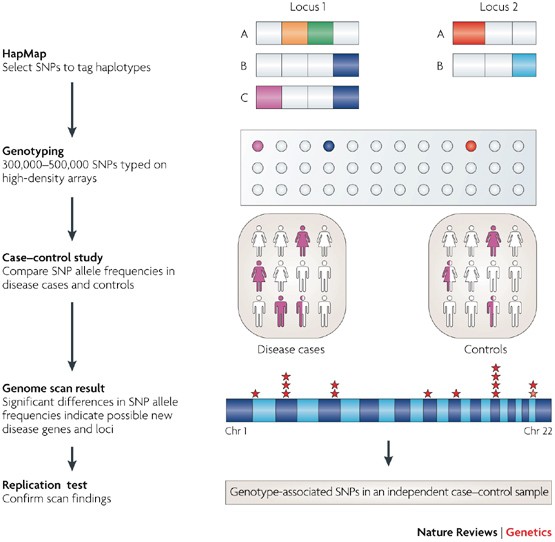
New links to the pathogenesis of Crohn disease provided by genome-wide association scans
nature.com

New links to the pathogenesis of Crohn disease provided by genome-wide association scans

Genetic studies help reveal biological pathways behind Crohn’s disease, which can guide research into new treatments and better understanding of disease mechanisms. People with Crohn’s disease may find it useful to know...

Read Summary
Crohn's Disease-associated variant in laccase domain containing 1 (LACC1) modulates T ... - Nature
nature.com

Crohn's Disease-associated variant in laccase domain containing 1 (LACC1) modulates T ... - Nature

The paper links a Crohn’s disease GWAS signal to reduced LACC1 expression in lymphocytes and to altered immunometabolic function, clarifying a potential mechanism by which genetic variation contributes to IBD risk. It...

Read Summary
The SERPINB4 gene mutation identified in twin patients with Crohn's disease impaires the ... - Nature
nature.com

The SERPINB4 gene mutation identified in twin patients with Crohn's disease impaires the ... - Nature

This study links a specific SERPINB4 gene mutation to impaired intestinal epithelial cell function in twins with Crohn’s disease, which could help explain how rare genetic variants contribute to disease in some patients.

Read Summary