
Article Archive

Page 32 of 100 · 4779 patient-friendly summaries

Therapeutic response to exclusive enteral nutrition correlates with suppressed IL-17 signaling activity and diminished IL-1β secretion in pediatric Crohn's disease
Frontiers in Nutrition

Therapeutic response to exclusive enteral nutrition correlates with suppressed IL-17 signaling activity and diminished IL-1β secretion in pediatric Crohn's disease

Shows molecular correlates (reduced IL‑17 signaling and IL‑1β) linked with mucosal healing after exclusive enteral nutrition in children with Crohn's disease, which may help researchers develop biomarkers or understand...

Read Summary
Digital Mind Body Intervention Among Black and Hispanic Patients Living With Inflammatory Bowel Disease
ClinicalTrials.gov

Digital Mind Body Intervention Among Black and Hispanic Patients Living With Inflammatory Bowel Disease

Psychological distress and gut–brain interactions can worsen quality of life and IBD outcomes. A culturally tailored, scalable digital mind–body program could improve access to psychosocial care for Black and Hispanic...

Read Summary
Engineered microvesicle-mediated multimodal therapy resolves ulcerative colitis via synergistic immunoregulation, barrier restoration, and microbiota remodeling
Materials today. Bio

Engineered microvesicle-mediated multimodal therapy resolves ulcerative colitis via synergistic immunoregulation, barrier restoration, and microbiota remodeling

Based on the title and source metadata, this appears to be a basic science related to Ulcerative colitis, Inflammatory bowel disease, and Microbiome. The original article is from Materials today. Bio.

Read Summary
Optimizing Endoscopic Assessment of Postoperative Crohn's Disease: A Scoping Review.
Digestive endoscopy : official journal of the Japan Gastroenterological Endoscopy Society

Optimizing Endoscopic Assessment of Postoperative Crohn's Disease: A Scoping Review.

Endoscopic scores guide detection and treatment of postoperative Crohn's recurrence; better scoring could change who gets earlier therapy and potentially prevent clinical or surgical relapse.

Read Summary
Immune–microbe interactions in pediatric ulcerative colitis: clinical features, pathogenesis, and novel targeted therapeutic strategies
Frontiers in Immunology

Immune–microbe interactions in pediatric ulcerative colitis: clinical features, pathogenesis, and novel targeted therapeutic strategies

PUC often behaves differently and more aggressively than adult-onset UC; understanding pediatric‑specific causes and treatments could lead to better, more effective therapies for children.

Read Summary
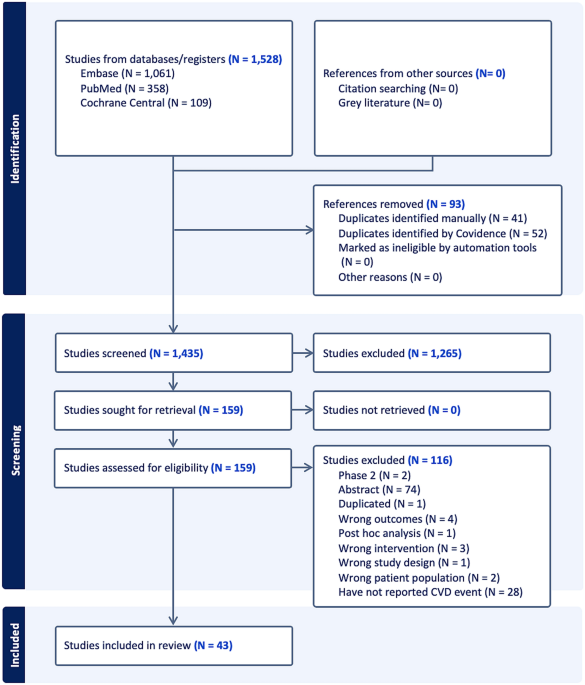
Major cardiovascular event risk of advanced therapies in inflammatory bowel diseases: systematic review and meta-analysis
Inflammation Research

Major cardiovascular event risk of advanced therapies in inflammatory bowel diseases: systematic review and meta-analysis

A pooled analysis of cardiovascular risk tied to advanced IBD therapies could affect treatment decisions and monitoring plans because some immune-targeted drugs have been linked to cardiovascular safety concerns in other...

Read Summary
[Corrigendum] Integrative transcriptomic analysis unveils FXR as a key regulator of intestinal stemness and inflammation in ulcerative colitis
International Journal of Molecular Medicine

[Corrigendum] Integrative transcriptomic analysis unveils FXR as a key regulator of intestinal stemness and inflammation in ulcerative colitis

Accurate methods and dataset labels matter for researchers reproducing transcriptomic analyses and for clinicians interpreting translational implications. The corrigendum clarifies which datasets and experimental models...

Read Summary
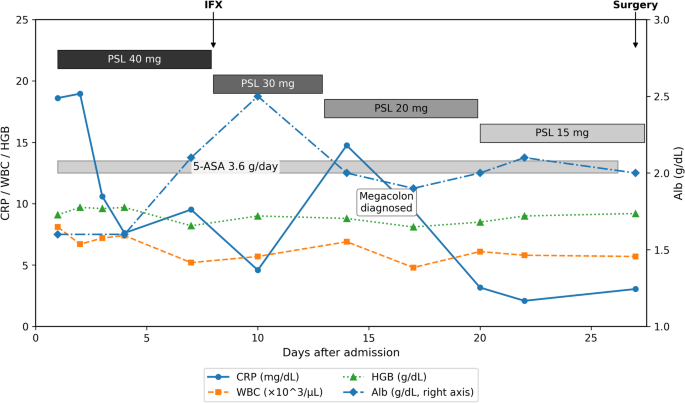
Persistent non-toxic megacolon in ulcerative colitis: a case report of broad disruption and scar replacement of the muscularis propria
Clinical Journal of Gastroenterology

Persistent non-toxic megacolon in ulcerative colitis: a case report of broad disruption and scar replacement of the muscularis propria

Persistent or worsening colonic dilatation in ulcerative colitis can reflect severe, possibly irreversible bowel‑wall damage even when classic signs of toxic megacolon are absent. Recognizing this may prompt timely...

Read Summary
Macrophage SELENOP controls neutrophil homeostasis through redox stress regulation in Crohn's disease.
Redox biology

Macrophage SELENOP controls neutrophil homeostasis through redox stress regulation in Crohn's disease.

The paper identifies macrophage SELENOP as a regulator of oxidative stress and neutrophil behavior in Crohn’s disease samples and mouse models, pointing to a new mechanism that could become a target for future treatments...

Read Summary
Development of multimodal multiscale imaging platform for high-content molecular profiling of mucosal healing to predict the risk of relapse in ulcerative colitis
NIH RePORTER

Development of multimodal multiscale imaging platform for high-content molecular profiling of mucosal healing to predict the risk of relapse in ulcerative colitis

Patients and clinicians struggle to predict relapse in ulcerative colitis because current endoscopic, histologic, and noninvasive biomarkers are imperfect. A tissue-based imaging and spatial-omics approach could identify...

Read Summary
Microbiota-Dependent Alleviation of Ulcerative Colitis by Liubao Tea: Integrated Insights into SCFA and Arachidonic Acid Metabolism
Foods (Basel, Switzerland)

Microbiota-Dependent Alleviation of Ulcerative Colitis by Liubao Tea: Integrated Insights into SCFA and Arachidonic Acid Metabolism

Based on the title and source metadata, this appears to be a basic science related to Ulcerative colitis, Inflammatory bowel disease, and Microbiome. The original article is from Foods (Basel, Switzerland).

Read Summary
Faecal multiplex PCR testing and its clinical utility in inflammatory bowel disease: a systematic review and meta-analysis
Frontline Gastroenterology

Faecal multiplex PCR testing and its clinical utility in inflammatory bowel disease: a systematic review and meta-analysis

Better detection of enteric infections during suspected IBD flares could help avoid unnecessary escalation of immunosuppressive therapy and guide appropriate antibiotic use. This review suggests MPCR finds more pathogens...

Read Summary
Connecting the Dots Between Pharmacokinetics, Inflammatory Biomarkers, and Mucosal Healing in Patients on Infliximab with Inflammatory Bowel Disease
Pharmaceutics

Connecting the Dots Between Pharmacokinetics, Inflammatory Biomarkers, and Mucosal Healing in Patients on Infliximab with Inflammatory Bowel Disease

If true, using infliximab drug-level modeling plus routine blood tests could help predict who has mucosal healing without immediate endoscopy, potentially reducing invasive procedures and improving monitoring for people...

Read Summary
Integrated Multi-Omics Reveals Complementary Luminal and Mucosal Host–Microbiome Interactions Associated with Disease Activity and Phenotype in Paediatric Inflammatory Bowel Disease
Microorganisms

Integrated Multi-Omics Reveals Complementary Luminal and Mucosal Host–Microbiome Interactions Associated with Disease Activity and Phenotype in Paediatric Inflammatory Bowel Disease

The study shows that fecal (luminal) and mucosal microbiome and metabolite profiles capture different aspects of pediatric IBD—activity versus phenotype—so combined sampling may give a fuller picture for research and...

Read Summary
Aspects of inflammatory bowel disease during the COVID-19 pandemic and general considerations☆ Aspectos y consideraciones generales en la enfermedad inflamatoria intestinal durante la pandemia por COVID-19
Revista de gastroenterologia de Mexico (English)

Aspects of inflammatory bowel disease during the COVID-19 pandemic and general considerations☆ Aspectos y consideraciones generales en la enfermedad inflamatoria intestinal durante la pandemia por COVID-19

People with IBD and their clinicians need to know whether common IBD treatments change COVID-19 risk or should be stopped. This review provides practical recommendations (continue most maintenance drugs; avoid systemic...

Read Summary
Gradient Boosting Machine-Based Prognostic Model with SurvSHAP Analysis for Predicting Secondary Loss of Response to Infliximab Therapy in Crohn's Disease.
Drug design, development and therapy

Gradient Boosting Machine-Based Prognostic Model with SurvSHAP Analysis for Predicting Secondary Loss of Response to Infliximab Therapy in Crohn's Disease.

The work identifies factors that predict loss of response to infliximab and suggests maintenance drug levels are the strongest predictor, which could influence monitoring strategies for people with Crohn's disease on...

Read Summary
Divergent trends in Crohn's disease surgery rates: Is Austria truly an exception in the biologic era?
Digestive and liver disease : official journal of the Italian Society of Gastroenterology and the Italian Association for the Study of the Liver

Divergent trends in Crohn's disease surgery rates: Is Austria truly an exception in the biologic era?

Based on the title and source metadata, this appears to be a clinical study related to Crohn's disease, Inflammatory bowel disease, and Research and clinical trials. The original article is from Digestive and liver...

Read Summary
Kindlin-3 is a Regulator of Force-Regulated Activation of Integrin α4β7 by CCL25 During Lymphocyte Adhesion.
Cellular and molecular bioengineering

Kindlin-3 is a Regulator of Force-Regulated Activation of Integrin α4β7 by CCL25 During Lymphocyte Adhesion.

The study reveals a new mechano-chemical mechanism regulating gut-homing integrin α4β7, which may help explain how lymphocytes home to inflamed intestines in IBD and points to a possible target for anti-adhesion...

Read Summary
Nanomaterial-Based Strategies Targeting IL-1 Signalling in Inflammatory Bowel Disease: Therapeutic Applications and Mechanistic Insights.
Journal of inflammation research

Nanomaterial-Based Strategies Targeting IL-1 Signalling in Inflammatory Bowel Disease: Therapeutic Applications and Mechanistic Insights.

Targeting IL‑1 is a promising route to reduce gut inflammation in IBD, but existing IL‑1 drugs face delivery and stability challenges. Nanocarriers could improve how these agents reach inflamed intestinal tissue, which...

Read Summary
Acceptability and tolerability of risankizumab maintenance therapy administered via on-body injector in patients with Crohn's disease: Results of the ACCEPT-OBI study.
Therapeutic advances in gastroenterology

Acceptability and tolerability of risankizumab maintenance therapy administered via on-body injector in patients with Crohn's disease: Results of the ACCEPT-OBI study.

Delivery method affects daily life and adherence. If you use or may use risankizumab, the on-body injector in this study was highly acceptable to most patients and caused mostly mild, local skin reactions, which may make...

Read Summary
Anti-TNF therapy attenuates the diagnostic utility of leucine-rich α2-Glycoprotein 1 for endoscopic activity in ulcerative colitis.
Therapeutic advances in gastroenterology

Anti-TNF therapy attenuates the diagnostic utility of leucine-rich α2-Glycoprotein 1 for endoscopic activity in ulcerative colitis.

Serum LRG1 is a candidate blood biomarker for mucosal inflammation in UC, but anti-TNF drugs may suppress its levels and cause false-negative results. This affects noninvasive monitoring and decisions based on LRG1...

Read Summary
Identification of COPZ1 as a Shared Candidate Ferroptosis-Related Hub Gene in Periodontitis and Inflammatory Bowel Disease.
Human mutation

Identification of COPZ1 as a Shared Candidate Ferroptosis-Related Hub Gene in Periodontitis and Inflammatory Bowel Disease.

Researchers identified COPZ1 as a shared ferroptosis-related hub gene in Crohn’s disease, ulcerative colitis, and periodontitis, which could point to a new molecular pathway linking gut and oral inflammation and a...

Read Summary
Goblet cell heterogeneity and plasticity in ulcerative colitis: implications for mucus barrier reconstitution
Cell & Bioscience

Goblet cell heterogeneity and plasticity in ulcerative colitis: implications for mucus barrier reconstitution

The mucus layer and goblet cells are central to colonic barrier function; understanding goblet cell diversity and plasticity could point to new ways to restore the mucus barrier in UC and improve disease control.

Read Summary