Evidence types

Basic Science

Basic science articles covering early-stage IBD research, disease mechanisms, lab findings, microbiome work, genetics, and experimental models.

Page 8 of 15 · 709 articles

Ethanolic Extract of Selaginella tamariscina Alleviates DSS-induced Ulcerative Colitis by Restoring Epithelial Barrier Function.
Journal of ethnopharmacology

Ethanolic Extract of Selaginella tamariscina Alleviates DSS-induced Ulcerative Colitis by Restoring Epithelial Barrier Function.

The study suggests a plant-derived extract can reduce inflammation and help restore the intestinal epithelial barrier in laboratory models of ulcerative colitis, which is directly relevant to research into new IBD...

Read Summary
Chishizhi Yuyuliang Decoction Ameliorates Ulcerative Colitis in Mice by Promoting Colonic Epithelial Mucosal Healing via the CAV1/FA Axis.
Rapid communications in mass spectrometry : RCM

Chishizhi Yuyuliang Decoction Ameliorates Ulcerative Colitis in Mice by Promoting Colonic Epithelial Mucosal Healing via the CAV1/FA Axis.

This paper identifies a herbal formula that improved inflammation and epithelial barrier repair in a mouse colitis model and highlights specific molecular pathways (CAV1/FAK/paxillin and metabolite pathways) that might...

Read Summary
Identification of Ferro‐Aging‐Related Biomarkers for Ulcerative Colitis Through Integrated Machine Learning, Single‐Cell Analysis, and Spatial Transcriptomics
The FASEB Journal

Identification of Ferro‐Aging‐Related Biomarkers for Ulcerative Colitis Through Integrated Machine Learning, Single‐Cell Analysis, and Spatial Transcriptomics

Researchers identified molecular features of a proposed “ferro‑aging” state in UC and nominated CHST15 and MSN as biomarkers, which could help understand disease biology and point to new experimental targets for therapy...

Read Summary
A Receptor-Mediated Endolysosomal Recycling Chimera Enables Catalytic TNF-α Degradation for Sustained Treatment of Mucosal Inflammation.
Advanced materials (Deerfield Beach, Fla.)

A Receptor-Mediated Endolysosomal Recycling Chimera Enables Catalytic TNF-α Degradation for Sustained Treatment of Mucosal Inflammation.

This study reports a new engineered platform that can catalytically degrade TNF‑α, the same inflammatory cytokine targeted by several IBD therapies. If translated to humans, it could offer longer‑lasting mucosal...

Read Summary
Integrated microbiome and metabolomics analysis of the mechanism of inflammation-reducing effects of cyanidin-3-glucoside and blueberry pectin complexes in mice with ulcerative colitis.
International journal of biological macromolecules

Integrated microbiome and metabolomics analysis of the mechanism of inflammation-reducing effects of cyanidin-3-glucoside and blueberry pectin complexes in mice with ulcerative colitis.

This mouse study suggests a blueberry-derived anthocyanin plus pectin complex can alter gut microbes and metabolites linked to inflammation, pointing to a dietary approach that might influence ulcerative colitis biology.

Read Summary
Extracts of Chrysanthemum morifolium Ramat. alleviated colitis-induced cognitive dysfunction through the BDNF/TrkB/CREB signaling pathway
Journal of Functional Foods

Extracts of Chrysanthemum morifolium Ramat. alleviated colitis-induced cognitive dysfunction through the BDNF/TrkB/CREB signaling pathway

IBD can cause cognitive and neurological symptoms. This preclinical study suggests a flavonoid-rich Chrysanthemum extract reduced colitis and related cognitive deficits in mice by changing the gut microbiota and...

Read Summary
Integrated multi-omics, network pharmacology, and experimental validation reveal the protective mechanisms of curcumol against DSS-induced ulcerative colitis
Frontiers in Immunology

Integrated multi-omics, network pharmacology, and experimental validation reveal the protective mechanisms of curcumol against DSS-induced ulcerative colitis

The study identifies a plant-derived compound (curcumol) that reduced inflammation, mucosal injury, and some microbiome/metabolome disturbances in a mouse model of ulcerative colitis and links these effects to...

Read Summary
Mechanistic Insights into the Anti-Inflammatory Activity of a Sulfated α-Glucan (VpG) from Volutharpa ampullacea perryi
Macromol

Mechanistic Insights into the Anti-Inflammatory Activity of a Sulfated α-Glucan (VpG) from Volutharpa ampullacea perryi

Researchers are exploring new anti-inflammatory molecules for ulcerative colitis. Mechanistic data showing inhibition of macrophage M1 polarization, MAPK signaling, and antioxidant activity may help prioritize VpG for...

Read Summary
Oral Nanomicelle‐Mediated Sequential Butyrate Production in the Intestine for Ulcerative Colitis and Immunosuppression Treatment
Advanced Science

Oral Nanomicelle‐Mediated Sequential Butyrate Production in the Intestine for Ulcerative Colitis and Immunosuppression Treatment

Butyrate supports intestinal health and is often low in IBD. A single oral compound that reliably restores luminal butyrate could — if proven safe and effective in humans — offer a new way to treat ulcerative colitis or...

Read Summary
Finetuning Foundation Models for Temporal Clinical Transcriptomics Data.
Bioinformatics (Oxford, England)

Finetuning Foundation Models for Temporal Clinical Transcriptomics Data.

Researchers working on IBD molecular mechanisms or biomarker discovery may find this AI-driven approach useful because it can detect temporal gene-expression patterns and suggest pathways linked to treatment response...

Read Summary
Pharmacodynamic-oriented serum pharmacochemistry-based discovery of the pharmacodynamic material basis and mechanism of Ohwia caudata leaves against acute ulcerative colitis.
Journal of ethnopharmacology

Pharmacodynamic-oriented serum pharmacochemistry-based discovery of the pharmacodynamic material basis and mechanism of Ohwia caudata leaves against acute ulcerative colitis.

People with UC or IBD may be interested because the study identifies plant-derived compounds that reduce inflammation in lab models of ulcerative colitis and points to molecular pathways relevant to IBD.

Read Summary
Cadmium exposure elevates gut microbial oleic acid and promoted colitis potentially via FFAR4: A network toxicology and molecule docking study.
Food and chemical toxicology : an international journal published for the British Industrial Biological Research Association

Cadmium exposure elevates gut microbial oleic acid and promoted colitis potentially via FFAR4: A network toxicology and molecule docking study.

Environmental cadmium exposure may alter the gut microbiome’s metabolites (oleic acid) and worsen colitis in mice via FFAR4-linked inflammatory pathways. If similar mechanisms operate in people, this could point to new...

Read Summary
Peribiliary and colonic crypt glands in primary sclerosing cholangitis and inflammatory bowel disease pathogenesis: New research perspectives
World Journal of Hepatology

Peribiliary and colonic crypt glands in primary sclerosing cholangitis and inflammatory bowel disease pathogenesis: New research perspectives

PSC frequently occurs with IBD and has unclear origins; understanding a shared glandular mechanism could help explain the link and point to new research targets relevant to both liver and colon disease.

Read Summary
An atlas of colonization factors in the human gut microbiome reveals ecological strategies and inflammatory bowel disease signatures
Nature Communications

An atlas of colonization factors in the human gut microbiome reveals ecological strategies and inflammatory bowel disease signatures

This study identifies conserved, gut-enriched genes (colonization factors) and shows their repertoires are remodeled in IBD, highlighting functional microbiome changes that could inform future biomarkers or...

Read Summary
CD226 associates with interferon and inflammatory programs in intestinal γδ T and group 3 innate lymphoid cells in Crohn's disease.
Biochemical and biophysical research communications

CD226 associates with interferon and inflammatory programs in intestinal γδ T and group 3 innate lymphoid cells in Crohn's disease.

The study points to CD226 (DNAM-1) being linked to inflammatory and interferon-driven programs in specific intestinal immune cells in Crohn's disease, which may be relevant to understanding disease mechanisms or...

Read Summary
Caulerpa peltata extract protects against Dextran sodium sulfate-induced acute ulcerative colitis via modulating Nrf2 pathway
The Science of Nature

Caulerpa peltata extract protects against Dextran sodium sulfate-induced acute ulcerative colitis via modulating Nrf2 pathway

People with IBD might be interested because the study explores a new natural-product intervention that appears to reduce colitis severity in an animal model by activating the Nrf2 antioxidant pathway — a pathway already...

Read Summary
ABTB1, as an E3 ubiquitin ligase, suppresses Th17 cell differentiation and mitigates autoimmune inflammation by promoting STAT3 ubiquitination and degradation.
Cellular & molecular immunology

ABTB1, as an E3 ubiquitin ligase, suppresses Th17 cell differentiation and mitigates autoimmune inflammation by promoting STAT3 ubiquitination and degradation.

The study identifies ABTB1 as a regulator that limits STAT3-driven Th17 differentiation and reduces severity in a mouse colitis model, suggesting a new molecular pathway relevant to IBD inflammation and a potential...

Read Summary
Targeting Ferroptosis and Cuproptosis in Ulcerative Colitis: Findings from Comprehensive Bioinformatics and Experimental Validation
Journal of Visualized Experiments

Targeting Ferroptosis and Cuproptosis in Ulcerative Colitis: Findings from Comprehensive Bioinformatics and Experimental Validation

Based on the title and source metadata, this appears to be a basic science related to Ulcerative colitis, Inflammatory bowel disease, and Research and clinical trials. The original article is from Journal of Visualized...

Read Summary
From mesenchymal stem cells to myoblast cell sheets: A next-generation regenerative concept for fistulizing Crohn’s disease
World Journal of Stem Cells

From mesenchymal stem cells to myoblast cell sheets: A next-generation regenerative concept for fistulizing Crohn’s disease

Fistulizing Crohn’s disease is a major complication where durable structural repair is hard to achieve. Regenerative cell-sheet approaches aim to rebuild tissue architecture rather than only suppress inflammation, which...

Read Summary
Identification and validation of novel platelet-related genes in ulcerative colitis using bioinformatics and machine learning strategies
PeerJ

Identification and validation of novel platelet-related genes in ulcerative colitis using bioinformatics and machine learning strategies

Researchers present a small platelet-related gene signature (TRIM22, TIMP1, RAC2) that may help understand UC biology and point toward blood-based biomarkers. If validated further, such markers might aid noninvasive...

Read Summary
Uhrf1-Mediated PKM2 Degradation via Ubiquitination Alleviates Inflammation and Pyroptosis in Inflammatory Bowel Disease.
Advanced science (Weinheim, Baden-Wurttemberg, Germany)

Uhrf1-Mediated PKM2 Degradation via Ubiquitination Alleviates Inflammation and Pyroptosis in Inflammatory Bowel Disease.

The study describes a new molecular axis (Uhrf1 → PKM2 ubiquitination) that reduced inflammation and pyroptosis in IBD models and identifies a compound (EPT) that promotes this interaction — a potential early-stage...

Read Summary
Tongxie Yaofang ameliorates chronic relapsing ulcerative colitis by regulating gut microbiota and microbial metabolites.
Journal of chromatography. B, Analytical technologies in the biomedical and life sciences

Tongxie Yaofang ameliorates chronic relapsing ulcerative colitis by regulating gut microbiota and microbial metabolites.

The study suggests a traditional Chinese medicine formula can reduce disease signs in a mouse model of chronic relapsing ulcerative colitis and that its effects are mediated by changes in the gut microbiota and microbial...

Read Summary
Valorization of spent black tea polyphenols as a functional coating for probiotic protection and colitis alleviation.
Food & function

Valorization of spent black tea polyphenols as a functional coating for probiotic protection and colitis alleviation.

The study reports an experimental coating that both protects a probiotic and provides antioxidant, anti-inflammatory effects in a mouse colitis model—an approach that, if validated in humans, could improve probiotic...

Read Summary
Oral Colon‐ and Mitochondria‐Targeted Nanoparticles Alleviate Ulcerative Colitis by Reeducating Macrophage Polarization via SIRT3/FOXO3a‐Mediated Mitochondrial Restoration
Journal of Gastroenterology and Hepatology

Oral Colon‐ and Mitochondria‐Targeted Nanoparticles Alleviate Ulcerative Colitis by Reeducating Macrophage Polarization via SIRT3/FOXO3a‐Mediated Mitochondrial Restoration

The study targets macrophage mitochondrial dysfunction, a mechanism linked to inflammation in ulcerative colitis, and demonstrates a nanodelivery approach that reduced colitis in mice—an approach that could inspire new...

Read Summary
Structural elucidation and structure-activity relationship of Porphyra haitanensis polysaccharide for preventing ulcerative colitis: Targeting the immune-microbiota-metabolism axis.
International journal of biological macromolecules

Structural elucidation and structure-activity relationship of Porphyra haitanensis polysaccharide for preventing ulcerative colitis: Targeting the immune-microbiota-metabolism axis.

The study suggests a natural seaweed-derived polysaccharide could modify gut bacteria and immune signaling in ways that reduced experimental colitis, which may interest people looking for microbiota-targeted dietary...

Read Summary
MAAMOUL: metabolic network-based discovery of microbiome-metabolome shifts in disease.
Bioinformatics (Oxford, England)

MAAMOUL: metabolic network-based discovery of microbiome-metabolome shifts in disease.

This method helps translate complex paired microbiome and metabolome data into coherent functional modules; that could clarify microbial metabolic alterations in IBD or IBS and guide future biomarker or mechanistic...

Read Summary
Epigenetic changes in stromal cells drive disease-promoting tissue niches - Bioengineer.org
bioengineer.org

Epigenetic changes in stromal cells drive disease-promoting tissue niches - Bioengineer.org

This work suggests that non-immune stromal cells can hold an epigenetic ‘memory’ that keeps intestinal tissue in a disease-promoting state, which may help explain relapse or incomplete responses to immune-focused...

Read Summary
Molecular Mechanisms of Danggui Shaoyao Powder in the Treatment of Ulcerative Colitis: A Network Pharmacology Approach with Experimental Validation.
Combinatorial chemistry & high throughput screening

Molecular Mechanisms of Danggui Shaoyao Powder in the Treatment of Ulcerative Colitis: A Network Pharmacology Approach with Experimental Validation.

The study points to specific immune pathways (especially Th17 differentiation) and molecular targets that might explain DSP’s anti-inflammatory effects in ulcerative colitis, which could guide further preclinical and...

Read Summary
Microbiota-derived 4-HPAA alleviates Crohn's disease by stabilizing SIRT1 and reprogramming macrophage immunometabolism.
Apoptosis : an international journal on programmed cell death

Microbiota-derived 4-HPAA alleviates Crohn's disease by stabilizing SIRT1 and reprogramming macrophage immunometabolism.

The study links a polyphenol-rich diet to a specific microbiome change and a microbial metabolite (4-HPAA) that reduced inflammation in mouse models — offering a possible mechanism by which diet could influence Crohn's...

Read Summary
Peptide Andersonin-W1 Attenuates Ulcerative Colitis by Inhibiting Inflammation and Restoring Intestinal Barrier Function through Direct Binding to IL-17RA
Springer Science and Business Media LLC

Peptide Andersonin-W1 Attenuates Ulcerative Colitis by Inhibiting Inflammation and Restoring Intestinal Barrier Function through Direct Binding to IL-17RA

Researchers describe a natural peptide that binds IL‑17RA and reduced disease measures in mouse colitis models — a potential new mechanism for reducing gut inflammation and restoring the epithelial barrier that could...

Read Summary
An orally administered peptide hydrogel disentangles immune-microbiota crosstalk for long-term ulcerative colitis therapy
openRxiv

An orally administered peptide hydrogel disentangles immune-microbiota crosstalk for long-term ulcerative colitis therapy

This study describes a new oral peptide hydrogel that, in mouse models, appears to reduce colitis severity by acting on both immune signaling (TLR4) and the gut microbiome. For people with UC, treatments that target both...

Read Summary
Dysregulation of the KLF9/TXNRD2 Axis Leads to Mitochondrial DNA Oxidation and NLRP3 Inflammasome Activation in Ulcerative Colitis
Journal of Biochemical and Molecular Toxicology

Dysregulation of the KLF9/TXNRD2 Axis Leads to Mitochondrial DNA Oxidation and NLRP3 Inflammasome Activation in Ulcerative Colitis

The study identifies a molecular link between epithelial mitochondrial oxidative stress and NLRP3-driven inflammation in ulcerative colitis models, suggesting a possible new target for research into disease mechanisms...

Read Summary
Microbiota-Immune Interaction Landscape of Treg/Th17 Dynamic Balance in Regulating Mucosal Immune Homeostasis: From Molecular Switches to Precision Intervention in Inflammatory Bowel Disease
Discovery Medicine

Microbiota-Immune Interaction Landscape of Treg/Th17 Dynamic Balance in Regulating Mucosal Immune Homeostasis: From Molecular Switches to Precision Intervention in Inflammatory Bowel Disease

Treg/Th17 balance is a central immune mechanism implicated in IBD pathogenesis; understanding how microbes, metabolites, and tissue context control that balance could inform new biomarkers and targeted therapies.

Read Summary
Rosuvastatin and Engeletin Ameliorate Acetic Acid-Induced Ulcerative Colitis through Modulation of TXNIP/NLRP3-Related Inflammatory Signaling pathway.
Immunopharmacology and immunotoxicology

Rosuvastatin and Engeletin Ameliorate Acetic Acid-Induced Ulcerative Colitis through Modulation of TXNIP/NLRP3-Related Inflammatory Signaling pathway.

The study links TXNIP/NLRP3 inflammatory signaling to disease features in an animal UC model and tests engeletin and rosuvastatin as interventions that lowered inflammatory markers—information relevant to researchers...

Read Summary
Polysaccharide-based colon targeting drug delivery systems: Overview on challenges, opportunities and prospects
International Journal of Polymeric Materials

Polysaccharide-based colon targeting drug delivery systems: Overview on challenges, opportunities and prospects

Colon-targeted delivery systems aim to concentrate drugs in the colon, which could improve effectiveness and reduce systemic side effects for IBD and colorectal cancer treatments. Understanding these approaches helps...

Read Summary
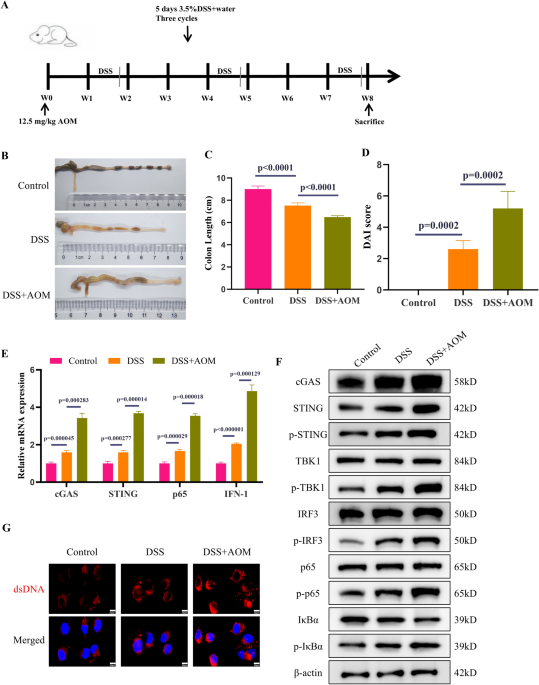
cGAS-STING Modulates the NF-κB Pathway to Influence the Occurrence of Ulcerative Colitis-Associated Colorectal Cancer
Digestive Diseases and Sciences

cGAS-STING Modulates the NF-κB Pathway to Influence the Occurrence of Ulcerative Colitis-Associated Colorectal Cancer

The study links activation of the cGAS–STING immune-sensing pathway to NF-κB–driven inflammation and tumor formation in UC models, which could help explain mechanisms behind colitis-associated colorectal cancer risk.

Read Summary
Microbiota-derived 4-HPAA alleviates Crohn’s disease by stabilizing SIRT1 and reprogramming macrophage immunometabolism
Apoptosis

Microbiota-derived 4-HPAA alleviates Crohn’s disease by stabilizing SIRT1 and reprogramming macrophage immunometabolism

The study identifies a gut bacterial metabolite that appears to reduce intestinal inflammation through SIRT1 stabilization and macrophage metabolic reprogramming — a potential new biological pathway relevant to Crohn’s...

Read Summary
A dual-crosslinked herbal hydrogel for multimodal therapy of ulcerative colitis via IL-34/IL-22 modulation
Journal of Nanobiotechnology

A dual-crosslinked herbal hydrogel for multimodal therapy of ulcerative colitis via IL-34/IL-22 modulation

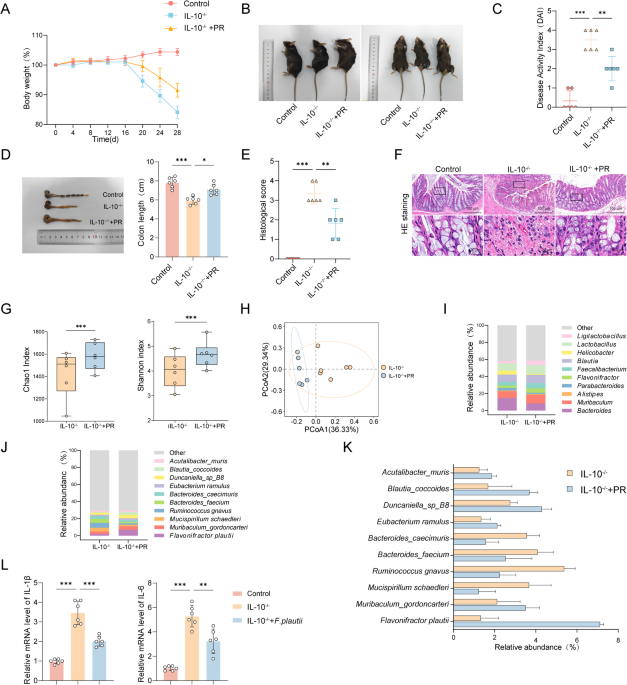
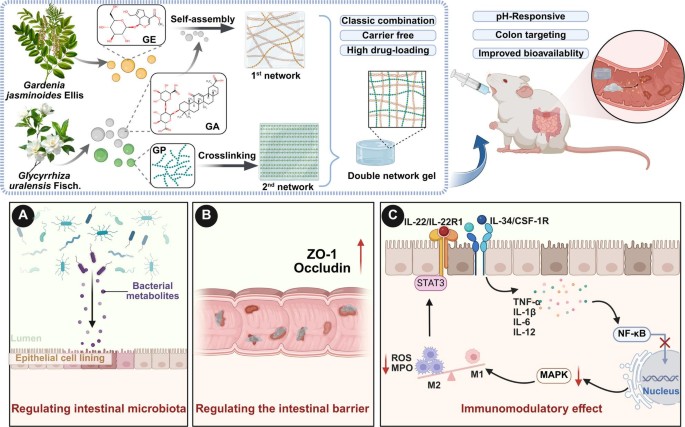
This study reports a new herbal hydrogel designed to repair the intestinal barrier, shift gut microbes, and modulate immune signals (IL-22/IL-34) in preclinical models of ulcerative colitis—ideas that could inform future...

Read Summary
Shengjiang San modification promotes colonic mucosal repair in ulcerative colitis rats by inhibiting lauric acid-Shigella synergistic damage via PKC signaling pathway.
American journal of translational research

Shengjiang San modification promotes colonic mucosal repair in ulcerative colitis rats by inhibiting lauric acid-Shigella synergistic damage via PKC signaling pathway.

The paper identifies a potential microbiome–metabolite–PKC pathway by which an herbal formula reduced colonic injury in a rat model of UC; this could point to new targets for research into mucosal repair and...

Read Summary
A natural pectic polysaccharide from rhubarb reprograms dysbiotic gut microbiota and resolves mucosal inflammation in ulcerative colitis.
Phytomedicine : international journal of phytotherapy and phytopharmacology

A natural pectic polysaccharide from rhubarb reprograms dysbiotic gut microbiota and resolves mucosal inflammation in ulcerative colitis.

People with ulcerative colitis may be interested because the study describes a natural compound that reduced inflammation and disease signs in a mouse model and acted through the gut microbiota and immune pathways —...

Read Summary
Downregulation of miR-23b-3p improves the intestinal mucosal barrier function in LPS-induced intestinal epithelial inflammatory injury models via modulating Erbin.
Cytotechnology

Downregulation of miR-23b-3p improves the intestinal mucosal barrier function in LPS-induced intestinal epithelial inflammatory injury models via modulating Erbin.

The study identifies miR-23b-3p as elevated in UC and CD and linked to disease severity, and shows in cell models that lowering miR-23b-3p can improve epithelial barrier function via Erbin. If confirmed, this miRNA could...

Read Summary
NAD+ metabolism influences TGF-β–associated transcriptional programs and the gut microbiota in murine models of colitis
Biochemistry and Biophysics Reports

NAD+ metabolism influences TGF-β–associated transcriptional programs and the gut microbiota in murine models of colitis

The study links NAD+ precursor (NMN) supplementation to changes in TGF-β–associated gene programs, intestinal immune signatures, and the gut microbiome in mouse colitis models — pathways relevant to fibrosis and...

Read Summary
Intestinal toxicity mechanisms of 6PPD and 6PPD-Q and their potential relevance to inflammatory bowel disease: network toxicology and experimental evidence.
Food and chemical toxicology : an international journal published for the British Industrial Biological Research Association

Intestinal toxicity mechanisms of 6PPD and 6PPD-Q and their potential relevance to inflammatory bowel disease: network toxicology and experimental evidence.

The paper links common tire-derived pollutants to intestinal injury and pathways also implicated in Crohn’s disease and ulcerative colitis, suggesting environmental chemicals could influence gut inflammation. If...

Read Summary
Single-cell transcriptomic analysis reveals that Trametes robiniophila Murr. (Huaier) granules protect against ulcerative colitis by targeting macrophage-associated cGAS-STING signaling.
Journal of ethnopharmacology

Single-cell transcriptomic analysis reveals that Trametes robiniophila Murr. (Huaier) granules protect against ulcerative colitis by targeting macrophage-associated cGAS-STING signaling.

The study describes a mechanism by which Huaier granules reduced colitis-related inflammation in mice and cell models by targeting macrophage cGAS–STING signaling and altering the gut microbiome—information that could...

Read Summary