Research topics

Biomarkers

Biomarker research articles covering molecular signals, prediction tools, and measures used to study Crohn's disease, ulcerative colitis, or broader IBD.

Page 3 of 8 · 360 articles

An allogeneic and gut specific Engineered T regulatory cell therapy for the treatment of Inflammatory Bowel Disease
NIH RePORTER

An allogeneic and gut specific Engineered T regulatory cell therapy for the treatment of Inflammatory Bowel Disease

This project describes a novel off-the-shelf engineered regulatory T cell therapy aiming to promote intestinal immune regulation and mucosal healing — a different approach than current biologics. If successful, it could...

Read Summary
MicroRNAs in immune-related diseases: mechanism, functions and therapeutic perspectives.
Frontiers in immunology

MicroRNAs in immune-related diseases: mechanism, functions and therapeutic perspectives.

miRNAs are being studied as stable circulating biomarkers and possible therapeutic targets in immune diseases including IBD. Advances could eventually improve earlier diagnosis, track disease course, or lead to new...

Read Summary
In Silico Single-Cell Frame work for Modeling Intestinal Stem and Transit-Amplifying Progenitor Cells Dynamics.
Methods in molecular biology (Clifton, N.J.)

In Silico Single-Cell Frame work for Modeling Intestinal Stem and Transit-Amplifying Progenitor Cells Dynamics.

The pipeline helps identify stem and progenitor epithelial cell states linked to inflammation in IBD. Knowing these cell states and biomarkers could guide research into disease mechanisms, tissue repair, and potential...

Read Summary
Dietary prevention of undernutrition reduces intestinal inflammation associated with an anti-inflammatory profile of gut microbiota in a preclinical model
Scientific Reports

Dietary prevention of undernutrition reduces intestinal inflammation associated with an anti-inflammatory profile of gut microbiota in a preclinical model

Undernutrition and lean-mass loss are common and harmful in people with IBD. If dietary strategies can prevent weight and muscle loss and shift the gut microbiota toward SCFA producers, that could be relevant to...

Read Summary
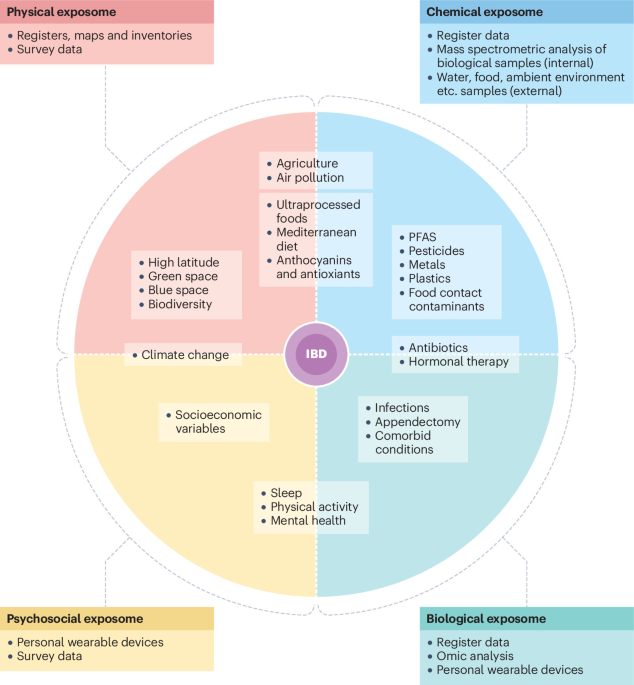
The exposome and inflammatory bowel disease: a framework for primary and primordial prevention
Nature Reviews Gastroenterology & Hepatology

The exposome and inflammatory bowel disease: a framework for primary and primordial prevention

The exposome perspective emphasizes that many non-genetic, potentially modifiable environmental factors likely influence IBD risk. Understanding these factors could help guide prevention research and public-health...

Read Summary
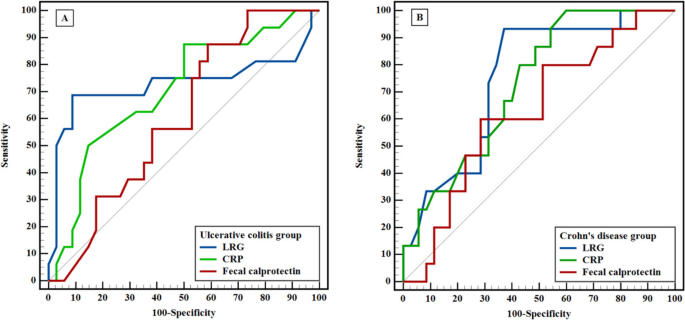
Leucine-rich alpha-2 glycoprotein as a predictor of primary non-response to anti-TNF-α therapy in biologic-naïve Egyptian IBD patients
BMC Gastroenterology

Leucine-rich alpha-2 glycoprotein as a predictor of primary non-response to anti-TNF-α therapy in biologic-naïve Egyptian IBD patients

A blood biomarker that helps predict primary non-response to anti‑TNF drugs could spare some patients ineffective therapy, reduce delays to alternative treatments, and inform shared decision‑making before starting...

Read Summary
Multi-omics analyses unveil gut microbiota and metabolites signatures in deoxycholic acid-associated intestinal inflammation.
Frontiers in microbiology

Multi-omics analyses unveil gut microbiota and metabolites signatures in deoxycholic acid-associated intestinal inflammation.

The study links high levels of the bile acid DCA to microbiome and metabolite changes that correlate with intestinal inflammation in mice, suggesting a possible pathway connecting high‑fat diets to colitis risk.

Read Summary
Klebsiella pneumoniae in inflammatory bowel disease and rectal cancer: from gut inflammation to a potential driver of carcinogenesis.
Frontiers in microbiology

Klebsiella pneumoniae in inflammatory bowel disease and rectal cancer: from gut inflammation to a potential driver of carcinogenesis.

The review suggests that specific Klebsiella pneumoniae strains could connect chronic IBD inflammation with rectal cancer risk, pointing to possible biomarker or prevention targets that may be relevant for people with...

Read Summary
Spatial multi-omics-guided drug development in inflammatory bowel disease: from mucosal immune niches to precision therapy
Frontiers in Immunology

Spatial multi-omics-guided drug development in inflammatory bowel disease: from mucosal immune niches to precision therapy

Spatially resolved profiling could identify the specific cell neighborhoods and signaling circuits that drive disease in a person’s gut tissue, which may help predict who will respond to particular biologics or small...

Read Summary
Altered colonic keratin expression as a biomarker signature distinguishes IBD, microscopic colitis, and IBS – a retrospective study
BMC Gastroenterology

Altered colonic keratin expression as a biomarker signature distinguishes IBD, microscopic colitis, and IBS – a retrospective study

Biopsy-based keratin patterns might help distinguish IBD, microscopic colitis, and IBS—conditions that can look similar clinically—so this could improve diagnostic accuracy if validated.

Read Summary
Effects of grape seed extract on immune-related gene expression, inflammatory biomarkers, disease activity, and quality of life in patients with ulcerative colitis: a randomized, triple-blind, placebo-controlled trial
Scientific Reports

Effects of grape seed extract on immune-related gene expression, inflammatory biomarkers, disease activity, and quality of life in patients with ulcerative colitis: a randomized, triple-blind, placebo-controlled trial

Many people with UC try dietary supplements; this randomized trial tested grape seed extract and found a measurable reduction in an inflammation blood marker (hs‑CRP) but no clear improvement in most other measured...

Read Summary
Evaluation of the Correlation of Calprotectin and SES-CD Score at the Time of Diagnosis and Follow-up After Diagnosis in Pediatric Patients With Crohn's Disease in Korea.
Journal of Korean medical science

Evaluation of the Correlation of Calprotectin and SES-CD Score at the Time of Diagnosis and Follow-up After Diagnosis in Pediatric Patients With Crohn's Disease in Korea.

Noninvasive fecal calprotectin levels tracked with endoscopic disease activity in children with colonic Crohn's disease, suggesting FC could help reduce repeat endoscopies and better monitor treatment response.

Read Summary
Comparative pharmacodynamic material basis of oral and colonic administration of Baitouweng decoction in experimental ulcerative colitis.
Journal of ethnopharmacology

Comparative pharmacodynamic material basis of oral and colonic administration of Baitouweng decoction in experimental ulcerative colitis.

The paper suggests that the same herbal formula can produce different absorbed components and target interactions depending on oral versus colonic delivery, which could influence therapeutic effects in ulcerative colitis...

Read Summary
Neutrophil activation parameter is a promising new biomarker of disease activity in ulcerative colitis.
Clinica chimica acta; international journal of clinical chemistry

Neutrophil activation parameter is a promising new biomarker of disease activity in ulcerative colitis.

A simple blood-derived neutrophil activation marker (Neut-RI) correlated with clinical disease activity in ulcerative colitis and outperformed fecal calprotectin and CRP in this study, suggesting a potential low-cost,...

Read Summary
Development of multimodal multiscale imaging platform for high-content molecular profiling of mucosal healing to predict the risk of relapse in ulcerative colitis
NIH RePORTER

Development of multimodal multiscale imaging platform for high-content molecular profiling of mucosal healing to predict the risk of relapse in ulcerative colitis

Patients and clinicians struggle to predict relapse in ulcerative colitis because current endoscopic, histologic, and noninvasive biomarkers are imperfect. A tissue-based imaging and spatial-omics approach could identify...

Read Summary
Connecting the Dots Between Pharmacokinetics, Inflammatory Biomarkers, and Mucosal Healing in Patients on Infliximab with Inflammatory Bowel Disease
Pharmaceutics

Connecting the Dots Between Pharmacokinetics, Inflammatory Biomarkers, and Mucosal Healing in Patients on Infliximab with Inflammatory Bowel Disease

If true, using infliximab drug-level modeling plus routine blood tests could help predict who has mucosal healing without immediate endoscopy, potentially reducing invasive procedures and improving monitoring for people...

Read Summary
Integrated Multi-Omics Reveals Complementary Luminal and Mucosal Host–Microbiome Interactions Associated with Disease Activity and Phenotype in Paediatric Inflammatory Bowel Disease
Microorganisms

Integrated Multi-Omics Reveals Complementary Luminal and Mucosal Host–Microbiome Interactions Associated with Disease Activity and Phenotype in Paediatric Inflammatory Bowel Disease

The study shows that fecal (luminal) and mucosal microbiome and metabolite profiles capture different aspects of pediatric IBD—activity versus phenotype—so combined sampling may give a fuller picture for research and...

Read Summary
Anti-TNF therapy attenuates the diagnostic utility of leucine-rich α2-Glycoprotein 1 for endoscopic activity in ulcerative colitis.
Therapeutic advances in gastroenterology

Anti-TNF therapy attenuates the diagnostic utility of leucine-rich α2-Glycoprotein 1 for endoscopic activity in ulcerative colitis.

Serum LRG1 is a candidate blood biomarker for mucosal inflammation in UC, but anti-TNF drugs may suppress its levels and cause false-negative results. This affects noninvasive monitoring and decisions based on LRG1...

Read Summary
Serum osmolality as a potential marker of inflammatory bowel disease in patients with anxiety: a cross-sectional analysis based on the MIMIC-IV database
BMC Psychiatry

Serum osmolality as a potential marker of inflammatory bowel disease in patients with anxiety: a cross-sectional analysis based on the MIMIC-IV database

If validated, serum osmolality — a routine, low-cost blood measure — could become an additional marker to help identify IBD in certain hospitalized patients with anxiety. This could aid research and possibly improve...

Read Summary
Adhesion-Enhanced Engineered Probiotic for Prolonged Intestinal Retention and Calprotectin-Responsive IBD Therapy.
Advanced science (Weinheim, Baden-Wurttemberg, Germany)

Adhesion-Enhanced Engineered Probiotic for Prolonged Intestinal Retention and Calprotectin-Responsive IBD Therapy.

This study describes a programmable, inflammation-responsive engineered probiotic aimed at targeting IBD flares by sensing calprotectin and delivering antioxidant and epithelial-protective factors — a concept that could...

Read Summary
Oncostatin M as a Complementary Non-Invasive Marker of Endoscopic and Histological Disease Activity in Ulcerative Colitis
International Journal of Molecular Sciences

Oncostatin M as a Complementary Non-Invasive Marker of Endoscopic and Histological Disease Activity in Ulcerative Colitis

A blood biomarker (OSM) that tracks microscopic inflammation could help detect residual disease activity that fecal calprotectin and routine clinical scores miss. That matters because histological inflammation predicts...

Read Summary
The Association of microRNA-145 and microRNA-191 with Therapeutic Response in Patients with Inflammatory Bowel Disease
Journal of Clinical Medicine

The Association of microRNA-145 and microRNA-191 with Therapeutic Response in Patients with Inflammatory Bowel Disease

Non-invasive blood biomarkers that predict who will respond to therapy could help personalize treatment and avoid ineffective medications. This study identifies plasma miR-145 and miR-191 as potential predictors of...

Read Summary
Not only bowel: opportunistic assessment of sarcopenia in pediatric ulcerative colitis patients undergoing magnetic resonance enterography.
Nutrition (Burbank, Los Angeles County, Calif.)

Not only bowel: opportunistic assessment of sarcopenia in pediatric ulcerative colitis patients undergoing magnetic resonance enterography.

Children with newly diagnosed ulcerative colitis in this study commonly had reduced muscle mass (sarcopenia) at diagnosis, and the degree of muscle loss correlated with higher disease activity and inflammation....

Read Summary
Patient Perspectives to Inform Co-creation of Wearable-Derived Digital Biomarkers for Early Flare Detection and Management in IBD: A Survey-Based Study.
Digestive diseases and sciences

Patient Perspectives to Inform Co-creation of Wearable-Derived Digital Biomarkers for Early Flare Detection and Management in IBD: A Survey-Based Study.

Wearable-derived digital biomarkers aim to detect flares earlier and reduce reliance on questionnaires; patients' acceptance is essential for real-world use. High reported willingness suggests patient-centered...

Read Summary
Association of nutritional indices with early clinical remission in patients with moderate-to-severe ulcerative colitis treated with vedolizumab.
Therapeutic advances in gastroenterology

Association of nutritional indices with early clinical remission in patients with moderate-to-severe ulcerative colitis treated with vedolizumab.

Simple, routinely measured nutritional scores were associated with early (14-week) remission on vedolizumab in patients with moderate-to-severe UC, which could help identify patients more likely to respond early to this...

Read Summary
Matrix metalloproteinase 9 and dipeptidyl peptidase-4/cluster of differentiation 26 are better performing biomarkers than matrix metalloproteinase 3 in stratifying mild and moderate activity of the ulcerative colitis
Biochemia medica

Matrix metalloproteinase 9 and dipeptidyl peptidase-4/cluster of differentiation 26 are better performing biomarkers than matrix metalloproteinase 3 in stratifying mild and moderate activity of the ulcerative colitis

Based on the title and source metadata, this appears to be a clinical study related to Ulcerative colitis, Inflammatory bowel disease, and Biomarkers. The original article is from Biochemia medica.

Read Summary
Association Between Bowel Urgency and Intestinal Ultrasound Parameters in Ulcerative Colitis: Insights Into Transmural Inflammation and Symptom Pathophysiology.
United European gastroenterology journal

Association Between Bowel Urgency and Intestinal Ultrasound Parameters in Ulcerative Colitis: Insights Into Transmural Inflammation and Symptom Pathophysiology.

The study connects a bothersome UC symptom (bowel urgency) to intestinal ultrasound signs of transmural inflammation, suggesting ultrasound might help explain and track symptom-related inflammation without relying solely...

Read Summary
Integrative Machine Learning and Single-Cell RNA Sequencing Reveals Timp1+ Stromal Cells as Key Drivers in Ulcerative Colitis.
Journal of inflammation research

Integrative Machine Learning and Single-Cell RNA Sequencing Reveals Timp1+ Stromal Cells as Key Drivers in Ulcerative Colitis.

Identifies a stromal-cell subset marked by TIMP1 that may play a role in UC pathogenesis and might serve as a candidate biomarker or therapeutic target; useful for researchers and clinicians following emerging...

Read Summary
From Preclinical phase of Crohn’s disease to Post-operative Recurrence: Shared Mechanisms and Potential Interventions
PubMed Central

From Preclinical phase of Crohn’s disease to Post-operative Recurrence: Shared Mechanisms and Potential Interventions

This review highlights shared biomarkers and mechanisms between early Crohn's disease and post-operative recurrence, which could improve prediction and lead to preventive strategies for recurrence after surgery.

Read Summary
From polymorphism to phenotype: FADS2 rs174538, fatty acid signatures and disease activity in Japanese Crohn’s disease
World Journal of Gastroenterology

From polymorphism to phenotype: FADS2 rs174538, fatty acid signatures and disease activity in Japanese Crohn’s disease

This study links genetic variation in fatty-acid–desaturase genes with membrane PUFA profiles and inflammatory markers in Crohn’s disease. If replicated, erythrocyte desaturase indices could become integrative biomarkers...

Read Summary
Oral and upper gastrointestinal Crohn's disease: new perspectives on pathogenesis and clinical management.
Frontiers in cell and developmental biology

Oral and upper gastrointestinal Crohn's disease: new perspectives on pathogenesis and clinical management.

Oral and upper-GI involvement in Crohn's can be missed and may change how disease is diagnosed and managed. A focused review helps clinicians and researchers spot gaps in diagnostics and treatment research.

Read Summary
Glucagon like peptide 1 receptor agonists in patients with inflammatory bowel disease: safety, clinical effectiveness and anti-inflammatory mechanisms.
Frontiers in gastroenterology (Lausanne, Switzerland)

Glucagon like peptide 1 receptor agonists in patients with inflammatory bowel disease: safety, clinical effectiveness and anti-inflammatory mechanisms.

Many people with IBD also have overweight or obesity; GLP-1 receptor agonists are being used for weight loss and may affect inflammation and IBD outcomes. This review summarizes current evidence on safety, effectiveness,...

Read Summary
Peroxynitrite-activated near-infrared fluorescence sensing platform for early non-invasive IBD diagnosis, herbal formula efficacy evaluation and anti-enteritis bioactive components screening.
Talanta

Peroxynitrite-activated near-infrared fluorescence sensing platform for early non-invasive IBD diagnosis, herbal formula efficacy evaluation and anti-enteritis bioactive components screening.

This study reports a non-invasive fluorescence probe that detects a reactive nitrogen species (peroxynitrite) linked to intestinal inflammation and shows signal changes in cells, animal models, and mouse feces — a...

Read Summary
Effects of paraprobiotic Lactobacillus acidophilus LA-5 on PANoptosis, oxidative stress and inflammation in acetic acid-induced ulcerative colitis.
Journal of the science of food and agriculture

Effects of paraprobiotic Lactobacillus acidophilus LA-5 on PANoptosis, oxidative stress and inflammation in acetic acid-induced ulcerative colitis.

This preclinical study suggests a heat‑killed form of Lactobacillus acidophilus LA‑5 reduced inflammation, oxidative stress, and markers of regulated cell death in a mouse model of ulcerative colitis — with effects...

Read Summary