Article Archive

Page 37 of 100 · 4779 patient-friendly summaries

Comprehensive Assessment of medication Risk-bEnefit in autoimmune disease for Healthy Pregnancies (CARE-HP)
NIH RePORTER

Comprehensive Assessment of medication Risk-bEnefit in autoimmune disease for Healthy Pregnancies (CARE-HP)

Pregnant people with IBD or other autoimmune diseases often face tough choices about continuing biologics or JAK inhibitors. CARE-HP aims to produce broader, disease-specific evidence to help patients and clinicians...

Read Summary
Compartment-specific collagen architecture in Crohn’s disease biopsies using SHG/TPE microscopy: a pilot feasibility study
Journal of Histotechnology

Compartment-specific collagen architecture in Crohn’s disease biopsies using SHG/TPE microscopy: a pilot feasibility study

A quantitative, biopsy-based measure of collagen architecture could help study intestinal fibrosis, which underlies stricture formation in Crohn’s disease. Feasibility data support further validation work that may lead...

Read Summary
Astragaloside IV ameliorates DSS-induced intestinal epithelial barrier dysfunction associated with modulation of tight junction proteins and MLCK/p-MLC and MyD88/TRAF6 signaling pathways.
Frontiers in pharmacology

Astragaloside IV ameliorates DSS-induced intestinal epithelial barrier dysfunction associated with modulation of tight junction proteins and MLCK/p-MLC and MyD88/TRAF6 signaling pathways.

Barrier dysfunction is central to IBD pathogenesis; a compound that restores tight junctions and reduces permeability in preclinical models could eventually lead to new therapies that protect the gut lining and reduce...

Read Summary
Oral and upper gastrointestinal Crohn's disease: new perspectives on pathogenesis and clinical management.
Frontiers in cell and developmental biology

Oral and upper gastrointestinal Crohn's disease: new perspectives on pathogenesis and clinical management.

Oral and upper-GI involvement in Crohn's can be missed and may change how disease is diagnosed and managed. A focused review helps clinicians and researchers spot gaps in diagnostics and treatment research.

Read Summary
Glucagon like peptide 1 receptor agonists in patients with inflammatory bowel disease: safety, clinical effectiveness and anti-inflammatory mechanisms.
Frontiers in gastroenterology (Lausanne, Switzerland)

Glucagon like peptide 1 receptor agonists in patients with inflammatory bowel disease: safety, clinical effectiveness and anti-inflammatory mechanisms.

Many people with IBD also have overweight or obesity; GLP-1 receptor agonists are being used for weight loss and may affect inflammation and IBD outcomes. This review summarizes current evidence on safety, effectiveness,...

Read Summary
Community: Component based differential cell communication analysis in large multi-sample case-control scRNAseq datasets.
iScience

Community: Component based differential cell communication analysis in large multi-sample case-control scRNAseq datasets.

A new single-cell analysis tool may help researchers and clinicians studying IBD (here shown for ulcerative colitis) to detect and interpret changes in cell–cell signaling that accompany disease or treatment response.

Read Summary
Pregnancy safety of biologics in inflammatory bowel disease: A systematic review and network meta-analysis.
Therapeutic advances in gastroenterology

Pregnancy safety of biologics in inflammatory bowel disease: A systematic review and network meta-analysis.

People with IBD often need biologic therapy during their reproductive years. This review compiles comparative evidence about pregnancy risks with different biologics to inform decisions about continuing or switching...

Read Summary
Peroxynitrite-activated near-infrared fluorescence sensing platform for early non-invasive IBD diagnosis, herbal formula efficacy evaluation and anti-enteritis bioactive components screening.
Talanta

Peroxynitrite-activated near-infrared fluorescence sensing platform for early non-invasive IBD diagnosis, herbal formula efficacy evaluation and anti-enteritis bioactive components screening.

This study reports a non-invasive fluorescence probe that detects a reactive nitrogen species (peroxynitrite) linked to intestinal inflammation and shows signal changes in cells, animal models, and mouse feces — a...

Read Summary
Lactiplantibacillus plantarum BF_15 Confers Protection Against Ulcerative Colitis by Orchestrating Gut Microbiota-Barrier-Immune Triad Homeostasis.
Food science & nutrition

Lactiplantibacillus plantarum BF_15 Confers Protection Against Ulcerative Colitis by Orchestrating Gut Microbiota-Barrier-Immune Triad Homeostasis.

Early-stage research suggests a specific probiotic strain may reduce inflammation and alter the gut microbiome and immune-related proteins in an animal model of ulcerative colitis, which could point to future therapeutic...

Read Summary
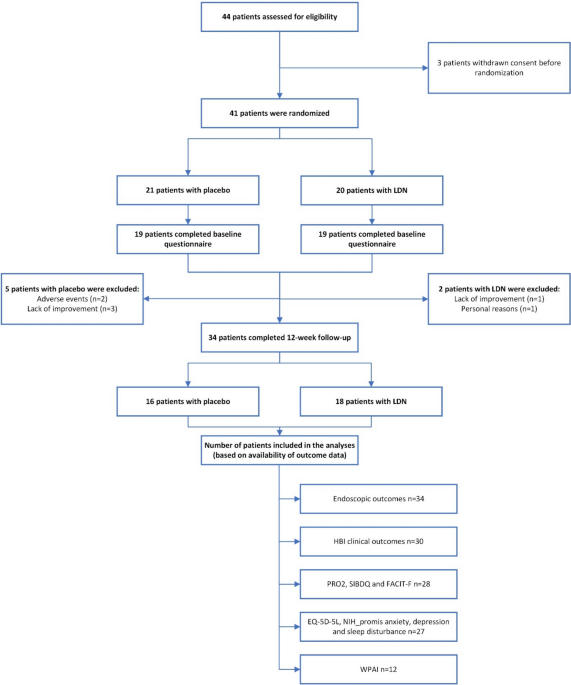
Low-Dose Naltrexone in Crohn’s Disease: A Prematurely Terminated Randomized Trial Showing Reduced Fatigue Without Clinical or Endoscopic Benefit
Digestive Diseases and Sciences

Low-Dose Naltrexone in Crohn’s Disease: A Prematurely Terminated Randomized Trial Showing Reduced Fatigue Without Clinical or Endoscopic Benefit

Many patients and clinicians seek safer, non-immunosuppressive options for Crohn’s disease. This randomized trial found LDN did not induce endoscopic or clinical remission, though it may reduce fatigue—information that...

Read Summary
The impact for causal associations between common diseases and inflammatory bowel disease: a disease-wide bidirectional Mendelian randomization study.
Inflammation research : official journal of the European Histamine Research Society ... [et al.]

The impact for causal associations between common diseases and inflammatory bowel disease: a disease-wide bidirectional Mendelian randomization study.

Genetic evidence for causal links between other diseases (for example asthma or multiple sclerosis) and IBD can help researchers prioritize biological pathways and potential therapeutic targets, and may explain why some...

Read Summary
Cyanidin-3-O-glucoside ameliorates DSS-induced colitis in mice by modulating the PI3K-Akt pathway and preserving intestinal barrier function.
Food & function

Cyanidin-3-O-glucoside ameliorates DSS-induced colitis in mice by modulating the PI3K-Akt pathway and preserving intestinal barrier function.

A naturally occurring pigment (C3G) improved inflammation and barrier markers in a mouse colitis model, which could be of interest to people exploring nutrition-related ways to support gut health.

Read Summary
Ustekinumab Treatment Persistence in Ulcerative Colitis Patients Unresponsive to Biologic Treatment: A Single-Center Real-World Experience
Uludağ Üniversitesi Tıp Fakültesi Dergisi

Ustekinumab Treatment Persistence in Ulcerative Colitis Patients Unresponsive to Biologic Treatment: A Single-Center Real-World Experience

This study provides real‑world data on how long biologic‑experienced UC patients stay on ustekinumab, which helps patients and clinicians set expectations about drug persistence and factors that might influence stopping...

Read Summary
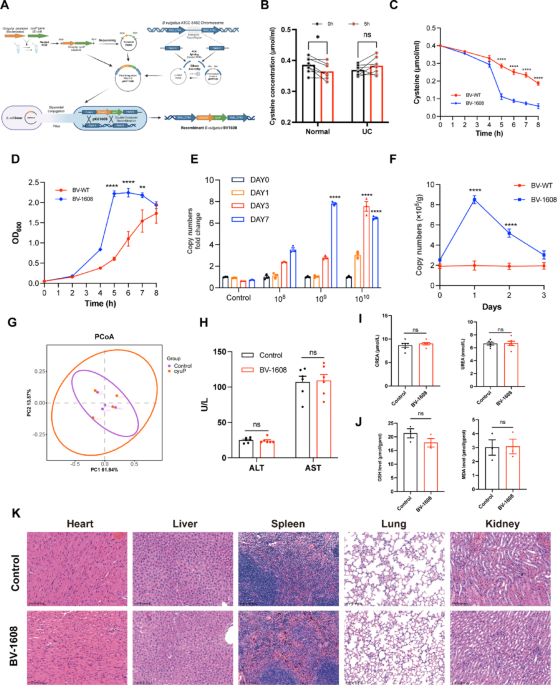
Depleting luminal cysteine with engineered bacteroides vulgatus alleviates experimental colitis by suppressing Th17 differentiation through an ATF6-dependent mechanism
Inflammation Research

Depleting luminal cysteine with engineered bacteroides vulgatus alleviates experimental colitis by suppressing Th17 differentiation through an ATF6-dependent mechanism

This study describes a new microbiome-engineering approach that reduced inflammation in mouse colitis models by sequestering cysteine and altering T cell behavior. If followed up, it could point to novel future therapies...

Read Summary
Systemic Corticosteroids in the Perioperative Setting for Prevention of Pyoderma Gangrenosum During Reconstructive Surgery.
Journal of drugs in dermatology : JDD

Systemic Corticosteroids in the Perioperative Setting for Prevention of Pyoderma Gangrenosum During Reconstructive Surgery.

Because PG is linked to IBD and can be triggered by surgery, a perioperative immunosuppressive approach reported here may be relevant to patients with IBD who have had prior PG or are planning reconstructive surgery.

Read Summary
Compartment-specific collagen architecture in Crohn's disease biopsies using SHG/TPE microscopy: a pilot feasibility study.
Journal of histotechnology

Compartment-specific collagen architecture in Crohn's disease biopsies using SHG/TPE microscopy: a pilot feasibility study.

Fibrosis and stricture formation are important complications in Crohn’s disease; a biopsy-based, quantitative way to measure collagen architecture could help research into fibrotic disease mechanisms and eventually...

Read Summary
Intrinsic capacity, genetic susceptibility and incident inflammatory bowel disease: a prospective cohort study in UK Biobank
Scientific Reports

Intrinsic capacity, genetic susceptibility and incident inflammatory bowel disease: a prospective cohort study in UK Biobank

The study suggests that a simple, multidomain functional measure (intrinsic capacity) is linked to later IBD risk and that combining it with genetic risk may better identify people at higher risk—especially for Crohn’s...

Read Summary
Robotic Versus Laparoscopic Ileal Pouch-Anal Anastomosis for Ulcerative Colitis: A Systematic Review and Comparative Meta-Analysis
Journal of Laparoendoscopic & Advanced Surgical Techniques

Robotic Versus Laparoscopic Ileal Pouch-Anal Anastomosis for Ulcerative Colitis: A Systematic Review and Comparative Meta-Analysis

For people with ulcerative colitis needing restorative surgery, the choice between robotic and laparoscopic IPAA may affect short-term surgical outcomes and recovery.

Read Summary
Low-dose PFNA exposure exacerbates intestinal inflammation via caspase-11-dependent noncanonical NLRP3 inflammasome activation in macrophages.
Journal of advanced research

Low-dose PFNA exposure exacerbates intestinal inflammation via caspase-11-dependent noncanonical NLRP3 inflammasome activation in macrophages.

PFAS exposure is widespread; if PFNA worsens intestinal inflammation through a defined immune pathway, it could help explain environmental contributions to IBD flares and point to new research targets for mitigation.

Read Summary
Effects of paraprobiotic Lactobacillus acidophilus LA-5 on PANoptosis, oxidative stress and inflammation in acetic acid-induced ulcerative colitis.
Journal of the science of food and agriculture

Effects of paraprobiotic Lactobacillus acidophilus LA-5 on PANoptosis, oxidative stress and inflammation in acetic acid-induced ulcerative colitis.

This preclinical study suggests a heat‑killed form of Lactobacillus acidophilus LA‑5 reduced inflammation, oxidative stress, and markers of regulated cell death in a mouse model of ulcerative colitis — with effects...

Read Summary
Strengthening the Methodological Rigor of the APAGE Clinical Practice Guideline on Small Molecules and IL-23 p19 Inhibitors for Inflammatory Bowel Disease.
Journal of gastroenterology and hepatology

Strengthening the Methodological Rigor of the APAGE Clinical Practice Guideline on Small Molecules and IL-23 p19 Inhibitors for Inflammatory Bowel Disease.

Cure8 found this source from Journal of gastroenterology and hepatology, but the page could not be read reliably yet. It is tagged for Inflammatory bowel disease and Research and clinical trials. Open the original...

Read Summary
Beyond class switching in multi-refractory inflammatory bowel disease: Nine case reports and review of literature
World Journal of Gastrointestinal Pharmacology and Therapeutics

Beyond class switching in multi-refractory inflammatory bowel disease: Nine case reports and review of literature

For people with multi-refractory Crohn’s disease or ulcerative colitis, adding a JAK inhibitor to an existing biologic (advanced combination therapy) may convert partial responses into deeper remission in selected cases,...

Read Summary
Letter to the Editor: Can upadacitinib dose escalation redefine treatment strategies in refractory inflammatory bowel disease?
World Journal of Gastrointestinal Pharmacology and Therapeutics

Letter to the Editor: Can upadacitinib dose escalation redefine treatment strategies in refractory inflammatory bowel disease?

Patients who lose response to standard upadacitinib dosing may have a practical option—dose re‑escalation—that could improve symptoms and reduce steroid needs according to a small retrospective cohort summarized here.

Read Summary
FUT2-mediated intestinal fucosylation: a master regulator of host-microbiota symbiosis in health and disease.
Frontiers in microbiology

FUT2-mediated intestinal fucosylation: a master regulator of host-microbiota symbiosis in health and disease.

FUT2-dependent intestinal fucosylation helps shape which gut microbes thrive and how the mucosa resists pathogens. For people with IBD, differences in FUT2 function and altered fucosylation may contribute to microbiome...

Read Summary
O Cyanidin-3--glucoside ameliorates DSS-induced colitis in mice by modulating the PI3K-Akt pathway and preserving intestinal barrier function.
Food & function

O Cyanidin-3--glucoside ameliorates DSS-induced colitis in mice by modulating the PI3K-Akt pathway and preserving intestinal barrier function.

This study provides preclinical evidence that an anthocyanin (cyanidin-3-O-glucoside) can reduce inflammation and preserve the intestinal barrier in a mouse colitis model, highlighting a possible dietary mechanism...

Read Summary
Blood Bile Acids for Inflammatory Bowel Disease Diagnosis and Disease Activity Assessment: A Metabolomics Meta-Analysis.
Journal of proteome research

Blood Bile Acids for Inflammatory Bowel Disease Diagnosis and Disease Activity Assessment: A Metabolomics Meta-Analysis.

If blood bile acid patterns are reproducibly different in IBD and track with disease activity, they could become noninvasive biomarkers to help diagnose IBD or monitor flares. That would be useful for patients and...

Read Summary