Condition

Crohn's disease

Crohn's disease news across medications, symptoms, tests, procedures, complications, research, access, and daily life.

Page 14 of 33 · 1547 articles

Clinical indications and outcomes of pediatric gastrointestinal endoscopy in a resource-limited healthcare system: Findings from the first multicenter study
PubMed Central

Clinical indications and outcomes of pediatric gastrointestinal endoscopy in a resource-limited healthcare system: Findings from the first multicenter study

Endoscopy in this pediatric multicenter series found a high diagnostic yield and confirmed IBD and other treatable conditions; this matters for families and clinicians in resource-limited settings because improving...

Read Summary
Gastrointestinal Tract Remodeling by Dietary Polysaccharides Mechanistic Insights in Colitis-A Review.
Foods (Basel, Switzerland)

Gastrointestinal Tract Remodeling by Dietary Polysaccharides Mechanistic Insights in Colitis-A Review.

People with IBD often look for safe, low-cost adjuncts to medical therapy. This review compiles mechanisms by which dietary polysaccharides could support gut barrier function, beneficial microbes, and anti-inflammatory...

Read Summary
Risk Factors and Predictive Biomarkers for Postoperative Complications in Crohn's Disease Surgery: Systematic Review.
International journal of molecular sciences

Risk Factors and Predictive Biomarkers for Postoperative Complications in Crohn's Disease Surgery: Systematic Review.

People with Crohn’s disease facing surgery may have varying risks of complications; better biomarkers and models could help tailor perioperative care and decision-making. The review signals active research toward more...

Read Summary
Machine Learning for Colitis-Associated Cancer in Inflammatory Bowel Disease: Evidence and Future Directions Toward Precision Medicine, a Narrative Review.
International journal of molecular sciences

Machine Learning for Colitis-Associated Cancer in Inflammatory Bowel Disease: Evidence and Future Directions Toward Precision Medicine, a Narrative Review.

People with IBD face an elevated lifetime risk of colitis-associated cancer; improved detection and risk prediction could lead to earlier treatment and better outcomes. AI could make surveillance more accurate and...

Read Summary
Effect of physician prescribed information to the inflammatory bowel disease patients on quality of life and disease relapse: a randomised control trial
PubMed Central

Effect of physician prescribed information to the inflammatory bowel disease patients on quality of life and disease relapse: a randomised control trial

The study suggests that a physician-endorsed, librarian-developed information prescription may improve quality of life and reduce short-term relapse in people with IBD, a non-pharmacological approach that could be...

Read Summary
Antigen-restricted Candida albicans Th17 cells link oral-gut immunity and adopt pathogenic features during intestinal inflammation.
Immunity

Antigen-restricted Candida albicans Th17 cells link oral-gut immunity and adopt pathogenic features during intestinal inflammation.

The paper identifies Candida albicans–reactive Th17 cells that travel between oral and gut mucosa and become more pathogenic in Crohn’s disease, suggesting a fungal–immune link that could matter for disease mechanisms...

Read Summary
Macrophage-driven inflammation in inflammatory bowel disease: mechanisms and therapeutic opportunities
Frontiers in Bioengineering and Biotechnology

Macrophage-driven inflammation in inflammatory bowel disease: mechanisms and therapeutic opportunities

Macrophages and innate immune signaling are central to how gut inflammation starts and persists in IBD; better understanding these pathways could point to new treatment strategies for people whose disease doesn’t fully...

Read Summary
Harmonized metagenomic signatures of the gut microbiome reveal robust species, functions, and strain links to inflammatory bowel disease.
Gastroenterology

Harmonized metagenomic signatures of the gut microbiome reveal robust species, functions, and strain links to inflammatory bowel disease.

The study synthesizes many stool metagenomes to find consistent microbial species, functional pathways, and strain-level differences linked to IBD and to distinctions between Crohn’s disease and ulcerative...

Read Summary
Real-world patterns of inflammatory bowel disease treatment across adult and pediatric populations: a nationwide cohort study in South Korea
Frontiers in Medicine

Real-world patterns of inflammatory bowel disease treatment across adult and pediatric populations: a nationwide cohort study in South Korea

Patients, families, and clinicians may care because the study shows pediatric-onset IBD is more often Crohn's and that children begin advanced therapies earlier than adults. The adult persistence data for vedolizumab and...

Read Summary
Retrospective Study of Open Versus Laparoscopic Ileocecal Resection in Crohn's Disease in an MIS Era: From a Low-to-Middle Income Country Perspective.
Journal of the West African College of Surgeons

Retrospective Study of Open Versus Laparoscopic Ileocecal Resection in Crohn's Disease in an MIS Era: From a Low-to-Middle Income Country Perspective.

Surgical approach (open vs laparoscopic) affects recovery after ileocecal resection — shorter hospital stay and less bleeding with laparoscopy could matter for Crohn’s patients, especially where resources and access to...

Read Summary
Responses of intestinal organoids to infection by resemble symptoms observed in Crohn's disease Mycobacterium avium .
Gut microbes

Responses of intestinal organoids to infection by resemble symptoms observed in Crohn's disease Mycobacterium avium .

The work models how Mycobacterium avium can provoke epithelial inflammation similar to Crohn's disease, pointing to possible molecular links between infection and CD-like pathology that could guide future research.

Read Summary
A bile acid-GPBAR1 network supports anti-inflammatory and anti-fibrotic benefits of probiotics in colitis.
Gut microbes

A bile acid-GPBAR1 network supports anti-inflammatory and anti-fibrotic benefits of probiotics in colitis.

Fibrosis and stricturing are key problems in Crohn’s disease with limited therapies; this study identifies a microbiota–bile acid–GPBAR1 pathway by which a specific probiotic mix reduced inflammation and fibrosis in...

Read Summary
Neglected kingdoms: the gut virome, mycobiome and their role in inflammatory bowel disease.
Gut microbes

Neglected kingdoms: the gut virome, mycobiome and their role in inflammatory bowel disease.

This review spotlights non-bacterial members of the gut microbiota (viruses and fungi) that may contribute to IBD by altering barrier function, immune responses, and interactions with bacteria. For people with IBD, these...

Read Summary
IL-10-STAT3 axis preserves epithelial mitochondrial homeostasis during bacterial challenge.
Gut microbes

IL-10-STAT3 axis preserves epithelial mitochondrial homeostasis during bacterial challenge.

This study shows a mechanism by which IL-10 protects gut epithelial mitochondria and barrier function during exposure to an IBD-associated E. coli strain, which could be relevant to understanding pathways that maintain...

Read Summary
Faecalibacterium prausnitzii Intestinal epithelial Syndecan-1 maintains mucosal homeostasis in inflammatory bowel disease by enhancingbiofilm formation.
Gut microbes

Faecalibacterium prausnitzii Intestinal epithelial Syndecan-1 maintains mucosal homeostasis in inflammatory bowel disease by enhancingbiofilm formation.

The study suggests a new host-directed mechanism that helps a common beneficial gut bacterium (Faecalibacterium prausnitzii) colonize and protect the gut lining, and identifies heparan sulfate as a potential way to...

Read Summary
All-cause and cause-specific mortality in inflammatory bowel disease across the biologic era: a population-based matched cohort study.
Journal of Crohn's & colitis

All-cause and cause-specific mortality in inflammatory bowel disease across the biologic era: a population-based matched cohort study.

This large, population-based study suggests people with Crohn's disease have modestly higher overall mortality than matched controls and higher deaths from specific causes (colorectal cancer, renal disease, non-Hodgkin...

Read Summary
Age-Related Microbial Differences in Newly Diagnosed Crohn's Disease Reveal the Distinct Enrichment of Oral-Associated Taxa in Pediatric Patients.
Gut and liver

Age-Related Microbial Differences in Newly Diagnosed Crohn's Disease Reveal the Distinct Enrichment of Oral-Associated Taxa in Pediatric Patients.

The study suggests that while Crohn's disease produces a shared dysbiotic signature at diagnosis, the specific microbes enriched differ by age — notably oral-associated taxa in children — which could affect research into...

Read Summary
Evaluation of serum human galectin 3 as a marker of activity in inflammatory bowel disease in comparison to fecal calprotectin.
The Egyptian journal of immunology

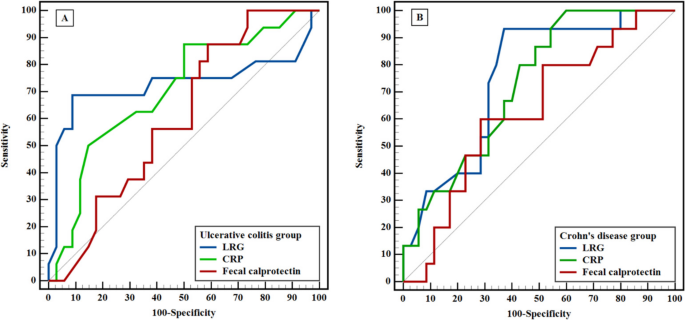
Evaluation of serum human galectin 3 as a marker of activity in inflammatory bowel disease in comparison to fecal calprotectin.

Noninvasive blood biomarkers that track IBD activity could reduce reliance on repeat endoscopy. If validated, serum galectin‑3 might complement fecal calprotectin and CRP to help identify active disease.

Read Summary
Reconstructing the intestinal microbiota ecological network based on graph neural network and contrastive learning: Predicting key microbiota regulatory targets in Crohn's Disease.
Computational biology and chemistry

Reconstructing the intestinal microbiota ecological network based on graph neural network and contrastive learning: Predicting key microbiota regulatory targets in Crohn's Disease.

Researchers used machine learning to prioritize microbiome-related regulatory targets in Crohn's disease, which may guide future lab and clinical research into microbial pathways (like butyrate-related metabolism) that...

Read Summary
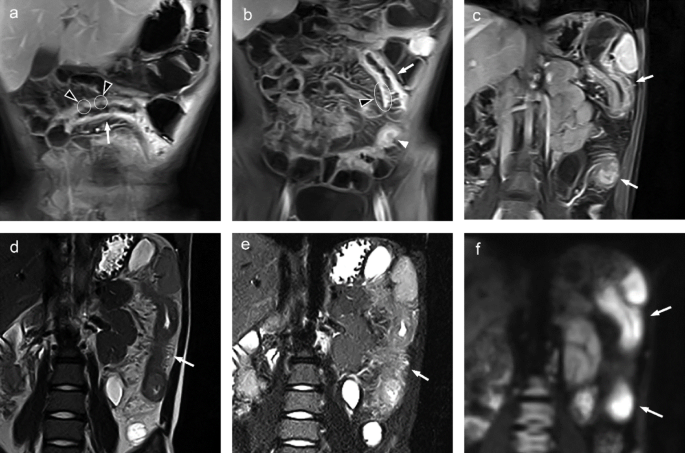
Liver findings in newly diagnosed, treatment-naive patients with Crohn's disease: a preliminary study of MRI proton density fat fraction and extracellular volume fraction.
BMC medical imaging

Liver findings in newly diagnosed, treatment-naive patients with Crohn's disease: a preliminary study of MRI proton density fat fraction and extracellular volume fraction.

People with Crohn’s disease can have liver involvement that may be missed on routine exams. Quantitative liver MRI measures (fat fraction and extracellular volume) could help detect and monitor subtle liver injury...

Read Summary
Perianal Crohn Disease in a Patient With Congenital Afibrinogenemia: A Multidisciplinary Therapeutic Management Challenge.
Cureus

Perianal Crohn Disease in a Patient With Congenital Afibrinogenemia: A Multidisciplinary Therapeutic Management Challenge.

People with IBD who also have bleeding disorders face special risks during endoscopy, surgery, and when using immunosuppressive drugs. This case shows that coordinated care and hemostatic support can allow diagnosis and...

Read Summary
Machine Learning-Based Prediction of Treatment Response to Vitamin D3 in Adolescents and Young Adults with Inflammatory Bowel Disease: A Prospective, Open-Label, Alternation-Based Comparative Study
Biomedicines

Machine Learning-Based Prediction of Treatment Response to Vitamin D3 in Adolescents and Young Adults with Inflammatory Bowel Disease: A Prospective, Open-Label, Alternation-Based Comparative Study

Vitamin D supplementation is commonly considered in people with IBD because deficiency is frequent and low vitamin D may relate to inflammation.

Read Summary
Mechanisms and clinical outcomes linking HLA-DRB1*01:03 and IBD
Nature Reviews Gastroenterology & Hepatology

Mechanisms and clinical outcomes linking HLA-DRB1*01:03 and IBD

The work identifies a genetic link (HLA‑DRB1*01:03) to anti‑IL‑10 autoantibodies and describes a small subgroup of IBD patients who may have a distinct immune mechanism driving disease—information that could matter for...

Read Summary
Gut microbiome in pediatric acute pancreatitis and Crohn's disease versus irritable bowel syndrome and healthy controls
Journal of Pediatric Gastroenterology and Nutrition

Gut microbiome in pediatric acute pancreatitis and Crohn's disease versus irritable bowel syndrome and healthy controls

The gut microbiome differed more in pediatric Crohn’s disease and acute pancreatitis than in IBS or healthy kids, suggesting microbial changes are stronger in organic inflammatory disease and could be targets for future...

Read Summary
Risk factors and fatigue in difficult-to-treat Crohn’s disease: A cross-sectional study of a Chinese cohort
World Journal of Gastroenterology

Risk factors and fatigue in difficult-to-treat Crohn’s disease: A cross-sectional study of a Chinese cohort

Identifies features associated with the new international definition of difficult‑to‑treat Crohn’s disease and links DTT status to greater mental fatigue. Biomarker differences (IL‑5, IL‑10) may point to distinct immune...

Read Summary
Balloon-assisted endoscopic stricturotomy for small bowel fibrostenotic strictures: A comparison of Crohn’s disease-related and non-Crohn’s disease strictures
World Journal of Gastroenterology

Balloon-assisted endoscopic stricturotomy for small bowel fibrostenotic strictures: A comparison of Crohn’s disease-related and non-Crohn’s disease strictures

Patients with small-bowel strictures face repeat procedures or surgery; this study suggests endoscopic stricturotomy outcomes differ by whether the stricture is from Crohn’s disease and that a simple blood marker (NLR)...

Read Summary
Editorial: Risankizumab in Refractory Crohn's Disease-From Real-World Effectiveness to Strategic Positioning and Early Monitoring.
Alimentary pharmacology & therapeutics

Editorial: Risankizumab in Refractory Crohn's Disease-From Real-World Effectiveness to Strategic Positioning and Early Monitoring.

Based on the title and source metadata, this appears to be an opinion or commentary related to Crohn's disease, Inflammatory bowel disease, and Risankizumab. The original article is from Alimentary pharmacology &...

Read Summary

Sulfasalazine- and Cerium Ion-Loaded Polymersomes with Enhanced RONS Scavenging and Colonic Mucosal Repair Ameliorate Experimental Colitis.

The work targets oxidative/nitrosative stress and mucosal repair—mechanisms important in IBD—using a novel delivery vehicle that pairs an approved anti-inflammatory drug with catalytic cerium ions. If translated, this...

Read Summary