All topics

Research and clinical trials

Clinical trials, biomarkers, microbiome, genetics, AI, basic science, and emerging IBD research.

Page 35 of 65 · 3115 articles

Early‐life adverse events and risk of inflammatory bowel disease: A Scandinavian birth cohort study
Journal of Pediatric Gastroenterology and Nutrition

Early‐life adverse events and risk of inflammatory bowel disease: A Scandinavian birth cohort study

Parents and clinicians may wonder whether stressful events in early life increase a child’s long-term IBD risk. This large prospective study found no evidence that the measured early maternal or family adverse events...

Read Summary
3 Self-Propelling WONanomotors Restore the Gut-Kidney Axis by Modulating Intestinal Homeostasis in Inflammatory Bowel Disease.
Advanced healthcare materials

3 Self-Propelling WONanomotors Restore the Gut-Kidney Axis by Modulating Intestinal Homeostasis in Inflammatory Bowel Disease.

This study describes a novel nanoparticle "nanomachine" approach aimed at fixing gut microbial and barrier dysfunction in IBD models and, by doing so, reducing secondary kidney injury—an intersection (gut–kidney axis)...

Read Summary
Celastrol ameliorates ulcerative colitis by inhibiting HSP90-mediated necroptosis of intestinal epithelial cells
Frontiers in Pharmacology

Celastrol ameliorates ulcerative colitis by inhibiting HSP90-mediated necroptosis of intestinal epithelial cells

The study suggests a new mechanism—blocking HSP90-mediated necroptosis of intestinal epithelial cells—that may reduce inflammation and tissue damage in ulcerative colitis, which could guide early drug-discovery efforts.

Read Summary
Gut microbiota-derived metabolites target C5AR1/KDM2A/HCAR3 axis in inflammatory bowel disease: a multi-machine learning algorithms and molecular docking study
Frontiers in Cellular and Infection Microbiology

Gut microbiota-derived metabolites target C5AR1/KDM2A/HCAR3 axis in inflammatory bowel disease: a multi-machine learning algorithms and molecular docking study

The study proposes new biomarker candidates (C5AR1, KDM2A, HCAR3) and microbiota-derived metabolites that might interact with those targets. If validated, that could guide future diagnostic tests or microbiome-targeted...

Read Summary
Basal plasmacytosis and eosinophilia for distinguishing inflammatory bowel disease from gastrointestinal tuberculosis on mucosal biopsy.
Journal of clinical pathology

Basal plasmacytosis and eosinophilia for distinguishing inflammatory bowel disease from gastrointestinal tuberculosis on mucosal biopsy.

Distinguishing IBD from gastrointestinal tuberculosis is challenging in regions where GITB is common; histologic markers like basal plasmacytosis and eosinophilia on mucosal biopsy could help guide diagnosis when...

Read Summary
Evaluation of the immunomodulatory effects of novel phosphinic acid derivatives in vitro and in a murine colitis model.
Biomedicine & pharmacotherapy = Biomedecine & pharmacotherapie

Evaluation of the immunomodulatory effects of novel phosphinic acid derivatives in vitro and in a murine colitis model.

Researchers are exploring new small molecules that might modulate T cells in IBD. This study found lab evidence of T‑cell inhibition for several compounds but no therapeutic benefit in a mouse colitis model, so these...

Read Summary
An inflammatory bowel disease-linked lncRNA suppresses transcription factor T-BET expression in T cells to limit intestinal inflammation.
Immunity

An inflammatory bowel disease-linked lncRNA suppresses transcription factor T-BET expression in T cells to limit intestinal inflammation.

People with IBD may care because this study connects a genetic risk region to a molecular mechanism that restrains inflammation in T cells, offering a potential new biological clue about disease causes and future...

Read Summary
Beyond ICD-10 Codes: A Multi-class Machine-Learning Approach to Identify True IBD Cases in Electronic Medical Records.
Digestive diseases and sciences

Beyond ICD-10 Codes: A Multi-class Machine-Learning Approach to Identify True IBD Cases in Electronic Medical Records.

Improving accuracy of IBD case identification in EMRs can make research and registries more reliable, reduce misclassification, and help ensure studies and quality programs use the right patient groups.

Read Summary
Global burden of inflammatory bowel disease in Asia, 1990-2023: A global burden of disease study 2023.
Saudi journal of gastroenterology : official journal of the Saudi Gastroenterology Association

Global burden of inflammatory bowel disease in Asia, 1990-2023: A global burden of disease study 2023.

Rising IBD prevalence across Asia means more people will need diagnosis, long-term care, and health-system resources; patterns differ by country and by Crohn's disease versus ulcerative colitis, which affects planning...

Read Summary
Analysis of multiplexed SERS-based lateral flow assays: turning qualitative into quantitative for inflammatory bowel disease monitoring.
The Analyst

Analysis of multiplexed SERS-based lateral flow assays: turning qualitative into quantitative for inflammatory bowel disease monitoring.

Quantitative, rapid stool tests could make it easier to track intestinal inflammation without central lab delays. If translated to clinical use, SERS-enhanced lateral-flow assays might allow more frequent, point-of-care...

Read Summary
Anti-Integrin αvβ6 Autoantibodies Distinguish Ulcerative Colitis From Crohn's Disease With High Diagnostic Accuracy and Outperform ANCA and ASCA Status: A Prospective Cross-Sectional Study.
Alimentary pharmacology & therapeutics

Anti-Integrin αvβ6 Autoantibodies Distinguish Ulcerative Colitis From Crohn's Disease With High Diagnostic Accuracy and Outperform ANCA and ASCA Status: A Prospective Cross-Sectional Study.

A blood test that more reliably distinguishes UC from CD could reduce diagnostic uncertainty and help guide appropriate long‑term management for people with colonic inflammatory bowel disease.

Read Summary
Inflammatory bowel disease and prostate cancer: from epidemiological controversy to mechanistic hypotheses
Frontiers in Immunology

Inflammatory bowel disease and prostate cancer: from epidemiological controversy to mechanistic hypotheses

People with IBD and their clinicians may be interested because some studies report higher prostate cancer incidence in IBD populations, and this review explores biological mechanisms that could explain a link while...

Read Summary
A Novel Remote Patient and Medication Monitoring Solution to Improve Adherence and PerSiStence With IBD Therapy
ClinicalTrials.gov

A Novel Remote Patient and Medication Monitoring Solution to Improve Adherence and PerSiStence With IBD Therapy

The trial could show whether a smart-label app plus clinician alerts improves medication adherence and downstream clinical outcomes for people with Crohn's disease or ulcerative colitis starting oral or subcutaneous...

Read Summary
An Induction Study to Investigate the Efficacy and Safety of Duvakitug in Participants With Moderately to Severely Active Ulcerative Colitis
ClinicalTrials.gov

An Induction Study to Investigate the Efficacy and Safety of Duvakitug in Participants With Moderately to Severely Active Ulcerative Colitis

A new Phase 3 trial is testing duvakitug as a potential induction therapy for moderate-to-severe ulcerative colitis. Trial results could add another treatment option if the drug proves safe and effective.

Read Summary
Prediction of Dietary Intervention Efficacy in Mild Ulcerative Colitis Patients Based on Fecal Microbiome Signatures
ClinicalTrials.gov

Prediction of Dietary Intervention Efficacy in Mild Ulcerative Colitis Patients Based on Fecal Microbiome Signatures

Researchers are testing whether baseline fecal microbiome profiles can predict who with mild ulcerative colitis will benefit from a specific prebiotic supplement. If validated, this approach could move dietary therapy...

Read Summary
Low ALIX expression might promote mucosal inflammation in the colon of patients with ulcerative colitis, possibly by promoting pyroptosis: an in silico analysis
Comparative Clinical Pathology

Low ALIX expression might promote mucosal inflammation in the colon of patients with ulcerative colitis, possibly by promoting pyroptosis: an in silico analysis

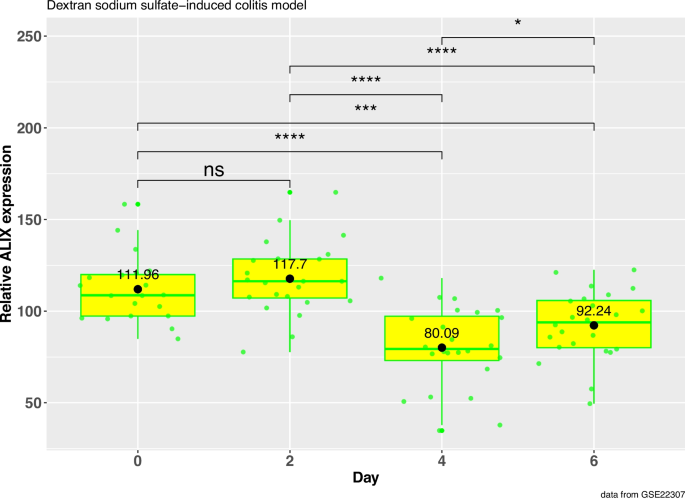
The paper suggests a new molecular link—low ALIX expression—to inflammatory cell death (pyroptosis) that might help explain mucosal inflammation in ulcerative colitis. If validated, that pathway could point to biomarkers...

Read Summary
Sodium acetate attenuates ulcerative colitis by reducing intestinal epithelial apoptosis and remodeling gut microbiota
Frontiers in Microbiology

Sodium acetate attenuates ulcerative colitis by reducing intestinal epithelial apoptosis and remodeling gut microbiota

The study suggests acetate (sodium acetate) can protect intestinal cells and reshape the gut microbiota in preclinical models of ulcerative colitis, pointing to a potential microbiome-linked therapeutic avenue that might...

Read Summary
Dietary tryptophan ameliorates metalaxyl-induced colitis by restoring microbial tryptophan metabolism and aryl hydrocarbon receptor activation
Frontiers in Nutrition

Dietary tryptophan ameliorates metalaxyl-induced colitis by restoring microbial tryptophan metabolism and aryl hydrocarbon receptor activation

This study suggests an environmental fungicide can disrupt gut microbes and reduce beneficial microbial tryptophan metabolites, promoting colitis in mice; dietary tryptophan reversed those effects in the model.

Read Summary
Cardiovascular and Thromboembolic Risk With Upadacitinib in Spondyloarthritis and Inflammatory Bowel Disease: A Meta-Analysis of Randomized Controlled Trials.
Journal of cardiovascular pharmacology

Cardiovascular and Thromboembolic Risk With Upadacitinib in Spondyloarthritis and Inflammatory Bowel Disease: A Meta-Analysis of Randomized Controlled Trials.

People with IBD or Crohn's disease considering or taking upadacitinib may worry about rare but serious risks such as heart attacks, strokes, or blood clots. This meta-analysis found no clear increase in those events...

Read Summary
Biomaterial-Based Microbiota Strategies for Targeting the Intestinal Immune Microenvironment in Inflammatory Bowel Disease.
European journal of pharmacology

Biomaterial-Based Microbiota Strategies for Targeting the Intestinal Immune Microenvironment in Inflammatory Bowel Disease.

Microbiota-targeting treatments are an active area of IBD research, and biomaterials may help overcome delivery challenges that limit current microbiome therapies. Advances here could improve how well these approaches...

Read Summary
Outcomes of risankizumab use in adults with Crohn's disease in a real-world setting (ARISE-CD): a multicentre, retrospective cohort study.
BMJ open gastroenterology

Outcomes of risankizumab use in adults with Crohn's disease in a real-world setting (ARISE-CD): a multicentre, retrospective cohort study.

This real-world multicentre study evaluates risankizumab effectiveness and short-term persistence in adults with Crohn's disease, including those previously treated with ustekinumab — information that can help patients...

Read Summary
α,α-Dicyanoolefin-Based Chemiluminophore with Conical Intersection for High-Contrast Imaging of Peroxynitrite in Ulcerative Colitis
Analytical Chemistry

α,α-Dicyanoolefin-Based Chemiluminophore with Conical Intersection for High-Contrast Imaging of Peroxynitrite in Ulcerative Colitis

A new chemiluminescent probe may help researchers detect and visualize peroxynitrite, a reactive species linked to inflammation in ulcerative colitis, which could aid research into disease mechanisms and early detection...

Read Summary
Adaptive graph learning of microbial phylogeny enables accurate and interpretable microbiome-based host phenotype prediction.
Applied and environmental microbiology

Adaptive graph learning of microbial phylogeny enables accurate and interpretable microbiome-based host phenotype prediction.

The study introduces a phylogeny-aware AI method that may improve detection and interpretation of microbiome signatures linked to IBD and colorectal cancer, which could help research into microbial biomarkers relevant to...

Read Summary
6 Blocking the mAm methyltransferase PCIF1 in macrophages attenuates colitis progression by preventing neuronal damage.
Cellular & molecular immunology

6 Blocking the mAm methyltransferase PCIF1 in macrophages attenuates colitis progression by preventing neuronal damage.

The work suggests a new mechanism linking macrophage-driven ECM remodeling to protection of enteric neurons and reduced colitis in preclinical models, which could point to future therapies aimed at preventing neuronal...

Read Summary
Perceived Familial Risk, Dietary Beliefs, and Self-Reported Family Dietary Changes Among Unaffected First-Degree Relatives of Individuals with Inflammatory Bowel Disease: A Mixed Methods Study in Greece
Gastroenterology Insights

Perceived Familial Risk, Dietary Beliefs, and Self-Reported Family Dietary Changes Among Unaffected First-Degree Relatives of Individuals with Inflammatory Bowel Disease: A Mixed Methods Study in Greece

Unaffected family members often worry about their own risk and may make dietary changes based on beliefs rather than evidence. Understanding these perceptions can help clinicians give clearer, balanced guidance about...

Read Summary
A modern toolbox to elucidate the role of the human microbiome in modulating mycobacterial gut infections
Open Biology

A modern toolbox to elucidate the role of the human microbiome in modulating mycobacterial gut infections

The review outlines new research tools for investigating whether mycobacteria contribute to Crohn’s disease and how the microbiome might influence infection and intestinal inflammation, which could eventually inform...

Read Summary
Cold-Induced Elevation of 3-Hydroxypropionate Exacerbates Colitis by Remodeling Gut Microbiota and Impairing Mitochondrial Respiration in Intestinal Epithelial Cells
Metabolites

Cold-Induced Elevation of 3-Hydroxypropionate Exacerbates Colitis by Remodeling Gut Microbiota and Impairing Mitochondrial Respiration in Intestinal Epithelial Cells

The study suggests a specific microbial metabolite, 3‑HPA, can link cold exposure to worse colitis by changing the microbiome and harming epithelial cell mitochondria and barrier function — a possible new mechanistic...

Read Summary
Intracolonic Treatment with a Rifamycin SV In Situ Gelling Formulation Ameliorates Macroscopic and Histological Damage in an Acute Rat Model of Oxazolone-Induced Colitis: A Proof-of-Concept Study
Journal of Clinical Medicine

Intracolonic Treatment with a Rifamycin SV In Situ Gelling Formulation Ameliorates Macroscopic and Histological Damage in an Acute Rat Model of Oxazolone-Induced Colitis: A Proof-of-Concept Study

A locally delivered rifamycin formulation reduced macroscopic and microscopic colonic damage in an acute rat model of colitis, suggesting a potential new local therapeutic approach worth further preclinical evaluation.

Read Summary
Letter to the Editor in Response to “Five‐Year Outcomes and Disease Trajectories in Moderate‐to‐Severe Ulcerative Colitis: A Korean Multicenter Inception Cohort”
Journal of Gastroenterology and Hepatology

Letter to the Editor in Response to “Five‐Year Outcomes and Disease Trajectories in Moderate‐to‐Severe Ulcerative Colitis: A Korean Multicenter Inception Cohort”

Based on the title and source metadata, this appears to be a clinical study related to Ulcerative colitis, Inflammatory bowel disease, and Research and clinical trials. The original article is from Journal of...

Read Summary
ASAPP Study - Topical 5-ASA as Prophylaxis for Pouchitis in Ulcerative Colitis Patients After Pelvic Pouch Surgery
ClinicalTrials.gov

ASAPP Study - Topical 5-ASA as Prophylaxis for Pouchitis in Ulcerative Colitis Patients After Pelvic Pouch Surgery

Pouchitis is a common, sometimes chronic complication after IPAA surgery for ulcerative colitis and can substantially affect quality of life. If topical 5-ASA prevents pouchitis, it could offer a simple prophylactic...

Read Summary
Efficacy, Safety, and Pharmacokinetics of Upadacitinib Among Patients in East Asia With Moderately to Severely Active Ulcerative Colitis: A Post Hoc Subanalysis of Randomized Phase 3 Studies
Journal of Gastroenterology and Hepatology

Efficacy, Safety, and Pharmacokinetics of Upadacitinib Among Patients in East Asia With Moderately to Severely Active Ulcerative Colitis: A Post Hoc Subanalysis of Randomized Phase 3 Studies

This analysis suggests upadacitinib works and has a similar safety and pharmacokinetic profile in East Asian patients with moderately to severely active ulcerative colitis as in the global trials, which may reassure...

Read Summary