All topics

Research and clinical trials

Clinical trials, biomarkers, microbiome, genetics, AI, basic science, and emerging IBD research.

Page 44 of 66 · 3126 articles

Coixol attenuates Ulcerative Colitis by modulating the ILC3 response via the Wnt/β-catenin pathway.
Journal of ethnopharmacology

Coixol attenuates Ulcerative Colitis by modulating the ILC3 response via the Wnt/β-catenin pathway.

This study identifies a plant-derived compound that reduced inflammation and promoted intestinal healing in mouse models by modulating the Wnt/β-catenin pathway and ILC3-driven IL-22 production—pathways relevant to...


Read Summary
XANTHINE OXIDOREDUCTASE IN DIGESTIVE DISEASES: A CONTEXT-DEPENDENT REDOX SWITCH LINKING INFLAMMATION, METABOLISM AND CARCINOGENESIS.
Free radical biology & medicine

XANTHINE OXIDOREDUCTASE IN DIGESTIVE DISEASES: A CONTEXT-DEPENDENT REDOX SWITCH LINKING INFLAMMATION, METABOLISM AND CARCINOGENESIS.

XOR is linked to oxidative stress, inflammation, drug (thiopurine) metabolism, microbiome interactions, and inflammation-associated colorectal cancer — all processes relevant to IBD pathogenesis and complications....

Read Summary
Anti-TNF, Pan-JAK, and JAK1-Selective Inhibition Differentially Alter Mechanisms of Flow-Mediated Dilation in Human Microvessels.
American journal of physiology. Heart and circulatory physiology

Anti-TNF, Pan-JAK, and JAK1-Selective Inhibition Differentially Alter Mechanisms of Flow-Mediated Dilation in Human Microvessels.

People with IBD already face higher cardiovascular risk; drugs used to treat IBD (anti-TNF and JAK inhibitors) may differently affect small-vessel endothelial function, a possible contributor to heart and vascular...

Read Summary

Epithelial regulatory networks link non-coding genetic variation to clinical heterogeneity in ulcerative colitis

The study links patient-specific non-coding genetic variation to epithelial regulatory networks and to differences in disease severity and response in a large UC trial, suggesting genetics could help explain why some...

Read Summary
Beyond Serum Zinc: Expanding the Understanding of Mucosal Zinc Homeostasis in Ulcerative Colitis
Journal of Gastroenterology and Hepatology

Beyond Serum Zinc: Expanding the Understanding of Mucosal Zinc Homeostasis in Ulcerative Colitis

Based on the title and source metadata, this appears to be a clinical study related to Ulcerative colitis, Inflammatory bowel disease, and Research and clinical trials. The original article is from Journal of...

Read Summary
Comparative effectiveness of adalimumab versus infliximab in children with Crohn's disease: real-world data from the prospective PIBD-SETQuality inception cohort study.
Crohn's & colitis 360

Comparative effectiveness of adalimumab versus infliximab in children with Crohn's disease: real-world data from the prospective PIBD-SETQuality inception cohort study.

This study compares two commonly used anti‑TNF biologics in children with Crohn’s disease using real‑world prospective data, so its findings are directly relevant to treatment choice, expectations for 1‑year remission,...

Read Summary
JAK1-preferential inhibition in refractory inflammatory bowel disease: reframing upadacitinib as a strategy for rapid immune recalibration.
Frontiers in immunology

JAK1-preferential inhibition in refractory inflammatory bowel disease: reframing upadacitinib as a strategy for rapid immune recalibration.

Upadacitinib is already used for some patients with UC and Crohn's; this article offers a structured way to think about why it can act quickly in refractory cases and what evidence would be needed to move from short‑term...

Read Summary
Intestinal epithelial SETD2 maintains gut microbial homeostasis to attenuate colitis.
Clinical and translational medicine

Intestinal epithelial SETD2 maintains gut microbial homeostasis to attenuate colitis.

Epigenetic control of intestinal epithelial cells can shape gut microbes and influence colitis severity; understanding SETD2’s role could point to new mechanistic targets for IBD research and microbiome-directed...

Read Summary
Innate immune recognition of Debaryomyces hansenii requires Dectin-1-Card9 signaling.
Infection and immunity

Innate immune recognition of Debaryomyces hansenii requires Dectin-1-Card9 signaling.

Researchers found that immune cells detect the gut-associated yeast Debaryomyces hansenii via Dectin-1 and Card9, and the yeast was enriched in Crohn’s disease ulcers. That suggests a possible microbial–immune link...

Read Summary

Epithelial-Intrinsic Alterations and Maladaptation to Luminal Metabolites Underlie Persistent Crohn's Disease Pathogenesis

If epithelial cells themselves retain disease-linked programs, that could help explain persistent intestinal abnormalities in Crohn’s disease even during remission and point to new biomarker or therapeutic targets...

Read Summary
Impact of Upper Gastrointestinal Involvement on Clinical Outcomes in Paediatric Inflammatory Bowel Disease.
Acta paediatrica (Oslo, Norway : 1992)

Impact of Upper Gastrointestinal Involvement on Clinical Outcomes in Paediatric Inflammatory Bowel Disease.

UGI involvement in children with IBD was common and linked to a more severe disease course — lower remission rates and more frequent need for biologic therapy — which could affect monitoring and treatment planning.

Read Summary
Auricular Vagus Nerve Stimulation in Inflammatory Bowel Disease: Mechanistic Insights and Biomarker-Based Evaluation of Therapeutic Response
International Journal of Molecular Sciences

Auricular Vagus Nerve Stimulation in Inflammatory Bowel Disease: Mechanistic Insights and Biomarker-Based Evaluation of Therapeutic Response

This review examines a noninvasive neuromodulation strategy (ta‑VNS) that might modulate immune and gut‑barrier biomarkers in IBD and could become an adjunctive therapy if validated in trials. Patients and clinicians may...

Read Summary
Systems biology integration of miR–mRNA profiles identifies steroid refractoriness mechanisms and biomarker candidates in ulcerative colitis
Biochemistry and Biophysics Reports

Systems biology integration of miR–mRNA profiles identifies steroid refractoriness mechanisms and biomarker candidates in ulcerative colitis

Based on the title and source metadata, this appears to be a basic science related to Ulcerative colitis, Inflammatory bowel disease, and Biomarkers. The original article is from Biochemistry and Biophysics Reports.

Read Summary
An Open-Label, Proof of Consent Study of Vorinostat for the Treatment of Mdoerate-to-Severe Crohn s Disease and Maintenance Therapy With Ustekinumab
ClinicalTrials.gov

An Open-Label, Proof of Consent Study of Vorinostat for the Treatment of Mdoerate-to-Severe Crohn s Disease and Maintenance Therapy With Ustekinumab

People with moderate-to-severe Crohn’s disease may be interested because the study explores a new, repurposed drug (vorinostat) that targets epigenetic and immune pathways and includes a plan to move responding...

Read Summary
Gut commensal Lachnospira eligens alleviates ulcerative colitis by mediating isodeoxycholic acid via the STAT3/NF-κB signaling pathway
Springer Science and Business Media LLC

Gut commensal Lachnospira eligens alleviates ulcerative colitis by mediating isodeoxycholic acid via the STAT3/NF-κB signaling pathway

The study identifies a specific gut microbe and a bile-acid metabolite that reduced inflammation in a mouse colitis model and implicates STAT3/NF-κB pathways — a potential new avenue for microbiome-based therapeutics for...

Read Summary
Time‐dependent histopathological remodelling of the appendix in patients with ulcerative colitis
Histopathology

Time‐dependent histopathological remodelling of the appendix in patients with ulcerative colitis

The appendix in conventional UC appears to be inflamed early and then remodels to fibrous obliteration over decades, which could influence thinking about timing or rationale for appendectomy-based interventions.

Read Summary
Krill oil supplementation alleviates clinical symptoms and improves intestinal barrier function with transcriptomic associations to cell adhesion molecule pathways in a mouse model of spontaneous chronic colitis
Frontiers in Nutrition

Krill oil supplementation alleviates clinical symptoms and improves intestinal barrier function with transcriptomic associations to cell adhesion molecule pathways in a mouse model of spontaneous chronic colitis

Krill oil improved colitis signs and intestinal barrier markers in a mouse model and changed colon gene expression linked to cell adhesion—findings that may interest people tracking dietary or supplemental approaches for...

Read Summary
Environmental pollutant UV-328 exacerbates chronic colitis and is associated with altered cholesterol metabolism.
Ecotoxicology and environmental safety

Environmental pollutant UV-328 exacerbates chronic colitis and is associated with altered cholesterol metabolism.

The study links a common environmental pollutant (UV-328) to worsened experimental colitis and altered cholesterol metabolism, suggesting environmental exposures might influence IBD activity and could point to new...

Read Summary
Mesenchymal Stromal/Stem Cells in Inflammatory Bowel Disease: Crosstalk with Innate and Adaptive Immunity.
European journal of pharmacology

Mesenchymal Stromal/Stem Cells in Inflammatory Bowel Disease: Crosstalk with Innate and Adaptive Immunity.

MSCs are an active research area for IBD because they may reduce harmful immune activity and help heal intestinal tissue. Patients following emerging biologic and cell therapies may want to know how MSCs could fit into...

Read Summary
Molecular mechanisms of allergic type 2 immunity in the pathogenesis of Crohn's disease: From epithelial alarmins to IgE signaling.
Cellular and molecular biology (Noisy-le-Grand, France)

Molecular mechanisms of allergic type 2 immunity in the pathogenesis of Crohn's disease: From epithelial alarmins to IgE signaling.

The review suggests that allergic-type (type 2) immune pathways may play a meaningful role in some people with Crohn's disease, which could point to new treatment options that target IgE, Th2 cytokines, epithelial...

Read Summary
Beyond mood: the neurobiological rationale for using SSRIs and SNRIs in the care of inflammatory bowel disease and disorders of gut-brain interaction.
Minerva gastroenterology

Beyond mood: the neurobiological rationale for using SSRIs and SNRIs in the care of inflammatory bowel disease and disorders of gut-brain interaction.

This review suggests SSRIs and SNRIs may influence both brain and gut pathways relevant to symptom burden in IBD and DGBI — potentially improving mood, pain, motility, and aspects of inflammation. That could matter for...

Read Summary
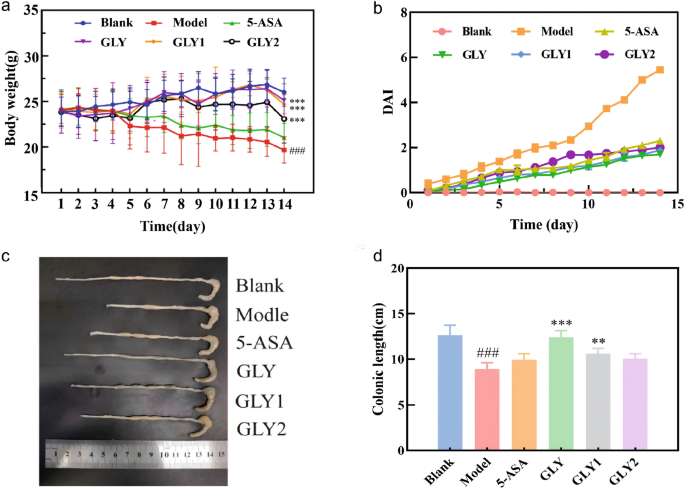
Gardenia Alleviating effect ofFructus polysaccharide and its enzymatic hydrolysate on DSS-induced colitis.
Food & function

Gardenia Alleviating effect ofFructus polysaccharide and its enzymatic hydrolysate on DSS-induced colitis.

The study identifies Gardenia-derived pectic polysaccharides that reduced inflammation and restored colon health in a mouse colitis model, suggesting a possible microbiome-mediated protective effect relevant to IBD...

Read Summary
Synergistic effects of heat-clearing and yin-nourishing herbs in compound Ganlu Yin on attenuating ulcerative colitis in mice
Advances in Traditional Medicine

Synergistic effects of heat-clearing and yin-nourishing herbs in compound Ganlu Yin on attenuating ulcerative colitis in mice

The study explores a multi-herb formula that the authors report reduces inflammation and alters gut microbiota in a mouse model of ulcerative colitis, suggesting possible biological mechanisms worth further study.

Read Summary
Polarized macrophage-derived microvesicles differentially modulate intestinal barrier dysfunction and endoplasmic reticulum stress in ulcerative colitis
Biology Direct

Polarized macrophage-derived microvesicles differentially modulate intestinal barrier dysfunction and endoplasmic reticulum stress in ulcerative colitis

The study identifies macrophage-derived microvesicles as modulators of intestinal barrier function and ER stress in ulcerative colitis models, suggesting a new mechanism that could be relevant to mucosal healing...

Read Summary
Endocytoscopic Classification Is Associated with Mucosal miR-192-5p Downregulation and CXCL2 Expression in Ulcerative Colitis: An Exploratory Study
Diagnostics

Endocytoscopic Classification Is Associated with Mucosal miR-192-5p Downregulation and CXCL2 Expression in Ulcerative Colitis: An Exploratory Study

If confirmed, an endocytoscopic appearance that corresponds to a specific miRNA and chemokine pattern could help clinicians assess mucosal inflammation during colonoscopy and prioritize biopsies or treatment decisions...

Read Summary