All topics

Complications

Fistulas, strictures, obstruction, anemia, cancer risk, extraintestinal symptoms, and related complications.

Page 6 of 20 · 921 articles

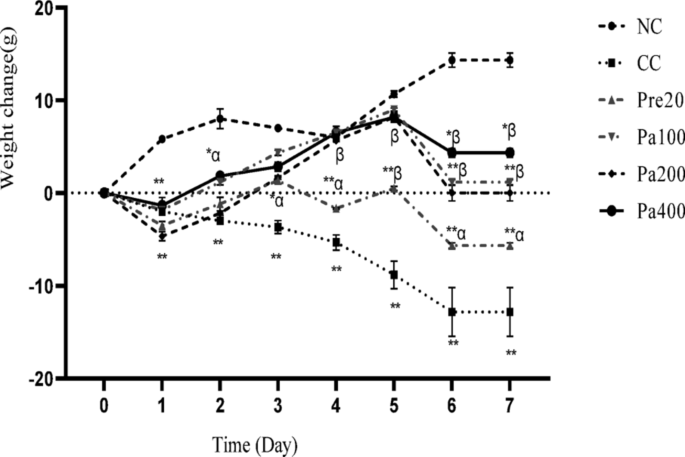
Dietary prevention of undernutrition reduces intestinal inflammation associated with an anti-inflammatory profile of gut microbiota in a preclinical model
Scientific Reports

Dietary prevention of undernutrition reduces intestinal inflammation associated with an anti-inflammatory profile of gut microbiota in a preclinical model

Undernutrition and lean-mass loss are common and harmful in people with IBD. If dietary strategies can prevent weight and muscle loss and shift the gut microbiota toward SCFA producers, that could be relevant to...

Read Summary
Phenotypic switching of gastrointestinal smooth muscle cells and the regulatory role of macrophages: a literature review.
Inflammation research : official journal of the European Histamine Research Society ... [et al.]

Phenotypic switching of gastrointestinal smooth muscle cells and the regulatory role of macrophages: a literature review.

SMC phenotypic switching can contribute to intestinal fibrosis and motility problems in IBD; understanding macrophage regulation of SMCs could point to new treatment targets for these complications.

Read Summary
IRF5 promotes the progression of ulcerative colitis by regulating macrophage polarization and Toll-like receptor signaling pathway.
Biochemical and biophysical research communications

IRF5 promotes the progression of ulcerative colitis by regulating macrophage polarization and Toll-like receptor signaling pathway.

The study links IRF5 to worse intestinal inflammation in UC and shows that reducing IRF5 activity lessens disease in a mouse model, suggesting IRF5 could be a future therapeutic target or biomarker.

Read Summary
Differential modulation of ferroptosis pathways by NOX1/4 and NLRP3 inhibition in DSS-induced colitis
Scientific Reports

Differential modulation of ferroptosis pathways by NOX1/4 and NLRP3 inhibition in DSS-induced colitis

This preclinical study links NOX1/4 and NLRP3 pathways to ferroptosis and iron metabolism in a mouse colitis model, highlighting potential mechanistic targets that could inform future precision therapies for ulcerative...

Read Summary
Klebsiella pneumoniae in inflammatory bowel disease and rectal cancer: from gut inflammation to a potential driver of carcinogenesis.
Frontiers in microbiology

Klebsiella pneumoniae in inflammatory bowel disease and rectal cancer: from gut inflammation to a potential driver of carcinogenesis.

The review suggests that specific Klebsiella pneumoniae strains could connect chronic IBD inflammation with rectal cancer risk, pointing to possible biomarker or prevention targets that may be relevant for people with...

Read Summary
Is there a difference in the outcomes of long-term seton placement for complex anal fistula in patients with and without Crohn's disease?
American journal of surgery

Is there a difference in the outcomes of long-term seton placement for complex anal fistula in patients with and without Crohn's disease?

Setons are often used to control sepsis in complex anal fistula, but this study suggests outcomes are worse when Crohn's disease is present, meaning clinicians may view long-term setons as temporary measures in CD rather...

Read Summary
IL1B-high macrophages promote ferroptosis-like lipid peroxidation injury in Crohn's disease intestinal epithelium.
Redox biology

IL1B-high macrophages promote ferroptosis-like lipid peroxidation injury in Crohn's disease intestinal epithelium.

The study identifies a macrophage-driven mechanism (IL-1β–linked ferroptosis-like lipid peroxidation) that may contribute to epithelial injury in Crohn’s disease, suggesting new biological targets that could eventually...

Read Summary
Integrated metabolomic and genetic profiling implicate loss of docosahexaenoic acid in the link between ultra-processed foods and Crohn's disease.
Clinical gastroenterology and hepatology : the official clinical practice journal of the American Gastroenterological Association

Integrated metabolomic and genetic profiling implicate loss of docosahexaenoic acid in the link between ultra-processed foods and Crohn's disease.

If UPFs increase Crohn's risk by lowering DHA, that points to a measurable metabolic pathway linking diet and disease. Understanding this could inform dietary prevention strategies or targeted nutrition research for...

Read Summary
The Impact of Perioperative Immunosuppression on Post-surgical Outcomes in Patients with Inflammatory Bowel Disease.
Digestive diseases and sciences

The Impact of Perioperative Immunosuppression on Post-surgical Outcomes in Patients with Inflammatory Bowel Disease.

This study addresses whether continuing advanced biologic therapies around abdominal surgery raises short-term postoperative risks—important for IBD patients and clinicians planning surgery.

Read Summary
Primary biliary cirrhosis and inflammatory bowel disease: a two-sample bidirectional Mendelian randomization study
Experimental Biology and Medicine

Primary biliary cirrhosis and inflammatory bowel disease: a two-sample bidirectional Mendelian randomization study

Genetic evidence that PBC may causally influence risk of IBD (and UC specifically) could help explain observed co-occurrence of these autoimmune diseases and point researchers toward shared pathways worth studying.

Read Summary
A sesterterpenoid derivative alleviates ulcerative colitis through targeting ProRS to suppress the NLRP3 inflammasome
Science China Life Sciences

A sesterterpenoid derivative alleviates ulcerative colitis through targeting ProRS to suppress the NLRP3 inflammasome

A new small molecule that blocks the NLRP3 inflammasome via ProRS could point to future drug strategies for ulcerative colitis — a pathway involved in intestinal inflammation that matters to people with IBD. This is...

Read Summary
Unlocking the role of fungal peptide cytotoxin candidalysin in candidiasis and non-candidiasis diseases.
Biochimie

Unlocking the role of fungal peptide cytotoxin candidalysin in candidiasis and non-candidiasis diseases.

Candidalysin is a toxin from Candida albicans that can damage epithelial barriers and trigger inflammation. If candidalysin contributes to intestinal inflammation or barrier dysfunction, it could help explain fungal...

Read Summary
Baseline Magnetic Resonance Enterography Stratifies Persistence Risk of Crohn's Disease Strictures.
Clinical gastroenterology and hepatology : the official clinical practice journal of the American Gastroenterological Association

Baseline Magnetic Resonance Enterography Stratifies Persistence Risk of Crohn's Disease Strictures.

Baseline MRE features may help predict which Crohn's strictures will not improve with advanced medical therapy, informing monitoring and surgical planning. Better stratification could guide decisions about earlier...

Read Summary
Atraumatic Knee Marrow Edema-Like Signal Preceding a Low-Energy Bicondylar Tibial Plateau Fracture in a Patient with Crohn Disease: A Case Report.
Journal of visualized experiments : JoVE

Atraumatic Knee Marrow Edema-Like Signal Preceding a Low-Energy Bicondylar Tibial Plateau Fracture in a Patient with Crohn Disease: A Case Report.

Bone marrow edema–like MRI signal in people with Crohn disease and prior steroid exposure can be an early warning sign of underlying bone fragility. Recognizing worsening load-related pain with such imaging may prompt...

Read Summary
Guselkumab as a Treatment Adjunct for Pyoderma Gangrenosum While Maintaining Clinical Remission of Ulcerative Colitis.
ACG case reports journal

Guselkumab as a Treatment Adjunct for Pyoderma Gangrenosum While Maintaining Clinical Remission of Ulcerative Colitis.

PG is a serious skin complication that can occur with UC. This report suggests guselkumab—an IL‑23 blocker used in IBD and dermatology—helped resolve PG in one patient without loss of UC remission, which could be...

Read Summary
An H2A.Z-dependent epigenetic checkpoint in macrophages couples genetic risk to microbial metabolite signaling.
Protein & cell

An H2A.Z-dependent epigenetic checkpoint in macrophages couples genetic risk to microbial metabolite signaling.

This study links an epigenetic mechanism in macrophages (H2A.Z deposition) to microbial metabolites (butyrate) and to genetic variants associated with IBD, which may help explain persistent inflammation and variable...

Read Summary
Qijiao Shengbai capsule ameliorates ulcerative colitis in mice by modulating gut microbiota and protecting the intestinal barrier, associated with suppression of the TLR4/MyD88/NF-κB pathway
Frontiers in Microbiology

Qijiao Shengbai capsule ameliorates ulcerative colitis in mice by modulating gut microbiota and protecting the intestinal barrier, associated with suppression of the TLR4/MyD88/NF-κB pathway

This preclinical study connects an herbal medicine to changes in gut microbiota, inflammation, and intestinal barrier function in a mouse model of ulcerative colitis — findings that could inform future research on new...

Read Summary
Properties of Persea americana Mill (Lauraceae) kernels aqueous extract on acetic acid-induced ulcerative colitis in rats
Inflammopharmacology

Properties of Persea americana Mill (Lauraceae) kernels aqueous extract on acetic acid-induced ulcerative colitis in rats

People with ulcerative colitis may be interested because the study explores a plant extract that reduced inflammation markers in a common animal model of colitis, suggesting a possible new avenue for drug discovery or...

Read Summary

Layer-Resolved Spatial Transcriptomic Profiling Reveals Distinct Fibrotic and Muscularizing Submucosal Niches in Fibrostenotic Crohn's Disease

The study maps layer-specific gene programs in fibrostenotic Crohn's disease and pinpoints the submucosa as a hotspot for fibromuscular remodeling that underlies strictures and bowel obstruction risk.

Read Summary
Metabolic reprogramming in ulcerative colitis: integrating dietary drivers, pathogenesis, and therapeutic advances
Frontiers in Immunology

Metabolic reprogramming in ulcerative colitis: integrating dietary drivers, pathogenesis, and therapeutic advances

The review connects Western diet-driven metabolic shifts in the gut, immune cells, and microbiota to ulcerative colitis mechanisms and highlights metabolism-targeting therapies as a potential future avenue for treatment.

Read Summary
Is There a Way to Break the Glass Ceiling in the Diagnosis and Treatment of Extraintestinal Manifestations (EIMs) in the Course of Inflammatory Bowel Diseases? A Comprehensive Review of Diagnosis, Pathophysiology, and Treatment of EIM
Journal of Clinical Medicine

Is There a Way to Break the Glass Ceiling in the Diagnosis and Treatment of Extraintestinal Manifestations (EIMs) in the Course of Inflammatory Bowel Diseases? A Comprehensive Review of Diagnosis, Pathophysiology, and Treatment of EIM

Extraintestinal manifestations (skin, joint, eye, liver) are common in IBD and can greatly affect quality of life; better recognition and coordinated care can speed diagnosis and improve outcomes.

Read Summary
Resveratrol suppresses ulcerative colitis and colitis-associated colorectal cancer via modulating the miR-31-5p/SATB2 axis
World Journal of Gastrointestinal Oncology

Resveratrol suppresses ulcerative colitis and colitis-associated colorectal cancer via modulating the miR-31-5p/SATB2 axis

The paper identifies a molecular pathway (miR-31-5p/SATB2) linked to UC progression to colitis-associated cancer and reports that resveratrol modulates this axis in mice, suggesting a potential preventive mechanism worth...

Read Summary
Risk of hepatobiliary and colorectal malignancies in primary sclerosing cholangitis: Crohn’s disease with colonic involvement versus ulcerative colitis - a propensity-matched cohort study
Scandinavian Journal of Gastroenterology

Risk of hepatobiliary and colorectal malignancies in primary sclerosing cholangitis: Crohn’s disease with colonic involvement versus ulcerative colitis - a propensity-matched cohort study

Based on the title and source metadata, this appears to be a clinical study related to Inflammatory bowel disease, Crohn's disease, and Ulcerative colitis. The original article is from Scandinavian Journal of...

Read Summary
Glutathione peroxidase in inflammatory bowel disease: From ferroptosis, immunity, and microbiota regulation to targeted nanomedicines.
Life sciences

Glutathione peroxidase in inflammatory bowel disease: From ferroptosis, immunity, and microbiota regulation to targeted nanomedicines.

GPX and selenium-related pathways may be important to how oxidative stress, ferroptosis, and the microbiome contribute to IBD. Understanding these mechanisms could guide future therapies.

Read Summary
Explainable random forest–SHAP framework for Montreal phenotype–stratified prediction of one-year complications in Crohn’s disease
Frontiers in Physiology

Explainable random forest–SHAP framework for Montreal phenotype–stratified prediction of one-year complications in Crohn’s disease

A model that predicts one-year risks for surgery and complications by Montreal phenotype could help identify patients at higher short-term risk and guide research into targeted monitoring or interventions.

Read Summary
Concomitant CMV colitis in patients with moderate to severe ulcerative colitis admitted to a tertiary hospital in Iran: a retrospective study of frequency, risk factors, and subsequent clinical outcome
BMC Gastroenterology

Concomitant CMV colitis in patients with moderate to severe ulcerative colitis admitted to a tertiary hospital in Iran: a retrospective study of frequency, risk factors, and subsequent clinical outcome

CMV colitis can complicate moderate–severe UC flares and—if present—is associated here with longer hospital stays, more frequent escalation to anti‑TNF therapy, and higher colectomy risk.

Read Summary
Design, synthesis, and evaluation of indole-pyridine chalcone derivatives as novel HK2 inhibitors to modulate macrophage glycolysis and inflammation for IBD treatment.
European journal of medicinal chemistry

Design, synthesis, and evaluation of indole-pyridine chalcone derivatives as novel HK2 inhibitors to modulate macrophage glycolysis and inflammation for IBD treatment.

The study identifies HK2 inhibition as a potential mechanism to shift pro-inflammatory macrophages and reduce intestinal inflammation in preclinical models, which could guide future drug development for IBD.

Read Summary
Extreme temperature events and hospitalizations for 59 autoimmune diseases in Korea: A nationwide outcome-wide, time-stratified, case-crossover study.
Environmental research

Extreme temperature events and hospitalizations for 59 autoimmune diseases in Korea: A nationwide outcome-wide, time-stratified, case-crossover study.

Short periods of extreme heat may modestly increase the chance of hospitalization for IBD and Crohn’s disease. Patients and clinicians should be aware that temperature extremes could be a trigger for worsening disease...

Read Summary
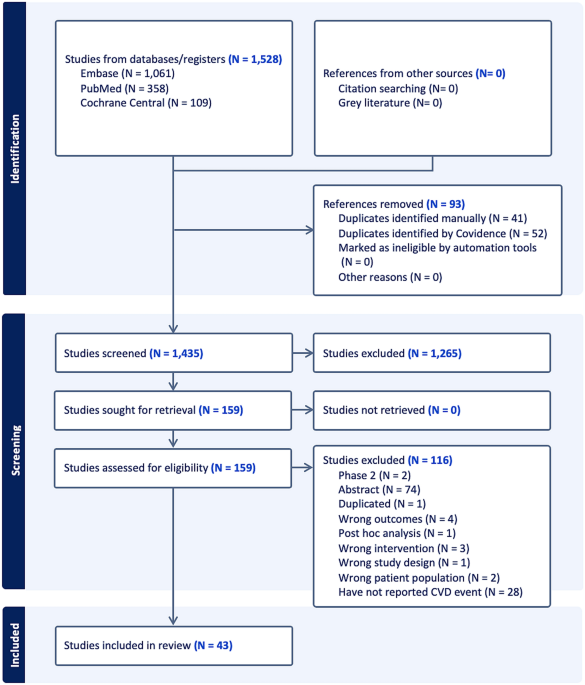
Major cardiovascular event risk of advanced therapies in inflammatory bowel diseases: systematic review and meta-analysis
Inflammation Research

Major cardiovascular event risk of advanced therapies in inflammatory bowel diseases: systematic review and meta-analysis

A pooled analysis of cardiovascular risk tied to advanced IBD therapies could affect treatment decisions and monitoring plans because some immune-targeted drugs have been linked to cardiovascular safety concerns in other...

Read Summary
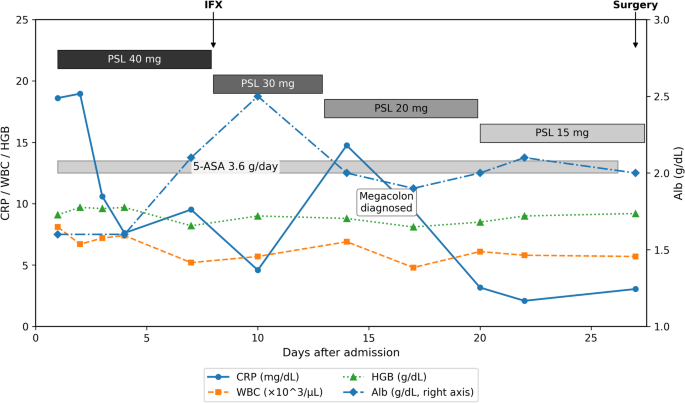
Persistent non-toxic megacolon in ulcerative colitis: a case report of broad disruption and scar replacement of the muscularis propria
Clinical Journal of Gastroenterology

Persistent non-toxic megacolon in ulcerative colitis: a case report of broad disruption and scar replacement of the muscularis propria

Persistent or worsening colonic dilatation in ulcerative colitis can reflect severe, possibly irreversible bowel‑wall damage even when classic signs of toxic megacolon are absent. Recognizing this may prompt timely...

Read Summary