Research topics

Biomarkers

Biomarker research articles covering molecular signals, prediction tools, and measures used to study Crohn's disease, ulcerative colitis, or broader IBD.

Page 5 of 8 · 360 articles

Anti-Integrin αvβ6 Autoantibodies Distinguish Ulcerative Colitis From Crohn's Disease With High Diagnostic Accuracy and Outperform ANCA and ASCA Status: A Prospective Cross-Sectional Study.
Alimentary pharmacology & therapeutics

Anti-Integrin αvβ6 Autoantibodies Distinguish Ulcerative Colitis From Crohn's Disease With High Diagnostic Accuracy and Outperform ANCA and ASCA Status: A Prospective Cross-Sectional Study.

A blood test that more reliably distinguishes UC from CD could reduce diagnostic uncertainty and help guide appropriate long‑term management for people with colonic inflammatory bowel disease.

Read Summary
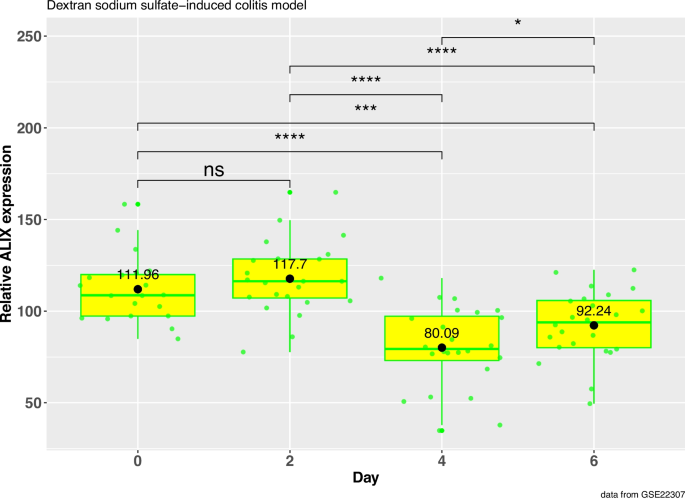
Low ALIX expression might promote mucosal inflammation in the colon of patients with ulcerative colitis, possibly by promoting pyroptosis: an in silico analysis
Comparative Clinical Pathology

Low ALIX expression might promote mucosal inflammation in the colon of patients with ulcerative colitis, possibly by promoting pyroptosis: an in silico analysis

The paper suggests a new molecular link—low ALIX expression—to inflammatory cell death (pyroptosis) that might help explain mucosal inflammation in ulcerative colitis. If validated, that pathway could point to biomarkers...

Read Summary
Hormonal contraception is not associated with recurrent flares in ulcerative colitis: a longitudinal time-dependent analysis
Inflammatory Bowel Diseases

Hormonal contraception is not associated with recurrent flares in ulcerative colitis: a longitudinal time-dependent analysis

Many women with UC use hormonal contraception and worry it might worsen disease activity. This study provides evidence that HCT was not linked to more recurrent flares or higher cumulative inflammatory burden in the...

Read Summary
Beyond Inflammation: Sarcopenia and Disease Phenotype Predict Unfavourable Course in Crohn’s Disease—A Retrospective Observational Study
Biomedicines

Beyond Inflammation: Sarcopenia and Disease Phenotype Predict Unfavourable Course in Crohn’s Disease—A Retrospective Observational Study

Sarcopenia (low muscle mass) was linked with worse outcomes in Crohn’s disease and, combined with fecal calprotectin and disease behaviour, formed a score that better predicted unfavourable courses. Identifying at-risk...

Read Summary
Inflammation-driven carcinogenesis in ulcerative colitis: Molecular and immunological pathways
World Journal of Gastrointestinal Oncology

Inflammation-driven carcinogenesis in ulcerative colitis: Molecular and immunological pathways

People with ulcerative colitis face a higher colorectal cancer risk driven in part by chronic inflammation; this review explains the molecular and immune mechanisms behind that risk and highlights biomarkers and...

Read Summary
C-Reactive Protein-to-Albumin Ratio in Pediatric Inflammatory Bowel Disease: Associations with Disease Activity and Comparison with C-Reactive Protein Alone
Diagnostics

C-Reactive Protein-to-Albumin Ratio in Pediatric Inflammatory Bowel Disease: Associations with Disease Activity and Comparison with C-Reactive Protein Alone

This paper evaluates CAR, a simple blood‑based biomarker, in children with IBD and finds it reflects disease severity and changes over time in pediatric Crohn’s disease. That matters because reliable, easy-to-measure...

Read Summary
Disrupted terminal bilirubin catabolism links Lachnospiraceae depletion to inflammatory bowel disease
Frontiers in Microbiology

Disrupted terminal bilirubin catabolism links Lachnospiraceae depletion to inflammatory bowel disease

Identifies specific gut bacteria and fecal bilirubin metabolites that may link microbial loss to increased oxidative burden in IBD; suggests new biomarker candidates and targets for functional follow-up.

Read Summary
Plasma Proteomic Profiling Identifies Biomarkers and Therapeutic Targets for Predicting Osteoporosis Risk in Patients with Inflammatory Bowel Disease.
The Turkish journal of gastroenterology : the official journal of Turkish Society of Gastroenterology

Plasma Proteomic Profiling Identifies Biomarkers and Therapeutic Targets for Predicting Osteoporosis Risk in Patients with Inflammatory Bowel Disease.

IBD increases risk of osteoporosis; identifying blood proteins that predict later bone loss could help flag higher-risk patients and reveal biological links between gut inflammation and bone health.

Read Summary
Persistent elevation of serum LBP, IL-23 and IL-6 in infliximab-maintained Crohn's disease: a case–control study from Iraq with the serum LBP/albumin ratio as a novel composite biomarker
Journal of Genetic Engineering and Biotechnology

Persistent elevation of serum LBP, IL-23 and IL-6 in infliximab-maintained Crohn's disease: a case–control study from Iraq with the serum LBP/albumin ratio as a novel composite biomarker

Based on the title and source metadata, this appears to be a clinical study related to Crohn's disease, Inflammatory bowel disease, and Infliximab. The original article is from Journal of Genetic Engineering and...

Read Summary
Evaluation of pharmacokinetic metrics and pharmacodynamic biomarkers associated with endoscopic healing in pediatric Crohn's disease patients treated with anti-tumor necrosis factor biologics.
Crohn's & colitis 360

Evaluation of pharmacokinetic metrics and pharmacodynamic biomarkers associated with endoscopic healing in pediatric Crohn's disease patients treated with anti-tumor necrosis factor biologics.

Identifies candidate drug‑level and immune biomarker cut‑points linked with endoscopic healing in pediatric Crohn's disease, which could help guide dosing or treatment changes if validated.

Read Summary
Rapid fecal lipidome profiling in inflammatory bowel disease: A novel approach for exploratory disease molecular characterization and therapeutic monitoring.
Journal of pharmaceutical and biomedical analysis

Rapid fecal lipidome profiling in inflammatory bowel disease: A novel approach for exploratory disease molecular characterization and therapeutic monitoring.

Non-invasive fecal lipid markers could help differentiate UC from CD and improve diagnostic molecular profiling in IBD if validated, which may be useful for patients and clinicians seeking less-invasive diagnostic tools.

Read Summary
Characterization of remission levels in patients with ulcerative colitis treated with 5-aminosalicylates: results of the cross-sectional CARUC-ASA study by the Belgian IBD Research and Development Group.
Journal of Crohn's & colitis

Characterization of remission levels in patients with ulcerative colitis treated with 5-aminosalicylates: results of the cross-sectional CARUC-ASA study by the Belgian IBD Research and Development Group.

The study evaluates how well first-line 5-ASA therapy achieves modern treatment targets (endoscopic, histologic, and biomarker remission) in real-world UC patients who are clinically in remission. Patients and clinicians...

Read Summary
Beyond Clinical Toxicity: Repositioning the Truelove and Witts Criteria in the Treat-to-Target Era of Acute Severe Ulcerative Colitis
Gastroenterology Insights

Beyond Clinical Toxicity: Repositioning the Truelove and Witts Criteria in the Treat-to-Target Era of Acute Severe Ulcerative Colitis

The T&W criteria are still used to define severe UC on admission, but relying on them alone may delay recognition of steroid non‑response and escalation decisions. Integrating biomarkers, endoscopy, and imaging can help...

Read Summary
Inflammatory and Immune Cytoprofiles of Active Ulcerative Colitis from Crohn’s Disease—Insights from Multivariable Modeling
International Journal of Molecular Sciences

Inflammatory and Immune Cytoprofiles of Active Ulcerative Colitis from Crohn’s Disease—Insights from Multivariable Modeling

Distinct circulating immune signatures could help differentiate active UC from CD and suggest disease-specific pathways that might guide future biomarkers or therapies.

Read Summary
Circulating microRNAs as biomarkers of disease activity and treatment response in Crohn’s disease patients receiving infliximab or vedolizumab: a longitudinal cohort study
Frontiers in Medicine

Circulating microRNAs as biomarkers of disease activity and treatment response in Crohn’s disease patients receiving infliximab or vedolizumab: a longitudinal cohort study

If validated, blood microRNAs could become noninvasive biomarkers to help track inflammation and predict biochemical response to infliximab or vedolizumab in Crohn’s disease, complementing CRP and fecal calprotectin.

Read Summary
Azoreductase-Responsive NIR Fluorescent Self-Assembled Probe for Hypoxia Imaging of Tumors, Hindlimb Ischemia, and Ulcerative Colitis
Analytical Chemistry

Azoreductase-Responsive NIR Fluorescent Self-Assembled Probe for Hypoxia Imaging of Tumors, Hindlimb Ischemia, and Ulcerative Colitis

The probe targets azoreductase-driven hypoxia, a mechanism linked to ulcerative colitis and other hypoxia-associated diseases; a reliable real-time imaging method could help research and eventually guide treatments.

Read Summary
Integrated Transcriptomic and Machine-Learning Analyses Identify Shared Na+ Overload-Related Gene Signatures in Inflammatory Bowel Disease and Ankylosing Spondylitis
Genes

Integrated Transcriptomic and Machine-Learning Analyses Identify Shared Na+ Overload-Related Gene Signatures in Inflammatory Bowel Disease and Ankylosing Spondylitis

The study links shared gene-expression patterns between IBD and ankylosing spondylitis and highlights STAT3 as a potential shared biomarker or therapeutic target, which could be relevant for understanding overlapping...

Read Summary
Chinese Medical Journal review highlights the role of artificial intelligence in inflammatory ...
eurekalert.org

Chinese Medical Journal review highlights the role of artificial intelligence in inflammatory ...

AI could help make IBD assessments (endoscopy, histology, imaging, biomarkers) more objective and faster, which may improve monitoring, treatment selection, and early detection of complications for people with Crohn’s...

Read Summary
The causal role of plasma protein ratios in ulcerative colitis: insights from mendelian randomization and single-cell sequencing.
Open medicine (Warsaw, Poland)

The causal role of plasma protein ratios in ulcerative colitis: insights from mendelian randomization and single-cell sequencing.

Researchers used genetics plus single-cell sequencing and ELISA to prioritize plasma protein ratios that may causally relate to ulcerative colitis. If validated in larger studies, such biomarkers could help with...

Read Summary
Sodium Butyrate Therapy in Ulcerative Colitis: A Systematic Review of Preclinical and Clinical Evidence
Medical Sciences

Sodium Butyrate Therapy in Ulcerative Colitis: A Systematic Review of Preclinical and Clinical Evidence

This review pools available human and animal studies on sodium butyrate for ulcerative colitis and highlights promising signals—especially for oral microencapsulated formulations—while noting that clinical evidence is...

Read Summary
Drug-Drug Interaction Risk Assessment Strategies for Biologics in Inflammatory Bowel Disease: A Literature-Based Evidence Mini-Review.
Clinical and translational science

Drug-Drug Interaction Risk Assessment Strategies for Biologics in Inflammatory Bowel Disease: A Literature-Based Evidence Mini-Review.

If you have IBD and take biologic therapy plus other medicines, inflammation and anti-cytokine treatment may change how your other drugs are metabolized. This review discusses ways researchers are trying to predict and...

Read Summary
Clinical study on the screening of biomarkers for Crohn's disease based on blood metabolomics.
Frontiers in gastroenterology (Lausanne, Switzerland)

Clinical study on the screening of biomarkers for Crohn's disease based on blood metabolomics.

The study suggests blood metabolite patterns differ by biologic therapy and identifies candidate biomarkers that might help develop less-invasive monitoring tools for inflammation and treatment effects in Crohn’s...

Read Summary
Fucose metabolism as a central axis linking inflammation, immunity, and cancer in the gut.
Frontiers in immunology

Fucose metabolism as a central axis linking inflammation, immunity, and cancer in the gut.

Researchers and clinicians are exploring how fucose metabolism affects gut barrier function, immunity, and microbiota — processes central to IBD and colorectal cancer. If validated, fucosylation biomarkers or treatments...

Read Summary
The Milan Ultrasound Criteria (MUC) in Pediatric Ulcerative Colitis: A Pilot Study of the Correlation With Clinical, Endoscopic and Ultrasound Activity Scores
JCC Plus

The Milan Ultrasound Criteria (MUC) in Pediatric Ulcerative Colitis: A Pilot Study of the Correlation With Clinical, Endoscopic and Ultrasound Activity Scores

If validated, a simple ultrasound-based score could reduce the need for invasive endoscopy to monitor disease activity in children with ulcerative colitis. Noninvasive monitoring is especially valuable in pediatrics.

Read Summary
C2 Integrative Analysis of Intestinal Transcriptomes UnderscoresUpregulation in IBD, AIG, EoE, and CRC.
Bioinformatics and biology insights

C2 Integrative Analysis of Intestinal Transcriptomes UnderscoresUpregulation in IBD, AIG, EoE, and CRC.

Researchers and clinicians looking for blood- or tissue-based molecular tests for IBD may find these integrated transcriptomic analyses useful because they identify candidate diagnostic biomarkers and highlight shared...

Read Summary
Integrated DIA proteomics of tissue and exudate reveals screening markers for early detection of ulcerative colitis and colorectal cancer.
Clinica chimica acta; international journal of clinical chemistry

Integrated DIA proteomics of tissue and exudate reveals screening markers for early detection of ulcerative colitis and colorectal cancer.

Early, noninvasive biomarkers could help detect ulcerative colitis and related colorectal cancer risk sooner. This study identifies four serum-accessible proteins with promising diagnostic accuracy in the reported...

Read Summary
Dual-energy computed tomography quantification of creeping fat in Crohn’s disease: A new radiologic biomarker for transmural disease monitoring
World Journal of Radiology

Dual-energy computed tomography quantification of creeping fat in Crohn’s disease: A new radiologic biomarker for transmural disease monitoring

Dual-energy CT quantification of creeping fat could offer a measurable imaging biomarker that reflects transmural inflammation and fibrosis in Crohn’s disease, potentially improving monitoring beyond mucosal healing.

Read Summary
JAK1-preferential inhibition in refractory inflammatory bowel disease: reframing upadacitinib as a strategy for rapid immune recalibration.
Frontiers in immunology

JAK1-preferential inhibition in refractory inflammatory bowel disease: reframing upadacitinib as a strategy for rapid immune recalibration.

Upadacitinib is already used for some patients with UC and Crohn's; this article offers a structured way to think about why it can act quickly in refractory cases and what evidence would be needed to move from short‑term...

Read Summary