Research topics

Microbiome

Microbiome articles covering gut bacteria, microbial changes, microbiota research, and IBD disease mechanisms.

Page 10 of 12 · 570 articles

Preventive and therapeutic effects of co-administration of Bacteroides thetaiotaomicron and infliximab on dextran sodium sulfate-induced colitis in mice
Intestinal Research

Preventive and therapeutic effects of co-administration of Bacteroides thetaiotaomicron and infliximab on dextran sodium sulfate-induced colitis in mice

This study suggests a specific gut microbe might reduce gut inflammation in a mouse colitis model and may boost the benefit of infliximab, which could point toward microbiota‑based adjuncts to current IBD therapies.


Read Summary
Effects of Anacyclus pyrethrum L on a mouse model of inflammatory bowel disease and its influence on intestinal barrier function and gut microbiota.
Frontiers in microbiology

Effects of Anacyclus pyrethrum L on a mouse model of inflammatory bowel disease and its influence on intestinal barrier function and gut microbiota.

This preclinical study reports that an extract of Anacyclus pyrethrum reduced colitis signs in a mouse DSS model and was linked to improved intestinal barrier markers, lower innate immune receptor expression, changes in...

Read Summary
Development of double emulsions loaded with Malus baccata (Linn.) polyphenols and their protective effect on dextran sulfate sodium-induced ulcerative colitis in mice.
Food chemistry

Development of double emulsions loaded with Malus baccata (Linn.) polyphenols and their protective effect on dextran sulfate sodium-induced ulcerative colitis in mice.

Researchers are exploring plant polyphenols and new oral delivery systems that might reduce gut inflammation and modify microbiota — findings in mice suggest potential but are not directly applicable to patients yet.

Read Summary
Based on the "gut microbiota-barrier-immunity" axis to explore the mechanism of action of traditional Chinese medicine polysaccharides in the treatment of inflammatory bowel disease and structure-activity relationship: A review.
International journal of biological macromolecules

Based on the "gut microbiota-barrier-immunity" axis to explore the mechanism of action of traditional Chinese medicine polysaccharides in the treatment of inflammatory bowel disease and structure-activity relationship: A review.

People with IBD may be interested because the review identifies polysaccharides from traditional Chinese medicine as a potential source of new therapies that act on gut microbes, the intestinal barrier, and immune...

Read Summary
CLINICAL AND PATHOGENETIC INTERACTIONS BETWEEN METABOLIC DYSFUNCTION-ASSOCIATED STEATOTIC LIVER DISEASE AND INFLAMMATORY BOWEL DISEASES: THE ROLE OF METABOLIC DISORDERS, MICROBIOTA, AND SYSTEMIC INFLAMMATION
Перспективи та інновації науки

CLINICAL AND PATHOGENETIC INTERACTIONS BETWEEN METABOLIC DYSFUNCTION-ASSOCIATED STEATOTIC LIVER DISEASE AND INFLAMMATORY BOWEL DISEASES: THE ROLE OF METABOLIC DISORDERS, MICROBIOTA, AND SYSTEMIC INFLAMMATION

Cure8 could only read part of this source from Перспективи та інновації науки, so this card uses cautious topic tags instead of a full summary. It is tagged for Microbiome and Research and clinical trials.

Read Summary
Tissue-resident colon macrophages shape the microbiome and regulate mucosal healing via ferroportin.
Cell reports

Tissue-resident colon macrophages shape the microbiome and regulate mucosal healing via ferroportin.

The study points to a new local mechanism—ferroportin in colon macrophages—that links iron handling, the microbiome, and mucosal healing. If validated, this could lead to targeted treatments that help healing without...

Read Summary
Assessing the proinflammatory potential of sterile fecal microbiome filtrate from ulcerative colitis patients using an intestine-on-chip platform and automated image analysis.
Gut microbes

Assessing the proinflammatory potential of sterile fecal microbiome filtrate from ulcerative colitis patients using an intestine-on-chip platform and automated image analysis.

The work suggests soluble factors present in fecal filtrates from active UC patients can provoke proinflammatory responses in a controlled intestine-on-chip model, supporting the idea that microbiome-derived metabolites...

Read Summary
Expansion resistance against genotoxic E. coli: protective effects of Bifidobacterium pseudolongum in DSS-induced colitis in mice
Frontiers in Microbiology

Expansion resistance against genotoxic E. coli: protective effects of Bifidobacterium pseudolongum in DSS-induced colitis in mice

The study identifies a probiotic species (B. pseudolongum) and its acetate production as potential ways to limit a genotoxic E. coli and reduce inflammation in a mouse model — suggesting a microbiome-based avenue that...

Read Summary
Microbial metabolite hyodeoxycholic acid induces macrophage immunometabolic reprogramming and alleviates ulcerative colitis.
Cell reports

Microbial metabolite hyodeoxycholic acid induces macrophage immunometabolic reprogramming and alleviates ulcerative colitis.

The work links a missing bacterial metabolite (HDCA) to macrophage metabolism and reduced intestinal inflammation in experimental models, highlighting a potential microbiome-derived pathway that could be targeted for...

Read Summary
Transient receptor potential vanilloid channels in inflammatory bowel diseases: linking inflammation, angiogenesis, and oxidative stress.
Inflammopharmacology

Transient receptor potential vanilloid channels in inflammatory bowel diseases: linking inflammation, angiogenesis, and oxidative stress.

TRPV channels are proposed as integrative mediators of inflammation, angiogenesis, and oxidative stress in IBD, suggesting new mechanistic targets that could eventually yield novel therapies for Crohn's disease and...

Read Summary

Synergistic Effect of VSL#3TM and Vedolizumab for Ulcerative colitis: Preliminary Evidence from a Real-world Single-Arm study

The report suggests a probiotic (VSL#3TM) added to vedolizumab may speed or increase early response in ulcerative colitis, which could interest patients and clinicians seeking ways to improve biologic induction outcomes....

Read Summary
How Complex Dietary Fibers Can Be Used to Shape the Human Gut Microbiome Toward Reduced Inflammatory Potential: A Pilot Study
Molecules

How Complex Dietary Fibers Can Be Used to Shape the Human Gut Microbiome Toward Reduced Inflammatory Potential: A Pilot Study

The study suggests that combining different fermentable fibers may steer the gut microbiome toward more butyrate-producing bacteria and away from pro-inflammatory lineages—changes that could be relevant to IBD-related...

Read Summary
Environment shapes gut microbiome and determines susceptibility to DSS-colitis in Adamdec1-/- mice
Frontiers in Immunology

Environment shapes gut microbiome and determines susceptibility to DSS-colitis in Adamdec1-/- mice

The paper highlights how the gut microbiome and environment can strongly influence colitis severity in genetically susceptible mice, illustrating a gene–environment–microbiome axis that may help explain heterogeneity in...

Read Summary
Scleroglucan ameliorates dextran sulfate sodium-induced ulcerative colitis and gut microbiota dysbiosis in mice.
International journal of biological macromolecules

Scleroglucan ameliorates dextran sulfate sodium-induced ulcerative colitis and gut microbiota dysbiosis in mice.

The study identifies a fungal β-glucan that reduced inflammation and altered the gut microbiome and short-chain fatty acids in a mouse model of ulcerative colitis, which could inform future nutritional or therapeutic...

Read Summary
Infliximab-linked gut microbiome signatures as candidate treatment response biomarkers in pediatric inflammatory bowel disease: a systematic review.
Frontiers in pharmacology

Infliximab-linked gut microbiome signatures as candidate treatment response biomarkers in pediatric inflammatory bowel disease: a systematic review.

This matters because identifying microbiome patterns linked to infliximab response could help predict which children with IBD are more likely to benefit from the drug and guide personalized treatment decisions in the...

Read Summary
The intellectual structure and emerging trends on nanotechnology in inflammatory bowel disease: A bibliometric analysis from 2005 to 2024.
Medicine

The intellectual structure and emerging trends on nanotechnology in inflammatory bowel disease: A bibliometric analysis from 2005 to 2024.

Nanotechnology is being heavily explored as a way to improve drug targeting, control release, and reduce systemic toxicity in IBD — topics that could shape future treatment options and research priorities.

Read Summary
Targeting mitochondrial dysfunction with traditional Chinese medicine for inflammatory bowel disease: a comprehensive review.
Frontiers in pharmacology

Targeting mitochondrial dysfunction with traditional Chinese medicine for inflammatory bowel disease: a comprehensive review.

Mitochondrial dysfunction may contribute to IBD symptoms and disease progression; therapies that protect or restore mitochondrial function could become future treatment strategies. People interested in complementary or...

Read Summary
A Specific Probiotic in thE MOdulation of Gut Microbiota of patieNts With Mild-to-modErate Ulcerative Colitis
ClinicalTrials.gov

A Specific Probiotic in thE MOdulation of Gut Microbiota of patieNts With Mild-to-modErate Ulcerative Colitis

This trial is testing whether a rectally delivered probiotic can change the gut microbiome and promote mucosal healing in people with mild-to-moderate ulcerative colitis (and includes some Crohn's patients). If...

Read Summary
Effects of cuproptosis and its application in inflammatory bowel disease (Review).
International journal of molecular medicine

Effects of cuproptosis and its application in inflammatory bowel disease (Review).

Researchers report links between copper-driven cell death pathways and IBD biology; identifying cuproptosis-related biomarkers or drugs could open new diagnostic or therapeutic avenues for people with Crohn's disease or...

Read Summary
Assessing the robustness of clinical trials regarding novel therapies in inflammatory bowel disease.
Gastroenterology report

Assessing the robustness of clinical trials regarding novel therapies in inflammatory bowel disease.

This study looks at how statistically "fragile" results are in trials of new IBD treatments. Patients and clinicians should know that trial size, treatment type, and whether the result was a primary outcome affect how...

Read Summary
Microbial predictors of sustained clinical remission following the Crohn's disease exclusion diet in adults and microbiome shifts toward healthy pediatric controls.
Crohn's & colitis 360

Microbial predictors of sustained clinical remission following the Crohn's disease exclusion diet in adults and microbiome shifts toward healthy pediatric controls.

If you or your clinician are considering dietary therapy like the CDED for Crohn's disease, microbiome features at baseline may influence who achieves sustained remission. Understanding these links could help personalize...

Read Summary
Antibiotic Class-Specific Effects on Inflammatory Bowel Disease: Microbiome Disruption, Risk, and Recovery
International Journal of Molecular Sciences

Antibiotic Class-Specific Effects on Inflammatory Bowel Disease: Microbiome Disruption, Risk, and Recovery

Antibiotics can change the gut microbiome in ways that may raise IBD risk or worsen disease for some people. Knowing which antibiotic classes and approaches may be less harmful could help patients and clinicians reduce...

Read Summary
Reduced fecal GP2 levels in ulcerative colitis associate with inflammatory activity and microbial composition.
Clinica chimica acta; international journal of clinical chemistry

Reduced fecal GP2 levels in ulcerative colitis associate with inflammatory activity and microbial composition.

If fecal GP2 reliably reflects UC activity and microbial changes, it could become a noninvasive marker to track inflammation or to study disease mechanisms that differ between UC and CD.

Read Summary
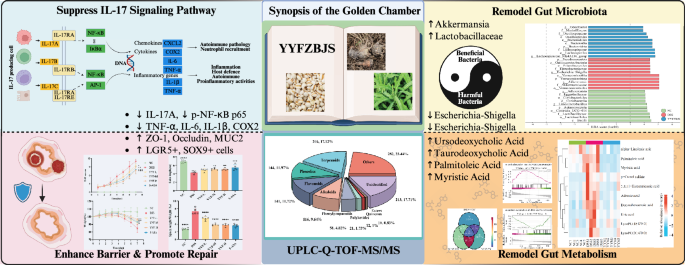
Yiyi Fuzi Baijiang formula protects against DSS-induced colitis by orchestrating the gut barrier-microbiota-metabolism axis
Chinese Medicine

Yiyi Fuzi Baijiang formula protects against DSS-induced colitis by orchestrating the gut barrier-microbiota-metabolism axis

The study suggests a multi-component herbal formula may affect inflammation, the intestinal barrier, epithelial repair, the gut microbiome, and fecal metabolites in a mouse colitis model—topics relevant to understanding...

Read Summary
Ferulic acid - A promising candidate molecule for the treatment of colitis.
European journal of microbiology & immunology

Ferulic acid - A promising candidate molecule for the treatment of colitis.

People with ulcerative colitis may be interested because ferulic acid is a plant-derived compound that, in lab and animal studies, appears to reduce gut inflammation, support the intestinal barrier, and positively...

Read Summary
FUT2-mediated α1,2-fucosylation in inflammatory bowel disease: mechanisms and translational potential.
Molecular biology reports

FUT2-mediated α1,2-fucosylation in inflammatory bowel disease: mechanisms and translational potential.

FUT2 connects genetics, mucosal sugars, and the gut microbiome — pathways that could help explain why some people with IBD have different microbiomes or disease risk. If validated in trials, FUT2-targeted or...

Read Summary
Structural Characteristics and Efficacy of Polysaccharides from Fenjiu Vinasse in Alleviating DSS-Induced Ulcerative Colitis
Foods

Structural Characteristics and Efficacy of Polysaccharides from Fenjiu Vinasse in Alleviating DSS-Induced Ulcerative Colitis

The study identifies a specific polysaccharide fraction (VPS-30) that reduced inflammation and improved gut barrier markers in cell and mouse models of colitis, suggesting a possible new functional-food lead for...

Read Summary
Appendicectomy in ulcerative colitis: a narrative review of epidemiology, pathophysiology, and emerging therapeutic implications
Inflammatory Bowel Diseases

Appendicectomy in ulcerative colitis: a narrative review of epidemiology, pathophysiology, and emerging therapeutic implications

The review examines whether removing the appendix could change the course of ulcerative colitis — a potential surgical option that might lower colectomy or hospitalization risk in some scenarios but also carries...

Read Summary
Artemisia rupestris Improves the Microbiota–Barrier Axis in DSS Colitis
International Journal of Molecular Sciences

Artemisia rupestris Improves the Microbiota–Barrier Axis in DSS Colitis

The study suggests Artemisia rupestris extract can reduce inflammation, repair the intestinal barrier, and shift the gut microbiota and metabolites in a mouse colitis model — pathways that are important in IBD. These...

Read Summary
Lactiplantibacillus plantarum as a multifunctional probiotic for inflammatory bowel disease: Mechanisms, synbiotic strategies, and delivery systems.
Synthetic and systems biotechnology

Lactiplantibacillus plantarum as a multifunctional probiotic for inflammatory bowel disease: Mechanisms, synbiotic strategies, and delivery systems.

People with IBD may be interested because the review describes a probiotic (L. plantarum) and synbiotic approaches that could influence gut inflammation, barrier function, and microbiota—areas directly relevant to IBD...

Read Summary
Artificial Intelligence in the Nutritional Management of Inflammatory Bowel Disease: A Scoping Review.
Journal of multidisciplinary healthcare

Artificial Intelligence in the Nutritional Management of Inflammatory Bowel Disease: A Scoping Review.

AI could help identify dietary patterns, predict which patients might benefit from specific nutrition approaches, and provide personalized nutrition support — potentially improving inflammation and gut microbiome...

Read Summary
A natural product-based pH-responsive hydrogel nanoplatform for ulcerative colitis therapy via synchronous regulation of immune microenvironment and intestinal barrier.
Colloids and surfaces. B, Biointerfaces

A natural product-based pH-responsive hydrogel nanoplatform for ulcerative colitis therapy via synchronous regulation of immune microenvironment and intestinal barrier.

This research describes a new nanoparticle/hydrogel delivery system that reduced inflammation and helped restore the intestinal barrier in mouse models of ulcerative colitis. It suggests a potential future therapeutic...

Read Summary
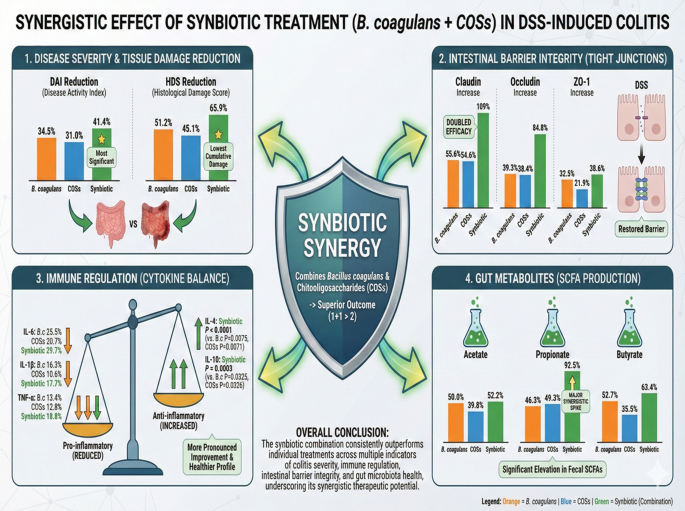
Synergistic synbiotic therapies for ulcerative colitis: mechanistic insights from multi-targeted pathways in animal models
Inflammopharmacology

Synergistic synbiotic therapies for ulcerative colitis: mechanistic insights from multi-targeted pathways in animal models

People with ulcerative colitis may be interested because synbiotic approaches aim to change the gut microbiome and intestinal barrier and therefore could become a future therapeutic option or adjunct. The paper...

Read Summary
Loss of TGR5-activating bile acids is associated with disease activity in inflammatory bowel disease
Scientific Reports

Loss of TGR5-activating bile acids is associated with disease activity in inflammatory bowel disease

The paper suggests that loss of microbial bile acid transformations in IBD reduces activation of the TGR5 receptor, and that lower TGR5 bioactivity correlates with higher inflammatory activity — a potential mechanism...

Read Summary
Callistephus A from Callistephus chinensis Alleviates DSS-Induced Ulcerative Colitis and Gut-liver Axis Disruption by Targeting the JAK2/STAT1 Pathway and Remodeling Gut Microbiota.
Journal of ethnopharmacology

Callistephus A from Callistephus chinensis Alleviates DSS-Induced Ulcerative Colitis and Gut-liver Axis Disruption by Targeting the JAK2/STAT1 Pathway and Remodeling Gut Microbiota.

The study identifies a plant-derived compound that reduced inflammation and liver injury in a mouse model of ulcerative colitis and ties its effects to both JAK2/STAT1 inhibition and changes in the gut microbiota—two...

Read Summary
Targeted β‐Glucan‐Veiled Oral Apremilast Nanotherapy Modulates Key Dysbiosis‐Associated Gut Microbiota and Alleviates Ulcerative Colitis‐Associated Anxiety, Depression, and Neuropsychiatric Behaviors
Advanced Science

Targeted β‐Glucan‐Veiled Oral Apremilast Nanotherapy Modulates Key Dysbiosis‐Associated Gut Microbiota and Alleviates Ulcerative Colitis‐Associated Anxiety, Depression, and Neuropsychiatric Behaviors

The study describes a new oral nanotherapy that delivered apremilast to the inflamed colon in mice and reportedly reduced gut inflammation and behaviors resembling anxiety/depression—suggesting a combined...

Read Summary
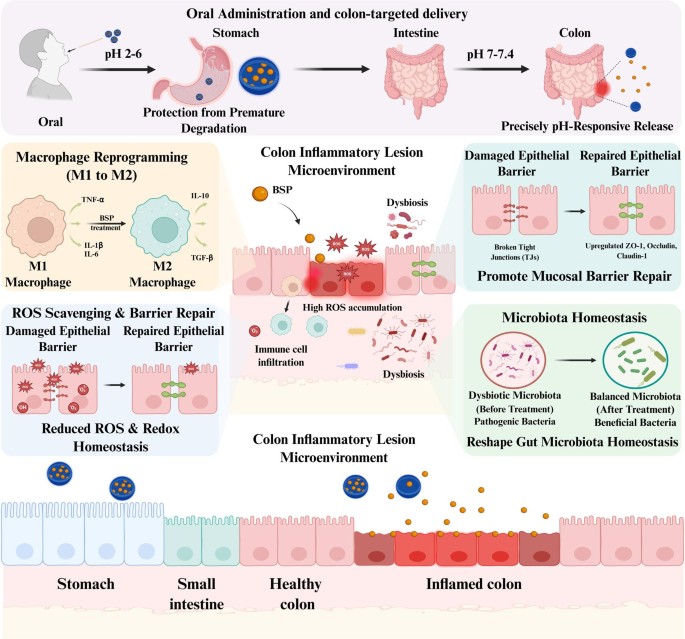
Colon-targeting pH-responsive Bletilla striata polysaccharide coacervate microdroplets for ulcerative colitis therapy via macrophage reprogramming
Journal of Nanobiotechnology

Colon-targeting pH-responsive Bletilla striata polysaccharide coacervate microdroplets for ulcerative colitis therapy via macrophage reprogramming

The study describes a new oral, colon‑targeted delivery system that improved outcomes in a mouse model of ulcerative colitis and shifted immune and microbiome markers—research that could inform future therapies focused...

Read Summary
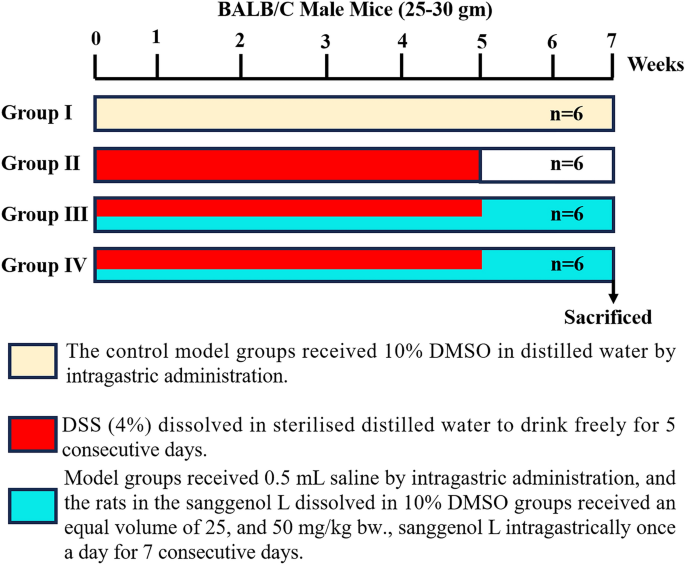
Sanggenol L Regulates Nrf2/HO-1/p65 Signalling Pathways via Dextran Sulfate Sodium-Induced Ulcerative Colitis in Mice
Bratislava Medical Journal

Sanggenol L Regulates Nrf2/HO-1/p65 Signalling Pathways via Dextran Sulfate Sodium-Induced Ulcerative Colitis in Mice

Researchers exploring new anti-inflammatory or antioxidant compounds for ulcerative colitis may find sanggenol L’s effects on Nrf2/HO-1 and TLR4/p65 signalling of interest. Patients should note this is early-stage,...

Read Summary