Research topics

Microbiome

Microbiome articles covering gut bacteria, microbial changes, microbiota research, and IBD disease mechanisms.

Page 9 of 12 · 570 articles

From Dysbiosis to systemic health: Microbiome modulation as a unified therapeutic framework.
Acta microbiologica et immunologica Hungarica

From Dysbiosis to systemic health: Microbiome modulation as a unified therapeutic framework.

The review connects microbiome-targeted therapies (diet, probiotics, FMT, antibiotics, and newer approaches) to mechanisms relevant to IBD and systemic health, highlighting why these strategies are of interest to...

Read Summary
The acid polysaccharides extracted from Moringa leaf improve DSS-induced ulcerative colitis by targeting intestinal microbiota metabolism.
Food research international (Ottawa, Ont.)

The acid polysaccharides extracted from Moringa leaf improve DSS-induced ulcerative colitis by targeting intestinal microbiota metabolism.

The study suggests a Moringa-derived polysaccharide may reduce inflammation in a mouse model of ulcerative colitis by altering gut microbiota, metabolites, and inflammatory/antioxidant signaling — a potential preclinical...

Read Summary
Ecological mechanisms and functional stability of lactic acid Bacteria in synthetic microbial communities: Competition, cross-feeding, and homeostasis maintenance.
Food research international (Ottawa, Ont.)

Ecological mechanisms and functional stability of lactic acid Bacteria in synthetic microbial communities: Competition, cross-feeding, and homeostasis maintenance.

This review links lactic acid bacteria ecology in engineered communities to potential applications in gut health and IBD research, which could guide future microbiome-based interventions.

Read Summary
Dysbiotic microbiota trigger colitis-associated colorectal cancer and imprint a distinctive bile acid profile in a PSC-IBD model.
Gut

Dysbiotic microbiota trigger colitis-associated colorectal cancer and imprint a distinctive bile acid profile in a PSC-IBD model.

If you have PSC-IBD or care for someone who does, this study suggests the gut microbiota and its ability to make secondary bile acids may help drive inflammation and colorectal dysplasia risk.

Read Summary
The polysaccharide from Usnea longissima ach. ameliorates DSS-induced ulcerative colitis by restoring gut microbiota homeostasis and inhibiting the NF-κB/PI3K-Akt signaling pathways.
International immunopharmacology

The polysaccharide from Usnea longissima ach. ameliorates DSS-induced ulcerative colitis by restoring gut microbiota homeostasis and inhibiting the NF-κB/PI3K-Akt signaling pathways.

Researchers are exploring natural compounds that may modulate gut microbes, barrier function, and immune signaling relevant to ulcerative colitis.

Read Summary
Microbiota-Modifying Therapies for Inflammatory Bowel Disease: A Systematic Review and Bayesian Network Meta-Analysis
Europe PMC

Microbiota-Modifying Therapies for Inflammatory Bowel Disease: A Systematic Review and Bayesian Network Meta-Analysis

This pooled analysis compares multiple microbiota-directed therapies and suggests FMT, probiotics, and synbiotics may improve clinical remission in adults with IBD, with FMT also showing benefit for endoscopic remission....

Read Summary
Extracellular vesicles from pasteurized Akkermansia muciniphila ameliorate inflammatory bowel disease through suppression of STING-driven inflammatory signaling.
Frontiers in microbiology

Extracellular vesicles from pasteurized Akkermansia muciniphila ameliorate inflammatory bowel disease through suppression of STING-driven inflammatory signaling.

This study suggests a new, non‑live (“postbiotic”) approach—extracellular vesicles from pasteurized Akkermansia muciniphila—may reduce inflammation and improve barrier function in an experimental colitis model, which...

Read Summary
Fucose metabolism as a central axis linking inflammation, immunity, and cancer in the gut.
Frontiers in immunology

Fucose metabolism as a central axis linking inflammation, immunity, and cancer in the gut.

Researchers and clinicians are exploring how fucose metabolism affects gut barrier function, immunity, and microbiota — processes central to IBD and colorectal cancer. If validated, fucosylation biomarkers or treatments...

Read Summary
Extracellular Vesicles Derived from Elaeocarpus braceanus Alleviate DSS-Induced Ulcerative Colitis in Mice Through Multiple Pathways
Nanomaterials

Extracellular Vesicles Derived from Elaeocarpus braceanus Alleviate DSS-Induced Ulcerative Colitis in Mice Through Multiple Pathways

This study describes a new plant-derived nanoparticle (EBDEVs) that reduced inflammation and improved colon health in a mouse model of ulcerative colitis and altered the gut microbiota — early evidence that may guide...

Read Summary
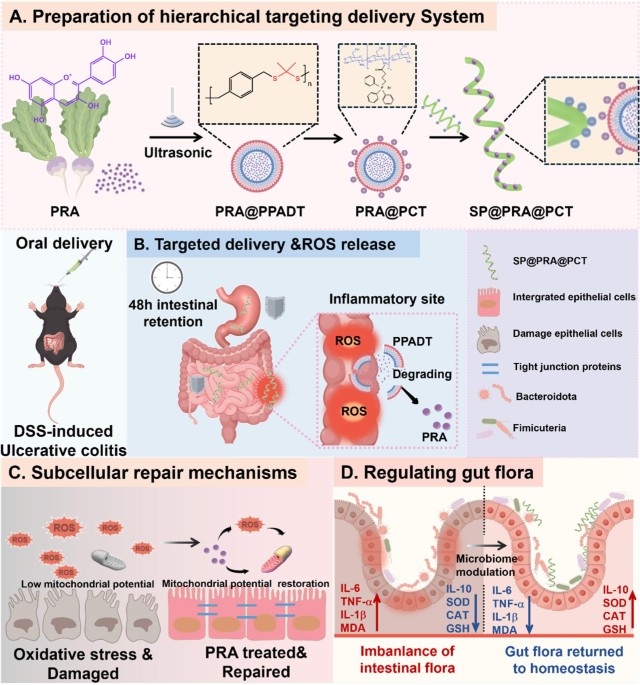
Oral microalgae-ROS-responsive hierarchical targeting delivery system for precision therapy of ulcerative colitis
Journal of Nanobiotechnology

Oral microalgae-ROS-responsive hierarchical targeting delivery system for precision therapy of ulcerative colitis

The study proposes a targeted oral delivery method that could help concentrate anti-inflammatory natural compounds at inflamed colon sites, potentially improving treatment effectiveness for ulcerative colitis while...

Read Summary
Effects of common antibiotics on representative gut bacterial strains associated with inflammatory bowel disease
BMC Microbiology

Effects of common antibiotics on representative gut bacterial strains associated with inflammatory bowel disease

Antibiotics commonly used against anaerobes affected opportunistic IBD-associated strains and beneficial commensals differently in lab cultures; this could influence thinking about using broad‑spectrum antibiotics to...

Read Summary
Structural Characterization of a Glucan from Zingiber officinale and Its Efficacy in Alleviating Ulcerative Colitis by Ameliorating Gut Microbiota Imbalance
Journal of Agricultural and Food Chemistry

Structural Characterization of a Glucan from Zingiber officinale and Its Efficacy in Alleviating Ulcerative Colitis by Ameliorating Gut Microbiota Imbalance

Researchers tested a ginger-derived glucan that reduced inflammation and reshaped the gut microbiota in a mouse colitis model — a potential prebiotic approach that could inform future IBD therapies or dietary strategies.

Read Summary
Chitosan–Unconjugated Bilirubin Microspheres Alleviate Dysbiosis, Immune Dysregulation, and Intestinal Barrier Damage in Ulcerative Colitis
Biomolecules

Chitosan–Unconjugated Bilirubin Microspheres Alleviate Dysbiosis, Immune Dysregulation, and Intestinal Barrier Damage in Ulcerative Colitis

This study reports a new colon-targeted delivery system for unconjugated bilirubin that reduced inflammation and improved mucosal healing in a mouse model of ulcerative colitis; it could inform future drug-development...

Read Summary
Weissella confusa RY-1 ameliorates DSS-induced colitis by restoring intestinal barrier, modulating gut microbiota, and reprogramming microbial metabolism
Frontiers in Microbiology

Weissella confusa RY-1 ameliorates DSS-induced colitis by restoring intestinal barrier, modulating gut microbiota, and reprogramming microbial metabolism

The study shows a probiotic strain reduced inflammation and improved gut barrier and microbiome/metabolite profiles in a mouse colitis model, indicating a possible new avenue for UC therapies worth further research.

Read Summary
XANTHINE OXIDOREDUCTASE IN DIGESTIVE DISEASES: A CONTEXT-DEPENDENT REDOX SWITCH LINKING INFLAMMATION, METABOLISM AND CARCINOGENESIS.
Free radical biology & medicine

XANTHINE OXIDOREDUCTASE IN DIGESTIVE DISEASES: A CONTEXT-DEPENDENT REDOX SWITCH LINKING INFLAMMATION, METABOLISM AND CARCINOGENESIS.

XOR is linked to oxidative stress, inflammation, drug (thiopurine) metabolism, microbiome interactions, and inflammation-associated colorectal cancer — all processes relevant to IBD pathogenesis and complications....

Read Summary
Intestinal epithelial SETD2 maintains gut microbial homeostasis to attenuate colitis.
Clinical and translational medicine

Intestinal epithelial SETD2 maintains gut microbial homeostasis to attenuate colitis.

Epigenetic control of intestinal epithelial cells can shape gut microbes and influence colitis severity; understanding SETD2’s role could point to new mechanistic targets for IBD research and microbiome-directed...

Read Summary
Auricular Vagus Nerve Stimulation in Inflammatory Bowel Disease: Mechanistic Insights and Biomarker-Based Evaluation of Therapeutic Response
International Journal of Molecular Sciences

Auricular Vagus Nerve Stimulation in Inflammatory Bowel Disease: Mechanistic Insights and Biomarker-Based Evaluation of Therapeutic Response

This review examines a noninvasive neuromodulation strategy (ta‑VNS) that might modulate immune and gut‑barrier biomarkers in IBD and could become an adjunctive therapy if validated in trials. Patients and clinicians may...

Read Summary
Gut commensal Lachnospira eligens alleviates ulcerative colitis by mediating isodeoxycholic acid via the STAT3/NF-κB signaling pathway
Springer Science and Business Media LLC

Gut commensal Lachnospira eligens alleviates ulcerative colitis by mediating isodeoxycholic acid via the STAT3/NF-κB signaling pathway

The study identifies a specific gut microbe and a bile-acid metabolite that reduced inflammation in a mouse colitis model and implicates STAT3/NF-κB pathways — a potential new avenue for microbiome-based therapeutics for...

Read Summary
Beyond mood: the neurobiological rationale for using SSRIs and SNRIs in the care of inflammatory bowel disease and disorders of gut-brain interaction.
Minerva gastroenterology

Beyond mood: the neurobiological rationale for using SSRIs and SNRIs in the care of inflammatory bowel disease and disorders of gut-brain interaction.

This review suggests SSRIs and SNRIs may influence both brain and gut pathways relevant to symptom burden in IBD and DGBI — potentially improving mood, pain, motility, and aspects of inflammation. That could matter for...

Read Summary
Gardenia Alleviating effect ofFructus polysaccharide and its enzymatic hydrolysate on DSS-induced colitis.
Food & function

Gardenia Alleviating effect ofFructus polysaccharide and its enzymatic hydrolysate on DSS-induced colitis.

The study identifies Gardenia-derived pectic polysaccharides that reduced inflammation and restored colon health in a mouse colitis model, suggesting a possible microbiome-mediated protective effect relevant to IBD...

Read Summary
Synergistic effects of heat-clearing and yin-nourishing herbs in compound Ganlu Yin on attenuating ulcerative colitis in mice
Advances in Traditional Medicine

Synergistic effects of heat-clearing and yin-nourishing herbs in compound Ganlu Yin on attenuating ulcerative colitis in mice

The study explores a multi-herb formula that the authors report reduces inflammation and alters gut microbiota in a mouse model of ulcerative colitis, suggesting possible biological mechanisms worth further study.

Read Summary
Magnolia biondii-Derived Exosome-Like Nanoparticles Ameliorate Ulcerative Colitis by Suppressing Inflammation, Reducing Oxidative Stress, and Modulating Gut Microbiota.
International journal of nanomedicine

Magnolia biondii-Derived Exosome-Like Nanoparticles Ameliorate Ulcerative Colitis by Suppressing Inflammation, Reducing Oxidative Stress, and Modulating Gut Microbiota.

This study suggests plant-derived exosome-like nanoparticles from a traditional herbal decoction may reduce inflammation, oxidative stress, and alter gut microbiota in a mouse model of colitis — an early preclinical step...

Read Summary
Erythritol Exacerbates DSS-Induced Colitis and Influences Behavioral Responses in Mice Through Gut Microbiota and Metabolic Alterations
Microorganisms

Erythritol Exacerbates DSS-Induced Colitis and Influences Behavioral Responses in Mice Through Gut Microbiota and Metabolic Alterations

This study suggests erythritol — a common non-nutritive sweetener — may worsen experimental colitis and depression-like behavior in mice via microbiome and metabolic changes, raising questions about how ultra-processed...

Read Summary
Fecal Microbiota Transplantation (FMT) in the Management of Ulcerative Colitis: A Comprehensive Systematic Review and Meta-Analysis of Randomized Controlled Trials (RCTs).
Cureus

Fecal Microbiota Transplantation (FMT) in the Management of Ulcerative Colitis: A Comprehensive Systematic Review and Meta-Analysis of Randomized Controlled Trials (RCTs).

This meta-analysis pools randomized trial data and finds that FMT increased both clinical and endoscopic remission in ulcerative colitis versus placebo, which could matter to patients and clinicians exploring...

Read Summary
Agricultural chemicals and gut microbiota dysbiosis: implications for the pathogenesis of inflammatory bowel disease.
Frontiers in nutrition

Agricultural chemicals and gut microbiota dysbiosis: implications for the pathogenesis of inflammatory bowel disease.

Environmental exposures from agricultural chemicals may affect the gut microbiome and intestinal inflammation, which could be one factor influencing IBD risk or flares. Understanding these links could point to preventive...

Read Summary
Vitamin D in mucosal healing: therapeutic potential and current evidence in inflammatory bowel disease
PubMed Central

Vitamin D in mucosal healing: therapeutic potential and current evidence in inflammatory bowel disease

Vitamin D may support intestinal barrier integrity and immune regulation—pathways central to mucosal healing and disease control in IBD. Understanding the evidence helps patients and clinicians consider vitamin D as a...

Read Summary
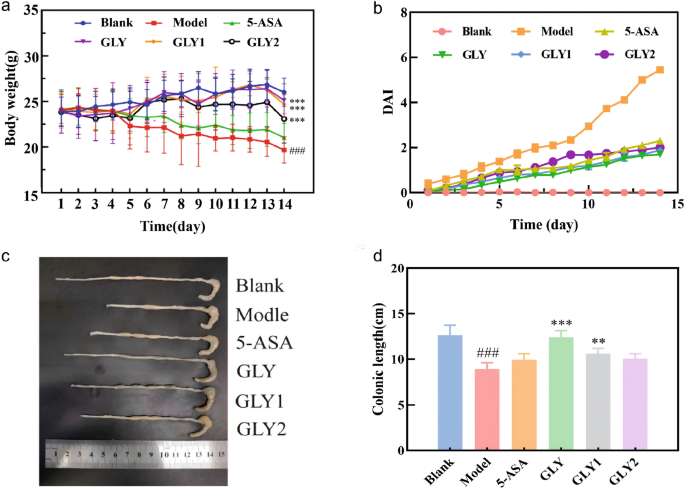
Mechanism and Active ingredients of Gancao Qinlian Granules in ameliorating ulcerative colitis:integrated in vivo, in vitro, network pharmacology and untargeted metabolomics investigation.
Journal of ethnopharmacology

Mechanism and Active ingredients of Gancao Qinlian Granules in ameliorating ulcerative colitis:integrated in vivo, in vitro, network pharmacology and untargeted metabolomics investigation.

The paper presents integrated preclinical evidence that a multi-herb formula (GQG) can reduce inflammation and alter gut microbiota and metabolites in a mouse model of ulcerative colitis, highlighting possible mechanisms...

Read Summary
Shifts in Mucosa‐Associated Microbiota Reflect Inflammation Gradient in Postoperative Crohn's Disease
JCC Plus

Shifts in Mucosa‐Associated Microbiota Reflect Inflammation Gradient in Postoperative Crohn's Disease

Microbial changes after ileocecal resection appear linked to the degree of postoperative inflammation; understanding these changes could help predict or prevent Crohn’s recurrence after surgery.

Read Summary
Modified Crohn's Disease Exclusion Diet and exclusive enteral nutrition (EEN) resolve oral dysbiosis in pediatric Crohn's disease: a prospective cohort study
PubMed Central

Modified Crohn's Disease Exclusion Diet and exclusive enteral nutrition (EEN) resolve oral dysbiosis in pediatric Crohn's disease: a prospective cohort study

The oral microbiome in children with Crohn's disease appears to reflect disease severity and changes with treatment, suggesting a potential noninvasive biomarker for monitoring response to nutritional therapies like CDED...

Read Summary
Oral hydrogel systems in lower gastrointestinal disorders: From disease-based therapy to microbiota-guided design.
Materials today. Bio

Oral hydrogel systems in lower gastrointestinal disorders: From disease-based therapy to microbiota-guided design.

IBD and other lower-GI disorders may benefit from oral hydrogel platforms that improve local drug delivery while deliberately engaging the gut microbiota. Understanding this research direction helps patients and...

Read Summary
Curcumin-loaded tetrahedral framework nucleic acids reshape intestinal homeostasis in ulcerative colitis by coordinating barrier repair, microbiota reconstruction, and immune modulation
Materials Today Bio

Curcumin-loaded tetrahedral framework nucleic acids reshape intestinal homeostasis in ulcerative colitis by coordinating barrier repair, microbiota reconstruction, and immune modulation

Based on the title and source metadata, this appears to be a basic science related to Ulcerative colitis, Inflammatory bowel disease, and Microbiome. The original article is from Materials Today Bio.

Read Summary
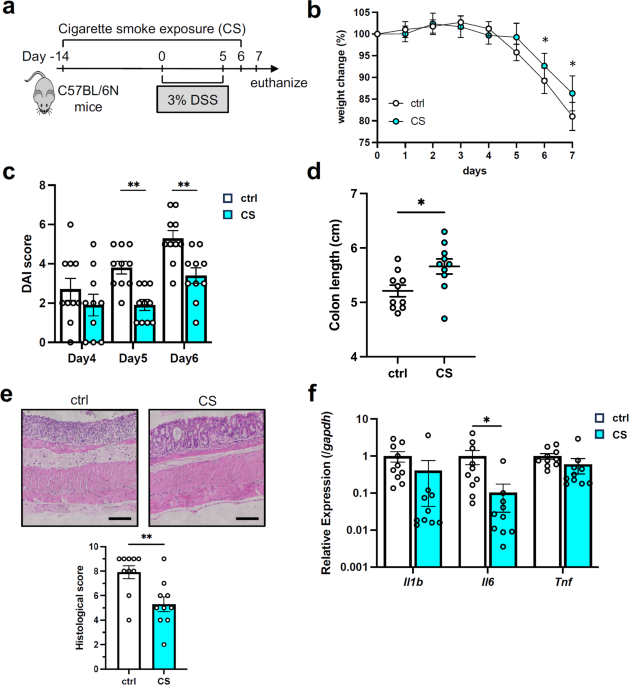
Metabolite 4-hydroxybenzoic acid, modulated by cigarette smoke exposure, functions as a protective factor in dextran sodium sulfate-induced colitis
Journal of Gastroenterology

Metabolite 4-hydroxybenzoic acid, modulated by cigarette smoke exposure, functions as a protective factor in dextran sodium sulfate-induced colitis

This preclinical study suggests cigarette smoke alters gut microbes and metabolites in ways that can either protect or worsen colitis depending on the model; it identifies 4-HBA as a metabolite that reduced inflammation...

Read Summary
Poricoic acid a ameliorates ulcerative colitis via AMPK/PPARγ pathway-dependent cellular senescence inhibition and concomitant gut microbiota-metabolome modulation.
Phytomedicine : international journal of phytotherapy and phytopharmacology

Poricoic acid a ameliorates ulcerative colitis via AMPK/PPARγ pathway-dependent cellular senescence inhibition and concomitant gut microbiota-metabolome modulation.

This study identifies a plant-derived compound (poricoic acid A) that reduced inflammation, cellular senescence, and colon injury in cell and mouse models of ulcerative colitis and links those effects to AMPK/PPARγ...

Read Summary
Multivariate functional linear discriminant analysis with feature selection: an application to inflammatory bowel disease classification.
Biostatistics (Oxford, England)

Multivariate functional linear discriminant analysis with feature selection: an application to inflammatory bowel disease classification.

New analytical tools for longitudinal microbiome data can reveal time-varying microbial signatures tied to Crohn's disease and ulcerative colitis. Identifying such biomarkers may eventually inform diagnosis, monitoring,...

Read Summary
Pulmonary injury in inflammatory bowel disease: intestinal barrier disruption, gut-lung axis remodeling, and treatment-related lung toxicity.
Frontiers in immunology

Pulmonary injury in inflammatory bowel disease: intestinal barrier disruption, gut-lung axis remodeling, and treatment-related lung toxicity.

Lung involvement is an underrecognized extraintestinal complication in IBD and can reflect disease activity, altered gut–lung immune signaling, or medication toxicity — distinguishing the cause is important for...

Read Summary
Tetramethylpyrazine ameliorates ulcerative colitis via B. pseudolongum-driven taurine metabolism and M2 macrophage polarization
Springer Science and Business Media LLC

Tetramethylpyrazine ameliorates ulcerative colitis via B. pseudolongum-driven taurine metabolism and M2 macrophage polarization

The work suggests a microbe–metabolite–immune pathway (B. pseudolongum → taurine metabolites → M2 macrophages) that could point to future microbiome- or metabolite-targeted therapies for ulcerative colitis, which may be...

Read Summary
H7F ameliorates DSS-induced colitis through restoration of intestinal barrier function and inhibition of IL-17/NF-κb signaling.
Frontiers in pharmacology

H7F ameliorates DSS-induced colitis through restoration of intestinal barrier function and inhibition of IL-17/NF-κb signaling.

The study suggests a herbal formula (H7F) may protect intestinal barrier function, modulate the gut microbiome, and suppress IL-17/NF-κB inflammation in a mouse colitis model—mechanisms relevant to IBD pathophysiology.

Read Summary
Optimized protocol for profiling mucosa-associated microbiota from formalin-fixed paraffin-embedded gut tissues from treatment-naïve pediatric patients with Crohn's disease.
Frontiers in cellular and infection microbiology

Optimized protocol for profiling mucosa-associated microbiota from formalin-fixed paraffin-embedded gut tissues from treatment-naïve pediatric patients with Crohn's disease.

Improved methods for profiling mucosa-associated microbiota from routine archival FFPE biopsies could expand research using stored pediatric gut samples, helping identify microbiome features linked to Crohn’s disease and...

Read Summary