Condition

Inflammatory bowel disease

Broader IBD news covering Crohn's disease, ulcerative colitis, research, treatments, monitoring, and patient care.

Page 40 of 88 · 4203 articles

The Gut Mycobiome in Inflammatory Bowel Disease: Reframing Candida as a Signal of Ecosystem Disruption.
Journal of fungi (Basel, Switzerland)

The Gut Mycobiome in Inflammatory Bowel Disease: Reframing Candida as a Signal of Ecosystem Disruption.

Researchers and clinicians are exploring fungi’s role in IBD beyond bacteria. For patients, seeing Candida in stool tests is usually a signal of microbiome disruption rather than proof of fungal infection that requires...

Read Summary
Circulating SARS-CoV-2 Spike IgG Antibody Levels and Avidity in Autoimmune, IBD and Transplant Cohorts: An Observational Study Following Multiple COVID-19 Vaccine Boosters.
Vaccines

Circulating SARS-CoV-2 Spike IgG Antibody Levels and Avidity in Autoimmune, IBD and Transplant Cohorts: An Observational Study Following Multiple COVID-19 Vaccine Boosters.

People with IBD and other immune conditions may develop weaker or lower‑quality antibody responses after COVID‑19 vaccination compared with healthy people, and transplant recipients showed the largest impairments. That...

Read Summary
Integrated Multi-Omics Analysis of Antarctic Krill Oil in Alleviating DSS-Induced Colitis and Modulating Gut Microbiota in Mice.
Marine drugs

Integrated Multi-Omics Analysis of Antarctic Krill Oil in Alleviating DSS-Induced Colitis and Modulating Gut Microbiota in Mice.

This preclinical study suggests Antarctic krill oil may reduce inflammation and alter the gut microbiome in a mouse model of ulcerative colitis, which could point toward microbiota-targeted nutritional strategies worth...

Read Summary
High prevalence of fatigue in patients with inflammatory bowel disease: association with physical activity intensity and sedentary behavior
Frontiers in Public Health

High prevalence of fatigue in patients with inflammatory bowel disease: association with physical activity intensity and sedentary behavior

Fatigue is very common in people with IBD—even when the disease is in remission—and is linked with lower physical activity, more sitting time, and with anxiety/depression. Understanding these links may help patients and...

Read Summary
Diversion-Associated Rectal Pathology in Patients With and Without Inflammatory Bowel Disease: A Rectum-Exclusive, Blinded Histologic Comparison and Practical Reporting Approach.
The American journal of surgical pathology

Diversion-Associated Rectal Pathology in Patients With and Without Inflammatory Bowel Disease: A Rectum-Exclusive, Blinded Histologic Comparison and Practical Reporting Approach.

Pathology after fecal diversion can look like active IBD, which affects diagnosis and management of the diverted rectum. This study helps clarify when changes likely reflect diversion alone versus persistent inflammatory...

Read Summary
Shaping the research agenda of pediatric gastroenterology, hepatology, and nutrition: The proposal from a SIGENP expert groups
PubMed Central

Shaping the research agenda of pediatric gastroenterology, hepatology, and nutrition: The proposal from a SIGENP expert groups

A strategic, pediatric-focused research agenda helps target studies where children with IBD and related conditions most need better diagnostics, biomarkers, and treatments. Prioritizing multi-center registries and...

Read Summary
Pharmacodynamic-oriented serum pharmacochemistry-based discovery of the pharmacodynamic material basis and mechanism of Ohwia caudata leaves against acute ulcerative colitis.
Journal of ethnopharmacology

Pharmacodynamic-oriented serum pharmacochemistry-based discovery of the pharmacodynamic material basis and mechanism of Ohwia caudata leaves against acute ulcerative colitis.

People with UC or IBD may be interested because the study identifies plant-derived compounds that reduce inflammation in lab models of ulcerative colitis and points to molecular pathways relevant to IBD.

Read Summary
Cadmium exposure elevates gut microbial oleic acid and promoted colitis potentially via FFAR4: A network toxicology and molecule docking study.
Food and chemical toxicology : an international journal published for the British Industrial Biological Research Association

Cadmium exposure elevates gut microbial oleic acid and promoted colitis potentially via FFAR4: A network toxicology and molecule docking study.

Environmental cadmium exposure may alter the gut microbiome’s metabolites (oleic acid) and worsen colitis in mice via FFAR4-linked inflammatory pathways. If similar mechanisms operate in people, this could point to new...

Read Summary
Peribiliary and colonic crypt glands in primary sclerosing cholangitis and inflammatory bowel disease pathogenesis: New research perspectives
World Journal of Hepatology

Peribiliary and colonic crypt glands in primary sclerosing cholangitis and inflammatory bowel disease pathogenesis: New research perspectives

PSC frequently occurs with IBD and has unclear origins; understanding a shared glandular mechanism could help explain the link and point to new research targets relevant to both liver and colon disease.

Read Summary
Identification and Validation of ISG20 as a Shared Immune-Related Crosstalk Marker in Rheumatoid Arthritis and Inflammatory Bowel Disease.
Journal of inflammation research

Identification and Validation of ISG20 as a Shared Immune-Related Crosstalk Marker in Rheumatoid Arthritis and Inflammatory Bowel Disease.

The paper proposes ISG20 as a shared molecular link between RA and IBD, which could help explain why the two diseases co-occur and point to a candidate biomarker for identifying patients at risk of both conditions.

Read Summary
An atlas of colonization factors in the human gut microbiome reveals ecological strategies and inflammatory bowel disease signatures
Nature Communications

An atlas of colonization factors in the human gut microbiome reveals ecological strategies and inflammatory bowel disease signatures

This study identifies conserved, gut-enriched genes (colonization factors) and shows their repertoires are remodeled in IBD, highlighting functional microbiome changes that could inform future biomarkers or...

Read Summary
Diet quality, gut microbiome, and inflammatory signatures in Puerto Rican adults with Crohn disease: a multidimensional analysis.
Inflammatory bowel diseases

Diet quality, gut microbiome, and inflammatory signatures in Puerto Rican adults with Crohn disease: a multidimensional analysis.

Diet quality was linked to gut microbiome features and exploratory differences in inflammatory markers and symptoms in adults with Crohn disease from Puerto Rico; understanding these links may help tailor dietary...

Read Summary
Psychometric Validation of the Self-Care Self-Efficacy Scale in Individuals With Inflammatory Bowel Disease: A Multicenter Cross-Sectional Study.
Gastroenterology nursing : the official journal of the Society of Gastroenterology Nurses and Associates

Psychometric Validation of the Self-Care Self-Efficacy Scale in Individuals With Inflammatory Bowel Disease: A Multicenter Cross-Sectional Study.

Tools that reliably measure self-care self-efficacy can help clinicians identify IBD patients who may benefit from extra self-management support. A brief, validated 10-item scale is practical for busy clinics and...

Read Summary
CD226 associates with interferon and inflammatory programs in intestinal γδ T and group 3 innate lymphoid cells in Crohn's disease.
Biochemical and biophysical research communications

CD226 associates with interferon and inflammatory programs in intestinal γδ T and group 3 innate lymphoid cells in Crohn's disease.

The study points to CD226 (DNAM-1) being linked to inflammatory and interferon-driven programs in specific intestinal immune cells in Crohn's disease, which may be relevant to understanding disease mechanisms or...

Read Summary
Cost Per Remission of Vedolizumab Versus Risankizumab for the Treatment of Moderately to Severely Active Crohn's Disease in Italy.
Advances in therapy

Cost Per Remission of Vedolizumab Versus Risankizumab for the Treatment of Moderately to Severely Active Crohn's Disease in Italy.

Patients, clinicians, and payers may care because the analysis addresses the relative economic value of two approved biologic options (vedolizumab and risankizumab) for Crohn’s disease treatment in Italy and could...

Read Summary
Childhood exposure to a sibling with Crohn's disease alters gut microbiome and Crohn's disease susceptibility.
Gut

Childhood exposure to a sibling with Crohn's disease alters gut microbiome and Crohn's disease susceptibility.

Because having a sibling with Crohn's disease during childhood was linked to substantially higher risk of developing Crohn's later, and the study points to early-life microbiome differences and elevated faecal...

Read Summary
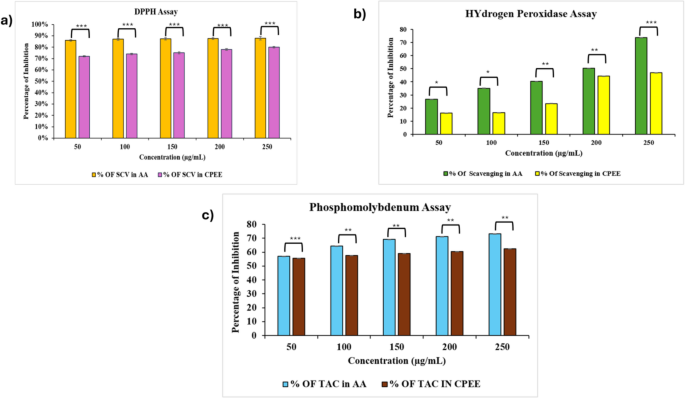
Caulerpa peltata extract protects against Dextran sodium sulfate-induced acute ulcerative colitis via modulating Nrf2 pathway
The Science of Nature

Caulerpa peltata extract protects against Dextran sodium sulfate-induced acute ulcerative colitis via modulating Nrf2 pathway

People with IBD might be interested because the study explores a new natural-product intervention that appears to reduce colitis severity in an animal model by activating the Nrf2 antioxidant pathway — a pathway already...

Read Summary
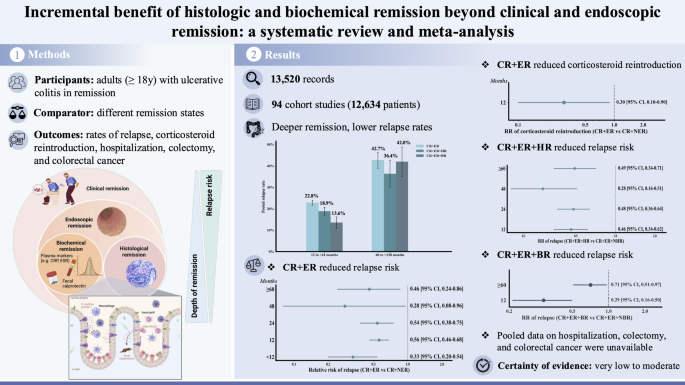
Hierarchical benefit of multidimensional remission in ulcerative colitis: a systematic review and meta-analysis
BMC Gastroenterology

Hierarchical benefit of multidimensional remission in ulcerative colitis: a systematic review and meta-analysis

Achieving histologic or biochemical remission in addition to clinical and endoscopic remission was associated with substantially lower relapse risk in ulcerative colitis across multiple follow-up intervals, suggesting...

Read Summary
Hyperbaric Oxygen Therapy for Perianal Fistulizing Crohn's Disease Not Responsive or Intolerant to Conventional Care: HYPNOTIC Pilot Study
ClinicalTrials.gov

Hyperbaric Oxygen Therapy for Perianal Fistulizing Crohn's Disease Not Responsive or Intolerant to Conventional Care: HYPNOTIC Pilot Study

Perianal fistulizing Crohn’s disease is difficult to treat and many patients don’t respond to available medical and surgical options. This trial tests an existing wound‑healing therapy (HBOT) in a formal controlled...

Read Summary
A First-time in Human (FTIH) Study to Evaluate Safety, Tolerability, Pharmacokinetics and Target Engagement of GSK4528287 in Healthy Participants
ClinicalTrials.gov

A First-time in Human (FTIH) Study to Evaluate Safety, Tolerability, Pharmacokinetics and Target Engagement of GSK4528287 in Healthy Participants

Researchers and patients tracking new IBD therapies may care because this is the first human study of a GlaxoSmithKline investigational drug aimed at colitis/ulcerative colitis — an early step that could lead to future...

Read Summary
ABTB1, as an E3 ubiquitin ligase, suppresses Th17 cell differentiation and mitigates autoimmune inflammation by promoting STAT3 ubiquitination and degradation.
Cellular & molecular immunology

ABTB1, as an E3 ubiquitin ligase, suppresses Th17 cell differentiation and mitigates autoimmune inflammation by promoting STAT3 ubiquitination and degradation.

The study identifies ABTB1 as a regulator that limits STAT3-driven Th17 differentiation and reduces severity in a mouse colitis model, suggesting a new molecular pathway relevant to IBD inflammation and a potential...

Read Summary
Ferroptosis in Intestinal Diseases: Molecular Mechanisms, Therapeutic Potential, and Future Perspectives.
Medicinal research reviews

Ferroptosis in Intestinal Diseases: Molecular Mechanisms, Therapeutic Potential, and Future Perspectives.

Researchers are exploring ferroptosis as a double-edged mechanism: preventing it may protect healthy gut lining in IBD, while inducing it might help treat colorectal cancer. Advances could lead to new biomarkers or...

Read Summary
The protein extracted from fermented Zanthoxylum bungeanum seeds mitigates DSS-induced ulcerative colitis by orchestrating inflammatory cytokine modulation, counteracting oxidative stress, and safeguarding gut microbiota homeostasis.
International journal of biological macromolecules

The protein extracted from fermented Zanthoxylum bungeanum seeds mitigates DSS-induced ulcerative colitis by orchestrating inflammatory cytokine modulation, counteracting oxidative stress, and safeguarding gut microbiota homeostasis.

The study suggests a fermented seed protein ingredient may reduce inflammation, oxidative stress, and microbiota imbalance in an experimental colitis model — mechanisms relevant to IBD. That could inform future dietary...

Read Summary
Novel Clinical Intervention Pathway Based on the Pathogenesis Mechanism of Enterotoxigenic Bacteroides fragilis.
Critical reviews in oncology/hematology

Novel Clinical Intervention Pathway Based on the Pathogenesis Mechanism of Enterotoxigenic Bacteroides fragilis.

Research linking ETBF to intestinal inflammation and colorectal cancer suggests better detection and targeted therapies for this microbe could eventually affect IBD management and cancer risk assessment.

Read Summary
Targeting Ferroptosis and Cuproptosis in Ulcerative Colitis: Findings from Comprehensive Bioinformatics and Experimental Validation
Journal of Visualized Experiments

Targeting Ferroptosis and Cuproptosis in Ulcerative Colitis: Findings from Comprehensive Bioinformatics and Experimental Validation

Based on the title and source metadata, this appears to be a basic science related to Ulcerative colitis, Inflammatory bowel disease, and Research and clinical trials. The original article is from Journal of Visualized...

Read Summary
From mesenchymal stem cells to myoblast cell sheets: A next-generation regenerative concept for fistulizing Crohn’s disease
World Journal of Stem Cells

From mesenchymal stem cells to myoblast cell sheets: A next-generation regenerative concept for fistulizing Crohn’s disease

Fistulizing Crohn’s disease is a major complication where durable structural repair is hard to achieve. Regenerative cell-sheet approaches aim to rebuild tissue architecture rather than only suppress inflammation, which...

Read Summary
Electroacupuncture alleviates intestinal inflammation in rats with ulcerative colitis by regulating colonic cell autophagy and gut microbiota.
Journal of traditional Chinese medicine = Chung i tsa chih ying wen pan

Electroacupuncture alleviates intestinal inflammation in rats with ulcerative colitis by regulating colonic cell autophagy and gut microbiota.

The study suggests electroacupuncture may reduce intestinal inflammation in a rat model of ulcerative colitis by enhancing epithelial autophagy and altering the gut microbiota—mechanisms relevant to IBD pathophysiology.

Read Summary
The Roles of Four Neutrophil-Derived Proteins as Non-Invasive Biomarkers in the Assessment of Inflammatory Bowel Disease.
Journal of inflammation research

The Roles of Four Neutrophil-Derived Proteins as Non-Invasive Biomarkers in the Assessment of Inflammatory Bowel Disease.

Non-invasive biomarkers can help detect and monitor IBD activity, distinguish IBD from other GI conditions, and potentially predict relapse—tools that may reduce need for invasive tests.

Read Summary