All topics

Research and clinical trials

Clinical trials, biomarkers, microbiome, genetics, AI, basic science, and emerging IBD research.

Page 56 of 65 · 3097 articles

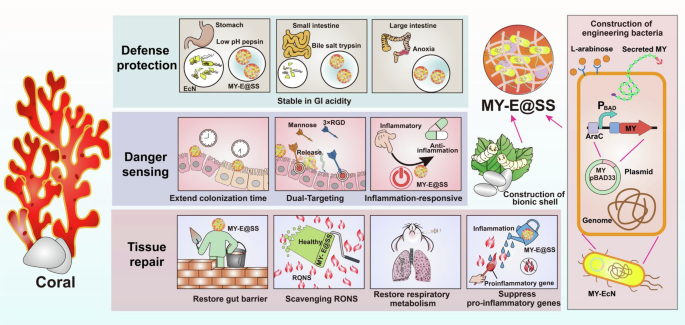
Sulfasalazine- and Cerium Ion-Loaded Polymersomes with Enhanced RONS Scavenging and Colonic Mucosal Repair Ameliorate Experimental Colitis.

The work targets oxidative/nitrosative stress and mucosal repair—mechanisms important in IBD—using a novel delivery vehicle that pairs an approved anti-inflammatory drug with catalytic cerium ions. If translated, this...

Read Summary

Risk of Inflammatory Bowel Disease Following Hospital-Treated Infections and Modulatory Role of Host Genetics to Support a Multi-Hit Pathogenesis Model.

If hospital-treated infections raise later IBD risk—especially in people with certain immune-related genetic variants—this supports a multi-hit model of IBD and could eventually help identify higher-risk individuals...

Read Summary
Mechanisms of Commensal- Specific CD8+ T Cell Differentiation, Restraint and Dysregulation in Intestinal Inflammation
NIH RePORTER

Mechanisms of Commensal- Specific CD8+ T Cell Differentiation, Restraint and Dysregulation in Intestinal Inflammation

Understanding how commensal-specific CD8+ T cells are generated and become pathogenic could reveal new mechanisms contributing to IBD, pointing to future therapeutic targets. The project aims to clarify immune–microbiota...

Read Summary
INTERROGATING GCPII-MEDIATED GLUTAMATE SIGNALING IN THE GASTROINTESTINAL TRACT AND ITS ROLE IN INTESTINAL HOMEOSTASIS
NIH RePORTER

INTERROGATING GCPII-MEDIATED GLUTAMATE SIGNALING IN THE GASTROINTESTINAL TRACT AND ITS ROLE IN INTESTINAL HOMEOSTASIS

This project studies a novel enzyme target (GCPII) that is reportedly upregulated in IBD and may change glutamate signaling and barrier function; understanding it could point to new treatment strategies for people whose...

Read Summary
Modulating Microbial Choline Degradation to Prevent and Treat Intestinal Fibrosis in Inflammatory Bowel Diseases
NIH RePORTER

Modulating Microbial Choline Degradation to Prevent and Treat Intestinal Fibrosis in Inflammatory Bowel Diseases

Intestinal fibrosis and strictures remain a major cause of surgery and obstruction in Crohn’s disease, and current anti-inflammatory drugs don’t reliably prevent fibrosis. If microbial choline degradation promotes...

Read Summary
Protective effects of Brassica rapa L. water extract against DSS-induced acute UC-like colitis in mice and its regulatory mechanisms involving gut microbiota and the intestinal mucosal barrier
Frontiers in Microbiology

Protective effects of Brassica rapa L. water extract against DSS-induced acute UC-like colitis in mice and its regulatory mechanisms involving gut microbiota and the intestinal mucosal barrier

The study identifies a plant extract that reduced colitis-like injury in mice and altered gut microbes and intestinal barrier markers, which could inform future preclinical work. For people with IBD, this is early-stage...

Read Summary
Cimicifuga foetida L. polysaccharide alleviates ulcerative colitis by inhibiting pyroptosis and regulating gut microbiota
Frontiers in Pharmacology

Cimicifuga foetida L. polysaccharide alleviates ulcerative colitis by inhibiting pyroptosis and regulating gut microbiota

Researchers are exploring plant-derived polysaccharides as potential therapies that might reduce inflammation and protect the intestinal barrier. For people with UC, therapies that reduce pyroptosis and restore...

Read Summary
Efficacy and Safety of Low-Dose Upadacitinib Combined With Ustekinumab in the Treatment of Refractory Crohn's Disease
ClinicalTrials.gov

Efficacy and Safety of Low-Dose Upadacitinib Combined With Ustekinumab in the Treatment of Refractory Crohn's Disease

This study examines a combination of ustekinumab plus low‑dose upadacitinib for patients with refractory Crohn’s disease — a group with limited options after failing anti‑TNF and single‑agent therapy. Results could...

Read Summary
A Study to Evaluate the Efficacy and Safety of Tulisokibart (MK-7240) in Participants With Moderate to Severe Crohn's Disease (MK-7240-008)
ClinicalTrials.gov

A Study to Evaluate the Efficacy and Safety of Tulisokibart (MK-7240) in Participants With Moderate to Severe Crohn's Disease (MK-7240-008)

This trial is testing an investigational anti-TL1A antibody (tulisokibart/MK-7240) as a potential new treatment for moderate to severe Crohn's disease. Results could affect future treatment options if the drug proves...

Read Summary
A Study to Assess the Pharmacokinetics, Effectiveness and Safety of Afimkibart for Induction and Maintenance Therapy in Children With Moderately to Severely Active Crohn's Disease
ClinicalTrials.gov

A Study to Assess the Pharmacokinetics, Effectiveness and Safety of Afimkibart for Induction and Maintenance Therapy in Children With Moderately to Severely Active Crohn's Disease

A successful Phase 3 trial could provide a new treatment option specifically studied in children with moderate‑to‑severe Crohn's disease, addressing a pediatric population often underrepresented in trials.

Read Summary
Study of Advanced Therapies for the Treatment of Adult Participants With Moderately to Severely Active Crohn's Disease or Ulcerative Colitis
ClinicalTrials.gov

Study of Advanced Therapies for the Treatment of Adult Participants With Moderately to Severely Active Crohn's Disease or Ulcerative Colitis

The trial is testing risankizumab alone and in combination with investigational ABBV antibodies for moderate-to-severe Crohn’s disease and ulcerative colitis — findings could inform future treatment choices and...

Read Summary

Quantitative Analysis of Retinal and Choroidal Microvascular Changes in Adult IBD Patients: Insights into the Gut-Retina Axis.

The study suggests measurable retinal and choroidal microvascular differences in people with IBD versus controls, which could point to systemic vascular effects of inflammation and offer noninvasive biomarker...

Read Summary
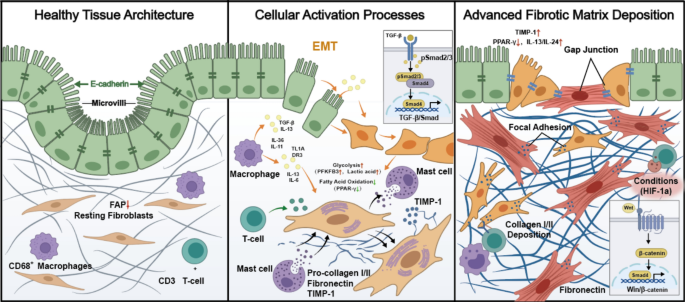
Crohn's Disease: From Immune Dysregulation to Intestinal Damage.
Inflammation

Crohn's Disease: From Immune Dysregulation to Intestinal Damage.

This review explains how genetic, microbial, immune, and stromal factors interact to cause Crohn’s disease, which helps explain why treatments often need to target specific immune pathways or biologic mechanisms....

Read Summary
Intestinal Fibrosis in IBD: Rethinking the Inflammatory Paradigm and Emerging Therapeutic Opportunities.
Digestive diseases and sciences

Intestinal Fibrosis in IBD: Rethinking the Inflammatory Paradigm and Emerging Therapeutic Opportunities.

Intestinal fibrosis causes strictures that can lead to obstruction and often require surgery; current drugs mainly reduce inflammation and do not reliably prevent or reverse fibrosis. Advances in understanding fibrosis...

Read Summary

Meta-Analysis: Crohn's Disease Exclusion Diet for Induction and Maintenance in Crohn's Disease.

Dietary strategies such as the Crohn’s Disease Exclusion Diet (CDED) may help induce remission for some people with Crohn’s disease and could be an option alongside medical therapy or enteral nutrition. Patients...

Read Summary
Clinical characterization and healthcare burden of difficult-to-treat inflammatory bowel disease in Latin America: a real-world registry-based study.
Crohn's & colitis 360

Clinical characterization and healthcare burden of difficult-to-treat inflammatory bowel disease in Latin America: a real-world registry-based study.

The study identifies a sizable group of patients in Latin America with difficult-to-treat IBD—especially Crohn’s disease—highlighting higher disease severity, younger onset, and longer diagnostic delays that can affect...

Read Summary

Enhancing the efficacy of ulcerative colitis treatment by inhibiting LCN2-mediated pyroptosis through traditional processing techniques: With the rhizome of Atractylodes macrocephala Koidz. as an example.

This study suggests a traditional processing method may change a common herbal used for UC so it works better in mouse and cell models, and it proposes a specific molecular pathway (LCN2‑mediated pyroptosis) that could...

Read Summary
Comparison of the Efficacy of Different Biologic Agents in Preventing Postoperative Endoscopic Recurrence of Crohn's Disease
ClinicalTrials.gov

Comparison of the Efficacy of Different Biologic Agents in Preventing Postoperative Endoscopic Recurrence of Crohn's Disease

The study is comparing common biologics given after Crohn's surgery to prevent endoscopic recurrence—a key issue for people who have had bowel resection. Knowing which drugs perform better in real‑world practice could...

Read Summary
A Study to Evaluate Efficacy and Safety of MK-8690 in Participants With Moderately to Severely Active Ulcerative Colitis (MK-8690-002)
ClinicalTrials.gov

A Study to Evaluate Efficacy and Safety of MK-8690 in Participants With Moderately to Severely Active Ulcerative Colitis (MK-8690-002)

A new Phase 2 trial is testing MK-8690 as a potential subcutaneous treatment for moderate–severe ulcerative colitis, with clinical remission at 12 weeks as the primary goal. Positive results could point to an additional...

Read Summary

Sutterella Inhibition of Aryl hydrocarbon receptor Interleukin-22 signaling and worsening of intestinal inflammation byspecies.

Researchers identify a gut microbe (Sutterella species) that may worsen intestinal inflammation by blocking AhR-driven IL-22 and IL-17 responses—pathways that help protect the gut lining.

Read Summary

Microbiome-driven alterations in tryptophan metabolism contribute to behavioral comorbidities in the Muc2 knockout mouse model of chronic colitis.

IBD is increasingly linked with anxiety, depression, and cognitive symptoms; this study suggests gut microbes may change tryptophan metabolism in colitis and contribute to those brain-related symptoms, which could point...

Read Summary
Performance of Google NotebookLM for AI-assisted data extraction and consensus statement generation in a heterogenous systematic review on inflammatory bowel disease, obesity, and cardiometabolic comorbidities: A Methodological Report
medRxiv

Performance of Google NotebookLM for AI-assisted data extraction and consensus statement generation in a heterogenous systematic review on inflammatory bowel disease, obesity, and cardiometabolic comorbidities: A Methodological Report

AI tools like Google NotebookLM could make systematic reviews and consensus statement processes faster and less labor-intensive for IBD-related evidence, while maintaining very low rates of major factual errors.

Read Summary

Immune cell-derived membrane nanovesicles: A promethean fire for autoimmune disease therapy through immune cell mimicry.

This review describes a novel, targeted drug-delivery approach being explored for autoimmune diseases including IBD; such technology could in future enable more specific immunomodulation with fewer systemic side effects...

Read Summary
Discovery of an oral, potent and highly selective immunoproteasome inhibitor for the treatment of rheumatoid arthritis and ulcerative colitis.
European journal of medicinal chemistry

Discovery of an oral, potent and highly selective immunoproteasome inhibitor for the treatment of rheumatoid arthritis and ulcerative colitis.

This study describes a new oral immunoproteasome inhibitor (ent-F10) with preclinical activity in animal models of ulcerative colitis and rheumatoid arthritis, highlighting a potential new drug-development direction that...

Read Summary

Human gut flagellome profiling using FlaPro reveals TLR5-related phenotype-specific alterations in IBD.

This paper links specific features of the gut bacterial flagellome to TLR5-driven immune activation and reports a disease-associated shift in flagellin profiles in Crohn’s disease and ulcerative colitis, suggesting...

Read Summary
Effectiveness and Safety of Mirikizumab in Patients With Moderate-to-severe Ulcerative Colitis: a Real-life Retrospective Multicenter Study
ClinicalTrials.gov

Effectiveness and Safety of Mirikizumab in Patients With Moderate-to-severe Ulcerative Colitis: a Real-life Retrospective Multicenter Study

This study reports real-world data on mirikizumab in adults with ulcerative colitis, focusing on clinical and endoscopic remission and inflammatory markers — outcomes patients and clinicians use to judge treatment...

Read Summary
Partial Enteral Nutrition as Therapeutic Augmentation of Advanced Pharmacological Therapy in Patients With Active Crohn's Disease
ClinicalTrials.gov

Partial Enteral Nutrition as Therapeutic Augmentation of Advanced Pharmacological Therapy in Patients With Active Crohn's Disease

Adding structured partial enteral nutrition to advanced drug therapy could offer a non-pharmacologic way to improve short-term, steroid-free remission rates in active Crohn's disease if the trial shows benefit.

Read Summary
Novel SLC10A2 variants induce primary bile acid malabsorption and dysbiosis with IBD-like features.
Inflammatory bowel diseases

Novel SLC10A2 variants induce primary bile acid malabsorption and dysbiosis with IBD-like features.

Genetic primary bile acid malabsorption can produce IBD-like symptoms and may be missed in children labeled with Crohn's disease; recognizing PBAM could change testing and management for some patients.

Read Summary
Glycocholic acid inhibits TRIB3-ID1 axis to acelerate colitis progression via suppressing intestinal stem cell renewal.
Nature communications

Glycocholic acid inhibits TRIB3-ID1 axis to acelerate colitis progression via suppressing intestinal stem cell renewal.

The paper proposes a specific molecular link between elevated glycocholic acid (a bile acid altered in IBD) and impaired intestinal stem cell renewal via the TRIB3–ID1 pathway, which could help explain poor mucosal...

Read Summary