All topics

Research and clinical trials

Clinical trials, biomarkers, microbiome, genetics, AI, basic science, and emerging IBD research.

Page 49 of 65 · 3101 articles

The hostile abdomen dilemma: the safety of primary anastomosis in the presence of an intraoperative abscess in Crohn disease.
Inflammatory bowel diseases

The hostile abdomen dilemma: the safety of primary anastomosis in the presence of an intraoperative abscess in Crohn disease.

If surgeons can safely perform a primary bowel reconnection when they encounter an intra-abdominal abscess during Crohn surgery, some patients may avoid a temporary stoma and its associated morbidity.

Read Summary
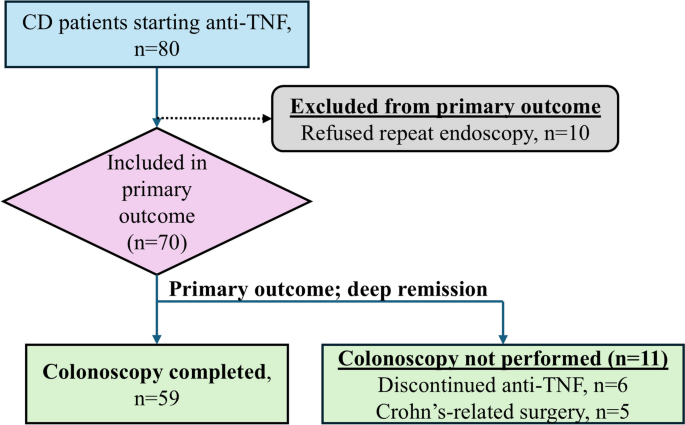
Pharmacometric Targets During Anti-TNF Induction and Their Association with Deep Remission in Pediatric Crohn’s Disease
Clinical Pharmacokinetics

Pharmacometric Targets During Anti-TNF Induction and Their Association with Deep Remission in Pediatric Crohn’s Disease

The study identifies specific induction exposure targets and biomarkers tied to higher chances of deep remission at 12 months in children on anti-TNF therapy, which could inform earlier dose optimization to improve...

Read Summary
Automated assessment of the ulcerative colitis endoscopic index of severity using a multi-task deep learning model
Scientific Reports

Automated assessment of the ulcerative colitis endoscopic index of severity using a multi-task deep learning model

Automated, consistent scoring of the UCEIS could reduce subjectivity and variability in endoscopic assessment of ulcerative colitis, which matters for clinical trials, central reading, and potentially treatment decisions...

Read Summary
Scleroglucan ameliorates dextran sulfate sodium-induced ulcerative colitis and gut microbiota dysbiosis in mice.
International journal of biological macromolecules

Scleroglucan ameliorates dextran sulfate sodium-induced ulcerative colitis and gut microbiota dysbiosis in mice.

The study identifies a fungal β-glucan that reduced inflammation and altered the gut microbiome and short-chain fatty acids in a mouse model of ulcerative colitis, which could inform future nutritional or therapeutic...

Read Summary
Exploratory Risk Patterns of Steroid Dependency in Ulcerative Colitis: A Multicenter Pilot Study Combining Logistic Regression and Self-Organizing Map Analysis.
Inflammatory intestinal diseases

Exploratory Risk Patterns of Steroid Dependency in Ulcerative Colitis: A Multicenter Pilot Study Combining Logistic Regression and Self-Organizing Map Analysis.

Steroid dependency affects many people with ulcerative colitis and can change long-term treatment plans. This study explores clinical factors and uses an AI clustering method to visualize different risk patterns, which...

Read Summary
The safe and effective use of tofacitinib and ustekinumab combination therapy in infantile onset inflammatory bowel disease.
JPGN reports

The safe and effective use of tofacitinib and ustekinumab combination therapy in infantile onset inflammatory bowel disease.

The report suggests tofacitinib (a JAK inhibitor), alone or combined with ustekinumab, could be an effective option for some infants with treatment-refractory IOIBD — a population with few evidence-based alternatives. If...

Read Summary
Infliximab-linked gut microbiome signatures as candidate treatment response biomarkers in pediatric inflammatory bowel disease: a systematic review.
Frontiers in pharmacology

Infliximab-linked gut microbiome signatures as candidate treatment response biomarkers in pediatric inflammatory bowel disease: a systematic review.

This matters because identifying microbiome patterns linked to infliximab response could help predict which children with IBD are more likely to benefit from the drug and guide personalized treatment decisions in the...

Read Summary
Efficacy of Ustekinumab for the treatment of perianal fistulizing Crohn's disease: a multicentre retrospective study.
Frontiers in medicine

Efficacy of Ustekinumab for the treatment of perianal fistulizing Crohn's disease: a multicentre retrospective study.

Perianal fistulizing Crohn's disease is difficult to treat and many patients have failed anti-TNF therapy. Evidence that ustekinumab achieves high clinical fistula response and remission rates in a real-world multicenter...

Read Summary
Data-driven subphenotyping uncovers ulcerative colitis subtype with high risk for relapse in Japan: a prospective multicenter cohort study
The Lancet Regional Health - Western Pacific

Data-driven subphenotyping uncovers ulcerative colitis subtype with high risk for relapse in Japan: a prospective multicenter cohort study

The study suggests quality-of-life and patient-reported measures can reveal a subgroup of UC patients in clinical remission who nevertheless have higher relapse risk, which could help personalize monitoring and care.

Read Summary
Mycobacterium tuberculosis PPE2 protein-derived peptide ameliorates DSS-induced colitis by depleting mast cells
iScience

Mycobacterium tuberculosis PPE2 protein-derived peptide ameliorates DSS-induced colitis by depleting mast cells

This mouse study identifies a novel peptide that reduced DSS-induced colitis and points to mast cells and fibroblast–mast cell interactions as potential therapeutic targets. It also showed additive benefit when combined...

Read Summary
Comparative efficacy and safety of subcutaneous vedolizumab versus other targeted inflammatory bowel therapies in patients with moderate to severe ulcerative colitis: a network meta-analysis update
BMC Gastroenterology

Comparative efficacy and safety of subcutaneous vedolizumab versus other targeted inflammatory bowel therapies in patients with moderate to severe ulcerative colitis: a network meta-analysis update

This study compares many targeted IBD drugs indirectly to help clarify how subcutaneous vedolizumab stacks up against other biologics and newer oral therapies — information that could inform treatment discussions for...

Read Summary
Pharmacological treatments for moderate-to-severe ulcerative colitis: a systematic review and Bayesian network meta-analysis
Scandinavian Journal of Gastroenterology

Pharmacological treatments for moderate-to-severe ulcerative colitis: a systematic review and Bayesian network meta-analysis

Based on the title and source metadata, this appears to be a systematic review or meta analysis related to Ulcerative colitis, Inflammatory bowel disease, and Research and clinical trials. The original article is from...

Read Summary
Investigating causal associations between inflammatory bowel disease and IgA vasculitis: Univariable and multivariable Mendelian randomization study.
Medicine

Investigating causal associations between inflammatory bowel disease and IgA vasculitis: Univariable and multivariable Mendelian randomization study.

The analysis suggests genetic liability to IBD, particularly Crohn’s disease, may raise the risk of IgA vasculitis. This is relevant for understanding overlapping immune mechanisms and possible shared pathways between...

Read Summary
The intellectual structure and emerging trends on nanotechnology in inflammatory bowel disease: A bibliometric analysis from 2005 to 2024.
Medicine

The intellectual structure and emerging trends on nanotechnology in inflammatory bowel disease: A bibliometric analysis from 2005 to 2024.

Nanotechnology is being heavily explored as a way to improve drug targeting, control release, and reduce systemic toxicity in IBD — topics that could shape future treatment options and research priorities.

Read Summary
Comorbidity Between Mood Disorders and Chronic Somatic Diseases, With a Focus on Cardiometabolic Disease, and Its Mechanistic Crosstalk.
Depression and anxiety

Comorbidity Between Mood Disorders and Chronic Somatic Diseases, With a Focus on Cardiometabolic Disease, and Its Mechanistic Crosstalk.

Mood disorders commonly co-occur with chronic somatic diseases, including IBD; understanding shared mechanisms may explain worse outcomes and suggest multidisciplinary care needs.

Read Summary
phox CRISPR-Cas9-producing probiotic bacteria for editing NOX2/gp91and treating inflammatory bowel disease.
Cell reports. Medicine

phox CRISPR-Cas9-producing probiotic bacteria for editing NOX2/gp91and treating inflammatory bowel disease.

The study explores a novel method to reduce gut oxidative stress — a contributor to IBD inflammation — by using an engineered probiotic to edit NOX2, which could point toward new therapeutic strategies if translated to...

Read Summary
Risk factors and prediction model of renal dysfunction in patients with inflammatory bowel disease: a retrospective cohort study
BMC Gastroenterology

Risk factors and prediction model of renal dysfunction in patients with inflammatory bowel disease: a retrospective cohort study

Kidney dysfunction can occur in people with IBD and may be under-recognized. A validated prediction model could help clinicians identify IBD patients at higher risk and prompt earlier monitoring or interventions.

Read Summary
Very early onset inflammatory bowel disease in Jordan: a single-center case series of clinical, genetic, and therapeutic features
BMC Pediatrics

Very early onset inflammatory bowel disease in Jordan: a single-center case series of clinical, genetic, and therapeutic features

VEOIBD often has a strong genetic component and different clinical needs than adult IBD; this study shows genetic findings and treatment challenges in a Middle East pediatric center, which may affect diagnosis and access...

Read Summary
A Comparative Study of Nintedanib versus Conventional Drugs in the Treatment of Inflammatory Bowel Disease-Associated Intestinal Fibrosis.
Clinics and research in hepatology and gastroenterology

A Comparative Study of Nintedanib versus Conventional Drugs in the Treatment of Inflammatory Bowel Disease-Associated Intestinal Fibrosis.

Intestinal fibrosis (stricture) is a serious, hard-to-treat complication of IBD/Crohn's disease. This preclinical study tests whether an antifibrotic drug used in lung fibrosis might reduce fibrosis in the gut, which...

Read Summary
Real world experience with granulocyte and monocyte adsorptive apheresis (ADACOLUMN®) in patients with refractory inflammatory bowel disease: a retrospective observational multicenter cohort study.
Clinics and research in hepatology and gastroenterology

Real world experience with granulocyte and monocyte adsorptive apheresis (ADACOLUMN®) in patients with refractory inflammatory bowel disease: a retrospective observational multicenter cohort study.

This study reports real-world outcomes with granulocyte and monocyte adsorptive apheresis (GMA) in patients with refractory IBD, showing steroid-free remission by week 14 in about one-third of patients and continued...

Read Summary
Fecal incontinence among patients with ulcerative colitis and relation with disease activity, and extent: A cross-sectional study.
Arab journal of gastroenterology : the official publication of the Pan-Arab Association of Gastroenterology

Fecal incontinence among patients with ulcerative colitis and relation with disease activity, and extent: A cross-sectional study.

Fecal incontinence is a distressing symptom that lowers quality of life and appears linked to active disease in UC. Knowing which patients are at higher risk can help clinicians focus assessment and symptom support.

Read Summary
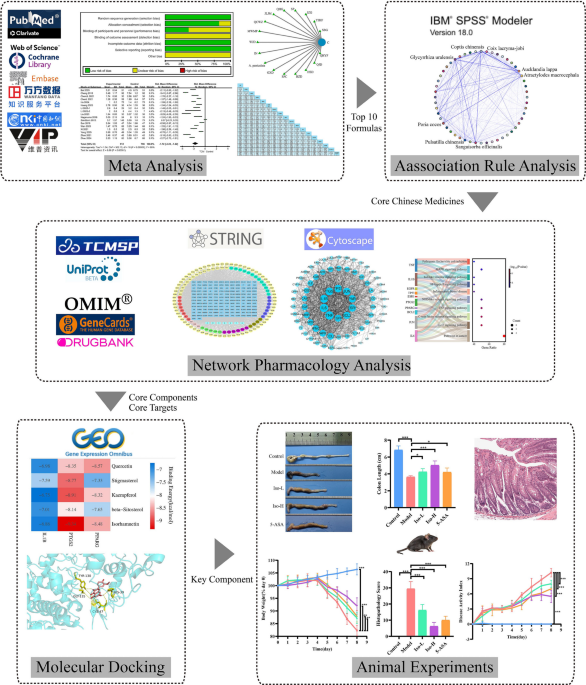
Isorhamnetin ameliorates active ulcerative colitis potentially involving the Nrf2-PTGS2 axis: an integrative study from clinical evidence mining to in vivo validation
Naunyn-Schmiedeberg's Archives of Pharmacology

Isorhamnetin ameliorates active ulcerative colitis potentially involving the Nrf2-PTGS2 axis: an integrative study from clinical evidence mining to in vivo validation

This article suggests a naturally derived compound (isorhamnetin) identified from TCM may reduce inflammation in experimental ulcerative colitis and points to the Nrf2–PTGS2 pathway as a possible mechanism. That could...

Read Summary
Pancreatic Hyperenzymemia in Inflammatory Bowel Disease: Clinical Characterization and Outcomes from the European PANDORA Registry.
Pathophysiology : the official journal of the International Society for Pathophysiology

Pancreatic Hyperenzymemia in Inflammatory Bowel Disease: Clinical Characterization and Outcomes from the European PANDORA Registry.

Elevated pancreatic enzymes are relatively common in IBD and can reflect very different conditions (benign asymptomatic elevations, pancreatitis variants, or autoimmune pancreatitis). Recognizing phenotype-specific...

Read Summary
Liandan Xiaoyan Formula ameliorates DSS-induced ulcerative colitis through altering the metabolism of bile acids by regulating the FXR-FGF15 signaling pathway.
Phytomedicine : international journal of phytotherapy and phytopharmacology

Liandan Xiaoyan Formula ameliorates DSS-induced ulcerative colitis through altering the metabolism of bile acids by regulating the FXR-FGF15 signaling pathway.

The study links a traditional herbal formula to improved colitis in mice and to changes in bile-acid metabolism through the FXR–FGF15 pathway, suggesting a mechanistic route that could inform future preclinical or...

Read Summary
RNA-binding protein RBM47 in health and disease: molecular mechanisms, preclinical evidence, and translational challenges.
Frontiers in immunology

RNA-binding protein RBM47 in health and disease: molecular mechanisms, preclinical evidence, and translational challenges.

Researchers are investigating RBM47 because it influences RNA processing and immune pathways that could modify inflammation and disease processes relevant to IBD. If borne out, RBM47 could become a biomarker or...

Read Summary
Mechanistic remodeling and immunoregulatory functions of the B cell-humoral immunity axis in inflammatory bowel disease.
Frontiers in immunology

Mechanistic remodeling and immunoregulatory functions of the B cell-humoral immunity axis in inflammatory bowel disease.

B cells and antibodies appear to play active, regulatory roles in gut inflammation and tissue organization in IBD. Understanding this axis could inform new therapies or biomarkers that change how inflammation is detected...

Read Summary
Serum immune profiling suggests overlap between IBD patients with joint complaints and patients with spondyloarthritis.
Frontiers in immunology

Serum immune profiling suggests overlap between IBD patients with joint complaints and patients with spondyloarthritis.

If you have IBD and joint symptoms, this study suggests your joint complaints may reflect measurable immune changes that partly overlap with spondyloarthritis, not just non-specific pain. That could mean joint symptoms...

Read Summary
Engineering allogeneic type 1 regulatory T cells: a scalable, off-the-shelf platform for restoring immune tolerance.
Frontiers in immunology

Engineering allogeneic type 1 regulatory T cells: a scalable, off-the-shelf platform for restoring immune tolerance.

This paper describes a new engineered, off-the-shelf regulatory T cell therapy (TRX103) designed to restore immune tolerance and that is already entering early clinical trials for treatment-refractory Crohn’s disease.

Read Summary
Systemic antibody responses against bacterial and viral antigens associate with fatigue in patients with inflammatory bowel disease.
iScience

Systemic antibody responses against bacterial and viral antigens associate with fatigue in patients with inflammatory bowel disease.

Fatigue is a common, disabling symptom in people with IBD with unclear causes. Finding reproducible immune or infectious signatures related to fatigue could point toward new research directions and, eventually, markers...

Read Summary
Structural elucidation of an active pectin against inflammatory bowel disease from the roots of Sanguisorba officinalis and its protection effect.
Carbohydrate polymers

Structural elucidation of an active pectin against inflammatory bowel disease from the roots of Sanguisorba officinalis and its protection effect.

Researchers identified a defined pectin from Sanguisorba officinalis that reduced inflammatory cytokine release in cells and improved outcomes in a mouse colitis model, suggesting a new lead for IBD drug discovery.

Read Summary
Targeting mitochondrial dysfunction with traditional Chinese medicine for inflammatory bowel disease: a comprehensive review.
Frontiers in pharmacology

Targeting mitochondrial dysfunction with traditional Chinese medicine for inflammatory bowel disease: a comprehensive review.

Mitochondrial dysfunction may contribute to IBD symptoms and disease progression; therapies that protect or restore mitochondrial function could become future treatment strategies. People interested in complementary or...

Read Summary
Evaluating objective nutritional biomarkers for the prediction of sarcopenia in Crohn's disease: development and internal validation of a clinical nomogram.
Frontiers in nutrition

Evaluating objective nutritional biomarkers for the prediction of sarcopenia in Crohn's disease: development and internal validation of a clinical nomogram.

Sarcopenia is common in Crohn's disease and is linked to worse outcomes; a simple GNRI-based prediction tool could help identify at-risk patients without routine CT scanning.

Read Summary
The genetic landscape of congenital diarrheas and very early onset inflammatory bowel disease in the Middle East.
JPGN reports

The genetic landscape of congenital diarrheas and very early onset inflammatory bowel disease in the Middle East.

Finding monogenic causes in infants with congenital diarrheas or VEOIBD can directly affect diagnosis, genetic counseling, and management. Populations with higher consanguinity may have higher diagnostic yields for...

Read Summary
Pharmacokinetic model selection for infliximab based on inflammatory bowel disease phenotype and severity: Toward model-informed precision dosing.
PloS one

Pharmacokinetic model selection for infliximab based on inflammatory bowel disease phenotype and severity: Toward model-informed precision dosing.

Infliximab dosing can be hard to personalize. This study shows that selecting pharmacokinetic models based on IBD type and severity can improve how well drug levels are predicted, which could help tailor dosing for...

Read Summary
A Specific Probiotic in thE MOdulation of Gut Microbiota of patieNts With Mild-to-modErate Ulcerative Colitis
ClinicalTrials.gov

A Specific Probiotic in thE MOdulation of Gut Microbiota of patieNts With Mild-to-modErate Ulcerative Colitis

This trial is testing whether a rectally delivered probiotic can change the gut microbiome and promote mucosal healing in people with mild-to-moderate ulcerative colitis (and includes some Crohn's patients). If...

Read Summary
Efficacy and Safety of Guselkumab in Patients With Moderate-to-Severe Ulcerative Colitis:A Real-World Prospective Cohort Study.
ClinicalTrials.gov

Efficacy and Safety of Guselkumab in Patients With Moderate-to-Severe Ulcerative Colitis:A Real-World Prospective Cohort Study.

This trial is testing guselkumab (an IL‑23 inhibitor) in a real‑world UC cohort and will measure endoscopic and histologic remission at 48 weeks — outcomes that matter to people managing moderate‑to‑severe ulcerative...

Read Summary