Autologous Stem Cell Transplant for Crohn's Disease
This trial is testing whether adding vedolizumab after autologous stem cell transplant can improve remission rates for people with severe Crohn's disease that has failed multiple therapies.
Clinical trials, biomarkers, microbiome, genetics, AI, basic science, and emerging IBD research.
Page 50 of 65 · 3100 articles
This trial is testing whether adding vedolizumab after autologous stem cell transplant can improve remission rates for people with severe Crohn's disease that has failed multiple therapies.
Cure8 found this source from Journal of physiological investigation, but the page could not be read reliably yet. It is tagged for Ulcerative colitis, Inflammatory bowel disease, and Research and clinical trials. Open...

This meta-analysis suggests people with IBD face higher risks of major cardiovascular events (heart attack, ischemic heart disease, ischemic stroke), which may matter for monitoring and preventive care. Higher risk...
Researchers report links between copper-driven cell death pathways and IBD biology; identifying cuproptosis-related biomarkers or drugs could open new diagnostic or therapeutic avenues for people with Crohn's disease or...
This review summarizes many observational studies to identify dietary and environmental factors that may influence the risk of developing ulcerative colitis, which could help guide future research and prevention efforts...
The review suggests matrine and oxymatrine reduce inflammation and oxidative stress in animal UC models, pointing to potential new therapeutic approaches. People with UC may want to know about directions in preclinical...
This study looks at how statistically "fragile" results are in trials of new IBD treatments. Patients and clinicians should know that trial size, treatment type, and whether the result was a primary outcome affect how...
Based on the title and source metadata, this appears to be a patient education related to Inflammatory bowel disease and Medications. The original article is from hmpgloballearningnetwork.com.
A pooled analysis found modest differences in cardiac structure and function in people with IBD versus controls, which may relate to the higher cardiovascular risk seen in this population.
The study suggests nickel accumulation and iron deficiency may be linked with more severe IBD. If confirmed, blood metal and micronutrient levels could help researchers understand disease mechanisms and guide nutritional...
If you or your clinician are considering dietary therapy like the CDED for Crohn's disease, microbiome features at baseline may influence who achieves sustained remission. Understanding these links could help personalize...
m6A RNA methylation regulators are emerging as potential targets that may influence immune-driven inflammation in diseases that matter to people with IBD. Understanding these pathways could point toward new precision...
Links between IBD genetic risk and specific adult tissue lesion contexts help researchers understand which cell types and tissue programs may mediate inherited susceptibility. That can guide future biomarker and...
This real-world, multicenter study suggests risankizumab can induce clinical and steroid-free remission and mucosal healing in many patients with Crohn disease who previously failed advanced therapies, which may be...
Rheumatological EIMs (notably joint inflammation) are frequent in IBD and affect quality of life; inconsistent definitions and lack of validated PROs make it harder for patients and clinicians to understand and compare...
New oral drugs that act mainly in the gut could offer more convenient options and potentially fewer systemic side effects for people with UC or Crohn’s disease. Early clinical signals and a planned Phase 2 trial mean...
Antibiotics can change the gut microbiome in ways that may raise IBD risk or worsen disease for some people. Knowing which antibiotic classes and approaches may be less harmful could help patients and clinicians reduce...
Based on the title and source metadata, this appears to be a basic science related to Ulcerative colitis, Inflammatory bowel disease, and Research and clinical trials. The original article is from Journal of Genetic...
This trial explores whether oral ozanimod can induce and maintain remission in children and adolescents with moderate to severe ulcerative colitis who have not responded to standard therapies. Pediatric-specific evidence...
Risk-prediction tools like CDPATH™ could help people with Crohn’s disease and their doctors identify higher or lower short-term risk of complications and guide treatment conversations. This study tests how the tool...
Patients with UC often take multiple medicines that rely on CYP enzymes. This study is checking if afimkibart affects how those drugs are processed, which could matter for safety or dosing if the drug proceeds in...
A validated pre-endoscopic model could help estimate UC disease extent before colonoscopy, aiding clinical triage and planning without replacing endoscopy.
If validated, an early drop in fecal calprotectin could help identify patients on biologic therapy who are likely to achieve mucosal healing without waiting for invasive endoscopy, allowing earlier decisions about...
Digital self-management programs could help people with active IBD build skills to manage symptoms and quality of life between clinic visits. This trial tests whether such a program is feasible, acceptable, and practical...
Early intestinal ultrasound may predict one-year endoscopic remission in Crohn's disease, offering a noninvasive tool to guide treatment decisions and possibly reduce the need for some colonoscopies.
Perianal fistulizing Crohn's disease is a disabling complication; a subcutaneous form of infliximab could lower treatment burden and expand options if its effectiveness and safety in this specific setting are confirmed.
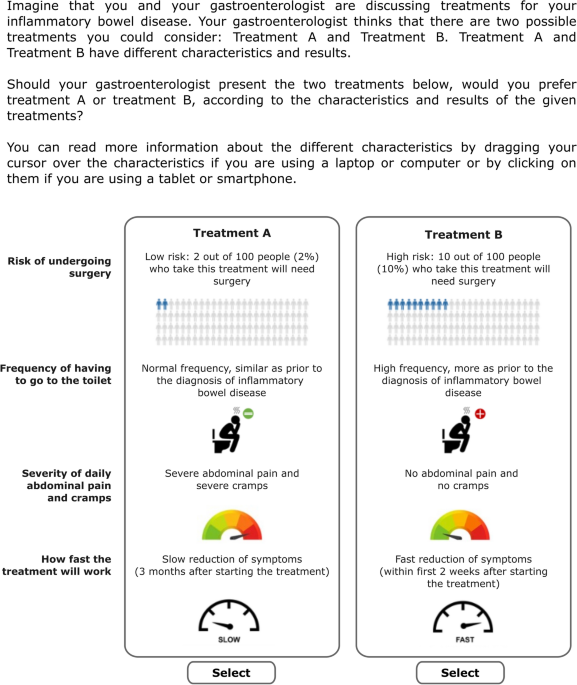
This global survey shows that people with IBD prioritize symptom relief and psychological well-being over treatment features like administration route or speed of onset. That matters for shared decision-making, trial...
If organoid transplantation can be translated to people, it could offer a new way to repair inflamed colonic lining and promote mucosal healing when current therapies are insufficient. The approach also highlights links...
If fecal GP2 reliably reflects UC activity and microbial changes, it could become a noninvasive marker to track inflammation or to study disease mechanisms that differ between UC and CD.
The 1955 Truelove and Witts criteria do not account for patients already on modern outpatient therapies. Updated consensus criteria could change how ASUC is recognized and triaged in current clinical practice.
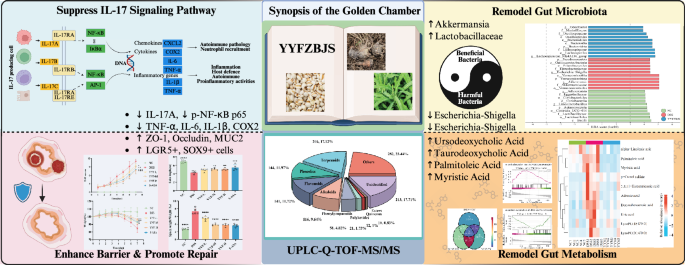
The study suggests a multi-component herbal formula may affect inflammation, the intestinal barrier, epithelial repair, the gut microbiome, and fecal metabolites in a mouse colitis model—topics relevant to understanding...
This study identifies NR1D1 activation by the experimental drug SR9009 as a potential way to reduce inflammation and improve colon pathology in a mouse model of obesity-associated ulcerative colitis.
Based on the title and source metadata, this appears to be a conference abstract related to Inflammatory bowel disease and Research and clinical trials. The original article is from gastroendonews.com.
If confirmed, antibody signatures detectable years before symptoms could help identify people at higher risk for IBD and improve understanding of how the disease begins — a step toward earlier diagnosis or future...
Transition from pediatric to adult IBD care is a high-risk period; structured programs and better communication can improve adherence and reduce relapse and hospitalization risk for young people with IBD.
Real-world data show how mirikizumab performs outside clinical trials, especially in patients previously exposed to multiple advanced therapies. That can help patients and clinicians weigh expectations for effectiveness...
Identifying patients at higher risk of hospitalization earlier could help clinicians target monitoring or treatment changes before clinical deterioration. Standard lab reference ranges may miss meaningful within-person...
Methotrexate is commonly used in IBD, often with biologics, but real‑world data on how long patients stay on it, typical dosing, and safety in large contemporary cohorts are limited.
This study suggests tofacitinib may work quickly as a rescue option for biologic‑naive patients with steroid‑refractory ASUC and that many achieved steroid‑free remission by 24 weeks — information that could matter when...
An externally validated, simple prediction score could help identify patients unlikely to need early aggressive treatment and inform shared decision-making about monitoring and therapy.
This paper systematically catalogs drugs that have been reported with new or worsening IBD in two large pharmacovigilance databases. Knowing which medications generate strong reporting signals can help clinicians and...
People with ulcerative colitis may be interested because ferulic acid is a plant-derived compound that, in lab and animal studies, appears to reduce gut inflammation, support the intestinal barrier, and positively...
This study describes a lab-stage engineered probiotic–silver nanoparticle therapy that reduced inflammation and promoted colon repair in an animal colitis model; it highlights new molecular targets (Wnt signaling and...
For patients and clinicians facing steroid- and infliximab-refractory acute severe ulcerative colitis, upadacitinib may be a third-line medical option that can produce rapid symptom and CRP improvement and allow some...
Based on the title and source metadata, this appears to be a market or business news related to Research and clinical trials. The original article is from businesswire.com.
The work suggests a fungus-derived metabolite can reduce experimental colitis through AhR and NF-κB pathways, highlighting a potential new direction for microbiome‑based therapies or postbiotics that could eventually...
Identifies a redox-sensitive NOX1–ROS–IκBζ pathway that may sustain intestinal inflammation in IBD and points to a new molecular target for future therapies.
LCH can present like perianal Crohn's disease and may be missed if biopsies and molecular testing are not performed. Correct diagnosis changes treatment and prompts systemic staging for other malignancies.