Research tools

Fecal calprotectin

Fecal calprotectin articles covering stool inflammation testing, flare monitoring, treatment response, and IBD research. Research context emphasizes studies, trials, biomarkers, mechanisms, and emerging IBD science.

Page 2 of 3 · 144 articles

Dietary prevention of undernutrition reduces intestinal inflammation associated with an anti-inflammatory profile of gut microbiota in a preclinical model
Scientific Reports

Dietary prevention of undernutrition reduces intestinal inflammation associated with an anti-inflammatory profile of gut microbiota in a preclinical model

Undernutrition and lean-mass loss are common and harmful in people with IBD. If dietary strategies can prevent weight and muscle loss and shift the gut microbiota toward SCFA producers, that could be relevant to...


Read Summary
Evaluation of the Correlation of Calprotectin and SES-CD Score at the Time of Diagnosis and Follow-up After Diagnosis in Pediatric Patients With Crohn's Disease in Korea.
Journal of Korean medical science

Evaluation of the Correlation of Calprotectin and SES-CD Score at the Time of Diagnosis and Follow-up After Diagnosis in Pediatric Patients With Crohn's Disease in Korea.

Noninvasive fecal calprotectin levels tracked with endoscopic disease activity in children with colonic Crohn's disease, suggesting FC could help reduce repeat endoscopies and better monitor treatment response.

Read Summary
Enteric glial cell remodeling at diagnosis is associated with reduced mucosal inflammation at follow-up in pediatric ulcerative colitis.
Human pathology

Enteric glial cell remodeling at diagnosis is associated with reduced mucosal inflammation at follow-up in pediatric ulcerative colitis.

If confirmed, a pathology marker visible on routine biopsy (EGC patterns by SOX10 IHC) could help predict which children with ulcerative colitis are more likely to have improved mucosal inflammation over the first year,...

Read Summary
Neutrophil activation parameter is a promising new biomarker of disease activity in ulcerative colitis.
Clinica chimica acta; international journal of clinical chemistry

Neutrophil activation parameter is a promising new biomarker of disease activity in ulcerative colitis.

A simple blood-derived neutrophil activation marker (Neut-RI) correlated with clinical disease activity in ulcerative colitis and outperformed fecal calprotectin and CRP in this study, suggesting a potential low-cost,...

Read Summary
Intestinal ultrasound: a non-invasive alternative to monitor and predict biologic treatment persistence in patients with inflammatory bowel disease.
Scandinavian journal of gastroenterology

Intestinal ultrasound: a non-invasive alternative to monitor and predict biologic treatment persistence in patients with inflammatory bowel disease.

A non-invasive test (intestinal ultrasound) that predicts whether patients stay on biologic therapy could reduce the need for frequent endoscopy and help guide monitoring decisions.

Read Summary
Oncostatin M as a Complementary Non-Invasive Marker of Endoscopic and Histological Disease Activity in Ulcerative Colitis
International Journal of Molecular Sciences

Oncostatin M as a Complementary Non-Invasive Marker of Endoscopic and Histological Disease Activity in Ulcerative Colitis

A blood biomarker (OSM) that tracks microscopic inflammation could help detect residual disease activity that fecal calprotectin and routine clinical scores miss. That matters because histological inflammation predicts...

Read Summary
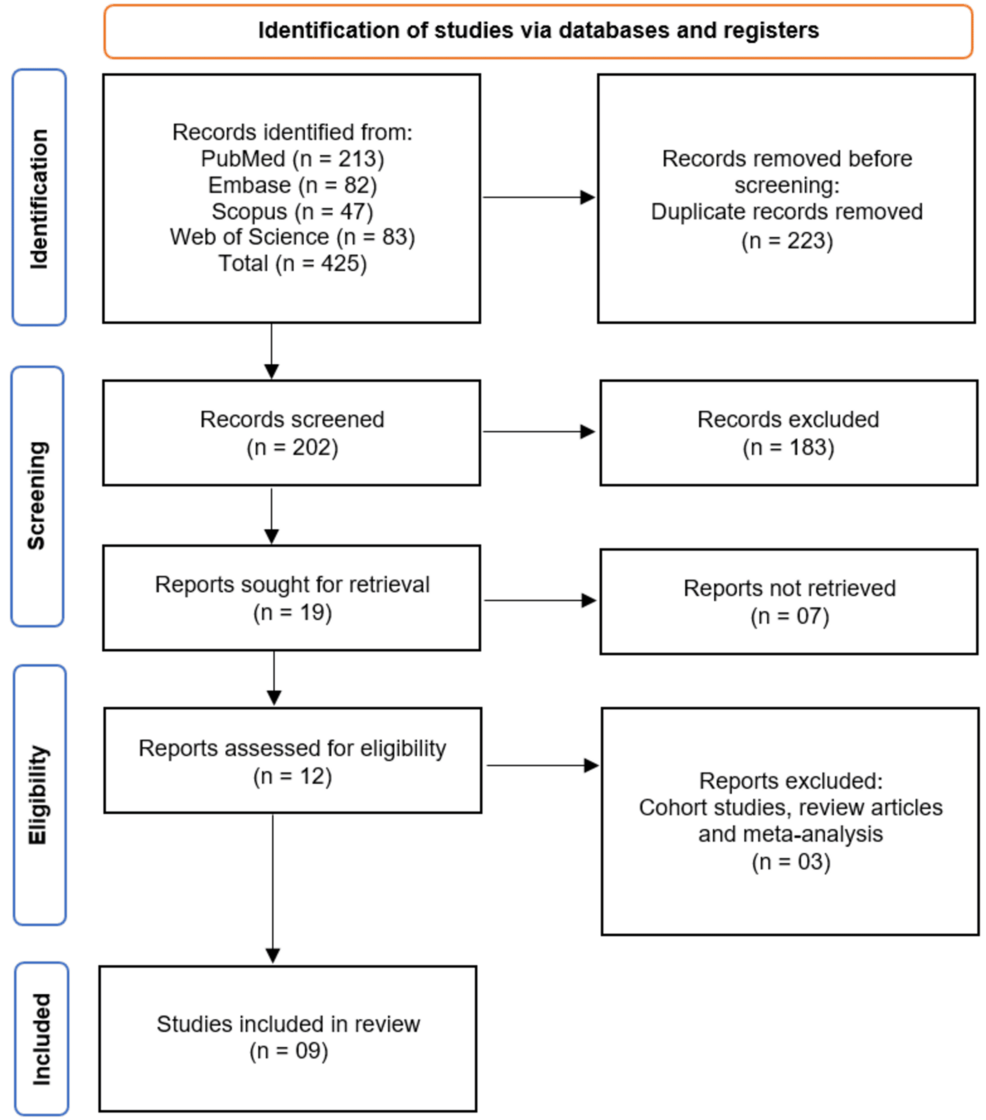
Diagnostic accuracy of Neutrophil Gelatinase-Associated Lipocalin (NGAL) for inflammatory bowel disease: a systematic review and bivariate diagnostic meta-analysis
BMC Gastroenterology

Diagnostic accuracy of Neutrophil Gelatinase-Associated Lipocalin (NGAL) for inflammatory bowel disease: a systematic review and bivariate diagnostic meta-analysis

People with suspected or known IBD and their clinicians want accurate, noninvasive tests to detect inflammation. This review suggests NGAL may be sensitive for identifying IBD but existing data are limited and uncertain,...

Read Summary
Not only bowel: opportunistic assessment of sarcopenia in pediatric ulcerative colitis patients undergoing magnetic resonance enterography.
Nutrition (Burbank, Los Angeles County, Calif.)

Not only bowel: opportunistic assessment of sarcopenia in pediatric ulcerative colitis patients undergoing magnetic resonance enterography.

Children with newly diagnosed ulcerative colitis in this study commonly had reduced muscle mass (sarcopenia) at diagnosis, and the degree of muscle loss correlated with higher disease activity and inflammation....

Read Summary
Fecal microbiota transplantation for the decolonization of mucosal adherent-invasive Escherichia coli in Crohn’s disease: an open-label pilot study
Nature Communications

Fecal microbiota transplantation for the decolonization of mucosal adherent-invasive Escherichia coli in Crohn’s disease: an open-label pilot study

The study suggests FMT can clear mucosal adherent‑invasive E. coli (AIEC) in some people with Crohn’s disease and alters mucosal microbiome features linked to inflammation, which could be relevant to microbiome‑targeted...

Read Summary
Glucagon like peptide 1 receptor agonists in patients with inflammatory bowel disease: safety, clinical effectiveness and anti-inflammatory mechanisms.
Frontiers in gastroenterology (Lausanne, Switzerland)

Glucagon like peptide 1 receptor agonists in patients with inflammatory bowel disease: safety, clinical effectiveness and anti-inflammatory mechanisms.

Many people with IBD also have overweight or obesity; GLP-1 receptor agonists are being used for weight loss and may affect inflammation and IBD outcomes. This review summarizes current evidence on safety, effectiveness,...

Read Summary
Exclusive enteral nutrition versus the Crohn's disease exclusion diet for remission induction in pediatric Crohn's disease: 52-week study.
Journal of pediatric gastroenterology and nutrition

Exclusive enteral nutrition versus the Crohn's disease exclusion diet for remission induction in pediatric Crohn's disease: 52-week study.

Both EEN and the Crohn’s disease exclusion diet are used to induce remission in children with Crohn’s disease. Evidence that they perform similarly through 52 weeks may help families and clinicians choose the approach...

Read Summary
Clinical features and biomarkers associated with ulcerative colitis: A systematic review and meta-analysis
World Journal of Gastroenterology

Clinical features and biomarkers associated with ulcerative colitis: A systematic review and meta-analysis

Knowing which symptoms and non-invasive biomarkers most strongly associate with UC can help patients and clinicians decide who should be prioritized for diagnostic endoscopy and for monitoring disease activity.

Read Summary
The Utility of Faecal Biomarkers in the Discrimination Between Acute Gastroenteritis and Inflammatory Bowel Disease
Biomedicines

The Utility of Faecal Biomarkers in the Discrimination Between Acute Gastroenteritis and Inflammatory Bowel Disease

Distinguishing acute infectious gastroenteritis from new‑onset IBD can be clinically challenging. Faecal biomarkers that help tell these apart could speed correct diagnosis and treatment and avoid unnecessary...

Read Summary
Wearable perspiration sensor for continuous inflammation tracking in inflammatory bowel disease.
Inflammatory bowel diseases

Wearable perspiration sensor for continuous inflammation tracking in inflammatory bowel disease.

A wearable sensor that reliably measures inflammation markers (CRP and calprotectin) from sweat could make inflammation monitoring less invasive and more frequent for people with IBD, potentially helping detect flares...

Read Summary
Diet quality, gut microbiome, and inflammatory signatures in Puerto Rican adults with Crohn disease: a multidimensional analysis.
Inflammatory bowel diseases

Diet quality, gut microbiome, and inflammatory signatures in Puerto Rican adults with Crohn disease: a multidimensional analysis.

Diet quality was linked to gut microbiome features and exploratory differences in inflammatory markers and symptoms in adults with Crohn disease from Puerto Rico; understanding these links may help tailor dietary...

Read Summary
Childhood exposure to a sibling with Crohn's disease alters gut microbiome and Crohn's disease susceptibility.
Gut

Childhood exposure to a sibling with Crohn's disease alters gut microbiome and Crohn's disease susceptibility.

Because having a sibling with Crohn's disease during childhood was linked to substantially higher risk of developing Crohn's later, and the study points to early-life microbiome differences and elevated faecal...

Read Summary
Virtual Reality Headset and Acceptability of Rectosigmoidoscopy in Ulcerative Colitis: a Randomised Controlled Trial
ClinicalTrials.gov

Virtual Reality Headset and Acceptability of Rectosigmoidoscopy in Ulcerative Colitis: a Randomised Controlled Trial

This trial tests a non-drug way (virtual reality medical-hypnosis content) to reduce pain and embarrassment during rectosigmoidoscopy — a common, sometimes poorly tolerated procedure in ulcerative colitis that patients...

Read Summary
Preventing relapse in ulcerative colitis remission maintenance: machine learning prediction and reinforcement-learning herbal prescription optimization with external validation
Frontiers in Medicine

Preventing relapse in ulcerative colitis remission maintenance: machine learning prediction and reinforcement-learning herbal prescription optimization with external validation

The work aims to predict relapse and personalize herbal maintenance dosing for UC, which matters because better risk stratification and tailored management could reduce relapses and avoid unnecessary treatment changes.

Read Summary
Serum leucine-rich α-2-glycoprotein and monocyte chemoattractant protein-1 as novel biomarkers for predicting vedolizumab response in patients with ulcerative colitis.
Crohn's & colitis 360

Serum leucine-rich α-2-glycoprotein and monocyte chemoattractant protein-1 as novel biomarkers for predicting vedolizumab response in patients with ulcerative colitis.

Blood biomarkers that predict vedolizumab response could help patients and clinicians choose the most effective therapy sooner and avoid ineffective treatments. The study suggests LRG and MCP‑1 may differentiate...

Read Summary
Association Between Primary Sclerosing Cholangitis and Faecal Calprotectin Levels in Patients With Inflammatory Bowel Disease: A Systematic Review and Meta-Analysis
Cureus

Association Between Primary Sclerosing Cholangitis and Faecal Calprotectin Levels in Patients With Inflammatory Bowel Disease: A Systematic Review and Meta-Analysis

People with IBD and coexisting primary sclerosing cholangitis (PSC) may get faecal calprotectin tests to monitor colon inflammation. If PSC raises FC independently of colitis, FC could mislead decisions about IBD...

Read Summary
Outcomes of risankizumab use in adults with Crohn's disease in a real-world setting (ARISE-CD): a multicentre, retrospective cohort study.
BMJ open gastroenterology

Outcomes of risankizumab use in adults with Crohn's disease in a real-world setting (ARISE-CD): a multicentre, retrospective cohort study.

This real-world multicentre study evaluates risankizumab effectiveness and short-term persistence in adults with Crohn's disease, including those previously treated with ustekinumab — information that can help patients...

Read Summary
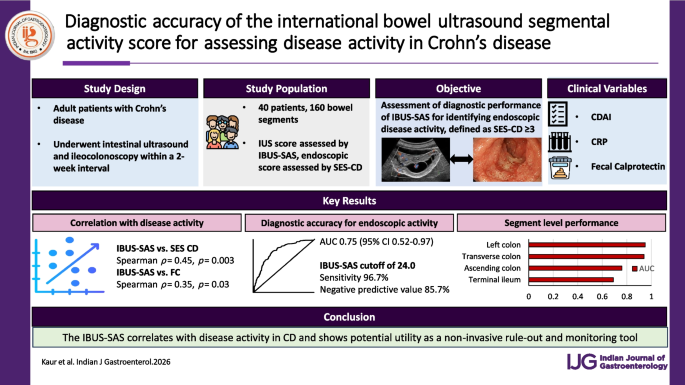
Diagnostic accuracy of the international bowel ultrasound segmental activity score for assessing disease activity in Crohn’s disease
Indian Journal of Gastroenterology

Diagnostic accuracy of the international bowel ultrasound segmental activity score for assessing disease activity in Crohn’s disease

Standardized intestinal ultrasound scoring could help non-invasively monitor Crohn’s disease activity and reduce reliance on colonoscopy for some assessments. A high-sensitivity IUS score may be useful to rule out...

Read Summary
Hormonal contraception is not associated with recurrent flares in ulcerative colitis: a longitudinal time-dependent analysis
Inflammatory Bowel Diseases

Hormonal contraception is not associated with recurrent flares in ulcerative colitis: a longitudinal time-dependent analysis

Many women with UC use hormonal contraception and worry it might worsen disease activity. This study provides evidence that HCT was not linked to more recurrent flares or higher cumulative inflammatory burden in the...

Read Summary
Beyond Inflammation: Sarcopenia and Disease Phenotype Predict Unfavourable Course in Crohn’s Disease—A Retrospective Observational Study
Biomedicines

Beyond Inflammation: Sarcopenia and Disease Phenotype Predict Unfavourable Course in Crohn’s Disease—A Retrospective Observational Study

Sarcopenia (low muscle mass) was linked with worse outcomes in Crohn’s disease and, combined with fecal calprotectin and disease behaviour, formed a score that better predicted unfavourable courses. Identifying at-risk...

Read Summary
C-Reactive Protein-to-Albumin Ratio in Pediatric Inflammatory Bowel Disease: Associations with Disease Activity and Comparison with C-Reactive Protein Alone
Diagnostics

C-Reactive Protein-to-Albumin Ratio in Pediatric Inflammatory Bowel Disease: Associations with Disease Activity and Comparison with C-Reactive Protein Alone

This paper evaluates CAR, a simple blood‑based biomarker, in children with IBD and finds it reflects disease severity and changes over time in pediatric Crohn’s disease. That matters because reliable, easy-to-measure...

Read Summary
Fatigue in inflammatory bowel disease beyond intestinal inflammation: A cross-sectional study.
Journal of psychosomatic research

Fatigue in inflammatory bowel disease beyond intestinal inflammation: A cross-sectional study.

Fatigue is common and disabling for people with IBD; this study shows that factors beyond intestinal inflammation—especially central sensitization and psychological symptoms—explain much of fatigue. That means treating...

Read Summary
Rapid fecal lipidome profiling in inflammatory bowel disease: A novel approach for exploratory disease molecular characterization and therapeutic monitoring.
Journal of pharmaceutical and biomedical analysis

Rapid fecal lipidome profiling in inflammatory bowel disease: A novel approach for exploratory disease molecular characterization and therapeutic monitoring.

Non-invasive fecal lipid markers could help differentiate UC from CD and improve diagnostic molecular profiling in IBD if validated, which may be useful for patients and clinicians seeking less-invasive diagnostic tools.

Read Summary
Characterization of remission levels in patients with ulcerative colitis treated with 5-aminosalicylates: results of the cross-sectional CARUC-ASA study by the Belgian IBD Research and Development Group.
Journal of Crohn's & colitis

Characterization of remission levels in patients with ulcerative colitis treated with 5-aminosalicylates: results of the cross-sectional CARUC-ASA study by the Belgian IBD Research and Development Group.

The study evaluates how well first-line 5-ASA therapy achieves modern treatment targets (endoscopic, histologic, and biomarker remission) in real-world UC patients who are clinically in remission. Patients and clinicians...

Read Summary
Association of the DTI-ALPS Index with Sleep Disturbances and Intestinal Inflammation in Crohn's Disease: A Diffusion Tensor MRI Study.
Academic radiology

Association of the DTI-ALPS Index with Sleep Disturbances and Intestinal Inflammation in Crohn's Disease: A Diffusion Tensor MRI Study.

If confirmed, a brain perivascular/glymphatic change linked to intestinal inflammation could help explain why sleep problems are common in Crohn's disease and point to new research targets for symptom mechanisms and...

Read Summary
Beyond Clinical Toxicity: Repositioning the Truelove and Witts Criteria in the Treat-to-Target Era of Acute Severe Ulcerative Colitis
Gastroenterology Insights

Beyond Clinical Toxicity: Repositioning the Truelove and Witts Criteria in the Treat-to-Target Era of Acute Severe Ulcerative Colitis

The T&W criteria are still used to define severe UC on admission, but relying on them alone may delay recognition of steroid non‑response and escalation decisions. Integrating biomarkers, endoscopy, and imaging can help...

Read Summary
Circulating microRNAs as biomarkers of disease activity and treatment response in Crohn’s disease patients receiving infliximab or vedolizumab: a longitudinal cohort study
Frontiers in Medicine

Circulating microRNAs as biomarkers of disease activity and treatment response in Crohn’s disease patients receiving infliximab or vedolizumab: a longitudinal cohort study

If validated, blood microRNAs could become noninvasive biomarkers to help track inflammation and predict biochemical response to infliximab or vedolizumab in Crohn’s disease, complementing CRP and fecal calprotectin.

Read Summary
Bowel Wall Vascularization in Crohn’s Disease: Exploratory Comparison of Vendor-Derived Vascular Index, ImageJ-Based Quantification, and Blinded Video-Based Doppler Scoring
Diagnostics

Bowel Wall Vascularization in Crohn’s Disease: Exploratory Comparison of Vendor-Derived Vascular Index, ImageJ-Based Quantification, and Blinded Video-Based Doppler Scoring

Bowel wall vascularization on ultrasound is used to gauge transmural inflammation in Crohn’s disease. This study examines whether quantitative measures could make those assessments more objective and how technique and...

Read Summary