Research tools

Fecal calprotectin

Fecal calprotectin articles covering stool inflammation testing, flare monitoring, treatment response, and IBD research. Research context emphasizes studies, trials, biomarkers, mechanisms, and emerging IBD science.

Page 3 of 3 · 144 articles

Modulation of experimental colitis by Enterococcus faecalis, Enterococcus faecium, and Bacillus subtilis: insights from infectious and chemical models.
Archives of microbiology

Modulation of experimental colitis by Enterococcus faecalis, Enterococcus faecium, and Bacillus subtilis: insights from infectious and chemical models.

The study investigates how specific gut bacterial strains can change colitis severity in experimental models — important because microbes are a focus of IBD research and potential therapies.


Read Summary
Multimodal monitoring of pan-enteric mucosal healing and biologic persistence in Crohn's disease-the MILESTONE-CD prospective cohort.
Journal of Crohn's & colitis

Multimodal monitoring of pan-enteric mucosal healing and biologic persistence in Crohn's disease-the MILESTONE-CD prospective cohort.

Measuring mucosal healing across the whole gut with stool markers, ultrasound, and capsule endoscopy may give a clearer picture of whether biologic treatment is working and help guide decisions about continuing or...

Read Summary
Prospective real-world experience with risankizumab in difficult-to-treat Crohn’s disease: results from the Dutch Initiative on Crohn and Colitis Registry
PubMed Central

Prospective real-world experience with risankizumab in difficult-to-treat Crohn’s disease: results from the Dutch Initiative on Crohn and Colitis Registry

The study provides real-world effectiveness and safety data for risankizumab in a largely difficult-to-treat Crohn's population, showing about half achieved corticosteroid-free clinical remission at 24 weeks —...

Read Summary
Real-world data on clinical response to inflammatory bowel disease biological treatments in patients with concurrent primary sclerosing cholangitis: a case-control study.
Gastroenterology report

Real-world data on clinical response to inflammatory bowel disease biological treatments in patients with concurrent primary sclerosing cholangitis: a case-control study.

This study suggests that people with PSC-IBD may respond differently to some biologic treatments: infliximab and vedolizumab had similar early effectiveness versus IBD alone, but ustekinumab showed a lower early response...

Read Summary
Study of the Role of Pomegranate Juice Ellagitannins in the Modulation of Inflammation in Inflammatory Bowel Disease
ClinicalTrials.gov

Study of the Role of Pomegranate Juice Ellagitannins in the Modulation of Inflammation in Inflammatory Bowel Disease

This trial tests whether pomegranate juice can lower fecal calprotectin, a commonly used marker of intestinal inflammation, in people with IBD in remission. If effective, such a dietary approach could be of interest to...

Read Summary
STUDY OF THE ADDED VALUE OF A TRANSMURAL EVALUATION IN PATIENTS WITH CROHN'S DISEASE UNDER BIOTHERAPY WITH CLOSE FECAL CALPROTECTIN FOLLOW-UP
ClinicalTrials.gov

STUDY OF THE ADDED VALUE OF A TRANSMURAL EVALUATION IN PATIENTS WITH CROHN'S DISEASE UNDER BIOTHERAPY WITH CLOSE FECAL CALPROTECTIN FOLLOW-UP

The study tests whether adding MRI-based transmural assessment to a fecal-calprotectin–guided (CALM) strategy improves the ability to keep people with Crohn’s disease in corticosteroid-free clinical remission and may...

Read Summary
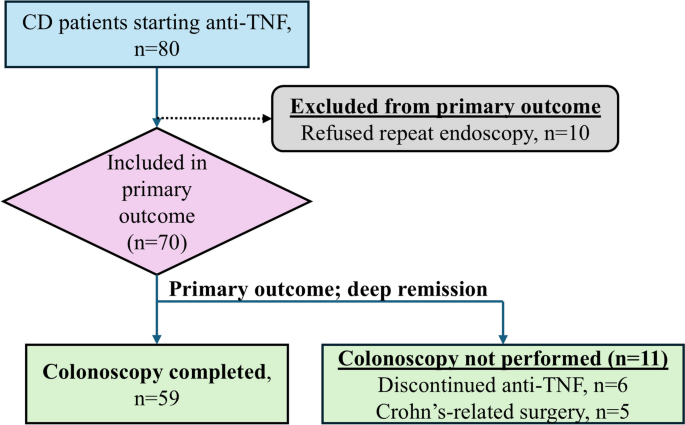
Pharmacometric Targets During Anti-TNF Induction and Their Association with Deep Remission in Pediatric Crohn’s Disease
Clinical Pharmacokinetics

Pharmacometric Targets During Anti-TNF Induction and Their Association with Deep Remission in Pediatric Crohn’s Disease

The study identifies specific induction exposure targets and biomarkers tied to higher chances of deep remission at 12 months in children on anti-TNF therapy, which could inform earlier dose optimization to improve...

Read Summary
Blood heavy metal and trace element levels in newly diagnosed cases of inflammatory bowel disease.
Pakistan journal of medical sciences

Blood heavy metal and trace element levels in newly diagnosed cases of inflammatory bowel disease.

The study suggests nickel accumulation and iron deficiency may be linked with more severe IBD. If confirmed, blood metal and micronutrient levels could help researchers understand disease mechanisms and guide nutritional...

Read Summary
Predictive Efficacy of Fecal Calprotectin Assay by Magnetic Particle Chemiluminescence for Mucosal Healing in Moderate-to-Severe Ulcerative Colitis Patients Undergoing Initial Biologic Therapy(PRECAL)
ClinicalTrials.gov

Predictive Efficacy of Fecal Calprotectin Assay by Magnetic Particle Chemiluminescence for Mucosal Healing in Moderate-to-Severe Ulcerative Colitis Patients Undergoing Initial Biologic Therapy(PRECAL)

If validated, an early drop in fecal calprotectin could help identify patients on biologic therapy who are likely to achieve mucosal healing without waiting for invasive endoscopy, allowing earlier decisions about...

Read Summary
Reduced fecal GP2 levels in ulcerative colitis associate with inflammatory activity and microbial composition.
Clinica chimica acta; international journal of clinical chemistry

Reduced fecal GP2 levels in ulcerative colitis associate with inflammatory activity and microbial composition.

If fecal GP2 reliably reflects UC activity and microbial changes, it could become a noninvasive marker to track inflammation or to study disease mechanisms that differ between UC and CD.

Read Summary
Crohn᾿s Disease and Ulcerative Colitis: The Role of Endoscopic, Hemogram-derived, Nutritional, and Hepatic Scores
Journal of Gastrointestinal and Liver Diseases

Crohn᾿s Disease and Ulcerative Colitis: The Role of Endoscopic, Hemogram-derived, Nutritional, and Hepatic Scores

Non-invasive biomarkers that reflect mucosal inflammation and systemic disease activity could help reduce reliance on frequent endoscopy and guide monitoring for people with Crohn’s disease or ulcerative colitis.

Read Summary
Underevaluation of bowel urgency in clinical care: patient experiences and outcomes in ulcerative colitis: a retrospective cohort study
Inflammatory Bowel Diseases

Underevaluation of bowel urgency in clinical care: patient experiences and outcomes in ulcerative colitis: a retrospective cohort study

Bowel urgency is a common symptom that may predict higher risk of treatment escalation, hospitalization, or surgery in UC even when bleeding and stool frequency look controlled. Better assessment of urgency in clinic...

Read Summary
Comparative performance of intestinal ultrasound activity indices in pediatric ulcerative colitis: a prospective study.
Journal of Crohn's & colitis

Comparative performance of intestinal ultrasound activity indices in pediatric ulcerative colitis: a prospective study.

Noninvasive monitoring matters for children with UC because endoscopy is burdensome. If ultrasound (and simple measures like bowel wall thickness) can reliably detect moderate-to-severe disease, families may avoid some...

Read Summary
Bowel Urgency in Ulcerative Colitis Is Associated With Clinical Endpoints, Health-Related Quality of Life, and Biomarkers: Data From the Etrasimod ELEVATE UC 52 Trial
Crohn's & Colitis 360

Bowel Urgency in Ulcerative Colitis Is Associated With Clinical Endpoints, Health-Related Quality of Life, and Biomarkers: Data From the Etrasimod ELEVATE UC 52 Trial

Bowel urgency is a common, disruptive UC symptom; this trial analysis shows urgency improvements with etrasimod track with clinical remission, endoscopic improvement, better quality of life, and lower inflammatory...

Read Summary
Current and novel biomarkers for predicting and assessing therapeutic response in inflammatory bowel disease: a systematic review.
Therapeutic advances in gastroenterology

Current and novel biomarkers for predicting and assessing therapeutic response in inflammatory bowel disease: a systematic review.

People with IBD and their clinicians want ways to predict which advanced therapy will work best. This review summarizes current evidence and shows that, despite many studies, no biomarker is reliably ready for routine...

Read Summary
Association Between the C-Reactive Protein-Albumin-Lymphocyte (CALLY) Index and Tissue-Confirmed Cytomegalovirus Colitis in Patients with Active Ulcerative Colitis
Diagnostics

Association Between the C-Reactive Protein-Albumin-Lymphocyte (CALLY) Index and Tissue-Confirmed Cytomegalovirus Colitis in Patients with Active Ulcerative Colitis

CMV reactivation can worsen outcomes in active UC and influence treatment choices; clinicians and patients may benefit from additional, easy-to-measure markers that flag higher risk of tissue CMV and prompt targeted...

Read Summary
Evaluation of serum human galectin 3 as a marker of activity in inflammatory bowel disease in comparison to fecal calprotectin.
The Egyptian journal of immunology

Evaluation of serum human galectin 3 as a marker of activity in inflammatory bowel disease in comparison to fecal calprotectin.

Noninvasive blood biomarkers that track IBD activity could reduce reliance on repeat endoscopy. If validated, serum galectin‑3 might complement fecal calprotectin and CRP to help identify active disease.

Read Summary
Machine Learning-Based Prediction of Treatment Response to Vitamin D3 in Adolescents and Young Adults with Inflammatory Bowel Disease: A Prospective, Open-Label, Alternation-Based Comparative Study
Biomedicines

Machine Learning-Based Prediction of Treatment Response to Vitamin D3 in Adolescents and Young Adults with Inflammatory Bowel Disease: A Prospective, Open-Label, Alternation-Based Comparative Study

Vitamin D supplementation is commonly considered in people with IBD because deficiency is frequent and low vitamin D may relate to inflammation.

Read Summary
Effectiveness and Safety of Mirikizumab in Patients With Moderate-to-severe Ulcerative Colitis: a Real-life Retrospective Multicenter Study
ClinicalTrials.gov

Effectiveness and Safety of Mirikizumab in Patients With Moderate-to-severe Ulcerative Colitis: a Real-life Retrospective Multicenter Study

This study reports real-world data on mirikizumab in adults with ulcerative colitis, focusing on clinical and endoscopic remission and inflammatory markers — outcomes patients and clinicians use to judge treatment...

Read Summary
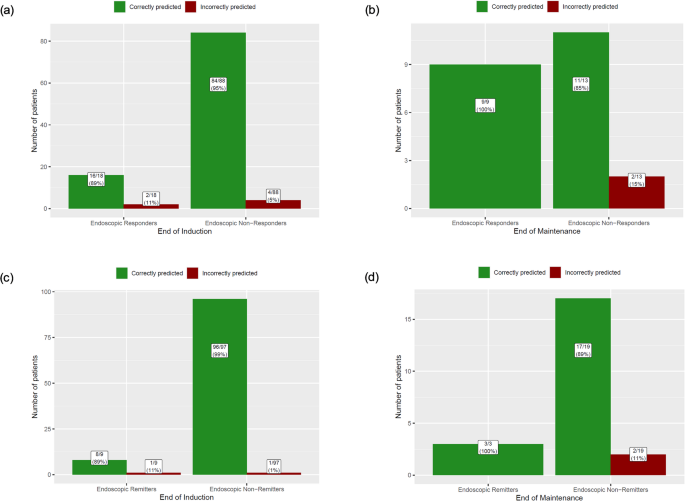
A Longitudinal Disease Progression Model Characterizing Endoscopic Response and Remission in Crohn's Disease.
Journal of pharmacokinetics and pharmacodynamics

A Longitudinal Disease Progression Model Characterizing Endoscopic Response and Remission in Crohn's Disease.

Understanding and quantifying placebo-driven endoscopic changes can improve design and interpretation of Crohn’s disease trials, which may ultimately speed development of effective therapies and clarify who benefits from...

Read Summary
A very common vitamin has surprised scientists and is forcing them to rethink how to manage inflammation in Crohn’s disease and colitis
okdiario.com

A very common vitamin has surprised scientists and is forcing them to rethink how to manage inflammation in Crohn’s disease and colitis

The study suggests vitamin D might help the immune system tolerate gut bacteria better and lower intestinal inflammation, which could mean fewer symptoms or flares for people with Crohn’s disease or ulcerative colitis.

Read Summary
Ventyx Biosciences Announces Presentation of Data from the Phase 2 Trial of Allosteric TYK2 Inhibitor VTX958 in Crohn’s Disease at ECCO 2025
markets.businessinsider.com

Ventyx Biosciences Announces Presentation of Data from the Phase 2 Trial of Allosteric TYK2 Inhibitor VTX958 in Crohn’s Disease at ECCO 2025

This reports Phase 2 clinical data for an oral TYK2 inhibitor (VTX958) in Crohn’s disease — a potential new oral treatment approach. The drug showed meaningful endoscopic improvements and reductions in inflammatory...

Read Summary