Article Archive

Page 73 of 100 · 4798 patient-friendly summaries

Treatable traits in inflammatory bowel disease: a conceptual framework for personalized care.
EClinicalMedicine

Treatable traits in inflammatory bowel disease: a conceptual framework for personalized care.

A treatable-traits approach could help tailor IBD care to each patient by targeting specific biological, comorbid, and psychosocial drivers of disease and quality-of-life impairment, potentially improving how we choose...


Read Summary
Lactiplantibacillus plantarum as a multifunctional probiotic for inflammatory bowel disease: Mechanisms, synbiotic strategies, and delivery systems.
Synthetic and systems biotechnology

Lactiplantibacillus plantarum as a multifunctional probiotic for inflammatory bowel disease: Mechanisms, synbiotic strategies, and delivery systems.

People with IBD may be interested because the review describes a probiotic (L. plantarum) and synbiotic approaches that could influence gut inflammation, barrier function, and microbiota—areas directly relevant to IBD...

Read Summary
Chirality-dependent toxicity decoupling: Discovery of a resibufogenin-based L-configured STING inhibitor with superior therapeutic profile for ulcerative colitis.
European journal of medicinal chemistry

Chirality-dependent toxicity decoupling: Discovery of a resibufogenin-based L-configured STING inhibitor with superior therapeutic profile for ulcerative colitis.

Targeting STING may reduce inflammatory signaling that contributes to ulcerative colitis; a safer, more potent STING inhibitor could become a new therapeutic approach if later-stage studies confirm benefit and safety.

Read Summary
Response-aware molecular subtyping of ulcerative colitis for patient stratification via interpretable machine learning.
Computational biology and chemistry

Response-aware molecular subtyping of ulcerative colitis for patient stratification via interpretable machine learning.

This research links molecular subtypes of ulcerative colitis to infliximab (anti-TNF) response using an interpretable machine-learning method, which could help identify which patients are more or less likely to respond...

Read Summary
Artificial Intelligence in the Nutritional Management of Inflammatory Bowel Disease: A Scoping Review.
Journal of multidisciplinary healthcare

Artificial Intelligence in the Nutritional Management of Inflammatory Bowel Disease: A Scoping Review.

AI could help identify dietary patterns, predict which patients might benefit from specific nutrition approaches, and provide personalized nutrition support — potentially improving inflammation and gut microbiome...

Read Summary
A natural product-based pH-responsive hydrogel nanoplatform for ulcerative colitis therapy via synchronous regulation of immune microenvironment and intestinal barrier.
Colloids and surfaces. B, Biointerfaces

A natural product-based pH-responsive hydrogel nanoplatform for ulcerative colitis therapy via synchronous regulation of immune microenvironment and intestinal barrier.

This research describes a new nanoparticle/hydrogel delivery system that reduced inflammation and helped restore the intestinal barrier in mouse models of ulcerative colitis. It suggests a potential future therapeutic...

Read Summary
Roxadustat-loaded pH-sensitive Anionic Liposomes Ameliorating Experimental Colitis in Mice: Formulation, Cellular Uptake and In vivo Evaluation.
Current drug delivery

Roxadustat-loaded pH-sensitive Anionic Liposomes Ameliorating Experimental Colitis in Mice: Formulation, Cellular Uptake and In vivo Evaluation.

This preclinical study reports a new pH-sensitive liposomal formulation that increased intestinal delivery and anti-inflammatory effects of roxadustat in animal models of colitis, which could be relevant to future oral...

Read Summary
Unraveling the probiotic evidence: how Lactobacillus pentosus from fermented vegetables alleviates colitis by enlisting muribaculum to boost host phosphatidylcholine biosynthesis.
Food & function

Unraveling the probiotic evidence: how Lactobacillus pentosus from fermented vegetables alleviates colitis by enlisting muribaculum to boost host phosphatidylcholine biosynthesis.

This study identifies a specific probiotic–commensal interaction that improved colitis in mice and points to a metabolite (phosphatidylcholine) and metabolic pathway that might help repair the gut barrier — a pathway...

Read Summary
Oxidative Stress in Inflammatory Bowel Disease: From Redox Dysregulation to Translational Targeting
Antioxidants

Oxidative Stress in Inflammatory Bowel Disease: From Redox Dysregulation to Translational Targeting

Oxidative stress may help explain some biological drivers of inflammation in Crohn’s disease and ulcerative colitis and could become a target for biomarkers or therapies in the future. Right now, the evidence is...

Read Summary
Cryptogenic Multifocal Ulcerating Stenosing Enteritis (CMUSE) in a Patient with Down Syndrome: A Case Report
Reports — Medical Cases Images and Videos

Cryptogenic Multifocal Ulcerating Stenosing Enteritis (CMUSE) in a Patient with Down Syndrome: A Case Report

CMUSE can closely mimic Crohn's disease and may require surgery for diagnosis and symptom relief. Recognizing it can change diagnostic pathways and multidisciplinary management for people with recurrent small-bowel...

Read Summary
Patchouli alcohol protects against ulcerative colitis by alleviating ER stress and dysbiosis-mediated intestinal epithelial injury
Chinese Journal of Natural Medicines

Patchouli alcohol protects against ulcerative colitis by alleviating ER stress and dysbiosis-mediated intestinal epithelial injury

Based on the title and source metadata, this appears to be a basic science related to Ulcerative colitis, Inflammatory bowel disease, and Research and clinical trials. The original article is from Chinese Journal of...

Read Summary
The ‘Cross‐Trust’ Histopathology Multidisciplinary Team: Report of meeting outputs and impact on paediatric inflammatory bowel disease management in a UK tertiary centre
JPGN Reports

The ‘Cross‐Trust’ Histopathology Multidisciplinary Team: Report of meeting outputs and impact on paediatric inflammatory bowel disease management in a UK tertiary centre

A cross‑trust histopathology MDT helped reclassify diagnoses in a substantial proportion of discussed paediatric IBD cases and occasionally changed management or transition planning, which could affect treatment...

Read Summary
Changyanqing decoction ameliorates ulcerative colitis via PI3K-Akt pathway: Insights from network pharmacology and in-vitro validation.
Pakistan journal of pharmaceutical sciences

Changyanqing decoction ameliorates ulcerative colitis via PI3K-Akt pathway: Insights from network pharmacology and in-vitro validation.

Patients and clinicians often ask whether herbal formulas or plant compounds can help IBD. This preclinical study identifies quercetin and the PI3K–Akt pathway as potential mechanisms, which may guide future research...

Read Summary

JAK and TYK2 inhibitors differentially modulate interferon/TNF-driven inflammation, stemness and proliferation in the colonic epithelium of ulcerative colitis

The study suggests JAK and TYK2 inhibitors can directly change epithelial inflammatory signaling and proliferation in UC, which may be relevant to healing of the gut lining and how different drugs work beyond immune...

Read Summary
Synergistic synbiotic therapies for ulcerative colitis: mechanistic insights from multi-targeted pathways in animal models
Inflammopharmacology

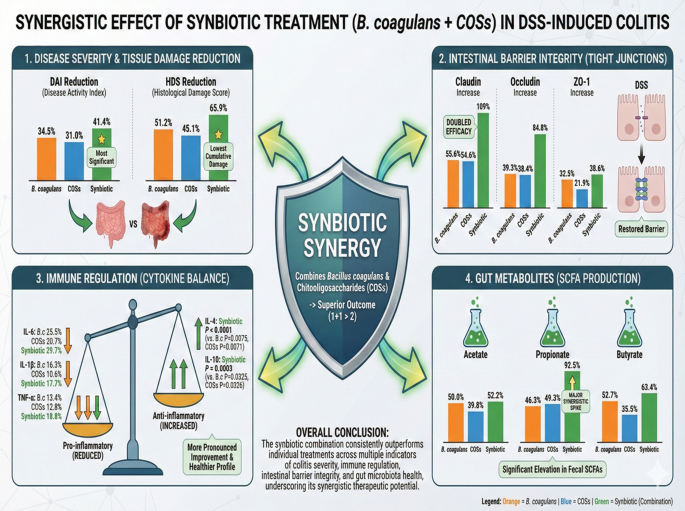
Synergistic synbiotic therapies for ulcerative colitis: mechanistic insights from multi-targeted pathways in animal models

People with ulcerative colitis may be interested because synbiotic approaches aim to change the gut microbiome and intestinal barrier and therefore could become a future therapeutic option or adjunct. The paper...

Read Summary
Beyond the drug maze: Ustekinumab in ulcerative colitis for a successful pregnancy
Adesh University Journal of Medical Sciences & Research

Beyond the drug maze: Ustekinumab in ulcerative colitis for a successful pregnancy

People with UC who need biologic therapy during conception or pregnancy often face limited evidence about safety and effectiveness; this case suggests ustekinumab may be an option when other drugs fail or are stopped for...

Read Summary
Therapeutic efficacy of the cyanobacterium Leptolyngbya cf. ectocarpi in experimental toxic hepatitis and inflammatory bowel disease in mice
Сибирский научный медицинский журнал

Therapeutic efficacy of the cyanobacterium Leptolyngbya cf. ectocarpi in experimental toxic hepatitis and inflammatory bowel disease in mice

The paper describes a potential new anti-inflammatory/hepatoprotective candidate (a cyanobacterium extract) tested in mouse models of liver injury and IBD — early-stage research that could guide future studies but is not...

Read Summary
Loss of TGR5-activating bile acids is associated with disease activity in inflammatory bowel disease
Scientific Reports

Loss of TGR5-activating bile acids is associated with disease activity in inflammatory bowel disease

The paper suggests that loss of microbial bile acid transformations in IBD reduces activation of the TGR5 receptor, and that lower TGR5 bioactivity correlates with higher inflammatory activity — a potential mechanism...

Read Summary
From tissue to blood: an integrated multi-omics signature identifies fibrogenesis and neutrophil activation as key drivers of ulcerative colitis severity
Frontiers in Immunology

From tissue to blood: an integrated multi-omics signature identifies fibrogenesis and neutrophil activation as key drivers of ulcerative colitis severity

The study links tissue and blood molecular changes to UC severity, suggesting candidate mechanisms (fibrogenesis, neutrophil activation) that could lead to biomarkers or new therapeutic targets. Understanding severity...

Read Summary
Callistephus A from Callistephus chinensis Alleviates DSS-Induced Ulcerative Colitis and Gut-liver Axis Disruption by Targeting the JAK2/STAT1 Pathway and Remodeling Gut Microbiota.
Journal of ethnopharmacology

Callistephus A from Callistephus chinensis Alleviates DSS-Induced Ulcerative Colitis and Gut-liver Axis Disruption by Targeting the JAK2/STAT1 Pathway and Remodeling Gut Microbiota.

The study identifies a plant-derived compound that reduced inflammation and liver injury in a mouse model of ulcerative colitis and ties its effects to both JAK2/STAT1 inhibition and changes in the gut microbiota—two...

Read Summary
The Diagnostic Accuracy of Fecal Calprotectin for Colonoscopic Abnormalities in Patients With Chronic Diarrhea.
Journal of gastroenterology and hepatology

The Diagnostic Accuracy of Fecal Calprotectin for Colonoscopic Abnormalities in Patients With Chronic Diarrhea.

Fecal calprotectin measured by a point‑of‑care CGICA assay showed high accuracy for identifying colorectal inflammation and IBD in patients with chronic diarrhea, which could help avoid some unnecessary colonoscopies...

Read Summary
Meta-analysis: safety and efficacy of ustekinumab in pediatric inflammatory bowel disease patients with anti-TNF failure.
BMC gastroenterology

Meta-analysis: safety and efficacy of ustekinumab in pediatric inflammatory bowel disease patients with anti-TNF failure.

This review pools available pediatric data showing ustekinumab can induce and maintain remission after anti‑TNF failure, offering a treatment option for children with refractory IBD. Results are most robust for Crohn’s...

Read Summary
Contribution of the appendix to ulcerative colitis by supplying pathogenic immunoglobulin G-producing cells
World Journal of Gastroenterology

Contribution of the appendix to ulcerative colitis by supplying pathogenic immunoglobulin G-producing cells

If the appendix is a significant source of harmful IgG antibodies in ulcerative colitis, that could help explain why appendectomy sometimes reduces UC risk or severity and might influence future therapies targeting...

Read Summary
Clinical characteristics and treatment patterns of older and younger patients with inflammatory bowel disease
World Journal of Gastroenterology

Clinical characteristics and treatment patterns of older and younger patients with inflammatory bowel disease

This study suggests that older-onset IBD is managed more conservatively and experiences fewer extraintestinal manifestations. Patients and clinicians should be aware that age can influence treatment choices and that...

Read Summary
Intestinal toxicity of functionalized polystyrene nanoplastics in NOD2 models of Crohn’s disease susceptibility
Frontiers in Toxicology

Intestinal toxicity of functionalized polystyrene nanoplastics in NOD2 models of Crohn’s disease susceptibility

The study suggests nanoplastic particles can alter intestinal barrier function, goblet cells, mucin secretion, and inflammation-related gene expression in models with genetic susceptibility to Crohn’s disease.

Read Summary
Orally Delivered Nanotherapeutics with miRNA-497 Supplying for Inflammatory Bowel Disease.
ACS applied materials & interfaces

Orally Delivered Nanotherapeutics with miRNA-497 Supplying for Inflammatory Bowel Disease.

Researchers are exploring targeted nanodelivery of miR-497 to reduce oxidative stress and shift immune cells toward tissue-repairing states — a novel preclinical strategy that could eventually lead to new treatments for...

Read Summary
Crohn᾿s Disease and Ulcerative Colitis: The Role of Endoscopic, Hemogram-derived, Nutritional, and Hepatic Scores
Journal of Gastrointestinal and Liver Diseases

Crohn᾿s Disease and Ulcerative Colitis: The Role of Endoscopic, Hemogram-derived, Nutritional, and Hepatic Scores

Non-invasive biomarkers that reflect mucosal inflammation and systemic disease activity could help reduce reliance on frequent endoscopy and guide monitoring for people with Crohn’s disease or ulcerative colitis.

Read Summary
Targeted β‐Glucan‐Veiled Oral Apremilast Nanotherapy Modulates Key Dysbiosis‐Associated Gut Microbiota and Alleviates Ulcerative Colitis‐Associated Anxiety, Depression, and Neuropsychiatric Behaviors
Advanced Science

Targeted β‐Glucan‐Veiled Oral Apremilast Nanotherapy Modulates Key Dysbiosis‐Associated Gut Microbiota and Alleviates Ulcerative Colitis‐Associated Anxiety, Depression, and Neuropsychiatric Behaviors

The study describes a new oral nanotherapy that delivered apremilast to the inflamed colon in mice and reportedly reduced gut inflammation and behaviors resembling anxiety/depression—suggesting a combined...

Read Summary
Colon-targeting pH-responsive Bletilla striata polysaccharide coacervate microdroplets for ulcerative colitis therapy via macrophage reprogramming
Journal of Nanobiotechnology

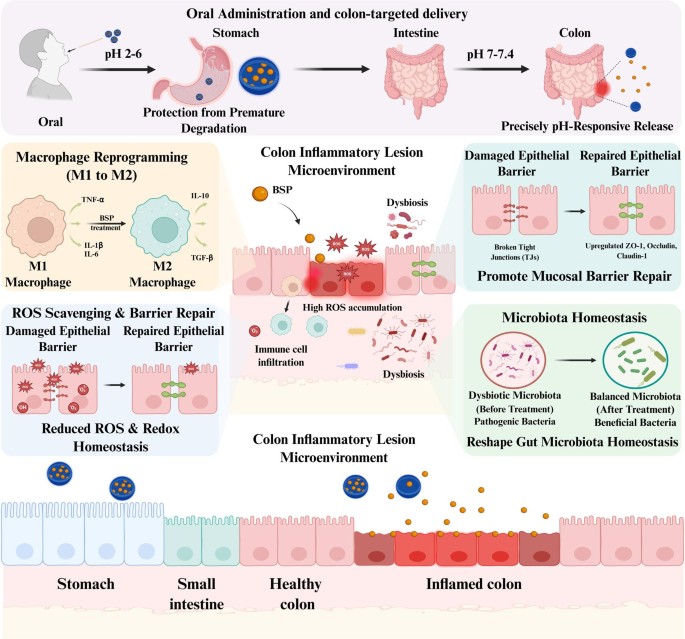
Colon-targeting pH-responsive Bletilla striata polysaccharide coacervate microdroplets for ulcerative colitis therapy via macrophage reprogramming

The study describes a new oral, colon‑targeted delivery system that improved outcomes in a mouse model of ulcerative colitis and shifted immune and microbiome markers—research that could inform future therapies focused...

Read Summary
A Phase 2 Study to Evaluate MORF-057 in Adults With Moderately to Severely Active Crohn's Disease
ClinicalTrials.gov

A Phase 2 Study to Evaluate MORF-057 in Adults With Moderately to Severely Active Crohn's Disease

This trial tests an oral integrin α4β7 inhibitor for Crohn’s disease, a new small-molecule approach aiming to block gut-specific immune cell trafficking similar to existing biologic anti‑integrin drugs. If effective and...

Read Summary
Mirikizumab Administered at the Same Time as Tirzepatide in Adult Participants With Moderately to Severely Active Ulcerative Colitis and Obesity or Overweight: Phase 3b Study
ClinicalTrials.gov

Mirikizumab Administered at the Same Time as Tirzepatide in Adult Participants With Moderately to Severely Active Ulcerative Colitis and Obesity or Overweight: Phase 3b Study

Combining a UC biologic (mirikizumab) with a weight-loss drug (tirzepatide) could address both intestinal inflammation and excess weight, which may be important for people with moderately to severely active ulcerative...

Read Summary
A Study of Eltrekibart and Mirikizumab in Adult Patients With Moderately to Severely Active Ulcerative Colitis
ClinicalTrials.gov

A Study of Eltrekibart and Mirikizumab in Adult Patients With Moderately to Severely Active Ulcerative Colitis

This trial tests two investigational agents (eltrekibart and mirikizumab) for moderate–severe ulcerative colitis, which may offer additional treatment options if proven safe and effective. It’s relevant to people whose...

Read Summary
Artificial intelligence in inflammatory bowel disease: From current evidence, clinical translation, and the road to precision medicine.
Chinese medical journal

Artificial intelligence in inflammatory bowel disease: From current evidence, clinical translation, and the road to precision medicine.

AI could help make assessments (endoscopy, histology, imaging) more objective and combine complex data to better predict disease course—potentially improving personalized care planning for people with IBD.

Read Summary
Lactobacillus pentosus Unraveling the probiotic evidence: howfrom fermented vegetables alleviates colitis by enlisting muribaculum to boost host phosphatidylcholine biosynthesis.
Food & function

Lactobacillus pentosus Unraveling the probiotic evidence: howfrom fermented vegetables alleviates colitis by enlisting muribaculum to boost host phosphatidylcholine biosynthesis.

This study suggests a specific probiotic strain may help reduce colitis in mice by changing the gut microbiome and boosting host phosphatidylcholine production — a pathway that could be relevant to gut barrier repair in...

Read Summary