Condition

Crohn's disease

Crohn's disease news across medications, symptoms, tests, procedures, complications, research, access, and daily life.

Page 20 of 53 · 2518 articles

Switching to the IL-23 Inhibitor Guselkumab for People With Active IBD Who Previously Used Ustekinumab (SHIFT-IBD)
ClinicalTrials.gov

Switching to the IL-23 Inhibitor Guselkumab for People With Active IBD Who Previously Used Ustekinumab (SHIFT-IBD)

People with IBD who don’t respond well to ustekinumab may need alternative options. This study will track how patients fare after switching to guselkumab in routine clinical care and report rates of deep remission at one...

Read Summary
A Study Comparing Transperineal Ultrasound, Magnetic Resonance Imaging, Endoscopic Ultrasound, and Examination Under Anesthesia to Detect and Classify Perianal Fistulas in Patients With Crohn's Disease or Fistulas of Unknown Cause
ClinicalTrials.gov

A Study Comparing Transperineal Ultrasound, Magnetic Resonance Imaging, Endoscopic Ultrasound, and Examination Under Anesthesia to Detect and Classify Perianal Fistulas in Patients With Crohn's Disease or Fistulas of Unknown Cause

Perianal fistulas are a common, often debilitating complication of Crohn's disease that require accurate imaging to guide medical and surgical care. If TPUS performs well, it could offer a faster, lower-cost,...

Read Summary
Pilot Study Investigating the Safety and Efficacy of Metallic Stent Insertion for Ileocolonic Anastomotic Strictures Related to Crohn's Disease: A Study Protocol.
The Kurume medical journal

Pilot Study Investigating the Safety and Efficacy of Metallic Stent Insertion for Ileocolonic Anastomotic Strictures Related to Crohn's Disease: A Study Protocol.

People with Crohn’s disease who develop narrowing at an ileocolonic surgical anastomosis often need repeated dilation or surgery. This pilot study tests using a self-expandable metallic stent (SEMS) as a possible...

Read Summary
Disrupted Functional Network Organization in Crohn's Disease: Interoceptive Alterations Linked to Anxiety
CNS Neuroscience & Therapeutics

Disrupted Functional Network Organization in Crohn's Disease: Interoceptive Alterations Linked to Anxiety

The study suggests Crohn’s disease is associated with altered brain network organization in regions involved in sensing the body and emotions; anxiety appears to modulate these brain circuits. This could help explain why...

Read Summary
Simultaneous DOTATATE uptake in three non-neuroendocrine pathologies: Follicular lymphoma, Crohn’s disease, and vertebral hemangioma
Radiology Case Reports

Simultaneous DOTATATE uptake in three non-neuroendocrine pathologies: Follicular lymphoma, Crohn’s disease, and vertebral hemangioma

DOTATATE PET/CT can show uptake in non‑neuroendocrine diseases, which may lead to misdiagnosis or unnecessary treatments if imaging findings are not confirmed. People with Crohn's disease or other abdominal pathology who...

Read Summary
Management of Arthritis Associated with Inflammatory Bowel Disease (IBD): A Systematic Review of Conventional and Targeted Therapies
International Journal of Health and Pharmaceutical (IJHP)

Management of Arthritis Associated with Inflammatory Bowel Disease (IBD): A Systematic Review of Conventional and Targeted Therapies

Arthritis is a common and meaningful extraintestinal problem for people with IBD; understanding diagnosis and treatment options can help patients and clinicians seek appropriate multidisciplinary care.

Read Summary
Batatasin III alleviates inflammatory bowel disease by suppressing MMP7 and NFκB signaling in macrophages and restoring gut microbial balance
Scientific Reports

Batatasin III alleviates inflammatory bowel disease by suppressing MMP7 and NFκB signaling in macrophages and restoring gut microbial balance

The study identifies a new compound that reduced colitis severity in mice by acting on macrophage NF-κB signaling, lowering MMP7, improving epithelial barrier markers, and altering the gut microbiome — mechanisms...

Read Summary
Temporal Trends and Socio-Demographic Disparities in Inflammatory Bowel Disease: Insights from the Global Burden of Disease Study 2021
Digestive Diseases and Sciences

Temporal Trends and Socio-Demographic Disparities in Inflammatory Bowel Disease: Insights from the Global Burden of Disease Study 2021

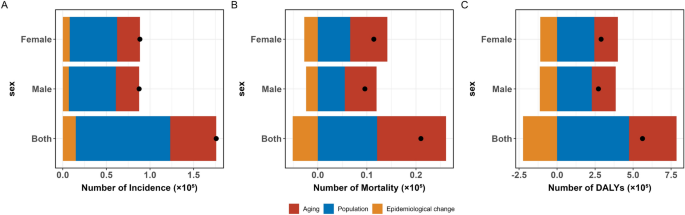
This large, population-level analysis summarizes long-term global trends in IBD burden and shows rising incidence and persistent geographic and socio-demographic inequalities. Patients and clinicians may see why...

Read Summary
Computational identification and experimental validation of shared diagnostic biomarkers and gene signatures across HLA-B27-associated immune-mediated diseases
Journal of Translational Medicine

Computational identification and experimental validation of shared diagnostic biomarkers and gene signatures across HLA-B27-associated immune-mediated diseases

The work searches for shared blood-based gene signatures and biomarkers across HLA-B27–linked diseases (including Crohn’s disease and ulcerative colitis), which could point to common mechanisms or cross-disease...

Read Summary
Interaction between Chinese olive (Canarium album L.) polyphenols and gut microbiota: Potential implications for inflammatory bowel disease.
Journal of the science of food and agriculture

Interaction between Chinese olive (Canarium album L.) polyphenols and gut microbiota: Potential implications for inflammatory bowel disease.

The study suggests that polyphenols can change gut bacteria and metabolite production differently in people with IBD versus healthy controls, which could matter for designing personalized dietary interventions.

Read Summary
Efficacy, safety and outcome of selective IL-23 inhibitor risankizumab in induction and maintenance of CD and ulcerative colitis
Medicine

Efficacy, safety and outcome of selective IL-23 inhibitor risankizumab in induction and maintenance of CD and ulcerative colitis

A systematic review finds risankizumab (an IL-23 inhibitor) effective and generally well tolerated for moderate-to-severe Crohn's disease and ulcerative colitis, including in patients who failed prior biologics. This...

Read Summary
Predictive value of epithelial lesion heterogeneity in the etiological diagnosis of chronic inflammatory bowel disease
BMC Gastroenterology

Predictive value of epithelial lesion heterogeneity in the etiological diagnosis of chronic inflammatory bowel disease

Distinguishing UC from Crohn’s colitis can be challenging but affects long-term management and surveillance. A histologic feature—homogeneity versus heterogeneity of epithelial lesions across biopsies—might help improve...

Read Summary
Wearable perspiration sensor for continuous inflammation tracking in inflammatory bowel disease.
Inflammatory bowel diseases

Wearable perspiration sensor for continuous inflammation tracking in inflammatory bowel disease.

A wearable sensor that reliably measures inflammation markers (CRP and calprotectin) from sweat could make inflammation monitoring less invasive and more frequent for people with IBD, potentially helping detect flares...

Read Summary
Targeting the TL1A pathway in inflammatory bowel disease: mechanistic insights and emerging therapeutic pipeline.
Inflammatory bowel diseases

Targeting the TL1A pathway in inflammatory bowel disease: mechanistic insights and emerging therapeutic pipeline.

Anti‑TL1A drugs represent a new mechanism with phase 2 signals for clinical remission and endoscopic response in both UC and Crohn's disease, plus early biomarker evidence suggesting antifibrotic effects—areas directly...

Read Summary
Reporting and representation of participant race, ethnicity, and sex in pediatric IBD clinical trials.
Inflammatory bowel diseases

Reporting and representation of participant race, ethnicity, and sex in pediatric IBD clinical trials.

Clinical trials shape available treatments and evidence; if groups of children (by race, ethnicity, or sex) are underrepresented, study results may not reflect how treatments work for them. This paper identifies...

Read Summary
Clinical Outcomes After Ustekinumab Biosimilar Switching in Crohn's Disease: the USBIOS IG-IBD Study.
Clinical gastroenterology and hepatology : the official clinical practice journal of the American Gastroenterological Association

Clinical Outcomes After Ustekinumab Biosimilar Switching in Crohn's Disease: the USBIOS IG-IBD Study.

If you’re stable on ustekinumab for Crohn’s disease, this multicenter study found that switching to an approved biosimilar produced similar 6-month remission and safety outcomes to staying on the original product. That...

Read Summary
Early Use of Anti-Tumor Necrosis Factor Therapy for Penetrating Complications in Children With Crohn's Disease: Multicenter Insight to a Challenging Clinical Problem
The American Journal of Gastroenterology

Early Use of Anti-Tumor Necrosis Factor Therapy for Penetrating Complications in Children With Crohn's Disease: Multicenter Insight to a Challenging Clinical Problem

Cure8 could only read part of this source from The American Journal of Gastroenterology, so this card uses cautious topic tags instead of a full summary. It is tagged for Crohn's disease, Inflammatory bowel disease, and...

Read Summary
A Study to Generate Real-world Evidence of Guselkumab Effectiveness in Inflammatory Bowel Disease in Germany
ClinicalTrials.gov

A Study to Generate Real-world Evidence of Guselkumab Effectiveness in Inflammatory Bowel Disease in Germany

This study will gather real‑world effectiveness and patient‑reported outcome data for guselkumab in adults with moderate‑to‑severe Crohn’s disease or ulcerative colitis, which may help clinicians and patients understand...

Read Summary
A Study to Observe Real-world Evidence of Guselkumab Treatment in Participants With Ulcerative Colitis and Crohn's Disease in the United Kingdom (UK)
ClinicalTrials.gov

A Study to Observe Real-world Evidence of Guselkumab Treatment in Participants With Ulcerative Colitis and Crohn's Disease in the United Kingdom (UK)

Patients and clinicians considering guselkumab for Crohn’s disease or ulcerative colitis may gain real-world evidence on how the drug performs across treatment lines and subgroups over up to 96 weeks. The study will...

Read Summary
A Multicenter, Prospective, Long-term, Observational Registry of Pediatric Patients With Inflammatory Bowel Disease
ClinicalTrials.gov

A Multicenter, Prospective, Long-term, Observational Registry of Pediatric Patients With Inflammatory Bowel Disease

This registry will track long-term safety and clinical outcomes in children with IBD, with a focus on infliximab (an anti‑TNF biologic) versus non‑biologic therapies. Long follow-up could help identify uncommon or late...

Read Summary
A novel inflammatory bowel disease registry powered by artificial intelligence and natural language processing.
PLOS digital health

A novel inflammatory bowel disease registry powered by artificial intelligence and natural language processing.

Registries that automatically extract clinical data with AI/NLP can speed research, help identify patient cohorts for studies or trials, and may eventually support better clinical decision-making for people with IBD....

Read Summary
Finetuning Foundation Models for Temporal Clinical Transcriptomics Data.
Bioinformatics (Oxford, England)

Finetuning Foundation Models for Temporal Clinical Transcriptomics Data.

Researchers working on IBD molecular mechanisms or biomarker discovery may find this AI-driven approach useful because it can detect temporal gene-expression patterns and suggest pathways linked to treatment response...

Read Summary