Patient groups

Pediatric Patients

Articles focused on children and teens with Crohn's disease or IBD, including pediatric research, care, and family context.

Page 2 of 6 · 252 articles

Decoding Personalized Nutritional, Microbiome and Host Patterns Impacting Clinical and Prognostic Features in Crohn's Disease
ClinicalTrials.gov

Decoding Personalized Nutritional, Microbiome and Host Patterns Impacting Clinical and Prognostic Features in Crohn's Disease

Understanding how individual diet and microbiome patterns relate to disease activity could help create personalized dietary approaches for children with Crohn's disease and improve monitoring using home fecal...

Read Summary
B.C. couple gives $10 million gift for digestive health centre at St. Paul's Hospital - Vancouver Sun
vancouversun.com

B.C. couple gives $10 million gift for digestive health centre at St. Paul's Hospital - Vancouver Sun

A dedicated Digestive Health Centre could make it easier for people with IBD (including children and teens) to access coordinated care—fewer separate visits and more centralized specialist services in one location.

Read Summary
A Practical Approach to Abnormal Liver Enzymes in Pediatric IBD in the Biologic and Targeted Therapy Era.
Clinics and research in hepatology and gastroenterology

A Practical Approach to Abnormal Liver Enzymes in Pediatric IBD in the Biologic and Targeted Therapy Era.

Abnormal liver tests are common in children with IBD and can come from many causes, including the disease itself or the medicines used to treat it. A practical approach helps avoid stopping effective IBD therapy...

Read Summary
Improving Endoscopic Scoring Accuracy in Pediatric Inflammatory Bowel Disease: Impact of a Focused Training Intervention
Endoscopy International Open

Improving Endoscopic Scoring Accuracy in Pediatric Inflammatory Bowel Disease: Impact of a Focused Training Intervention

Consistent, accurate endoscopic scoring matters for treatment decisions and trial outcomes in pediatric IBD. If focused training meaningfully improves scoring—especially for SES‑CD—it could reduce variability in clinical...

Read Summary
Anti-TNF-refractory inflammatory bowel disease associated with a novel XIAP frameshift variant successfully treated with ustekinumab.
Clinical journal of gastroenterology

Anti-TNF-refractory inflammatory bowel disease associated with a novel XIAP frameshift variant successfully treated with ustekinumab.

Identifying a genetic cause (XIAP frameshift variant) helped explain why anti‑TNF drugs failed and why blocking IL‑12/23 with ustekinumab led to improvement; that connection could influence treatment choices for similar...

Read Summary
Upadacitinib treatment in pediatric Crohn's disease: 52-week outcomes of an international multicenter retrospective cohort study from the pediatric IBD Porto Group of ESPGHAN.
Journal of Crohn's & colitis

Upadacitinib treatment in pediatric Crohn's disease: 52-week outcomes of an international multicenter retrospective cohort study from the pediatric IBD Porto Group of ESPGHAN.

This study gives real-world 52‑week data on upadacitinib maintenance in children with refractory Crohn's disease, showing meaningful remission rates but also notable adverse events. That balance is important for families...

Read Summary
Clinical phenotypes of very early onset inflammatory bowel disease in Australian children: A single-centre retrospective study.
Journal of pediatric gastroenterology and nutrition

Clinical phenotypes of very early onset inflammatory bowel disease in Australian children: A single-centre retrospective study.

VEO-IBD often presents with severe, extensive disease and can include monogenic causes and early hepatobiliary complications; knowing common presentations and early management patterns helps families and clinicians plan...

Read Summary
Disability in pediatric inflammatory bowel diseases: A systematic review and a single center experience
Journal of Pediatric Gastroenterology and Nutrition

Disability in pediatric inflammatory bowel diseases: A systematic review and a single center experience

Disability and functional limitations (school, sports, travel, diet) are common early after pediatric IBD diagnosis and can persist for some children even after clinical remission. Recognizing and measuring disability...

Read Summary
Machine Learning Predicts First Elective Bowel Resection in Newly Diagnosed Pediatric Crohn Disease Patients.
Journal of pediatric surgery

Machine Learning Predicts First Elective Bowel Resection in Newly Diagnosed Pediatric Crohn Disease Patients.

Predicting which children with Crohn disease will need surgery — and roughly when — could help families and clinicians plan treatments, monitoring, and discussions about elective bowel resection earlier in the disease...

Read Summary
Appropriate screening strategy and timely referral in suspected pediatric inflammatory bowel disease: Impact on diagnostic delay and severity at presentation.
Journal of pediatric gastroenterology and nutrition

Appropriate screening strategy and timely referral in suspected pediatric inflammatory bowel disease: Impact on diagnostic delay and severity at presentation.

Delays and incomplete pre-referral screening are common in pediatric IBD and can affect how sick children are when they first see specialists. Better, standardized use of fecal calprotectin and abdominal ultrasound...

Read Summary
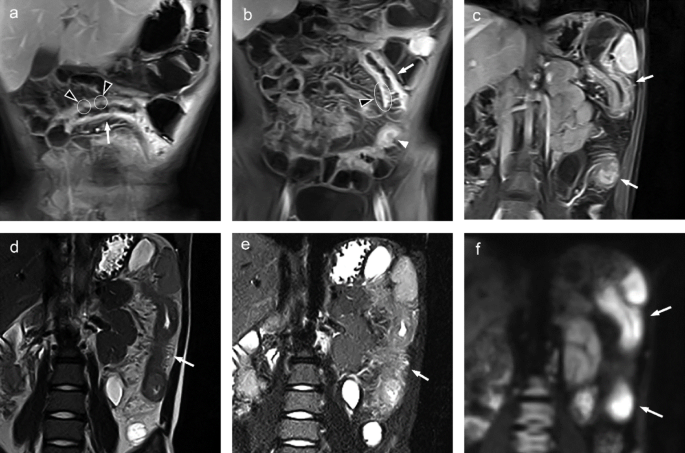
Clinical utility of magnetic resonance enterography for pediatric Crohn’s disease: a review with illustrative cases and a focus on Japan
Japanese Journal of Radiology

Clinical utility of magnetic resonance enterography for pediatric Crohn’s disease: a review with illustrative cases and a focus on Japan

MRE is a key radiation-free imaging tool for children with Crohn’s disease; this review summarizes its clinical utility and how it fits with other pediatric-focused diagnostic approaches in Japan.

Read Summary
Declining rates of surgery in pediatric-onset inflammatory bowel disease: a Swedish nationwide register-based cohort study 2002-2022.
Journal of Crohn's & colitis

Declining rates of surgery in pediatric-onset inflammatory bowel disease: a Swedish nationwide register-based cohort study 2002-2022.

A decreasing need for IBD-related surgery after pediatric diagnosis could mean fewer major operations and related recovery for children and young adults. It may reflect the growing use of advanced medical therapies in...

Read Summary
Evaluation of the Correlation of Calprotectin and SES-CD Score at the Time of Diagnosis and Follow-up After Diagnosis in Pediatric Patients With Crohn's Disease in Korea.
Journal of Korean medical science

Evaluation of the Correlation of Calprotectin and SES-CD Score at the Time of Diagnosis and Follow-up After Diagnosis in Pediatric Patients With Crohn's Disease in Korea.

Noninvasive fecal calprotectin levels tracked with endoscopic disease activity in children with colonic Crohn's disease, suggesting FC could help reduce repeat endoscopies and better monitor treatment response.

Read Summary
Insurance IQ: Demystifying health insurance for young people with inflammatory bowel disease
JPGN Reports

Insurance IQ: Demystifying health insurance for young people with inflammatory bowel disease

Young people with IBD often struggle with health insurance knowledge during transition to adult care. Improving insurance literacy can help them access care and manage coverage decisions. This study suggests a brief,...

Read Summary
Enteric glial cell remodeling at diagnosis is associated with reduced mucosal inflammation at follow-up in pediatric ulcerative colitis.
Human pathology

Enteric glial cell remodeling at diagnosis is associated with reduced mucosal inflammation at follow-up in pediatric ulcerative colitis.

If confirmed, a pathology marker visible on routine biopsy (EGC patterns by SOX10 IHC) could help predict which children with ulcerative colitis are more likely to have improved mucosal inflammation over the first year,...

Read Summary
Therapeutic response to exclusive enteral nutrition correlates with suppressed IL-17 signaling activity and diminished IL-1β secretion in pediatric Crohn's disease
Frontiers in Nutrition

Therapeutic response to exclusive enteral nutrition correlates with suppressed IL-17 signaling activity and diminished IL-1β secretion in pediatric Crohn's disease

Shows molecular correlates (reduced IL‑17 signaling and IL‑1β) linked with mucosal healing after exclusive enteral nutrition in children with Crohn's disease, which may help researchers develop biomarkers or understand...

Read Summary
Immune–microbe interactions in pediatric ulcerative colitis: clinical features, pathogenesis, and novel targeted therapeutic strategies
Frontiers in Immunology

Immune–microbe interactions in pediatric ulcerative colitis: clinical features, pathogenesis, and novel targeted therapeutic strategies

PUC often behaves differently and more aggressively than adult-onset UC; understanding pediatric‑specific causes and treatments could lead to better, more effective therapies for children.

Read Summary
Clinical characteristics and prognosis of infant onset inflammatory bowel disease in Chinese children: a 10-year single-center experience.
Translational pediatrics

Clinical characteristics and prognosis of infant onset inflammatory bowel disease in Chinese children: a 10-year single-center experience.

Monogenic causes (especially IL-10RA mutations) are common in infant-onset IBD and are linked to more severe disease and higher mortality; early genetic testing and consideration of HSCT may change prognosis.

Read Summary
Not only bowel: opportunistic assessment of sarcopenia in pediatric ulcerative colitis patients undergoing magnetic resonance enterography.
Nutrition (Burbank, Los Angeles County, Calif.)

Not only bowel: opportunistic assessment of sarcopenia in pediatric ulcerative colitis patients undergoing magnetic resonance enterography.

Children with newly diagnosed ulcerative colitis in this study commonly had reduced muscle mass (sarcopenia) at diagnosis, and the degree of muscle loss correlated with higher disease activity and inflammation....

Read Summary
A Study to Assess Adverse Events, Change in Disease Activity, and How Intravenous and Subcutaneous Risankizumab Moves Through the Body of Pediatric Participants With Moderately to Severely Active Crohn's Disease
ClinicalTrials.gov

A Study to Assess Adverse Events, Change in Disease Activity, and How Intravenous and Subcutaneous Risankizumab Moves Through the Body of Pediatric Participants With Moderately to Severely Active Crohn's Disease

This trial is testing risankizumab in children with moderate-to-severe Crohn’s disease to learn how the drug behaves in kids, whether it’s safe, and whether it reduces disease activity — information that could expand...

Read Summary
A Clinical Trial of Taibowei® Adalimumab Injection in the Treatment of Chinese Pediatric Patients With Moderately to Severely Active Crohn's Disease
ClinicalTrials.gov

A Clinical Trial of Taibowei® Adalimumab Injection in the Treatment of Chinese Pediatric Patients With Moderately to Severely Active Crohn's Disease

This trial studies adalimumab safety and pediatric dosing in children with moderate–severe Crohn's disease, which is directly relevant to families and clinicians considering anti-TNF therapy for pediatric IBD.

Read Summary
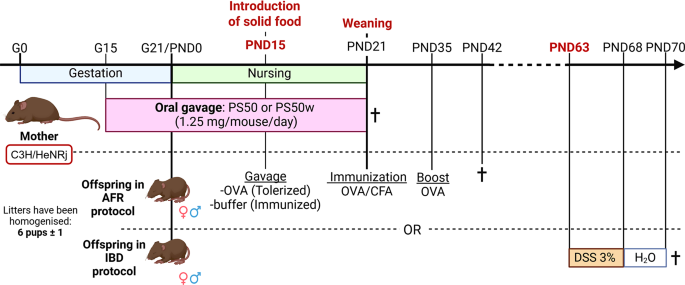
Perinatal exposure to nano-polystyrene: deleterious imprinting on inflammatory bowel diseases
Particle and Fibre Toxicology

Perinatal exposure to nano-polystyrene: deleterious imprinting on inflammatory bowel diseases

The study raises the possibility that perinatal exposure to nanoplastics could have lasting, sex-specific effects on gut health and make adult offspring more susceptible to intestinal inflammation. This may be relevant...

Read Summary
Association of attention-deficit/hyperactivity disorder and autism with inflammatory bowel disease activity.
Journal of pediatric gastroenterology and nutrition

Association of attention-deficit/hyperactivity disorder and autism with inflammatory bowel disease activity.

The study suggests ADHD and autism are linked with slightly higher risk of more severe IBD events (including need for advanced therapies and, for UC, colectomy), which may help target monitoring and support for young...

Read Summary
Time trends of pediatric inflammatory bowel disease in Catalonia from 2011 to 2023. Population-based cohort study.
Revista espanola de enfermedades digestivas

Time trends of pediatric inflammatory bowel disease in Catalonia from 2011 to 2023. Population-based cohort study.

Trends in treatments for children with IBD can affect hospitalization and surgical needs. Noting rising use of biologics (infliximab) alongside fewer hospitalizations may be important for families and clinicians tracking...

Read Summary
Cumulative thalidomide exposure, peripheral neuropathy, and clinical outcomes in pediatric and very early-onset inflammatory bowel disease: a retrospective cohort study.
Clinics (Sao Paulo, Brazil)

Cumulative thalidomide exposure, peripheral neuropathy, and clinical outcomes in pediatric and very early-onset inflammatory bowel disease: a retrospective cohort study.

Thalidomide can help treat refractory pediatric IBD but causes peripheral neuropathy. Knowing a cumulative-dose threshold linked to neuropathy could help clinicians balance benefit and neurotoxicity risk.

Read Summary
Clostridioides difficile in Paediatric Inflammatory Bowel Disease: A Retrospective Cross-Sectional Analysis of the East London Region.
Journal of paediatrics and child health

Clostridioides difficile in Paediatric Inflammatory Bowel Disease: A Retrospective Cross-Sectional Analysis of the East London Region.

C. difficile can cause or complicate diarrhoea in children with IBD, so understanding test positivity in this group helps clinicians interpret results and decide when to investigate or treat. The study suggests...

Read Summary
Nutritional Status and Linear Growth at Diagnosis and Their Association with Clinical Outcomes in Paediatric Inflammatory Bowel Disease: A Multicentre Cohort Study
Nutrients

Nutritional Status and Linear Growth at Diagnosis and Their Association with Clinical Outcomes in Paediatric Inflammatory Bowel Disease: A Multicentre Cohort Study

Malnutrition and growth failure at diagnosis are common in children with IBD—especially Crohn’s—and can indicate higher inflammatory burden. Monitoring and addressing nutrition and growth is important because most...

Read Summary
Transition of children with chronic gastrointestinal and liver disease to adult care: A multicentre Asian survey of paediatric gastroenterologists
Journal of Pediatric Gastroenterology and Nutrition

Transition of children with chronic gastrointestinal and liver disease to adult care: A multicentre Asian survey of paediatric gastroenterologists

Coordinated transition to adult gastroenterology affects continuity of care for children with chronic GI conditions such as IBD; improvements could reduce gaps in treatment and support during young adulthood.

Read Summary
Best practices for prior authorization in pediatric inflammatory bowel disease: A practical multidisciplinary roadmap
Journal of Pediatric Gastroenterology and Nutrition

Best practices for prior authorization in pediatric inflammatory bowel disease: A practical multidisciplinary roadmap

Based on the title and source metadata, this appears to be a patient education related to Inflammatory bowel disease and Pediatrics and family. The original article is from Journal of Pediatric Gastroenterology and...

Read Summary
Exclusive enteral nutrition versus the Crohn's disease exclusion diet for remission induction in pediatric Crohn's disease: 52-week study.
Journal of pediatric gastroenterology and nutrition

Exclusive enteral nutrition versus the Crohn's disease exclusion diet for remission induction in pediatric Crohn's disease: 52-week study.

Both EEN and the Crohn’s disease exclusion diet are used to induce remission in children with Crohn’s disease. Evidence that they perform similarly through 52 weeks may help families and clinicians choose the approach...

Read Summary