Research topics

Biomarkers

Biomarker research articles covering molecular signals, prediction tools, and measures used to study Crohn's disease, ulcerative colitis, or broader IBD.

Page 7 of 8 · 360 articles

Role of Fatty Acid Oxidation in Crohn's Disease and Ulcerative Colitis: Metabolomics Analysis and Experimental Evidence
PubMed Central

Role of Fatty Acid Oxidation in Crohn's Disease and Ulcerative Colitis: Metabolomics Analysis and Experimental Evidence

The study links depleted fatty acid oxidation metabolites—especially butyrate—to impaired regulatory T cell development in IBD, suggesting a metabolic pathway that may influence immune tolerance and disease activity.


Read Summary
International consensus on intestinal epithelial barrier assessment and therapeutic effects in inflammatory bowel diseases clinical trials.
Gut

International consensus on intestinal epithelial barrier assessment and therapeutic effects in inflammatory bowel diseases clinical trials.

If therapies that restore intestinal barrier function can be reliably tested and measured, future treatments might be developed that specifically target barrier healing — a mechanism linked to symptom relief and possibly...

Read Summary
Vedolizumab in biologic-naïve ulcerative colitis: a multicenter real-world evaluation of clinical benefits and exploratory inflammatory indices
Frontiers in Medicine

Vedolizumab in biologic-naïve ulcerative colitis: a multicenter real-world evaluation of clinical benefits and exploratory inflammatory indices

Patients and clinicians choosing first‑line biologic therapy for ulcerative colitis may find evidence here that vedolizumab can provide sustained clinical benefit and a favorable safety profile in a biologic‑naïve...

Read Summary
Integrative Bioinformatics Analysis of Single Cell RNA-Sequencing Data Reveals Key Regulatory Genes and Therapeutic Targets in Inflammatory Bowel Disease
Europe PMC

Integrative Bioinformatics Analysis of Single Cell RNA-Sequencing Data Reveals Key Regulatory Genes and Therapeutic Targets in Inflammatory Bowel Disease

The study uses single-cell RNA sequencing to pinpoint genes and regulatory networks that might help explain IBD biology and suggest new biomarkers or repurposed drugs. That information could guide future research toward...

Read Summary
Letter to the Editor to "Volatomics-based biomarkers for non-invasive diagnosis and monitoring of inflammatory bowel disease".
Journal of gastroenterology

Letter to the Editor to "Volatomics-based biomarkers for non-invasive diagnosis and monitoring of inflammatory bowel disease".

Cure8 found this source from Journal of gastroenterology, but the page could not be read reliably yet. It is tagged for Inflammatory bowel disease, Biomarkers, and Research and clinical trials. Open the original article...

Read Summary
Fluorescent Probes for Intestinal Diseases: Design Strategies, Imaging Mechanisms and Biomedical Applications
Advanced Functional Materials

Fluorescent Probes for Intestinal Diseases: Design Strategies, Imaging Mechanisms and Biomedical Applications

New or improved fluorescent probes could enable more sensitive, noninvasive imaging of biochemical changes in the gut, which may aid research, earlier diagnosis, or monitoring of IBD and colorectal cancer.

Read Summary
Bowel Urgency in Ulcerative Colitis Is Associated With Clinical Endpoints, Health-Related Quality of Life, and Biomarkers: Data From the Etrasimod ELEVATE UC 52 Trial
Crohn's & Colitis 360

Bowel Urgency in Ulcerative Colitis Is Associated With Clinical Endpoints, Health-Related Quality of Life, and Biomarkers: Data From the Etrasimod ELEVATE UC 52 Trial

Bowel urgency is a common, disruptive UC symptom; this trial analysis shows urgency improvements with etrasimod track with clinical remission, endoscopic improvement, better quality of life, and lower inflammatory...

Read Summary
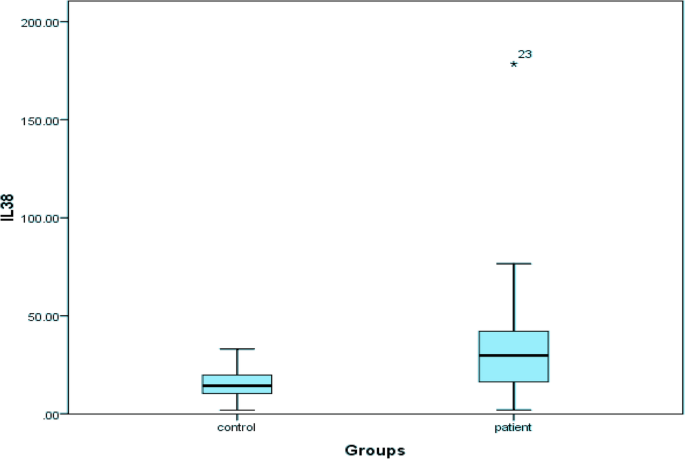
Association of interleukin-38 and its polymorphism (rs7599662) with ulcerative colitis
The Egyptian Journal of Internal Medicine

Association of interleukin-38 and its polymorphism (rs7599662) with ulcerative colitis

IL-38 and a genetic variant (rs7599662) were linked to ulcerative colitis in this study, suggesting a possible new biomarker or therapeutic target. If validated, this could help researchers better understand UC...

Read Summary
Current and novel biomarkers for predicting and assessing therapeutic response in inflammatory bowel disease: a systematic review.
Therapeutic advances in gastroenterology

Current and novel biomarkers for predicting and assessing therapeutic response in inflammatory bowel disease: a systematic review.

People with IBD and their clinicians want ways to predict which advanced therapy will work best. This review summarizes current evidence and shows that, despite many studies, no biomarker is reliably ready for routine...

Read Summary
Metabolic Profiling of the Gut-Brain Axis in a Murine Model of Ulcerative Colitis with Raman Spectroscopy.
ACS applied materials & interfaces

Metabolic Profiling of the Gut-Brain Axis in a Murine Model of Ulcerative Colitis with Raman Spectroscopy.

The study identifies candidate metabolites that may underlie gut–brain biochemical crosstalk during colitis, which could point to early biomarkers or mechanistic targets relevant to IBD-related brain effects.

Read Summary
Risk Factors and Predictive Biomarkers for Postoperative Complications in Crohn's Disease Surgery: Systematic Review.
International journal of molecular sciences

Risk Factors and Predictive Biomarkers for Postoperative Complications in Crohn's Disease Surgery: Systematic Review.

People with Crohn’s disease facing surgery may have varying risks of complications; better biomarkers and models could help tailor perioperative care and decision-making. The review signals active research toward more...

Read Summary
Exploring bidirectional causal relationships between ulcerative colitis and depression via the gut-brain axis: A Mendelian randomization study with plasma protein mediator analysis.
Journal of affective disorders

Exploring bidirectional causal relationships between ulcerative colitis and depression via the gut-brain axis: A Mendelian randomization study with plasma protein mediator analysis.

People with ulcerative colitis commonly experience depression; understanding whether the relationship is causal and which blood proteins might mediate it could help researchers develop biomarkers or new therapies...

Read Summary
A Scoping Review of Endoscopic Assessment Considering Disease Extent in Ulcerative Colitis: Insights for the Artificial Intelligence Era.
Gut and liver

A Scoping Review of Endoscopic Assessment Considering Disease Extent in Ulcerative Colitis: Insights for the Artificial Intelligence Era.

Measuring both how severe inflammation is and how much of the colon is affected could give a fuller picture of disease burden than current focal endoscopic scores. For patients with UC, that may affect risk assessment...

Read Summary
Neglected kingdoms: the gut virome, mycobiome and their role in inflammatory bowel disease.
Gut microbes

Neglected kingdoms: the gut virome, mycobiome and their role in inflammatory bowel disease.

This review spotlights non-bacterial members of the gut microbiota (viruses and fungi) that may contribute to IBD by altering barrier function, immune responses, and interactions with bacteria. For people with IBD, these...

Read Summary
Association Between the C-Reactive Protein-Albumin-Lymphocyte (CALLY) Index and Tissue-Confirmed Cytomegalovirus Colitis in Patients with Active Ulcerative Colitis
Diagnostics

Association Between the C-Reactive Protein-Albumin-Lymphocyte (CALLY) Index and Tissue-Confirmed Cytomegalovirus Colitis in Patients with Active Ulcerative Colitis

CMV reactivation can worsen outcomes in active UC and influence treatment choices; clinicians and patients may benefit from additional, easy-to-measure markers that flag higher risk of tissue CMV and prompt targeted...

Read Summary
Potential role of PPARGC1A in linking ulcerative colitis to colorectal cancer: a novel prognostic biomarker and therapeutic target.
Translational cancer research

Potential role of PPARGC1A in linking ulcerative colitis to colorectal cancer: a novel prognostic biomarker and therapeutic target.

People with long-standing ulcerative colitis face an increased risk of colorectal cancer; this study highlights PPARGC1A as a gene that may be downregulated early in that progression, which could eventually help identify...

Read Summary
Global research trends in ferroptosis in autoimmune diseases: a bibliometric and visual analysis (2018-2025).
Autoimmunity

Global research trends in ferroptosis in autoimmune diseases: a bibliometric and visual analysis (2018-2025).

The review shows increasing research linking ferroptosis to autoimmune diseases including IBD and ulcerative colitis, which may guide future biomarker and therapy research relevant to people with Crohn's disease or other...

Read Summary
Study of ectodomain of type 23 collagen as a novel marker of disease activity in patients with ulcerative colitis disease.
The Egyptian journal of immunology

Study of ectodomain of type 23 collagen as a novel marker of disease activity in patients with ulcerative colitis disease.

A blood biomarker that rises with active ulcerative colitis could help patients and clinicians monitor disease activity without relying solely on invasive tests. This study reports that serum type 23 collagen ectodomain...

Read Summary
Evaluation of serum human galectin 3 as a marker of activity in inflammatory bowel disease in comparison to fecal calprotectin.
The Egyptian journal of immunology

Evaluation of serum human galectin 3 as a marker of activity in inflammatory bowel disease in comparison to fecal calprotectin.

Noninvasive blood biomarkers that track IBD activity could reduce reliance on repeat endoscopy. If validated, serum galectin‑3 might complement fecal calprotectin and CRP to help identify active disease.

Read Summary
Multi-Omics Framework Integrating Genetics, Microbiome, Metabolism, and Immunity for Deciphering Ulcerative Colitis Pathogenesis and Diagnostic Biomarker Discovery.
FASEB journal : official publication of the Federation of American Societies for Experimental Biology

Multi-Omics Framework Integrating Genetics, Microbiome, Metabolism, and Immunity for Deciphering Ulcerative Colitis Pathogenesis and Diagnostic Biomarker Discovery.

Researchers used genetics, microbiome, metabolism, and immune profiling together to nominate biological pathways and a four-gene signature that might help diagnose or explain ulcerative colitis. If validated later, these...

Read Summary

Serum Leptin, Ghrelin, and IGF-1 Levels and Their Association with Bone Mineral Density in Patients with Ulcerative Colitis

People with UC have higher rates of low bone density, which raises fracture risk. This study links altered hormones (leptin, ghrelin, IGF‑1) and inflammation to lower BMD in UC, suggesting metabolic pathways that could...

Read Summary
A scoping review on emerging biomarkers in inflammatory bowel disease: Towards precision medicine in diagnosis and therapeutic management.
PloS one

A scoping review on emerging biomarkers in inflammatory bowel disease: Towards precision medicine in diagnosis and therapeutic management.

New, non-invasive biomarkers and AI-driven multi-omic approaches could make diagnosis and treatment of IBD more precise, helping patients avoid invasive tests and improving chances of choosing effective therapies sooner.

Read Summary
Balloon-assisted endoscopic stricturotomy for small bowel fibrostenotic strictures: A comparison of Crohn’s disease-related and non-Crohn’s disease strictures
World Journal of Gastroenterology

Balloon-assisted endoscopic stricturotomy for small bowel fibrostenotic strictures: A comparison of Crohn’s disease-related and non-Crohn’s disease strictures

Patients with small-bowel strictures face repeat procedures or surgery; this study suggests endoscopic stricturotomy outcomes differ by whether the stricture is from Crohn’s disease and that a simple blood marker (NLR)...

Read Summary

Quantitative Analysis of Retinal and Choroidal Microvascular Changes in Adult IBD Patients: Insights into the Gut-Retina Axis.

The study suggests measurable retinal and choroidal microvascular differences in people with IBD versus controls, which could point to systemic vascular effects of inflammation and offer noninvasive biomarker...

Read Summary