The Effect of Antifungal Therapy on Disease Activity in Patients with Inflammatory Bowel Disease: A Retrospective Matched Analysis.
People with IBD or their clinicians may worry that systemic antifungal treatment could trigger flares.
Condition
Ulcerative colitis news across medications, symptoms, monitoring, procedures, research, access, and daily life.
Page 11 of 40 · 1917 articles
People with IBD or their clinicians may worry that systemic antifungal treatment could trigger flares.
Non-invasive imaging biomarkers that track intestinal inflammation and structure could speed preclinical testing of IBD therapies and guide translational imaging research relevant to clinical monitoring of ulcerative...

This study compares two JAK inhibitors (upadacitinib and tofacitinib) used as rescue therapy for acute severe ulcerative colitis and reports lower 1‑year colectomy rates with upadacitinib. That could influence choices...
The study documents substantial increases in Crohn’s disease and ulcerative colitis prevalence and changing incidence patterns in Northeastern Italy from 2012–2024, which may affect healthcare demand and resource...
Automated, validated grading of UC on colonoscopy images could reduce variability between endoscopists and help standardize severity assessment that influences treatment planning.
Regulatory approvals and trial activity for upadacitinib (Rinvoq) affect availability and prescribing patterns for immunomodulatory treatment options used across autoimmune and inflammatory diseases, including IBD.
Researchers have found a short peptide in potato protein with antioxidant and anti-inflammatory properties and are testing it as a possible oral treatment for intestinal inflammation — a potential new, plant-derived...
IL-23 inhibitors are a newer class of biologics for moderate-to-severe ulcerative colitis that may offer another effective option for patients who have not responded to existing therapies, with improving evidence for...
Obese patients with FibroScan-detected steatosis in this cohort had a high frequency of colitis and some cases of IBD, dysplasia, and cancer, which could affect screening and symptom evaluation decisions.
Refractory IBD in children is linked to growth and development problems, hospitalizations, and surgery; knowing treatment options after anti‑TNF failure matters for long‑term outcomes. The review highlights which...
FDA IND clearance lets PALI‑2108 move into a Phase 2 trial in Crohn’s disease, meaning the drug’s safety and efficacy will be formally tested in people with moderate-to-severe disease. The program is being run alongside...
Fatigue is extremely common in IBD and is closely linked to depression—recognizing and addressing mental-health issues may be important for patients who report significant fatigue.
Based on the title and source metadata, this appears to be a basic science related to Ulcerative colitis, Inflammatory bowel disease, and Research and clinical trials. The original article is from American journal of...
Based on the title and source metadata, this appears to be a clinical study related to Ulcerative colitis, Inflammatory bowel disease, and Research and clinical trials. The original article is from International Journal...
This study directly compares two rescue medications used when intravenous steroids fail in acute severe ulcerative colitis, reporting similar short-term remission and safety but a slower early response with tacrolimus —...
Based on the title and source metadata, this appears to be a clinical study related to Ulcerative colitis, Inflammatory bowel disease, and Sulfasalazine. The original article is from Pediatric Gastroenterology,...
FDA clearance lets Palisade start a Phase 2 trial of PALI-2108 in moderate-to-severe Crohn’s disease, which could matter to patients and clinicians watching new oral treatments targeted to the lower intestine.
AI tools for endoscopic and multimodal IBD assessment could make scoring and monitoring more objective and consistent, which matters for treatment decisions and tracking remission or relapse. The review also flags...
A multimodal program combining exercise, diet, and psychological support could offer practical, nonpharmacologic ways to improve fitness, quality of life, and potentially treatment outcomes in people with ulcerative...
A new oral investigational drug (TP317) is entering a Phase 1b study in adults with active UC to assess safety and pharmacokinetics, which may be relevant to patients seeking information about emerging therapies.
Microbial amino-acid metabolites may be active players in IBD biology and could become useful biomarkers or therapeutic targets. Understanding these metabolites helps explain links between the microbiome, immune...
If disease activity hurts quality of life partly through low self-efficacy and (for UC) psychological distress, then boosting self-management confidence and identifying anxiety/depression could help improve...
Patient engagement in treatment decisions can affect satisfaction, adherence, and care planning. This study identifies practical factors (treatment options, trusted providers, community support) associated with higher...
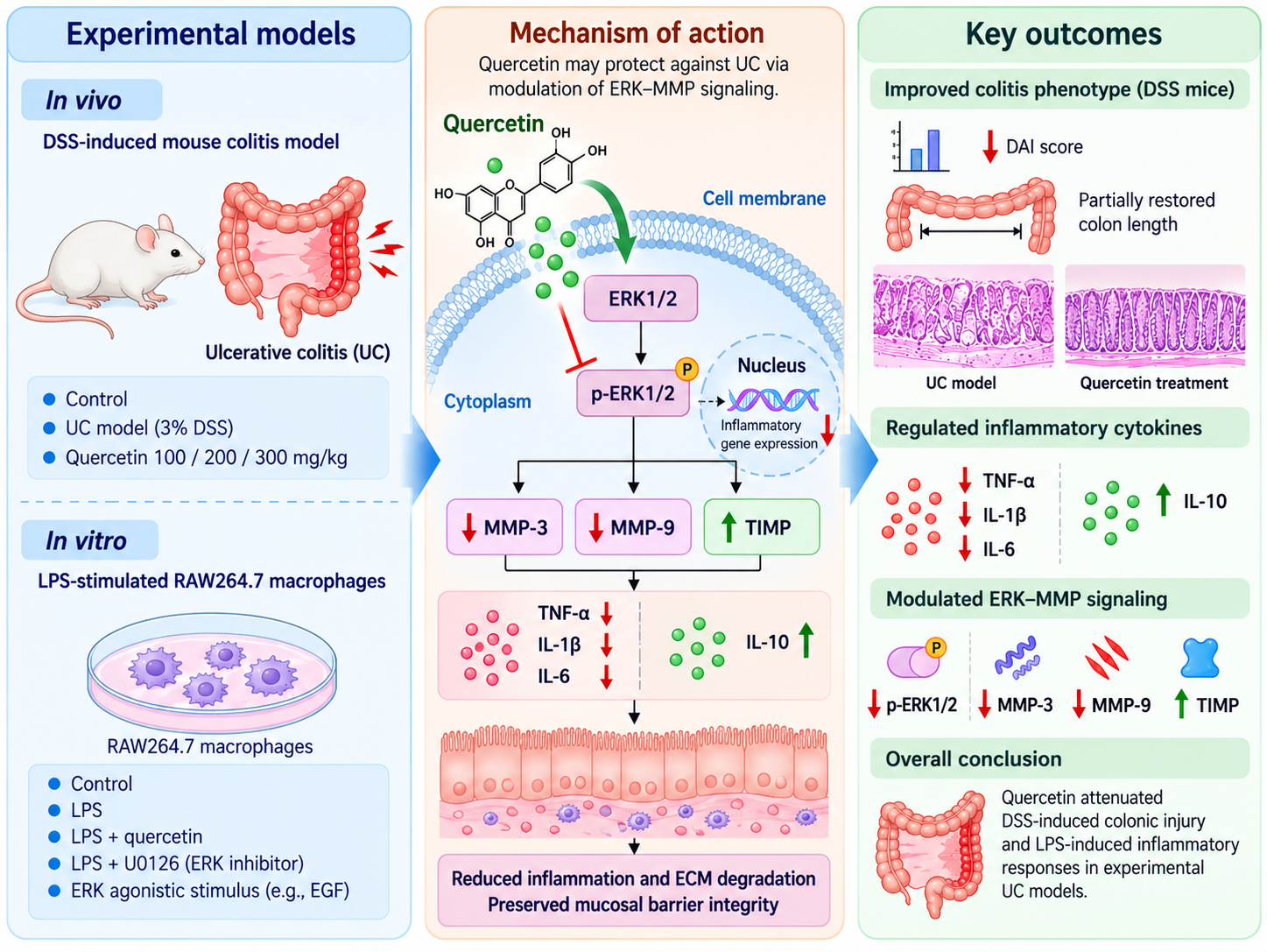
The study suggests quercetin can reduce inflammation and tissue damage markers in lab models of ulcerative colitis, pointing to ERK–MMP signaling as a possible mechanism. That could inform future preclinical research...
VEO-IBD often presents with severe, extensive disease and can include monogenic causes and early hepatobiliary complications; knowing common presentations and early management patterns helps families and clinicians plan...
People diagnosed as IBDU want to know whether their disease course, treatment needs, and chance of later being reclassified differ from typical UC or Crohn's disease.
A formulation that increases oral absorption of quercetin and reduces inflammation in animal models could point toward new flavonoid-based therapies for ulcerative colitis, but findings are preclinical.
Findings describe how often and when dysplasia recurs after ESD for UC-associated neoplasia, information that can affect decisions about endoscopic treatment versus colectomy and surveillance planning.
Identifies IL-1RN and SERPINA1 as biomarkers linked to macrophage-driven inflammation in ulcerative colitis and shows TolDCs can reduce macrophage pro-inflammatory cytokine expression in lab experiments — findings that...
The study suggests that higher levels of objectively measured moderate-to-vigorous physical activity are associated with lower risk of developing ulcerative colitis, and that people may gain similar associations whether...
A non-invasive MRI method that correlates with histology and endoscopic scores could reduce the need for frequent colonoscopy for assessing IBD activity and help monitor treatment response, especially when endoscopy is...
The paper reframes Crohn’s disease and ulcerative colitis in terms of dominant T-helper immune pathways (TH1 vs TH22), which could steer research on targeted immunologic treatments and biomarkers.
This meta-analysis pulls together early trial evidence that TL1A antagonists may improve clinical, endoscopic, and histologic outcomes in both UC and CD and reports an overall acceptable short-term safety...
The study suggests a mechanism (reduced intestinal oxalate transport) that could make common “healthy” plant foods aggravate intestinal inflammation in some people with Crohn’s or ulcerative colitis, which could affect...
This work looks for molecular signals that might help explain how long-term ulcerative colitis can be connected to higher colorectal cancer risk. Identifying shared genes and spatial patterns could eventually guide...
Researchers planned to study whether patterns in the gut microbiome correlate with clinical diagnoses (including Crohn’s and UC), which could inform future biomarker work. The study is suspended, so no results are...
Understanding how patient-derived epithelial cells respond to inflammation could reveal mechanisms of poor mucosal healing in IBD and identify targets or biomarkers to improve repair. Organoid models from patient tissue...
A randomized trial tested whether adding dapagliflozin (an SGLT2 inhibitor) to mesalamine changes disease activity in adults with mild–moderate ulcerative colitis over 6 months. If effective and safe, it could suggest a...
This Phase 2 trial is testing a new oral drug (ATH-063) for adults with moderately to severely active ulcerative colitis who have not responded to prior biologic or advanced therapies, a group that often needs additional...
A validated, disease-specific self-care scale could help measure and track self-management behaviors that affect daily life and clinical outcomes for people with IBD, and support research and clinical care focused on...
Sarcopenia (loss of muscle mass) appears common in people with IBD and is linked to markers of active disease and anemia; identifying it could point to patients who need nutritional or rehabilitation support.
How patients think about their IBD affects coping, treatment adherence, and quality of life. If different generations perceive illness threat and control differently, clinicians and care teams may need to tailor...
Patients and clinicians using ustekinumab may be able to use an early (around 3 months) drug concentration to help predict short-term remission, while routine repeated monitoring later on may be less informative for...
This highlights a new, biologically distinct drug target (IL‑7Rα) in ulcerative colitis that may help patients who do not respond to existing biologics, and it summarizes early clinical evidence for lusvertikimab while...
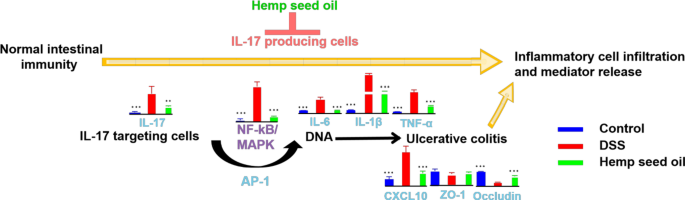
The study uses a mouse model of ulcerative colitis to test hemp seed oil and reports molecular and metabolic changes alongside reduced disease in the model. Patients and researchers may be interested because it explores...
A plant-derived polysaccharide improved inflammation, gut barrier markers, and metabolic measures in a mouse model of diabetes-linked ulcerative colitis — findings that could point to new research directions for...
Patient-informed refinements to ePRO design and study operations could reduce burden and missing data in high-frequency daily symptom reporting, which matters for study quality and for patients asked to report symptoms...
The project investigates how TNFR1 and TNFR2 differently control epithelial repair in the colon—mechanisms that may explain why many patients on anti‑TNF biologics do not achieve lasting mucosal healing and could point...